
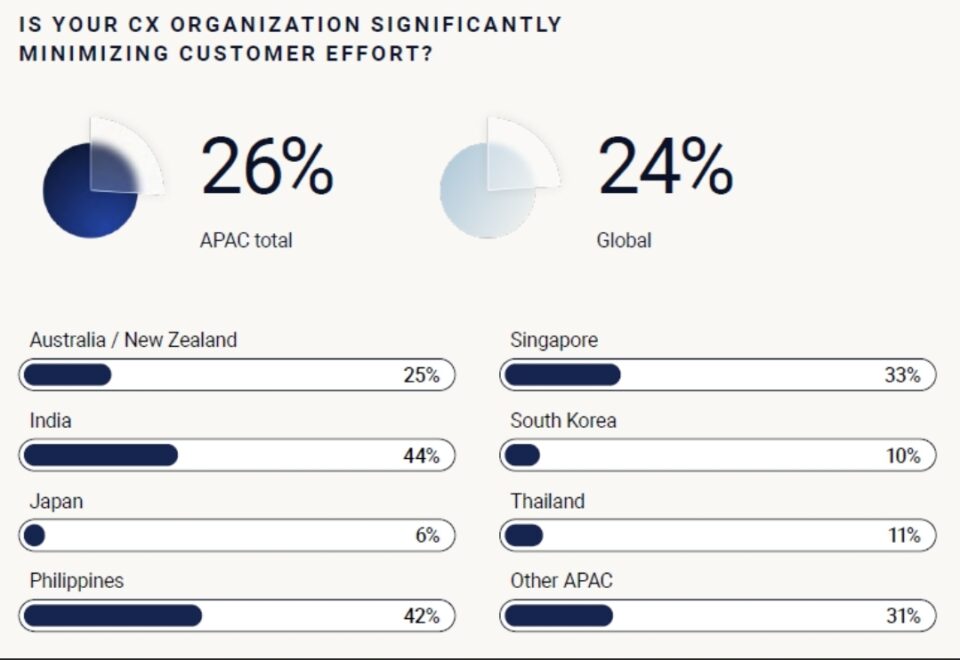
Customer experience has moved beyond being a support function to become a decisive competitive differentiator. The latest State of Customer Experience report from Genesys suggests that AI-powered customer experience orchestration in India is entering a new phase, where enterprises are no longer investing in artificial intelligence merely to automate interactions but to orchestrate seamless experiences across digital and human touchpoints. The findings highlight that Indian consumers are among the world’s most optimistic about AI in customer service while simultaneously setting higher expectations for speed, personalization and issue resolution. For enterprises, this signals that customer loyalty will increasingly depend on how effectively they combine AI, data and human expertise.
“Customers no longer judge brands by response time alone—they judge them by how effortlessly every interaction connects.”
AI-Powered Customer Experience Orchestration in India Reflects Rising Consumer Expectations
The report paints a clear picture of changing customer behaviour. More than half of consumers globally would rather avoid contacting customer service altogether, while 85% have reduced or stopped spending with brands after poor service experiences. These figures reinforce a reality many CX leaders already recognize: every interaction now influences revenue, retention and long-term brand trust.
India presents an even more compelling story. The research indicates that 94% of Indian consumers believe AI will improve both the quality and speed of customer service during the next few years. Moreover, 92% expect AI to deliver more personalized experiences, placing India significantly ahead of global averages.
However, optimism does not translate into unlimited patience. Customers increasingly expect organizations to remember previous conversations, maintain context across channels and resolve issues without forcing them to repeat information.
This shift reflects a broader evolution in customer expectations. Consumers are rewarding brands that simplify journeys while penalizing those that create unnecessary friction.
Speed, Context and Resolution Define AI-Powered Customer Experience Orchestration in India
Perhaps the strongest message emerging from the research is that customers value outcomes more than technology.
Indian consumers demonstrate remarkable openness toward AI-driven support. According to the report, 86% do not mind whether a human or AI resolves their issue—as long as it happens quickly and completely.
This finding changes the traditional debate surrounding automation.
Organizations previously focused on replacing manual processes with AI. Today’s challenge involves designing intelligent orchestration that determines when automation should lead and when human intervention creates greater value.
Despite significant AI investments, execution gaps remain.
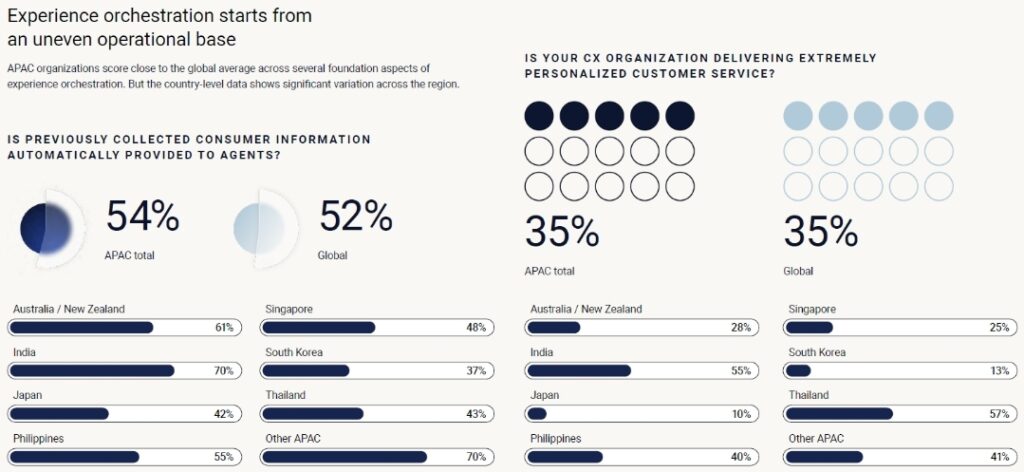
Nearly all consumers expect organizations to remember their information across every interaction. Yet almost half of organizations still fail to transfer customer context automatically between virtual assistants and human agents.
That disconnect often results in repeated explanations, longer resolution times and declining customer satisfaction.
“Customers rarely ask whether AI handled the conversation. They remember whether the problem disappeared.”
India Emerges as a Strategic AI CX Market
The report positions India as one of the fastest-evolving customer experience markets globally.
Unlike several mature markets where AI adoption sometimes faces skepticism, Indian consumers appear ready to embrace AI-enabled engagement provided it produces tangible improvements.
At the enterprise level, this confidence aligns with significant technology investments.
More than half of Indian CX leaders identify modernization of their customer experience technology stack as their highest strategic priority. Organizations are accelerating cloud migration, integrated CX platforms and AI-powered tools to prepare for future customer expectations.
These investments indicate that Indian enterprises increasingly recognize customer experience as an enterprise-wide capability rather than a contact center initiative.
Modern CX platforms connect customer data, operational systems, communication channels and AI models into a unified ecosystem capable of delivering consistent experiences throughout the customer journey.
Such orchestration becomes increasingly important as organizations serve customers across voice, messaging, mobile applications, websites and social platforms simultaneously.
Business Consequences Extend Beyond Customer Satisfaction
The findings also quantify the financial implications of poor customer experience.
While 38% of Indian consumers stopped purchasing from companies after poor service, another 53% continued buying but reduced their spending.
These customers often disappear gradually rather than immediately.
For many organizations, this represents a hidden cost because reduced purchasing behaviour may not immediately appear connected to customer service quality.
Globally, the situation appears equally concerning.
The research suggests that two-thirds of consumers would switch to competitors after only three negative experiences, while one in five would leave after a single bad interaction.
Such behaviour reinforces that customer experience now influences revenue protection as much as customer acquisition.
Brands therefore need to monitor customer journeys proactively instead of reacting after complaints escalate.
“Poor service rarely creates instant losses. More often, it quietly erodes customer lifetime value.”
AI and Human Collaboration Will Shape the Next Phase of CX
Another important insight emerging from the report involves the future relationship between AI and human employees.
Organizations increasingly recognize that autonomous AI agents can manage routine interactions while human advisors address emotionally complex or high-value situations.
The report indicates that 82% of CX leaders expect autonomous AI agents to orchestrate customer experiences within the next three years, while 40% already use agentic AI capabilities.
Rather than replacing employees, successful implementations appear focused on strengthening collaboration between AI systems and human expertise.
When AI captures context, recommends actions and automates repetitive tasks, human agents can concentrate on empathy, judgment and relationship building.
This balanced model aligns closely with evolving consumer expectations.
Customers increasingly appreciate efficiency without sacrificing personalization.
Organizations that successfully combine automation with emotional intelligence may therefore create stronger loyalty than those emphasizing either dimension alone.
Industry Perspective
Commenting on the findings, Raja Lakshmipathy, Vice President & Managing Director, India & SAARC, Genesys, said:
“India is emerging as one of the world’s most AI-ready customer experience markets. It combines exceptionally high consumer confidence in AI, strong enterprise investment in cloud and AI modernisation, and a growing ability to deliver connected, personalised experiences at scale. This positions India to become a leader in the next phase of AI-powered experience orchestration. As Agentic AI becomes more deeply embedded in customer engagement, the organisations that successfully orchestrate experiences by leveraging AI, human expertise and customer context will be best positioned to strengthen customer loyalty and drive long-term growth.”
His observations reinforce the report’s broader conclusion that technology alone will not determine future competitive advantage.
Instead, orchestration—the ability to connect systems, people, customer data and AI across every interaction—will define next-generation customer experience.
“The future belongs to organizations that orchestrate experiences—not merely automate conversations.”
Looking Ahead
The latest State of Customer Experience report illustrates that AI adoption has entered a more mature stage. Enterprises are moving beyond isolated automation projects toward integrated experience orchestration strategies that connect customer journeys end to end.
For Indian organizations, the timing appears particularly significant. Consumers already demonstrate exceptional confidence in AI while expecting seamless, personalized and context-aware interactions. Meanwhile, enterprises continue modernizing cloud infrastructure, integrating customer data and deploying agentic AI capabilities.
Success, however, will depend less on deploying AI at scale and more on deploying it intelligently. Organizations that preserve context across channels, balance automation with human expertise and consistently resolve customer issues will strengthen trust, improve loyalty and create measurable business value.
As customer expectations continue to evolve, AI-powered customer experience orchestration in India is becoming not simply a technology initiative but a strategic business imperative capable of shaping long-term competitive advantage across industries.
