
Reimagining the Healthcare Journey
Healthcare is undergoing a fundamental shift. The customer is no longer simply a patient who visits a doctor when something goes wrong. Increasingly, people expect healthcare to be accessible, preventive, personalised, digitally enabled and available across multiple touchpoints.
Yet the healthcare journey remains fragmented for millions of Indians. A doctor consultation may happen on one platform, diagnostics through another provider, medicines through a pharmacy, insurance through a separate channel, and follow-up care through yet another system. This fragmentation creates friction for customers while also increasing complexity and, often, out-of-pocket expenditure.
It is against this backdrop that LivLong Protection & Wellness Solutions Limited (LPWSL), operating under the LivLong 365 brand, has built a digital-first healthcare and wellness ecosystem. Founded in 2021 and headquartered in Thane, LivLong 365 brings together doctor consultations, diagnostics, pharmacy, OPD services, home healthcare, wellness, senior care, emergency support, surgicare, healthcare concierge services and insurance distribution.
Addressing a Fundamental Challenge
With a network of more than 10,000 doctors and a presence across 800+ cities, LivLong 365 is attempting to address a fundamental challenge: how can healthcare become simpler, more accessible and more financially predictable for individuals, families and SMEs?
Its integrated “Payvidor” approach is particularly significant. By bringing payer and provider capabilities closer together within a single healthcare journey, LivLong 365 is challenging the traditional separation between healthcare delivery, wellness and financing.
The company’s reported FY2025–26 performance also reflects an expanding business: revenue stood at ₹192.24 crore, while Profit Before Tax reached ₹13.20 crore. The company reported substantial year-on-year growth in both PBT and net worth.
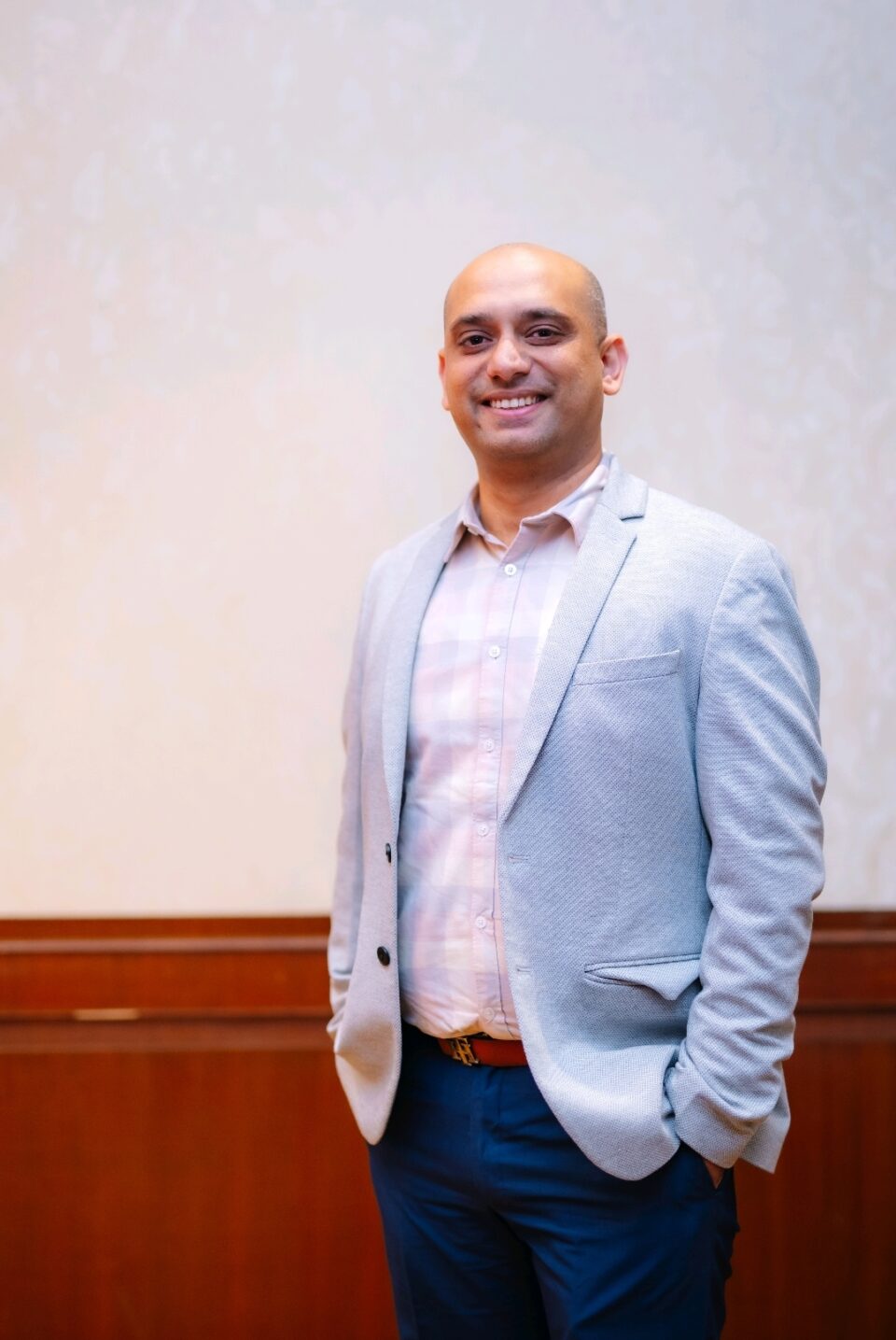
At the centre of this journey is Gaurav Dubey, Founder and CEO of LivLong 365. With more than 15 years of experience spanning insurance, healthcare, business strategy and digital transformation, Dubey has worked across corporate strategy, technology, digital and direct marketing, credit protection and pension businesses.
His leadership at LivLong 365 reflects a broader belief: quality healthcare should not only be available; it should be understandable, accessible and financially predictable.
In this CXQuest conversation, we explore how technology, integrated care and new healthcare business models can reshape Healthcare Customer Experience in India.
—
The Healthcare Experience Problem
Q1. Healthcare remains one of the most fragmented customer journeys. What, in your view, are the biggest experience failures that Indian consumers continue to face today?
Where do you see the greatest friction—from discovery and appointment booking to diagnosis, treatment, payment, insurance and post-treatment care?
GD: India’s public healthcare push has done the heavy lifting on access over 44 crore families now hold Ayushman Bharat cards, and NSO’s 2025 survey confirms more Indians than ever are seeking care. But access isn’t the same as a good experience. The real friction sits in outpatient care, the doctor visits, tests and follow-ups every family deals with year-round, yet most insurance and health-tech products are still built around the rare hospitalisation event. Add to that a fragmented provider network — diagnosis, labs and prescriptions scattered across disconnected players — and post-treatment follow-up that’s left entirely to families. That’s the gap we built LivLong 365 and our Payvidor model to close and bringing payer and provider together so a patient’s journey feels continuous, not stitched together on their own.
Designing Healthcare Customer Experience Around the Consumer
Q2. LivLong 365 brings together consultations, diagnostics, pharmacy, wellness, home care and other services.
How do you architect such a broad ecosystem around the customer’s journey rather than around individual healthcare products or services?
What does a truly customer-centric healthcare journey look like from your perspective?
GD: We started with a simple question- what does a family actually go through when someone falls sick? That journey rarely stays inside one category. A fever becomes a consultation, then a test, then a prescription, sometimes a follow-up at home. If each of those sits with a different, unconnected provider, the customer becomes the project manager of their own care. Our approach is integrating payer and provider within one system — exists to remove that burden. A doctor’s advice flows straight into a lab booking, a diagnosis into a pharmacy order, a discharge into home-care follow-up, all under one healthcare manager the customer can call. To me, a truly customer-centric journey is one where the system does the coordinating, and the family only has to make one decision is to get better.
From Patient to Healthcare Consumer
Q3. The language of healthcare is increasingly shifting from “patients” to “consumers”.
Has this change fundamentally altered expectations around convenience, transparency, personalisation and responsiveness?
And is the Indian healthcare industry adapting quickly enough to this new consumer mindset?
GD: Absolutely. Someone booking a doctor now expects the same ease as booking a cab with instant confirmation, clear pricing, no waiting in the dark. That’s a fair ask, and healthcare has been slow to meet it. Is the industry keeping pace? Partly. Digital rails like ABDM and eSanjeevani have built the infrastructure at national scale. But translating that into everyday private-sector experience — upfront pricing, a healthcare manager who knows your history, proactive rather than reactive care is still the exception, not the norm. That’s the gap we’re closing at LivLong 365.
Healthcare Customer Experience Through the Payvidor Lens
Q4. LivLong 365 describes its integrated model as “Payvidor”, bringing payer and provider capabilities together.
What problem was this model originally designed to solve?
How can integrating payer and provider capabilities fundamentally change the customer’s healthcare journey, particularly around affordability, coordination and continuity of care?
GD: Payvidor was built to solve a simple disconnect: the entity that pays for care and the entities that deliver it rarely talk to each other. That’s how customers end up with delayed reimbursements, opaque pricing, and repeating their history at every new provider.
Bringing payer and provider together changes that on three fronts. Affordability as we negotiate rates directly with our network, so costs are controlled upfront instead of reimbursed after the fact. Coordination as a consultation, lab booking and prescription move through one system, not three. And Continuity where a healthcare manager holds the full picture, so care doesn’t reset with every new doctor. It turns healthcare from one-off transactions into a single, accountable relationship.
Beyond the Doctor Consultation
Q5. Digital healthcare often focuses heavily on teleconsultation.
Do you believe the industry has overemphasised the consultation itself while underinvesting in everything that happens before and after it?
How is LivLong 365 approaching the complete journey—from prevention and diagnosis to treatment, medicines, recovery and ongoing wellness?
GD: Yes, and it’s a real gap. A consultation alone rarely changes a health outcome — what matters is whether the problem was caught early, and whether the person actually followed through afterward with tests, medicines and recovery.We built LivLong 365 around that full arc rather than the appointment alone. On prevention, our health check and screening programmes catch issues before they need a consultation at all. Diagnosis and treatment run through our own network of labs and doctors, so results feed straight into next steps instead of sitting in a PDF. Medicines are covered end to end, not just prescribed. And recovery and ongoing wellness are handled by a dedicated healthcare manager who follows up — checkups, trend tracking, reminders — long after the consultation is over. A teleconsult that ends without a resolved outcome hasn’t actually delivered healthcare; it’s delivered advice.
Preventive Healthcare as a CX Strategy
Q6. Prevention requires customers to engage with healthcare even when they are not sick.
How do you persuade consumers to move from episodic, illness-driven healthcare to continuous preventive and wellness engagement?
What role can technology and behavioural nudges play in changing that behaviour?
GD: This is the hardest shift in Indian healthcare as nobody wants a checkup they don’t feel they need. So a monthly call from a healthcare manager who knows your history feels like someone checking in, not a health push and that’s what gets people to say yes to a screening they’d otherwise skip.
Technology helps with nudges when they’re timely and specific — a due test, a number drifting — not generic wellness content. And for many families, the real nudge is aimed at the adult child abroad, who gets peace of mind seeing their parent’s health tracked every month. That’s what keeps people engaged, not just reaching for care when they’re already sick.
Personalisation at Scale
Q7. A healthcare journey is inherently personal, yet large digital platforms need to operate at enormous scale.
How can LivLong 365 deliver genuinely personalised healthcare experiences without making the operating model prohibitively expensive?
Where do data, analytics and AI fit into this equation?
GD: We don’t personalise everything manually, we let data do the heavy lifting and put people where judgment matters. AI and analytics handle triage, risk-flagging and matching customers to the right doctor or package at scale. That frees our healthcare managers to focus on what algorithms can’t do – a phone call, a follow-up, understanding context. Data also lets us spot patterns early, like a customer’s numbers drifting, without needing a human to monitor every case. So personalisation isn’t more people per customer, it’s smarter routing, so the human touch goes exactly where it’s needed most.
Technology Versus Human Empathy
Q8. Balancing Digital Convenience with Human Healthcare Experience
Healthcare is deeply emotional. Technology can make transactions faster, but it cannot automatically create trust or empathy.
Where should healthcare organisations automate, and where should they deliberately retain human intervention?
How do you determine the right balance between digital convenience and human support?
GD: Automate the transactions, not the relationship. Booking, reminders, reports, payments, tracking trends, technology should handle all of it instantly, because friction there just adds stress. But the moments that carry emotional weight — a diagnosis, an emergency, an elderly parent living alone — need a human on the other end, not a chatbot.
Our rule is simple: technology should remove effort, people should provide reassurance. A healthcare manager who knows the customer’s history is what makes an emergency call effective, not the app that dialled it. The balance isn’t a fixed ratio — it shifts with the moment. Routine care leans digital. Anything uncertain or high-stakes leans human, always.
Trust, Transparency and Healthcare
Q9. Trust is arguably more important in healthcare than in almost any other consumer category.
How do you build trust when customers are making decisions involving their health, personal data and financial commitments through a digital platform?
What principles guide LivLong 365 around transparency and customer communication?
GD: Trust here has two layers, and the platform is built to carry both. On the human side, every customer gets a dedicated healthcare manager, someone who knows their history and stays consistent over time. On the platform side, that same technology is what makes the trust scalable: every consultation, report and claim sits in one place, so nothing gets lost or has to be re-explained.
Three principles run through it. One, upfront pricing on the platform as costs shown before a decision, not discovered at the hospital counter. Two, full visibility where a customer can see their own records, claims and history at any time, not chase someone for it. Three, data governed strictly and used only to serve their care, never sold.
Reducing Out-of-Pocket Healthcare Costs
Q10. One of LivLong 365’s stated objectives is to reduce out-of-pocket medical expenditure.
Can better customer experience actually reduce healthcare costs, or are affordability and CX fundamentally separate challenges?
Where do you see the greatest opportunity to eliminate unnecessary expenditure through better coordination and technology?
GD: Poor experience is often what drives the cost up in the first place. When people don’t know which lab or doctor to trust, they end up over-testing, over-visiting, or paying retail because navigating the system feels harder than just paying.
The biggest opportunity is coordination. At LivLong 365, when a consultation, lab and pharmacy sit in one connected journey, rates are negotiated upfront instead of customers paying retail and reimbursing later. A healthcare manager holding a patient’s history means one less repeated test. And covering OPD — the everyday cost most families actually carry — matters just as much as covering hospitalisation, since that’s where most out-of-pocket spend quietly builds up.
Insurance and Healthcare Convergence
Q11. LivLong 365 operates across healthcare, wellness and insurance distribution.
Why have healthcare delivery and insurance historically remained so disconnected from the consumer’s perspective?
Could closer integration between the two fundamentally change how Indians understand and consume healthcare?
GD: They grew as separate industries, regulated separately, meeting the customer at separate moments — insurance sold once a year as a financial product, healthcare sought only when someone falls ill. So a customer was left connecting the dots — buying a policy, then separately chasing a doctor, a lab, a pharmacy, and hoping it all lines up at claim time.
Integration changes that. At LivLong 365, our Payvidor model brings cover and care together deliberately — the same relationship that pays also arranges the treatment. That also changes how people see insurance itself — something that shows up for the everyday OPD visit too, not just the rare hospitalisation.
Building Healthcare Customer Experience Beyond Large Enterprises
Q12. SMEs represent a massive but often underserved healthcare market.
What are the specific healthcare and CX challenges faced by SME employees and their families?
How can digital healthcare platforms make high-quality healthcare benefits viable for smaller organisations without creating administrative complexity?
GD: SME employees are often the most underserved segment as employers can’t afford large corporate health policies, so families end up paying out of pocket for everyday OPD visits and medicines, with no coordination and no cushion for anything bigger.
For employers, the barrier isn’t willingness, it’s complexity, a small company can’t run a benefits programme that needs a dedicated HR team. That’s where a digital platform helps,at LivLong 365, we build flexible packages SMEs can actually afford, covering everyday OPD needs, not just rare hospitalisation — so quality healthcare isn’t just a large-company privilege anymore.
The Human Side of Senior Care
Q13. Senior care presents a very different customer journey. It often involves the individual as well as family members who may live elsewhere.
How does LivLong 365 approach the CX of senior healthcare?
Can technology provide reassurance and continuity for families while preserving dignity and human connection for senior citizens?
GD: Senior care is really two customers – the parent living day-to-day, and the child often far away, carrying the worry. Our Regard program serves both: for the parent, just one number to call and a healthcare manager who speaks their language and checks in monthly; for the child, regular updates and someone who already knows the parent’s history when an emergency hits.
That continuity matters most around events like surgery, common at that age. Our SurgiCare service extends the same model: a dedicated manager handling hospital selection, cashless approval, and post-surgery care at home, so the family isn’t navigating it alone.
Measuring Healthcare Customer Experience
Q14. Most organisations measure CX through metrics such as NPS, CSAT, complaints and retention.
Are these metrics sufficient for healthcare?
What should a healthcare company measure if it genuinely wants to understand whether it has improved the customer’s life—not merely whether the customer liked an interaction?
GD: NPS and CSAT tell you if someone liked an interaction, not whether their health actually improved. A polite consultation with a delayed claim isn’t good CX. What we track is outcome-linked: did the checkup happen on time, did a screened condition actually get treated, did an insurance claim resolve without the customer chasing us, did a senior’s health trend improve over the quarter. Retention matters too, but read differently — did the customer need us less because we caught something early. The real measure of healthcare CX isn’t satisfaction; it’s whether a life got a little easier, or healthier.
Scaling Without Losing the Customer
Q15. LivLong 365 has expanded its footprint across hundreds of cities while building a large healthcare network.
How do you maintain consistency in customer experience when healthcare delivery involves thousands of doctors, laboratories, pharmacies and other partners?
What becomes harder as the ecosystem scales?
GD: Every doctor, lab and pharmacy in our network is vetted and rate-contracted before a customer ever reaches them, so quality doesn’t vary by city. A dedicated healthcare manager is the constant thread across every partner a patient touches, keeping the experience uniform even when providers differ. What gets harder as we scale is depth in newer geographies — ensuring enough quality partners exist near every customer, not just in metros. We solve that with dedicated network-onboarding teams who map demand city by city, so growth never outpaces the network’s ability to actually deliver.
The Future of Healthcare Customer Experience in India
Q16. Looking ahead five years, what will fundamentally change about the way Indians access and experience healthcare?
Will the winning healthcare platforms be defined primarily by their technology, their provider networks, their insurance capabilities—or by their ability to orchestrate the entire customer journey?
And what is the biggest assumption about the future of Indian healthcare that you believe the industry needs to rethink today?
GD: Looking ahead five years, what will fundamentally change about the way Indians access and experience healthcare? Will the winning healthcare platforms be defined primarily by their technology, their provider networks, their insurance capabilities—or by their ability to orchestrate the entire customer journey? And what is the biggest assumption about the future of Indian healthcare that you believe the industry needs to rethink today?
The biggest shift will be from episodic to continuous – healthcare that stays with a family through the year, not just the moment they’re sick. OPD, prevention and follow-up will matter as much as hospitalisation. The platforms that win will be the ones that orchestrate all three into a single, accountable journey for the customer, the way government infrastructure has already done at national scale through ABDM and Ayushman Bharat.
The assumption worth rethinking: that healthcare is only “used” during a hospitalisation. Most of a family’s spend, worry and decision-making happens outside that event — in OPD visits, chronic care and recovery. The industry that designs around that everyday reality, not the rare emergency, will define the next five years.

Healthcare Customer Experience: From Healthcare Access to Healthcare Experience
India’s healthcare opportunity is no longer limited to expanding access. The next challenge is making that access connected, understandable, affordable and human.
LivLong 365‘s approach brings together healthcare delivery, wellness, technology and financing in an attempt to address precisely this challenge. Its Payvidor model also raises a larger industry question: can the traditional boundaries between payer, provider and healthcare platform eventually disappear from the customer’s perspective?
For Gaurav Dubey, the opportunity appears to extend beyond building another digital healthcare platform. It is about redesigning how people experience healthcare itself—from prevention and diagnosis to treatment, payment, recovery and long-term wellness.
The future of Healthcare Customer Experience may ultimately depend not on how many individual services a platform provides, but on how effectively it connects those services into one coherent journey.
For LivLong 365, that journey is already underway.
