
India’s growing workforce presents an opportunity that extends beyond the number of people available for employment. The real challenge is connecting skills, recognised qualifications, ethical recruitment, language readiness and international employer demand through systems that workers and employers can trust. The real question is Global Skills Mobility.
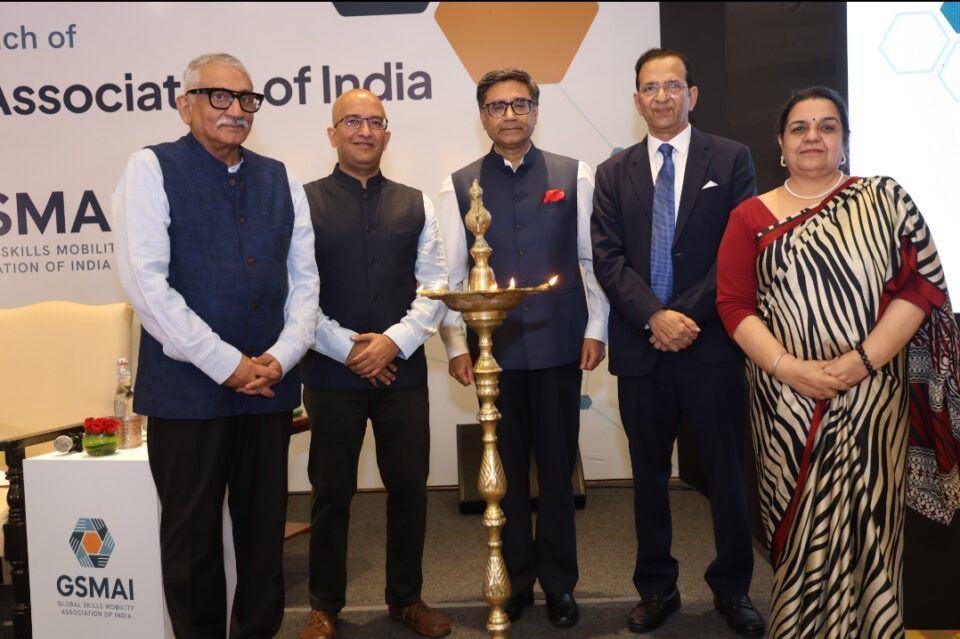
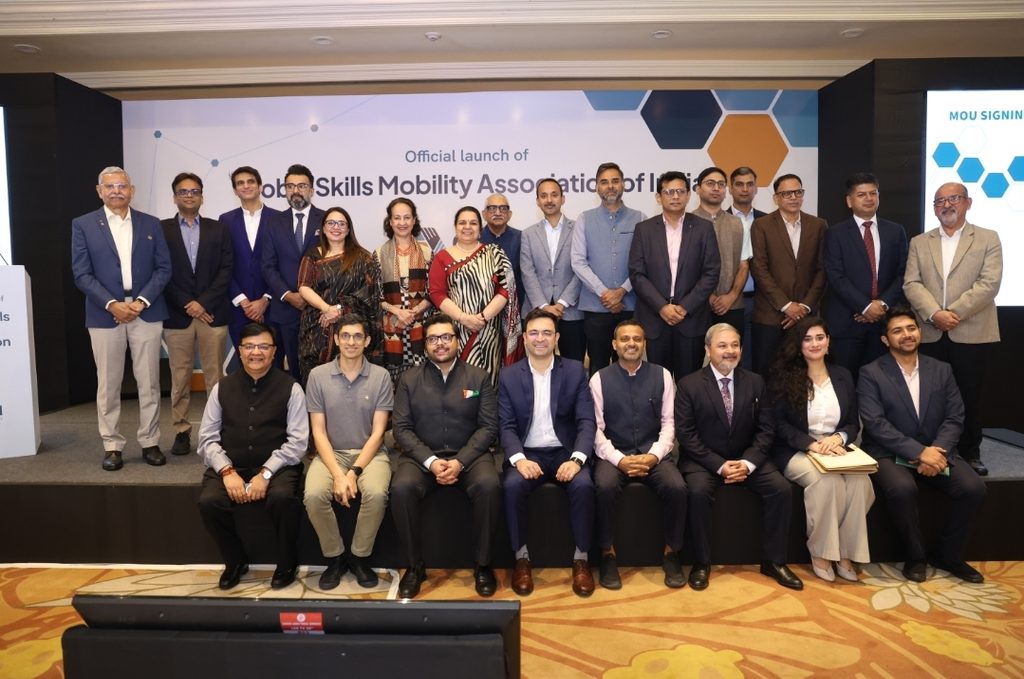
The launch of the Global Skills Mobility Association of India (GSMAI) on 12 October 2026 brings this challenge into sharper focus. The not-for-profit association aims to coordinate organisations across recruitment, skilling, language training and workforce mobility, creating more reliable pathways between Indian talent and overseas employment.
The initiative arrives as destination countries confront workforce shortages and India seeks to translate its demographic advantage into sustainable economic opportunity. Its significance, however, will depend less on the launch itself than on the standards, safeguards and measurable outcomes that follow.
Global Skills Mobility Needs More Than Recruitment Networks
International recruitment often involves multiple organisations performing separate functions. A training provider develops occupational skills. A language institution prepares candidates for communication requirements. A recruiter connects candidates with employers. An employer assesses suitability, while destination-country authorities determine applicable immigration and employment requirements.
When these activities operate independently, gaps can emerge between what workers learn, what employers require and what destination markets recognise.
A candidate may complete training without receiving a qualification that an overseas employer understands. A recruiter may fill a vacancy without adequate preparation for the workplace or destination country’s language requirements. An employer may struggle to verify a candidate’s capabilities before making a hiring decision.
These gaps create costs for all participants. Workers can lose time and money pursuing unsuitable opportunities. Employers face recruitment delays and mismatched skills. Training providers may lack reliable information about international demand, while governments must address worker protection and the integrity of migration pathways.
The International Labour Organization has identified fair recruitment and credible skills recognition as important components of safe and decent international employment. Its work on India also emphasises collaboration between governments, technical institutions and social partners. ILO: Skills recognition and fair recruitment for Indian migrant workers.
The problem, therefore, is not simply insufficient coordination. It is the absence of consistently implemented processes that connect recruitment, training, verification, employment and worker protection.
GSMAI’s Approach to Global Skills Mobility
GSMAI was formally launched at ITC Maurya in New Delhi on 12 October 2026. Established as a not-for-profit Section 8 company limited by guarantee, it brings together organisations involved in recruitment, skilling, language training and workforce mobility.
The launch release names Ambe International, Magic Billion, VFS Global, Learnet Skills, Dynamic Staffing Services, 2COMS, Quess Corp, BorderPlus, Virohan, TeamLease Services, TERN Group, Adecco, Randstad India, UDS, CENTA, LeverageEdu and AnywhereJobs among its 17 founding organisations.
The association’s stated priorities include ethical recruitment, market intelligence, a collective industry voice and stronger connections among recruiters, employers, training providers, governments and international partners.
Its underlying proposition is that workforce mobility should be treated as a connected ecosystem rather than a collection of isolated transactions.
That distinction matters strategically. An industry association can create a forum for common standards, shared evidence and coordinated engagement with governments and destination markets. It can also help identify recurring gaps that individual organisations may struggle to resolve independently.
However, an association’s existence does not automatically establish common operating standards. Its effectiveness will depend on governance, member accountability, transparency, implementation and its ability to demonstrate improvements for workers and employers.
The launch establishes an institutional starting point. It does not yet demonstrate the results.
From Demographic Advantage to Employer-Ready Skills
India’s demographic profile provides an important backdrop. Several economies, including Japan, Germany and Italy, face ageing populations and changing workforce requirements. India has a comparatively young population and a substantial base of working-age talent.
Foreign Secretary Vikram Misri addressed the broader purpose of mobility in his inaugural keynote:
“India’s skill mobility must not be treated as a one-way exit. We want our people to go abroad, experience, earn well, build networks and acquire technologies and return, or contribute to India from afar.”
The statement frames mobility as a potential source of reciprocal value. Workers can gain income, experience, networks and new capabilities. Employers can access skills they need. India can benefit through returning expertise, professional networks, investment and knowledge transfer.
But demographic availability is not equivalent to employability.
International employers need people whose occupational competencies, language abilities, qualifications and professional experience match specific roles. Those requirements differ by destination country, sector and occupation. A generic training programme cannot guarantee suitability across every market.
GSMAI’s opportunity is to help connect international demand signals with training and assessment decisions. Better information about vacancies, employer requirements, recognised credentials and language thresholds could help providers prepare candidates for actual opportunities rather than assumed demand.
Shashank Mani, Member of Parliament and Chairperson of the Parliamentary Standing Committee on Labour, Textiles and Skill Development, highlighted the scale of the perceived mismatch:
“There is almost a need for 65 to 70 million people globally, and India has a surplus of professionals of the 40 million variety. This mismatch has to be answered by institutions which are bringing them together.”
These figures are statements made at the launch, not independently established forecasts in the material supplied. Their interpretation requires clarification of the occupations, geographies, time horizon and definitions of workforce demand and surplus.
The wider point remains: matching available talent with real employer requirements requires evidence, not demographic assumptions alone.
Ethical Recruitment Is the Foundation of Trust
The most important test for GSMAI may be whether ethical recruitment becomes an operational requirement rather than a statement of intent.
Cross-border recruitment can expose workers to misleading job offers, unclear employment terms, excessive recruitment costs, contract substitution and inadequate information about working conditions. Workers may have limited ability to challenge a recruiter or employer once they have invested money and relocated.
These risks directly affect worker experience. A candidate who cannot verify an offer, understand a contract or access a grievance mechanism cannot make a fully informed employment decision.
The International Labour Organization’s fair recruitment guidance calls for transparent terms and conditions, protection against abusive recruitment, accessible information for workers and measures to prevent fraudulent practices. Its principles also state that recruitment fees and related costs should not be borne by workers or jobseekers. ILO: General Principles and Operational Guidelines for Fair Recruitment.
For GSMAI, a credible framework could include transparent fee disclosures, verifiable job offers, understandable employment contracts, documented recruiter responsibilities, complaint handling and clear consequences for non-compliance.
A membership organisation would also need to explain how its standards are monitored, whether members undergo assessment, how complaints are investigated and what happens when a member breaches agreed requirements.
These are proposed evaluation criteria, not claims that GSMAI has already implemented such a system.
Ajay Khanna, GSMAI’s founding chair, described the choice facing the industry:
“We can treat global skills mobility as a series of transactions, or approach it as a national responsibility. We can remain suppliers, or become partners. GSMAI gives us the opportunity to choose credibility over convenience and institution-building over improvisation.”
The statement captures the association’s ambition. Credibility, however, must ultimately be visible in recruitment practices, worker outcomes and accountability.
Digital Credentials Can Connect Skills With Demand
Skills verification is another important part of the ecosystem.
Neeti Sharma, CEO of TeamLease, highlighted the relationship between skills and technology:
“Skill is the currency that we need. The most important thing is ethical circular mobility and for you to have ethical circular mobility with the skills and with the kind of demand that is there in the world, it has to be digitally credentialised.”
Digital credentials could help workers present verified qualifications, training records, language proficiency and relevant assessments to prospective employers. They may also make it easier for employers and training providers to establish whether a candidate meets specified requirements.
Yet digitisation does not automatically create trust. A digital record is only as reliable as the institution that issued it, the assessment behind it and the process used to verify its authenticity.
Credentials also need to be meaningful across jurisdictions. An Indian qualification may require comparison or formal recognition before it satisfies a destination country’s occupational or regulatory requirements. Different professions may impose distinct licensing, examination or registration conditions.
The practical opportunity is to connect credential verification with recognised standards, employer requirements and applicable regulatory processes.
A shared digital approach could reduce repeated verification, improve transparency and make skills more portable. Its value would depend on interoperability, data protection, accessibility and acceptance by the relevant employers and authorities.
The Worker Experience Must Extend Beyond Placement
A successful international placement is not the same as a successful mobility journey.
The worker experience begins with information and recruitment. It continues through training, documentation, travel, onboarding, workplace integration, grievance resolution and, where relevant, return or onward mobility.
Each stage can introduce friction. Candidates may receive incomplete information about housing, salary deductions, working hours or contract conditions. Language barriers may make it difficult to understand instructions or seek help. Employers may underestimate the support required for integration into a new workplace.
For this reason, an ecosystem approach should measure outcomes beyond the number of candidates trained or jobs filled.
Useful indicators could include recruitment-related costs borne by workers, the proportion of candidates receiving verified contracts before departure, qualification recognition rates, placement-to-retention ratios, wage and role alignment, grievance resolution times, workplace safety and worker satisfaction.
Employers should also track time-to-hire, vacancy fulfilment, retention, productivity and the cost of unsuccessful placements.
These measures would help distinguish high-volume recruitment from effective workforce mobility. They would also provide feedback to training providers about the skills and preparation that international employers actually need.
Mayank Kumar, CEO of BorderPlus, expressed this distinction succinctly:
“I think most states are coming to terms that it’s not a volume game, it’s a quality game.”
Quality requires a defined measurement framework. Without transparent indicators and reliable reporting, stakeholders cannot determine whether improved coordination is reducing friction or simply adding another institutional layer.
State Governments and International Partnerships Matter
GSMAI’s launch included engagement with state governments and diplomatic representatives from Germany, Italy, Denmark and Switzerland. The release also identified partnerships with the Governments of Maharashtra and Odisha.
This state-level dimension is important because talent development, education, training capacity and local employment conditions vary across India. States can help connect training initiatives with occupational demand and provide a practical route for implementing mobility programmes.
Destination-country partnerships are equally important. Employers need suitable candidates, while workers need lawful routes, recognised qualifications and clear information about their rights and obligations.
The launch’s diplomatic dialogue covered workforce demand, qualification recognition, language training, ethical recruitment and trusted talent corridors. These are relevant areas for sustained collaboration, but participation in a dialogue should not be interpreted as proof of a formal bilateral agreement or a guaranteed employment pathway.
GSMAI’s contribution will depend on whether such engagement produces specific programmes, documented standards, recognised qualifications, employer commitments and measurable outcomes.
Can GSMAI Become More Than an Industry Forum?
Arnab Bhattacharya, CEO of GATI Foundation, compared the opportunity with India’s information technology industry’s development:
“In 1988, India’s IT industry gave itself a name and a voice. It grew into a $315 billion industry employing 5.95 million people. Global skills mobility is at that same moment today. India has the young workforce and the world has the demand. What has been missing is an industry that can speak with one voice.”
The comparison is an argument for collective representation, not proof that workforce mobility will follow the same growth trajectory as IT services.
Global employment involves additional complexities: immigration rules, occupational licensing, destination-country labour protections, language requirements and the personal consequences of relocating across borders.
GSMAI’s long-term credibility will therefore depend on how it balances industry growth with worker interests. Employers and recruitment organisations have legitimate commercial objectives, but those objectives must remain compatible with fair recruitment and decent work.
The association should be judged on whether it improves coordination without weakening independent oversight, whether workers can access meaningful protection, and whether its standards influence actual recruitment practices.
What Success Should Look Like
GSMAI’s first phase should establish measurable objectives rather than rely on membership growth or broad commitments.
Four outcomes deserve particular attention.
First, trusted recruitment: transparent employment terms, clear responsibilities, verifiable opportunities and effective complaint mechanisms.
Second, skills alignment: stronger connections between employer demand, training, language proficiency, credential verification and qualification recognition.
Third, measurable employment outcomes: successful placements, retention, worker satisfaction and evidence that candidates enter roles suited to their capabilities.
Fourth, accountable collaboration: published standards, clear governance, transparent performance reporting and constructive engagement with governments and international partners.
These outcomes would allow workers, employers and policymakers to assess whether the association is creating value beyond the coordination that already occurs across the sector.
Conclusion: Global Skills Mobility Must Earn Trust
GSMAI’s launch creates an opportunity to strengthen India’s position in international workforce mobility. Its cross-sector membership and engagement with governments and diplomatic missions provide a platform for addressing fragmentation between recruitment, skilling, credential recognition and employer demand.
But the association’s success will not be determined by the number of organisations it brings together. It will depend on whether those organisations adopt better practices, whether workers experience safer and more transparent pathways, and whether employers gain access to appropriately skilled talent.
India’s demographic advantage is a starting point, not a guarantee of global competitiveness. Converting it into lasting value requires credible skills, ethical recruitment, internationally relevant qualifications and protection throughout the employment journey.
The defining question for GSMAI is whether it can turn collaboration into measurable accountability. If it does, the association could help make international mobility more beneficial for workers, employers and countries on both sides of the employment relationship.
