
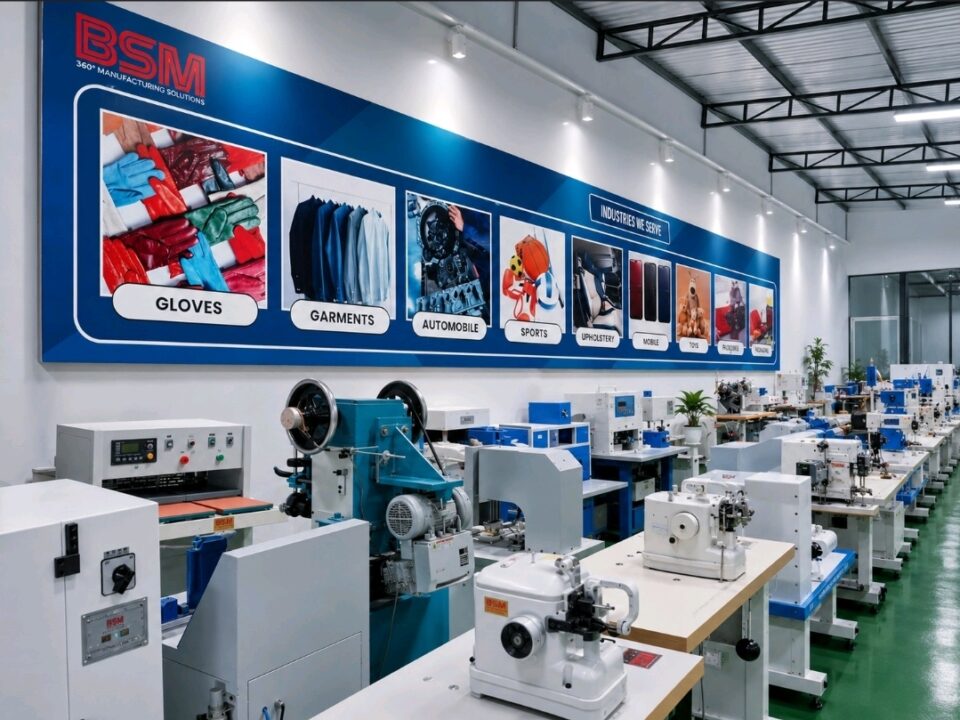
BSM India Experience Store: Can Live Machinery Trials Redefine Industrial CX?
Industrial machinery purchases rarely fail at the point of payment alone. The more consequential mistake can happen earlier, when a manufacturer commits capital to equipment without sufficient evidence that it will perform as required. The BSM India Experience Store addresses this uncertainty by allowing customers to inspect machinery, bring their own samples and conduct live trials before investing. The deeper question is whether experience-led evaluation can become a repeatable competitive advantage in India’s industrial machinery market.
What the BSM India Experience Store Changes About Industrial Buying
BSM India, operating under Build Scale Manufacture Pvt. Ltd., has opened a new Experience Store in Delhi, bringing machinery inventory, demonstrations, sampling and trials together. Founded in 1984 as Bengal Shoe Machinery, the company has expanded beyond footwear machinery into a broader manufacturing solutions business.
The facility addresses a fundamental weakness in catalogue-led procurement. Product photographs, specifications and videos explain what equipment is designed to do. They do not always establish how it will handle a customer’s materials, achieve the required finish or fit a specific production workflow.
BSM says customers can bring their own samples, test machines and evaluate output quality and suitability. Full eight-hour production runs may not be possible, but the company says its trials provide enough information for an initial assessment.
That distinction matters. A buyer can move from interpreting a supplier’s claims to observing equipment against a real application. For manufacturers investing in machinery that affects productivity, quality and delivery commitments, this can make the evaluation process more useful.
The facility’s value, however, depends on the quality of the evidence produced during a trial. A demonstration should help buyers understand operating requirements, limitations and suitability—not merely showcase a machine working under favourable conditions.
Why Industrial Procurement Needs a Better Customer Experience
Industrial procurement is a multi-stakeholder decision. Production teams assess technical suitability, procurement negotiates commercial terms, finance examines capital expenditure, and business owners consider the consequences of failure.
Each stakeholder sees a different risk. A production manager may worry about output consistency. A procurement head may focus on price and delivery. An owner may be concerned about the return on investment and the possibility of idle capacity.
These concerns become more consequential when equipment must work with particular materials, production volumes or existing processes. An unsuitable purchase can lead to additional expenditure, operational disruption, retraining or delayed customer orders.
A physical demonstration can reduce some uncertainty by making the equipment’s behaviour visible. Customer-supplied samples make the assessment more relevant than a generic demonstration because the buyer can observe the output against an actual requirement.
This is where the experience shift occurs: the supplier is no longer responsible only for explaining a product. It also helps the customer gather evidence for a business decision.
That does not eliminate procurement risk. A short trial cannot establish every aspect of long-term reliability, maintenance requirements or performance over an entire production shift. Buyers still need to evaluate warranties, service arrangements, operating costs and expected output under normal factory conditions.
Can the BSM India Experience Store Become a Competitive Advantage?
BSM Director and CEO Ainesh Sikdar described the thinking behind the facility:
“Our vision behind the BSM Experience Store was to transform how industrial machinery is discovered and purchased in India. Instead of relying on catalogues or importing machines only after an order, we bring extensive inventory, live demonstrations, sampling and trials together under one roof. Customers can experience the technology firsthand, select the right solution, and rely on BSM for everything from delivery to installation. Just as one test-drives a car before buying it, we believe every business should be able to experience its machinery before making an investment.”
The comparison with a car test drive captures the central proposition: buyers should have an opportunity to assess a significant purchase before committing.
BSM says its approach differs from the catalogue-led selling model it encounters in the machinery industry. That is a company-reported positioning claim, not an independently established market-wide finding. Machinery suppliers do offer demonstrations in some circumstances, so the relevant competitive question is how consistently a supplier makes equipment available for practical evaluation and connects that evaluation to the rest of the customer journey.
A useful benchmark has three levels. The first is catalogue-led discovery, where customers primarily depend on specifications and supplier explanations. The second offers demonstrations arranged on request. The third combines readily available equipment, application-specific trials and a connected post-sale service process.
BSM’s stated model incorporates elements of the third level. Its differentiation will depend on execution: the range of equipment available, the quality of technical guidance, the relevance of trials and the reliability of what happens after an order.
The strategic opportunity is not simply to attract showroom visitors. It is to turn a better evaluation experience into stronger customer confidence, fewer mismatched purchases and more dependable long-term relationships.
From Machinery Demonstrations to Measurable Business Outcomes
BSM says the Experience Store is intended to reduce evaluation time, procurement errors and the risk of choosing unsuitable equipment. These are credible potential benefits, but the company has not supplied quantified results demonstrating their scale.
The business case can be tested through several measures. Evaluation time can be measured from the first qualified enquiry to a purchase decision. Conversion rates can reveal whether trials help customers progress from interest to purchase. The frequency of post-installation suitability issues can help indicate whether the selection process is improving.
Cost should be considered across the entire purchasing journey. A more structured trial may require staff time, machine preparation and showroom operating expenses. Those costs could be justified if the process reduces avoidable sales cycles, unsuitable purchases or downstream service demands. The balance needs measurement rather than assumption.
For CX leaders, this is a broader lesson in experience design: removing friction for the customer may require additional work behind the scenes. The relevant question is whether the overall journey becomes more effective for both parties.
BSM India has an opportunity to build a stronger evidence base by comparing customers who complete application-specific trials with comparable purchases made through other evaluation routes. Such analysis could help establish whether the facility changes conversion, decision time or post-sale outcomes.
ERP Tracking Connects the Experience to Service Delivery
The showroom is only one part of the purchasing journey. Customers also need clear communication, timely installation, access to technical assistance and dependable spare-parts support.
BSM says its ERP system tracks customer enquiries, conversions, installation timelines and post-purchase service. This gives the company an operational foundation for monitoring activities that extend beyond the initial sale.
The technology matters because customer experience is often weakened by disconnected processes. A sales team may promise a delivery date without sufficient visibility into inventory. An installation team may lack context about the original application. A service team may struggle to resolve a problem without the relevant purchase and installation history.
ERP-based tracking can help address these problems when the underlying data is accurate and teams use it consistently. The available information does not establish how extensively BSM integrates these activities or whether it measures service-level performance through automated dashboards.
A more mature model would connect the original customer requirement and trial results with the machine supplied, installation milestones and subsequent service requests. That would allow teams to investigate whether an initial mismatch contributed to a later complaint and identify opportunities to improve product selection.
The objective should be operational continuity: customers should not have to reconstruct their requirements at every stage of the relationship.
Manoj Sikdar on Building Beyond a Four-Decade Legacy
For Manoj Sikdar, Director at BSM India, the new facility represents an evolution of the company’s relationship with manufacturers.
“BSM’s journey has always been about understanding the needs of manufacturers and evolving alongside the industry. Having been part of the second generation of this business, I believe that building on our legacy means more than preserving what we have created; it means finding new ways to serve our customers better. The Experience Store is a step in that direction. We want manufacturers to have greater access to technology, the opportunity to evaluate machinery before investing, and the confidence that they have a dependable partner throughout their manufacturing journey. As we move forward, our focus remains on strengthening customer relationships, embracing innovation and helping Indian businesses build more efficient and capable production systems.”
The company’s evolution from Bengal Shoe Machinery into a broader industrial manufacturing solutions business provides the context for this initiative. Its stated portfolio spans cutting, stitching, finishing, embossing, adhesive application, packaging, testing and other manufacturing processes.
BSM also describes services that extend into production-line planning, sourcing, installation, technical assistance and factory optimisation. These capabilities are relevant because machinery purchases rarely operate in isolation. Equipment must fit a production process, workforce and maintenance model.
The Experience Store could help connect those requirements earlier in the journey. But the long-term test is whether the relationship delivers consistent value after the demonstration, when customers begin operating the equipment in their own factories.
The CX Maturity Gap: From Trial Access to Proven Outcomes
The Experience Store represents an experience-led approach to industrial machinery evaluation. It combines physical access, live demonstrations and customer-specific trials with an ERP-based tracking capability.
That places the model beyond a purely catalogue-led interaction. It does not, by itself, establish that the entire customer journey has reached a mature, fully measured state.
The next step is to define a small set of outcomes and track them consistently. Relevant indicators include enquiry-to-decision time, trial-to-purchase conversion, installation completed within the promised timeframe, first-time suitability, service response time and customer satisfaction.
These measures should be interpreted together. A higher conversion rate is not necessarily a positive outcome if customers later report unsuitable purchases. Faster installation is less meaningful if commissioning quality deteriorates. Strong satisfaction claims become more useful when supported by a documented methodology, response rates and trends over time.
BSM says customer satisfaction is strong and attributes this to prompt service and spare-parts availability. Publishing appropriately aggregated evidence would help customers and industry observers assess the claim.
For CX leaders, the lesson is straightforward: a better-designed touchpoint is a starting point. Experience maturity emerges when the organisation can demonstrate that improvements persist across the full relationship.
What Manufacturers Should Evaluate Before Investing
A practical machinery trial should be treated as a structured decision process rather than an informal demonstration.
Before visiting the facility, buyers should define the application, materials, required output quality, production volume and constraints of the existing factory. During the trial, they should record operating settings, observed output, changeover requirements and any limitations.
They should also clarify which aspects cannot be evaluated in a short demonstration. Long-duration reliability, maintenance intervals, actual factory throughput and performance under sustained production conditions may require additional testing or contractual assurances.
After the trial, the evaluation should extend to the full cost of ownership: equipment price, installation, training, consumables, spare parts, maintenance, energy use where relevant and the operational consequences of downtime.
This approach benefits the supplier as well as the buyer. Better-defined requirements can improve product matching, reduce misunderstandings and create a clearer basis for installation and support.
The Experience Store can make these conversations easier, but its greatest value will emerge when practical testing becomes part of a disciplined procurement process.
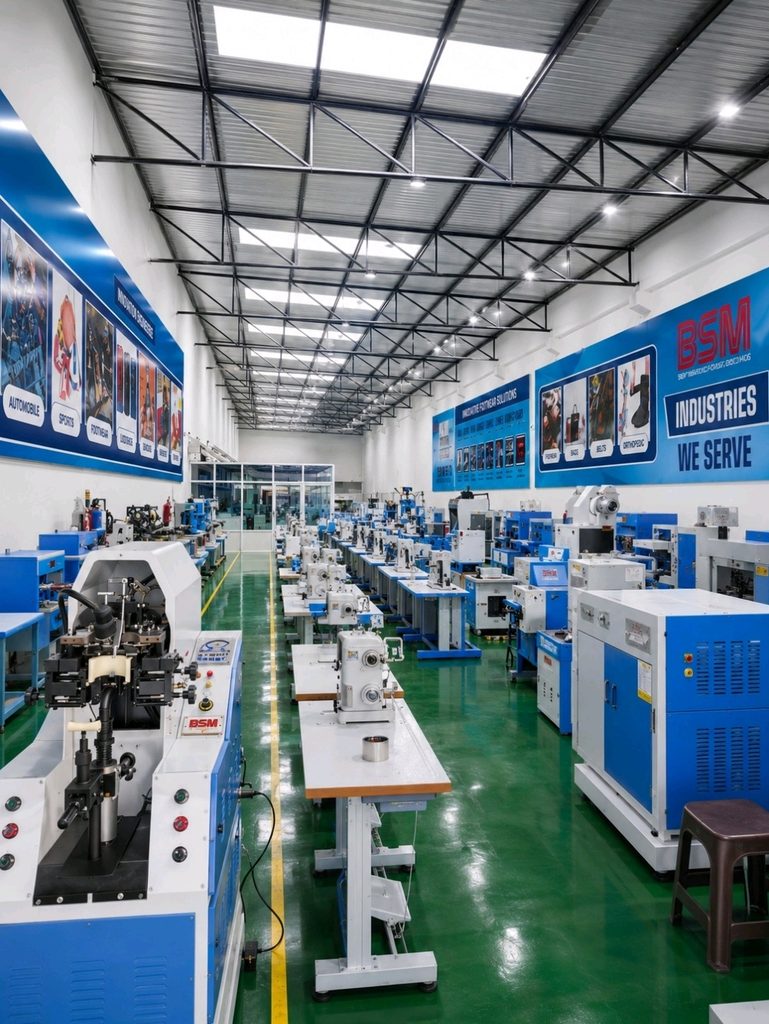
The Future of Experience-Led Industrial Buying
BSM India‘s new facility reflects a useful direction for industrial customer experience: making product capabilities easier to inspect, test and understand before a major purchase.
The approach is particularly relevant where equipment suitability depends on materials, production requirements and the interaction between machinery and existing processes. Live trials can provide evidence that specifications alone cannot fully convey.
Yet a showroom is not the final destination. The next competitive frontier is the connection between evaluation, inventory, installation, technical support and measurable customer outcomes. BSM’s ERP tracking provides a reported starting point, while more transparent performance measures would strengthen the case for the model.
For industrial suppliers, the broader implication is that customer experience is not limited to digital interfaces or service conversations. It also includes the conditions under which customers assess risk, make decisions and begin using a product.
The BSM India Experience Store could become a meaningful differentiator if the company consistently translates hands-on evaluation into better-informed purchases and dependable post-sale support. Its longer-term significance will be determined not by the facility alone, but by evidence that the experience improves the customer’s manufacturing journey.
