

Enterprise AI conversations are rapidly shifting from experimentation toward operational scale. Over the past two years, organizations across banking, healthcare, retail, and enterprise services have evolved. They have moved beyond asking whether artificial intelligence matters to confronting a more difficult challenge. It is, how to deploy AI systems responsibly, efficiently, and at enterprise scale without damaging customer trust or operational consistency.
At the center of this shift is the emergence of agentic AI. These are systems capable of autonomous reasoning, orchestration, and execution across workflows. These are different from earlier automation layers. These systems are beginning to influence customer journeys, service operations, decision-making frameworks, and enterprise delivery models simultaneously. That evolution is creating both opportunity and risk for organizations attempting to modernize customer experience infrastructure.
For CX leaders, the challenge is no longer simply adopting AI. The real question is whether enterprises can build AI-enabled experiences that remain transparent, governable, scalable, and genuinely customer-centric. As organizations race to operationalize AI investments, execution quality, governance maturity, and delivery architecture are becoming critical differentiators.
Bhavesh Mehta, Chief Delivery Officer at Apexon
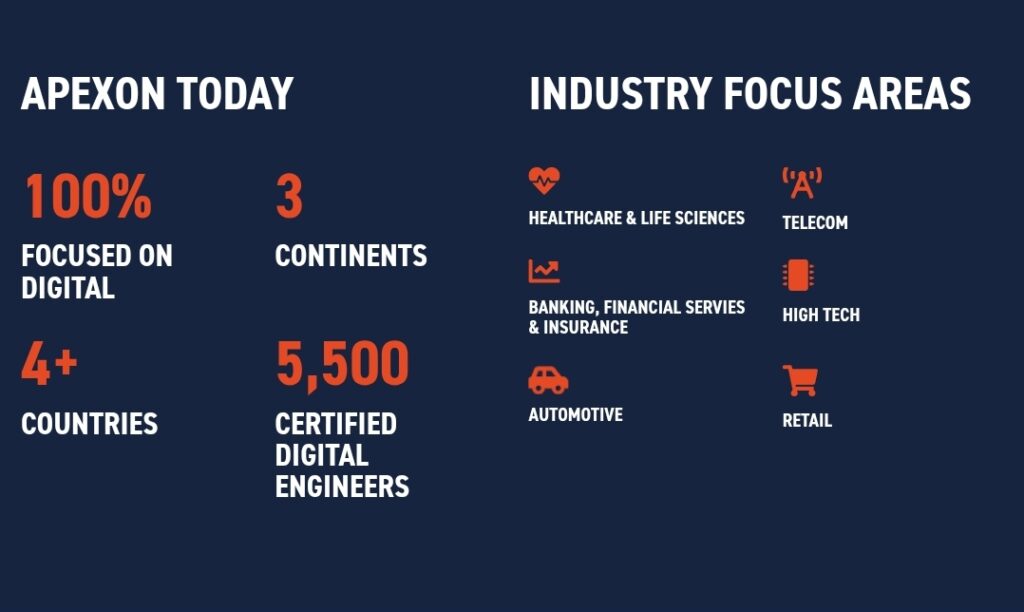
In this CXQuest interview, we speak with Bhavesh Mehta, Chief Delivery Officer at Apexon. Apexon is a digital-first technology services firm focused on digital engineering, data modernization, analytics, and digital experience transformation.
With more than 25 years of industry experience, Bhavesh leads Apexon’s global delivery operations. Including its data services, quality engineering initiatives, and e-commerce service lines. He also oversees delivery excellence across the company’s distributed operational ecosystem. With India serving as a major strategic hub for engineering and AI-led transformation initiatives.
The discussion explores major touchpoints. Like, how enterprise AI maturity is evolving. What organizations misunderstand about agentic AI. How autonomous systems may reshape customer experience operations. And, why governance and delivery strategy will play a defining role in the next phase of enterprise transformation.
Biggest Gaps Between AI Ambition and Operational Execution
Q1. Enterprise AI conversations have evolved rapidly over the past two years. What are the biggest gaps you currently see between AI ambition and operational execution?
BM: Artificial Intelligence is driving a fundamental shift in how business and IT teams have operated for decades. Enterprises are transitioning from traditional engineering operating models to a model where there will be AI assisted workflows, human-AI collaboration and autonomous systems. AI-native SDLC will look very different as the cost of iteration nears zero, whereas existing processes are built for the opposite scenario.
Each organization is on its own journey to realize their full AI potential. There are few challenges that stand out. First, there is a gap between the stakeholders’ view, from boardroom to the team on the ground in terms of the ‘art of the possible’ and the speed at which change is likely to impact everyday operations.
Another challenge is related to the underlying data’s readiness, privacy and security. There are still fragmented, poorly governed, or siloed data environments that limit the effectiveness of AI models. Without structured, contextual, and semantically enriched data, even the most advanced AI initiatives struggle to deliver meaningful outcomes.
And, then there is rapid evolution of the market products and many to choose from. To scale at the enterprise level, robust framework is essential covering ROI, guardrails and governance among other things.
The scale and speed of this change and therefore the approach to change management is of profound significance. It requires open minds to reimagine what has been done for decades. The challenge is not only to reskill large number of people from technology perspective, but from mindset as well.
Scaling AI Across Customer-facing Environments
Q2. Many organizations are now attempting to scale AI across customer-facing environments. What typically breaks first during that transition?
BM: Making changes to the customer-facing environments involves high stakes and organizations must get it right. With the use of AI, there must be flexibility to adapt to probabilistic results rather than deterministic results.
Organizations have had success using AI in controlled environments, but making these efforts scalable requires greater coordination across multiple domains, including data, engineering, governance, infrastructure, and the organization’s business process.
One of the weak links is arguably the human. It is a massive change for people who are still learning to collaborate with AI, and at scale, the human variables become very difficult to control. In fact, human-in-the-loop verification could prove to be the bottleneck.
The guard rails, ethical and responsible AI usage need to be asserted through AI model assurance approach to ensure that such systems are ready for prime time.
Agentic AI vs Earlier Automation and Workflow Technologies
Q3. From a customer experience transformation perspective, how is agentic AI fundamentally different from earlier automation and workflow technologies?
BM: With the advent of Agentic AI, there is a fundamental shift from automating tasks and processes to enabling intelligent decision-making, orchestration, and personalized customer engagement.
Earlier automation technologies, such as RPA, workflow engines, and rule-based bots, executed plans designed by humans in advance. Intelligence lived in the design phase, not at runtime, if something unexpected happened, the whole operation was halted. Agentic AI puts intelligence into execution; it can figure out new circumstances, connect services, and work towards the ultimate objective instead of performing a single step. As for customer experience, the result is a machine which not only helps a client navigate through a company but solves their issue in full, as an experienced agent would do.
Q4. Where are enterprises currently seeing the strongest measurable impact from AI in customer experience operations?
BM: Enterprises are seeing the strongest measurable impact where AI is embedded into high-frequency, well-defined operational workflows with clear before-and-after baselines, rather than from broad transformation initiatives.
The most evident examples of tangible benefits from using AI include its deployment for contact centre deflection to handle Level 1 conversations that decrease cost-per-contact, as well as its real-time agent assist that decreases Average Handle Time (AHT) and boosts First-Contact Resolution (FCR). High-volume activities after a conversation such as summarization and updating the customer relations management (CRM) system provide quick returns on investment, whereas intent resolution allows increasing containment rates by means of using chatbots compared to more primitive bot solutions.
Customer Trust and Governance Risks
Q5. What customer trust and governance risks emerge when organizations begin deploying increasingly autonomous AI systems?
BM: As organizations deploy increasingly autonomous AI systems, the primary customer trust and governance challenges center on transparency, accountability, privacy, bias, and control. Apexon’s AI model assurance offering helps clients build confidence in these key parameters before production release. The client expects clarity regarding the process by which AI will make decisions, especially in domains where this could have a significant effect, such as in financial services and healthcare. Organizations need to mitigate risks involving the possibility of hallucination, unpredictability, cybersecurity concerns, regulatory compliance issues, and lack of human supervision in autonomous systems.
This raises the critical question of achieving the appropriate balance between autonomy and accountability. In other words, organizations will need to design systems for governing AI agents as they take actions without human intervention.
Q6. Apexon has spoken about “scaling AI responsibly.” Operationally, what does responsible AI scaling actually look like inside large enterprises?
BM: For Apexon, responsible AI scaling means enabling autonomy with control points. As enterprises move from automation-driven processes to autonomy-driven operations, governance can’t be an afterthought. It has to be embedded into the AI operating model from day one. Functionally speaking, it involves the full nine yards – from use case identification to prioritization, data and access management, human-in-the-loop approvals, validation methods, audit trails, explainability, and measurement & monitoring.
Scaling also requires adopting the federated approach in which an enterprise’s AI CoE sets standards and guidelines on what good looks like, while business units deliver use cases. It makes it possible for enterprises to go fast while staying in control at the same time. It is not only about deploying AI but ensuring the organization’s ability to build autonomy with AI to enhance efficiency and effectiveness.
Agentic AI with Built-in Governance
Q7. What specific enterprise challenge was AgentRise originally designed to solve?
BM: AgentRise was designed to solve a pragmatic enterprise challenge of moving from fragmented AI pilots to scalable production-ready Agentic AI capabilities. AgentRise provides a unified, enterprise-ready platform for deploying Agentic AI across functions with built-in governance, security, and reusable frameworks.
It helps shift from an automation-driven enterprise to an autonomy-driven enterprise. It brings together use case prioritization, data readiness, reusable agent assets, workflow orchestration, validation, governance, security and ROI tracking.
Real-world Use Cases of AgentRise
Q8. Without naming clients, can you share a real-world use case where AgentRise materially improved operational efficiency or customer-facing outcomes?
BM: Apexon partnered with a global healthcare technology organization to transform clinical operations using Agentic AI built on the AgentRise platform. The solution involved designing and deploying multiple purpose-built autonomous agents for key workflows, including pathology report redaction, user support within an LTMS portal, and clinical trial protocol document processing. These agents were developed to integrate seamlessly into existing systems while maintaining regulatory compliance and enabling continuous adaptability.
The implementation delivered strong operational improvements across the clinical value chain. The organization achieved a 35% reduction in second-opinion review timelines, a 30% drop in support queries through conversational assistance, and a 40% acceleration in clinical trial initiation.
For a financial services client, AgentRise was leveraged for high-volume, document-intensive market intelligence workflows. We created agent-assisted document classification, adaptive parsing, extraction, quality validation and workflow automation across operational and analyst-facing processes. The workflow was redesigned so that agents could handle repetitive processing, manage exceptions, and improve the speed and consistency of decision cycles. The impact was a shift from manual, queue-based processing to a governed, exception-led operating model.
Disconnected or Inconsistent Customer Experiences
Q9. How do you prevent fragmented AI implementations from creating disconnected or inconsistent customer experiences across enterprise touchpoints?
BM: Having a centralized AI platform strategy would help. When individual business units deploy siloed bots and AI tools independently, customer experiences become inconsistent across channels and touchpoints.
The organization should have an integrated model of operations for AI that can be developed using common customer context, governance, and orchestration. First, it will require having common customer 360 and enterprise memory layers, which ensure that all the AI interactions access the customer’s contextual data, customer’s intention, and interactions through different media like voice, chat, emails, and messaging.
Secondly, central governance and guardrails should be in place to include common system prompts, brand voice guidelines, security requirements, compliances, and reusable enterprise AI services. Many enterprises are also adopting hub-and-spoke AI architectures, where a centralized routing and orchestration layer standardizes intent resolution and delegates tasks to specialized downstream agents consistently across customer touchpoints.
Future-ready Delivery Models
Q10. India has become a major AI and digital engineering hub for global enterprises. How do you see India’s role evolving in future-ready delivery models?
BM: India has played a key role over the past few decades in being a reliable partner for IT outsourcing services. And, it has evolved from providing labour and time zone advantage to adding value.
AI is creating a level playing field in many ways; however, India has the scale, strong infrastructure and ecosystem in place to stay relevant, but it will require a lot of unlearning and relearning for the Indian IT industry. India does have a natural advantage due to its demographics; in particular, a young workforce will be easier to mold for the skills required in future.
Global enterprises will expect deeper domain expertise and outcome-oriented relationship going forward. The talent needs to learn how to work alongside AI agents and bring critical thinking to orchestrate AI towards achieving desired outcomes.
At Apexon, we believe that future talent strategy needs to focus on creating Forward Deployed Engineers (FDEs) and embrace Harness Engineering to deliver at an unprecedented speed.
Changing Enterprise Expectations
Q11. How are enterprise expectations changing when selecting digital transformation and AI delivery partners?
BM: Clients are looking for specialists, who bring curiosity at work, a culture of innovation and are willing to push the boundaries. Curious minds who are willing to question every assumption on which the industry has been built over the decades –from the SDLC approach to the role of a delivery partner.
Data being the currency, firms that have deep data and AI expertise are well suited to be the partner for the journey. Talent should be consultative, domain-aware, and technology-savvy to partner in building the product.
Partner firms need expertise in their respective areas, must take ownership of delivering results, and should be willing to sign up for risk-reward-based models.
Q12. Looking ahead three to five years, what will distinguish organizations that successfully operationalize AI from those that simply adopt it superficially?
BM: The organizations that successfully operationalize AI will have AI embedded into its business processes, decision-making, and operating models. Such companies will treat AI as a core enterprise capability built on strong data foundations, unified governance, scalable platforms, and measurable business outcomes. The realized benefits will be exponential, resulting in sustained competitive advantage.
For those who adopt it superficially, benefits could be incremental, but more importantly, may face existential risks in due course.
Enterprise AI Landscape
The enterprise AI landscape is entering a far more consequential phase than the experimentation cycle that dominated earlier conversations. As organizations push toward operational AI deployment, the focus is increasingly shifting toward governance, orchestration, customer trust, delivery maturity, and measurable business outcomes.
For customer experience leaders, agentic AI customer experience transformation represents both a strategic opportunity and a structural challenge. Autonomous systems may dramatically improve efficiency and responsiveness, but they also introduce new expectations around transparency, accountability, consistency, and human oversight.
As enterprises continue building AI-native operational models, the organizations that succeed are likely to be those capable of balancing innovation velocity with governance discipline — while ensuring that customer experience remains central to every stage of transformation.
