
Starbucks is trying to solve a customer experience problem that many mature brands eventually encounter: the experience that built the brand becomes diluted by growth, operational complexity, digital convenience and changing customer expectations.
Its answer, under the “Back to Starbucks” strategy, is not simply a new advertising campaign or a refreshed loyalty program. Starbucks is attempting to rebuild the entire experience around coffee quality, human connection, service consistency and the coffeehouse as a place people want to visit.
From a marketer’s perspective, that is the most interesting part of the turnaround.
The lesson is not that every brand should become more like Starbucks. It is that a strong customer experience strategy begins by identifying what customers originally valued about the brand and then rebuilding the operating system required to deliver that value consistently.
Starbucks itself says the strategy is producing results. Its fiscal Q3 2026 results showed global comparable-store sales growth of 7.9%, with comparable transactions up 4.2%. North America comparable-store sales rose 8.1%, while U.S. comparable transactions increased 4.2%.
But those numbers should not be interpreted as proof that the turnaround is complete. In September 2026, Starbucks announced plans to close approximately 250 North American coffeehouses that it said could not consistently deliver the desired experience or acceptable financial performance.
That makes Starbucks an especially useful CX case study: the company is showing what happens when customer experience becomes an operating strategy rather than a communications exercise.
The Starbucks CX Problem Was Bigger Than Customer Service
Starbucks entered the current turnaround after years of increasing complexity.
Mobile ordering, drive-thru, delivery, extensive customization, menu proliferation and high transaction volumes created convenience, but they also changed the physical coffeehouse experience.
The risk was strategic. Starbucks had historically differentiated itself through more than beverages. Its proposition included the environment, the barista interaction, personalization and the idea of the coffeehouse as a “third place.”
A purely transactional operating model could therefore improve convenience while weakening the very experience that justified the brand.
That tension became particularly visible in Starbucks’ mobile-order and pickup-only formats. In 2025, the company said some such locations had become overly transactional and lacked the warmth and human connection associated with the Starbucks brand.
For marketers, this is an important distinction.
Customer convenience and customer experience are not automatically the same thing.
A faster transaction can be a better experience when speed is the customer’s objective. But when the brand’s value proposition includes hospitality, familiarity and social connection, excessive optimization for transaction speed can undermine differentiation.
Starbucks is effectively trying to answer that problem by combining connection with convenience, rather than choosing one over the other.
Back to Starbucks Is Really a Brand-Experience Reset
The phrase “Back to Starbucks” could easily have become nostalgic marketing.
Instead, Starbucks has attempted to translate it into operational changes.
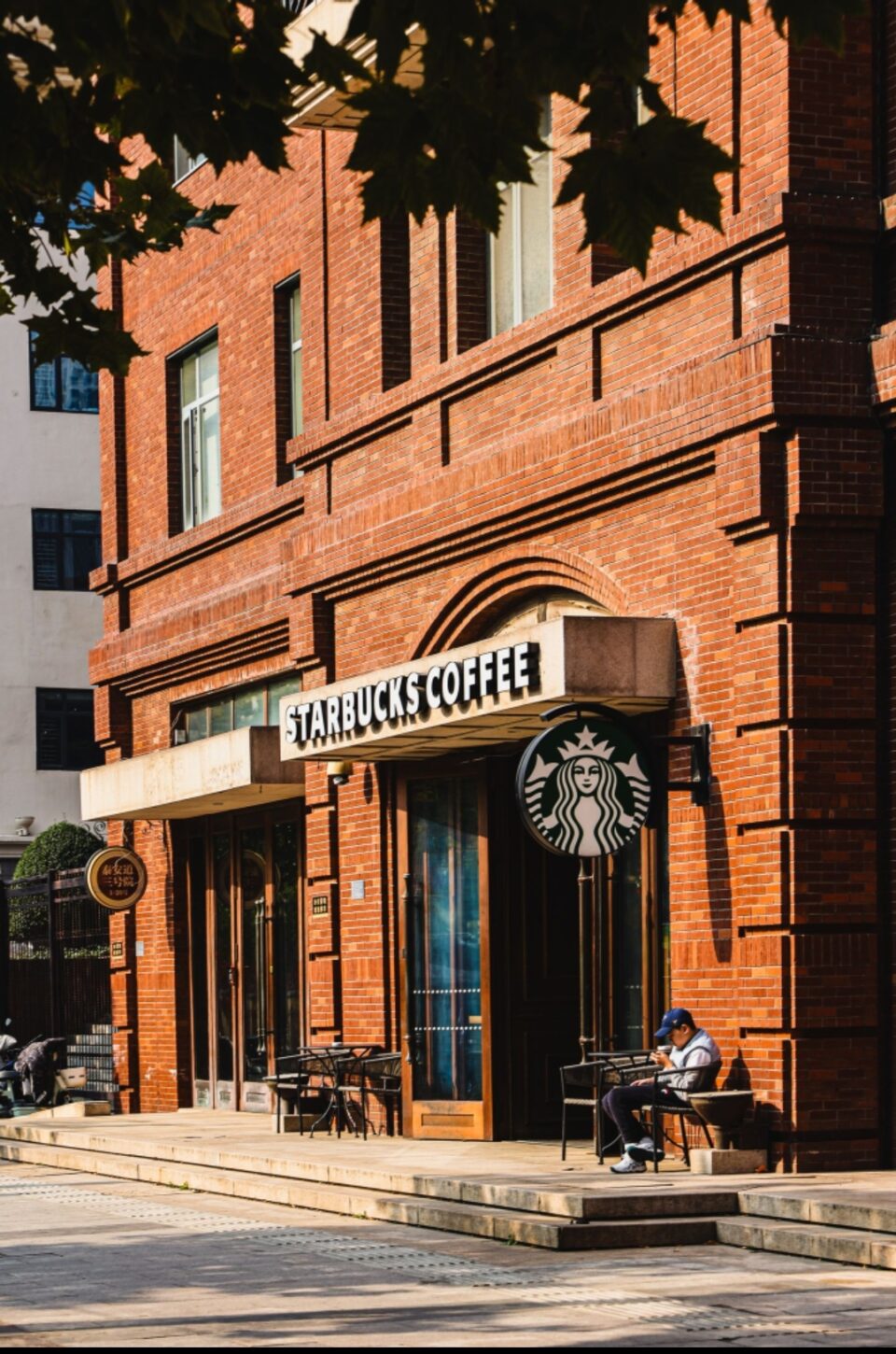
The company has restored or expanded several physical elements associated with its traditional coffeehouse experience, including ceramic cups, condiment bars, seating and access to power outlets. It is also redesigning stores with softer seating, artwork, greenery, textures and local design elements.
By September 2026, Starbucks said more than 1,000 U.S. and Canadian coffeehouses had been uplifted since late 2025, with an intention to reach at least 1,500 by the end of fiscal 2026.
The interesting marketing lesson is that brand positioning becomes credible only when customers can experience it.
If Starbucks tells customers that it is about connection but gives them an uncomfortable seat, a congested pickup area and an impersonal interaction, advertising cannot repair the contradiction.
Conversely, a redesigned environment, a more available barista and a warmer interaction reinforce the same message without requiring another advertisement.
This is experiential branding in its most practical form.
Green Apron Service Connects Employee Experience With Customer Experience
Perhaps the most consequential part of the strategy is Green Apron Service.
Starbucks has invested in staffing, scheduling, technology, service standards and store-level routines to give baristas more capacity to focus on both beverage craft and customer connection.
The company says the initiative includes larger rosters, additional partner hours, Smart Queue technology, clearer service expectations and five key customer-service moments.
Starbucks has committed approximately $500 million toward additional partner hours associated with the program. The company also reports that hourly partner turnover is below the industry average, that 95% of partners say they are receiving the hours and schedules they want, and that fully filled shifts are at record levels. These figures are Starbucks-reported and should therefore be treated as company claims rather than independently verified industry benchmarks.
The CX principle is straightforward:
Employees are not merely delivery mechanisms for customer experience. They are part of the experience itself.
A marketer can design the perfect customer journey on paper. But if employees lack time, tools, authority or staffing, the journey breaks at the point of human interaction.
This is why EX and CX increasingly need to be managed together.
Starbucks Is Using Technology to Create More Human Interactions
At first glance, Starbucks’ emphasis on human connection might appear to conflict with its investment in technology.
It does not.
The more interesting proposition is that Starbucks is using technology to remove operational friction so employees can spend more time on customers.
Its Smart Queue technology is designed to sequence café, mobile, drive-thru and delivery orders more effectively. Starbucks has also discussed the use of AI in areas such as scheduling and supply-chain support.
The company says its coffeehouses are meeting a target of handing off café and drive-thru orders in under four minutes, while mobile orders are increasingly being prepared on time.
That illustrates an important principle for enterprise CX leaders:
The best CX technology may be invisible to the customer.
Customers do not necessarily care that an algorithm optimized the queue. They care that their order arrives when promised.
Similarly, employees do not necessarily need another customer-facing application. They need systems that reduce cognitive and operational load.
Technology therefore creates CX value when it improves an outcome that customers or employees actually experience.
The Physical Store Has Become a Marketing Channel
Starbucks’ store redesigns reveal another important shift.
The physical location is no longer simply a distribution point for coffee. It is part of the brand’s media and experience ecosystem.
A customer entering an uplifted Starbucks encounters visual identity, spatial design, seating, music, lighting, local artwork, product presentation, barista interaction and the beverage itself.
Every element communicates the brand.
Starbucks is increasingly tailoring redesigned locations to their neighborhoods rather than applying a completely uniform template. Its recent examples include locally inspired artwork and design elements in cities including Chicago, Washington, D.C. and Mexico City.
For marketers, the implication is significant:
Owned physical environments can function like high-frequency brand media.
Unlike an advertisement that a customer sees for seconds, a physical environment can influence behavior for minutes or hours.
It can encourage customers to stay, meet, work, return and associate the brand with particular emotional states.
Loyalty Is Moving From Transactions Toward Relationship Design
Starbucks has also redesigned Starbucks Rewards.
The March 2026 program introduced Green, Gold and Reserve membership levels, with progressively differentiated benefits, personalization and experiences. Starbucks said its U.S. Rewards program had 35.5 million active members and represented nearly 60% of U.S. company-operated revenue in fiscal 2025.
The strategic significance goes beyond points.
A mature loyalty program can become a mechanism for understanding customer behavior, encouraging frequency, personalizing offers and creating differentiated experiences.
Starbucks is attempting to make progression itself part of the relationship.
Customers can see their status, earn Stars through activity and unlock increasingly valuable benefits.
For marketers, however, there is a warning here.
Personalization should not become algorithmic clutter.
The objective should not be to send customers more offers. It should be to make relevant interactions easier, more valuable and more distinctive.
Loyalty becomes strategically powerful when it connects customer data to an improved experience—not merely when it increases promotional frequency.
Starbucks Is Also Rebuilding the Product Experience
CX cannot compensate indefinitely for a weak core product.
Starbucks’ turnaround therefore also includes coffee quality, beverage innovation and menu development.
The company has continued investing in equipment and beverage preparation while introducing products designed around emerging customer preferences and new consumption occasions. Its Clover Vertica brewer, for example, is designed to produce freshly brewed coffee on demand in 30 seconds or less.
Starbucks has also emphasized customization, protein-forward offerings, Refreshers and new beverage and food platforms.
The lesson is fundamental:
CX is the total experience of the product, service and context—not the service layer alone.
For a restaurant, that means food quality matters.
For a bank, the product matters.
For SaaS, product reliability matters.
For an airline, the flight itself matters.
Customer experience should not become a substitute for product excellence.
Marketing Has Shifted From Discounting Toward Brand Demand
Another notable component of Starbucks’ strategy is its stated intention to reduce dependence on discount-driven offers and invest more in marketing that reminds customers why they choose Starbucks.
This is an important distinction.
Discounts can create transactions without necessarily rebuilding preference.
If a brand’s problem is declining relevance or deteriorating experience, promotional activity can mask rather than solve the underlying issue.
Starbucks is attempting to make the experience itself part of the reason to return.
That is potentially more durable because the marketing promise and operational reality reinforce each other.
The marketer’s role therefore moves from “How do we persuade customers to visit?” toward “What should happen when they visit that makes them want to return?”
The Numbers Suggest Progress—but Not a Finished Turnaround
Starbucks’ current financial performance provides evidence that the strategy is gaining traction.
In fiscal Q3 2026, global comparable-store sales increased 7.9%, with transactions up 4.2%. North America comparable-store sales increased 8.1%. The company also reported a second consecutive quarter of operating-margin expansion and raised its fiscal 2026 guidance at the time.
Starbucks subsequently reported that customer visits were up 4.5% year over year in its August 2026 account of the CX turnaround.
But there is an important analytical caveat.
Correlation is not causation.
The improvement in comparable sales cannot automatically be attributed solely to CX investments. Pricing, product mix, menu innovation, traffic, marketing, macroeconomic conditions and other operational changes can all influence results.
There is also evidence that Starbucks is still rationalizing its physical footprint.
In September 2026, the company announced approximately 250 North American closures, representing about 1% of its North American coffeehouses. Starbucks said the affected locations were stores where it did not see a path to consistently delivering the desired customer and partner experience or acceptable financial performance.
That is a useful reminder for marketers: better CX does not mean keeping every touchpoint.
Sometimes improving the customer experience requires removing locations, products, processes or channels that no longer work.
The Partner Question Cannot Be Separated From CX
There is another dimension marketers should watch closely: labor relations.
Starbucks emphasizes partner investment as central to the turnaround. At the same time, labor relations remain contested.
On September 30, 2026, Reuters reported that shareholder groups had filed a proposal calling for Starbucks to reinstate a board committee focused on labor relations, citing the absence of a labor agreement with the U.S. union representing Starbucks baristas and broader concerns about labor-related risk. Starbucks said its board has the necessary skills and experience to oversee its strategy and that responsibilities had been redistributed to strengthen and integrate oversight.
For CX leaders, the underlying lesson is larger than the Starbucks labor dispute.
A brand cannot permanently separate employee trust from customer trust.
Employees are brand touchpoints.
If employee experience improves, customer experience can benefit.
If employee relations deteriorate, the resulting friction can eventually affect service, reputation, recruitment, retention and customer perception.
That makes EX a strategic component of CX governance—not merely an HR metric.
What Marketers Should Learn From Starbucks
The Starbucks case offers several transferable lessons.
1. Fix the experience before amplifying the message
Marketing cannot sustainably compensate for a broken customer journey.
First identify the moments where customers experience friction. Then improve them.
2. Define what the brand should feel like
“Customer-centric” is too generic.
Starbucks has articulated specific behaviors around welcoming customers, kindness, connection and making moments right.
Brands need similarly observable definitions.
3. Connect EX and CX
Ask whether employees have the staffing, technology, training and authority required to deliver the promised experience.
If not, the CX strategy is incomplete.
4. Use technology to remove friction
Technology should simplify the journey rather than make the customer navigate another layer of complexity.
Starbucks’ Smart Queue is an example of technology operating largely behind the scenes.
5. Treat physical and digital channels as one journey
A customer can order through an app, wait in a store, interact with a barista and consume the product in a physical environment.
The customer does not experience those as separate departments.
Neither should the enterprise.
6. Make loyalty experiential
Points and discounts are easy to copy.
Recognition, personalization, access and distinctive experiences are harder to commoditize.
7. Measure both speed and warmth
A faster transaction is not necessarily a better experience.
Starbucks’ strategy is notable because it is attempting to combine service speed with human connection.
CX measurement should therefore include both efficiency metrics and relational metrics.
8. Scale what works—but keep testing
Starbucks moved from pilots to a much broader rollout of Green Apron Service after testing operational changes in hundreds of locations.
That pilot-to-scale discipline is transferable to almost any enterprise.
9. Make the brand promise operational
The strongest brand promises are embedded in processes, employee behaviors, technology, physical environments and measurement systems.
Advertising should be the expression of that system—not a substitute for it.
10. Know when to stop doing something
The 2026 store closures show another side of transformation.
CX improvement sometimes means eliminating experiences that are structurally unable to meet the brand promise.
The Bigger CX Lesson: Experience Is Becoming the Strategy
Starbucks’ most interesting move is not the return of ceramic cups, redesigned stores or even the Green Apron Service model individually.
It is the attempt to connect all of them.
The coffee.
The barista.
The store.
The app.
The queue.
The loyalty program.
The seating.
The marketing.
The employee experience.
The operating model.
The data.
The result is a more integrated definition of customer experience.
That is where marketers should focus.
The future of CX is unlikely to be won by a single campaign, chatbot, loyalty mechanic or personalization engine. It will be won by organizations that can make the promise customers see in marketing and the experience customers receive in reality increasingly identical.
Starbucks is still in the process of proving that model at scale. Its latest sales and traffic figures provide evidence of momentum, while continuing store closures, restructuring costs and unresolved labor issues show that the transformation remains a work in progress.
For marketers, therefore, the most useful Starbucks lesson is not simply “put the customer first.”
It is more demanding:
Build the organization so that putting the customer first becomes operationally possible, economically sustainable and consistently repeatable.
That is when customer experience stops being a marketing promise and becomes a competitive capability.
