
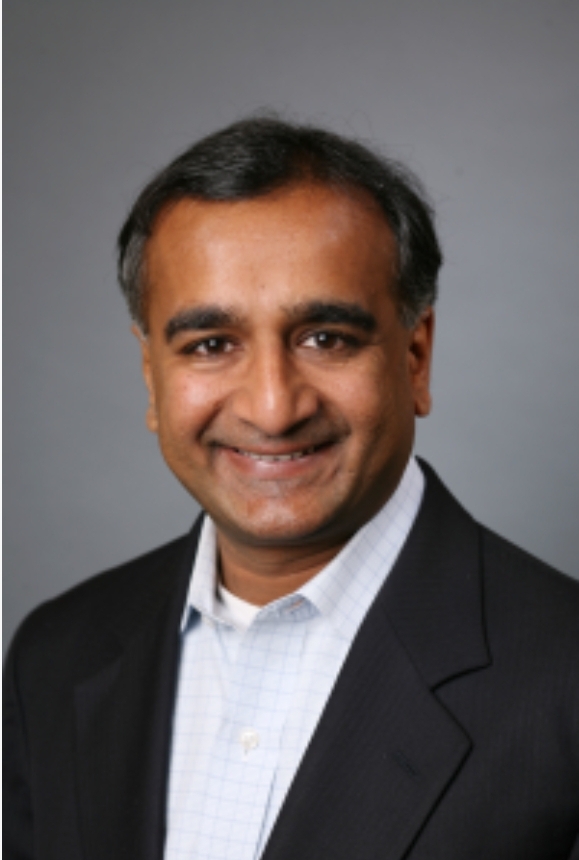
VergeIO Names Parag Patel CEO as Enterprise Infrastructure Enters a New Virtualization Cycle
Parag Patel, who spent roughly half of his 30-year career at VMware and helped bring vSAN to market, takes the CEO role as VergeIO positions VergeOS as a unified private-cloud operating system for the next phase of data-center infrastructure.
The enterprise infrastructure market is entering a period in which the question is no longer simply where workloads run, but how much infrastructure complexity organizations are willing to carry to run them.
That is the backdrop against which VergeIO has appointed Parag Patel as Chief Executive Officer, effective September 8, 2026. Patel succeeds Yan Ness, who remains on the company’s board.
The appointment brings a highly experienced virtualization executive into a company whose central proposition is itself a response to infrastructure complexity: consolidate virtualization, storage, data protection, networking and automation into a single software layer.
For VergeIO, Patel’s arrival is therefore more than a leadership change. It represents an attempt to take the company’s architectural proposition into a broader enterprise market at a time when virtualization is undergoing significant disruption.
Gartner’s September 2026 Magic Quadrant for Server Virtualization Platforms describes the market as facing its most significant disruption in more than a decade and includes VergeIO among the evaluated providers. Gartner’s accompanying Critical Capabilities for Server Virtualization Platforms also evaluates capabilities across compute, GPU, networking, storage, security, management, availability and recovery, private cloud and AI.
That market context gives Patel’s appointment particular relevance.
Why Parag Patel’s appointment matters
Patel brings more than 30 years of experience across data center, cloud infrastructure and AI. Approximately half of his professional career was spent at VMware, where he joined when the company had roughly 500 employees.
He was also the executive who brought VMware’s vSAN to market.
His career subsequently included leadership roles at C3.ai and Forcepoint, giving him experience beyond traditional virtualization and into AI and cybersecurity-related infrastructure.
But his connection to VMware is particularly relevant to VergeIO’s current strategy.
The company is seeking to address a problem that has emerged from years of infrastructure specialization: enterprises frequently operate separate technologies for compute virtualization, storage, networking, backup and recovery, management and automation.
Each component can be technically capable in isolation. The operational challenge comes from having to integrate, license, maintain, monitor and troubleshoot all of them together.
Patel’s own assessment is that the market has reached another inflection point.
“Data center infrastructure is in the midst of several cross-currents: a breathtaking buildout for AI which involves many new hardware types, rethinking the mix of hybrid cloud after almost 20 years of Public Cloud adoption, an on-premise stack that has become complex and of course, rising costs. I have always believed that after every couple of decades, we usher in a period where companies of all sizes need to simplify their infrastructure. VMware simplified a complex physical server landscape when we began our journey in the late 1990s. When I came across VergeIO, I saw that their architectural approach enables companies to dramatically simplify, and that’s what attracted me to the company, alongside an excellent culture and people. VergeIO’s founder Greg Campbell has been preparing for this moment with a Private Cloud OS that consolidates a complex tech stack into a single software layer, and we know how such an approach can dramatically simplify management and create signficant savings. I am excited to be able to help bring his vision to market and deliver a combination of Simplicity, Savings and Service to mid-market and MSP customers.”
— Parag Patel, CEO, VergeIO
That quote provides an important clue to how Patel sees his new role. He is not describing VergeIO merely as another hypervisor alternative. He is framing the opportunity as a potential infrastructure simplification cycle.
That distinction matters.
The virtualization market is being reconsidered
For much of the previous two decades, virtualization became an abstraction layer between physical servers and workloads. It helped organizations consolidate hardware, improve utilization and create more flexible infrastructure environments.
The industry subsequently built additional layers around that foundation.
Storage became increasingly software-defined. Backup and disaster recovery became specialized platforms. Networking became programmable. Automation and orchestration expanded. Public cloud introduced another operating model, while hybrid architectures connected on-premises and cloud environments.
The resulting environment can be powerful, but it can also become operationally fragmented.
At the same time, the economics of infrastructure have changed.
AI workloads are introducing new compute requirements, particularly around accelerated computing and GPUs. Enterprises must consider where those workloads should run, what infrastructure they require, and how they should coexist with existing applications.
Gartner’s current server virtualization research reflects this broader change by explicitly evaluating GPU, edge, AI, private cloud, storage, networking, security, management and recovery capabilities alongside traditional virtualization requirements.
This makes the virtualization decision increasingly an infrastructure architecture decision, rather than simply a hypervisor-selection exercise.
VergeIO’s bet: collapse the stack
VergeIO’s central proposition is VergeOS, which the company describes as a private-cloud operating system.
The architecture brings together:
- Virtualization
- Storage
- Data protection
- Networking
- Automation
The company’s stated objective is to replace what would traditionally require multiple infrastructure products with a unified software layer running on standard hardware.
That approach changes the economic and operational argument.
A conventional infrastructure discussion might ask whether one virtualization platform is better than another.
VergeIO wants customers to ask a different question:
How many separate infrastructure layers do we actually need?
That is potentially a more consequential proposition for mid-market organizations and managed service providers, where infrastructure teams may not have the personnel or budget of a large hyperscaler or global enterprise.
The value proposition is also tied to operational simplicity.
Fewer infrastructure components can potentially mean fewer management consoles, fewer integration points, fewer contracts and fewer points of failure.
However, consolidation also raises an important counter-question: does simplification come at the expense of capability, ecosystem depth or flexibility?
That is where VergeIO’s next phase will be tested.
The VMware connection is strategically significant
Patel is the third former VMware senior executive to become involved with VergeIO this year.
Former VMware CTO Kit Colbert and former VMware SVP of Strategic Ecosystem and Industry Solutions Zia Yusuf now serve as advisors to VergeIO’s board.
That concentration of VMware experience is notable because VergeIO is entering a market in which customers are reassessing virtualization architectures.
The significance is not simply that former VMware executives are joining a competitor.
It is that VergeIO is accumulating executives who have firsthand experience of building, scaling and commercializing infrastructure technology at VMware.
Patel’s own career provides an especially relevant bridge. He experienced the virtualization industry’s earlier transformation and is now attempting to participate in another one.
The strategic challenge will be converting that experience into a sufficiently differentiated enterprise proposition.
From VMware replacement to infrastructure platform
One of the most important aspects of VergeIO’s positioning is that it does not want to be defined solely as a VMware alternative.
The company says VergeOS is designed as a foundation layer for current workloads and future AI applications.
That is a much larger ambition.
A hypervisor replacement proposition primarily addresses migration.
A private-cloud operating system proposition addresses the architecture that comes after migration.
For customers, those are different decisions.
Migration can be driven by licensing, commercial terms, product strategy or vendor changes. A platform decision requires a much deeper assessment of operational requirements, workload compatibility, resilience, security, backup, networking, management and long-term roadmap.
That means VergeIO will need to demonstrate that consolidation does not merely reduce the number of products. It must show that the resulting platform can satisfy the operational requirements those products previously addressed.
Veeam integration strengthens the enterprise story
Another development surrounding VergeIO is its integration with Veeam’s data-protection ecosystem.
Veeam’s documentation currently lists VergeOS 26.1.7 or later among the supported Universal Hypervisor platforms for Veeam Backup & Replication.
This matters because backup and recovery are central to enterprise infrastructure architecture.
A virtualization platform can offer attractive economics and simplified operations, but enterprise adoption also depends on the surrounding ecosystem.
Support from an established data-protection platform gives customers another piece of the infrastructure stack they need when evaluating an alternative virtualization environment.
Veeam Backup & Replication 13.1 is also a current product release, with Veeam listing version 13.1.1.18 as released in September 2026.
For VergeIO, ecosystem compatibility therefore becomes part of the migration conversation rather than an ancillary feature.
Gartner recognition changes the conversation
VergeIO’s inclusion in Gartner’s 2026 Magic Quadrant for Server Virtualization Platforms is another important milestone.
The significance should not be interpreted as an endorsement of VergeIO’s technology or as evidence that it is the right choice for every organization. Gartner’s Magic Quadrant evaluates providers using its methodology around Ability to Execute and Completeness of Vision.
The more immediate significance is market visibility.
Being included places VergeIO within a formal evaluation of the server virtualization market at a time when buyers are reassessing their options.
That gives enterprises another data point when considering alternatives to established platforms.
It also raises the bar for VergeIO.
Once a company gains visibility in a major analyst framework, enterprise buyers can reasonably expect increasing transparency around product capabilities, roadmap, ecosystem, support and execution.
Why the mid-market and MSP focus is important
Patel’s quote specifically identifies mid-market and MSP customers.
That is strategically logical.
Large enterprises can absorb considerable infrastructure complexity because they have specialized teams for virtualization, storage, networking, security, backup and cloud operations.
The mid-market often cannot.
For an organization with a smaller IT team, five infrastructure products can create five sets of skills requirements, five management experiences and multiple support relationships.
The same issue becomes even more interesting for managed service providers.
An MSP manages infrastructure across multiple customers. Standardization can potentially reduce operational overhead, simplify administration and improve the ability to deliver repeatable services.
But MSPs also require strong multi-tenancy, automation, resilience, supportability and ecosystem integration.
Therefore, VergeIO’s “Simplicity, Savings and Service” proposition will ultimately have to be demonstrated through operational outcomes rather than messaging alone.
The economics need to survive scrutiny
VergeIO says customers moving from VMware have achieved infrastructure cost reductions of up to 70%.
That is a company claim and should be treated as such.
The important issue for prospective buyers is not the headline percentage. It is the methodology behind the savings.
A serious enterprise TCO assessment would need to consider:
- Existing licensing and subscription costs
- Hardware utilization
- Storage requirements
- Backup and recovery infrastructure
- Networking
- Staffing and skills
- Support contracts
- Migration costs
- Training
- Downtime risk
- Application compatibility
- Disaster-recovery requirements
- Three-to-five-year operating costs
A consolidated platform can potentially reduce several of these costs. But the business case must be evaluated against the customer’s actual environment.
This is particularly important because infrastructure consolidation creates a corresponding dependency on the platform itself.
Simplification is valuable only when the consolidated platform can reliably perform the functions being consolidated.
AI may accelerate the infrastructure rethink—but does not automatically validate it
Patel’s reference to AI is particularly relevant.
The AI infrastructure buildout is increasing demand for specialized compute, while traditional enterprise applications remain an important part of the installed base.
That creates an architectural tension.
Organizations need to introduce new capabilities without turning every AI initiative into another isolated infrastructure stack.
A platform that can unify conventional workloads with emerging AI infrastructure could therefore have strategic value.
But AI-readiness cannot simply mean supporting GPUs.
Enterprises will also need to consider:
- GPU scheduling and utilization
- Data locality
- Storage throughput
- Network performance
- Security
- Resilience
- Model and application lifecycle management
- Cost governance
- Integration with existing enterprise systems
Gartner’s current virtualization research explicitly includes AI and GPU capabilities among the areas being assessed.
That reinforces the broader market shift: virtualization platforms are increasingly being evaluated as part of an infrastructure operating model.
The bigger question: can simplicity become an enterprise differentiator?
VergeIO’s strategic thesis is compelling in its simplicity: infrastructure became fragmented over time, and another simplification cycle may now be beginning.
But the market will ultimately test that thesis against execution.
For Patel, that means converting a technically differentiated architecture into a repeatable enterprise buying proposition.
The company will need to demonstrate:
Migration confidence: Can organizations move existing workloads without unacceptable disruption?
Functional depth: Can one platform genuinely replace the capabilities provided by several specialized products?
Ecosystem strength: Can customers integrate VergeOS into their existing backup, security, monitoring and management environments?
AI readiness: Can the platform accommodate emerging AI infrastructure requirements without recreating the complexity it seeks to eliminate?
Commercial value: Do the claimed savings survive a complete TCO analysis?
Service capability: Can VergeIO support customers and MSPs at scale as adoption grows?
These questions will be more important than the CEO appointment itself.
A new chapter for VergeIO—and a broader test for infrastructure consolidation
Parag Patel arrives at VergeIO with an unusually relevant perspective on infrastructure transformation.
He experienced the rise of virtualization from inside VMware and is now joining a company that believes the next transformation will be about simplifying what virtualization became.
That is an ambitious proposition.
The market conditions provide a plausible opening. Gartner describes server virtualization as undergoing major disruption, while its latest research reflects a market increasingly concerned with AI, GPUs, private cloud, recovery, networking and operational management.
VergeIO now has several pieces of the story in place: a unified architecture, growing industry visibility, Veeam ecosystem support and senior executives with deep VMware experience.
The next test is execution.
For enterprise technology buyers, the most interesting question is not whether VergeIO can replace a hypervisor. It is whether infrastructure consolidation can once again become a meaningful source of operational simplicity and economic value without sacrificing enterprise capability.
That is the proposition Parag Patel has now been tasked with taking to market.
And that makes his appointment worth watching well beyond the leadership page.
CXQuest Editorial Take
Patel’s appointment arrives at a useful moment for VergeIO because the virtualization market itself is being reconsidered. Gartner’s September 2026 research explicitly describes significant disruption in server virtualization and includes VergeIO among the evaluated providers.
What makes the development particularly interesting is the alignment between Patel’s historical experience and VergeIO’s architectural thesis. VMware helped simplify physical infrastructure through virtualization; VergeIO is now arguing that the infrastructure stack built around virtualization has itself become too complex.
The proposition deserves attention—but enterprise credibility will ultimately depend on whether VergeIO can translate architectural consolidation into measurable TCO improvement, migration confidence, ecosystem compatibility and reliable service at scale.
That is the real story behind Patel’s appointment.
