

Preventive Cognitive Experience Design in Healthcare is where the next real disruption in healthcare will come from. Not from better diagnostics alone, but from better engagement with those diagnostics.
India doesn’t have a detection problem. It has an experience problem.
When 75–90% of cognitive impairments go undiagnosed, the issue is not the absence of tools. It is the absence of urgency, clarity, and trust in the user journey. People don’t act on what they don’t feel, don’t understand, or don’t believe applies to them.
This is the gap Ivory is attempting to solve.
Engineering a New Category
Founded in 2022, Ivory is not just building a cognitive screening platform—it is engineering a new category. One where brain health becomes proactive, measurable, and habit-driven. By combining neuroscience-backed assessments with consumer-grade experience design, the company is tackling one of healthcare’s most complex challenges. It’s making invisible risk visible—and actionable.
At the center of this effort is Issac John, Co-Founder & CEO. His background across consumer platforms like discovery+, HealthifyMe, and PUMA brings a sharp behavioral lens to healthcare. His thesis is clear: if the experience fails, the diagnosis doesn’t matter.
Because in preventive health, the real question isn’t:
Can we detect early?
It is:
Can we get people to care early enough to act?
This is where Preventive Cognitive Experience Design in Healthcare becomes not just relevant—but essential.
Preventive Cognitive Experience Design in Healthcare is emerging as a critical frontier. Especially, as healthcare shifts from reactive treatment to proactive intervention. In India, millions of cognitive impairments remain undiagnosed. The challenge is not just clinical capability. It’s how effectively individuals engage with early screening, interpret results, and take action.
Neuroscience, Behavioral Science, and Digital Health
Founded in 2022, Ivory operates at the intersection of neuroscience, behavioral science, and digital health, with a clear mission: make cognitive screening as routine and intuitive as a treadmill test for the heart.
The company’s platform combines FDA-registered cognitive assessments with personalized interventions, evaluating 23 cognitive parameters across domains like memory, attention, reasoning, and coordination. But beyond diagnostics, Ivory is attempting something far more complex—driving behavioral adoption in a category where awareness, trust, and urgency are inherently low.
Healthcare as Experience
Q1. Preventive Cognitive Experience Design in Healthcare is still an emerging concept. How do you define “experience” in the context of cognitive screening, which is traditionally clinical and reactive?
IJ: Cognitive screening has traditionally been very clinical: long, time-intensive, and usually triggered only when symptoms become noticeable. Because of that, most people associate it with something reactive rather than preventive.
For us, the idea of “experience” is really about reducing that friction. It’s about making the process simpler, more accessible, and less intimidating so that people are open to doing it earlier, not just when there’s a concern.
Technology has played a big role here. Moving from pen-and-paper or invasive methods to structured digital assessments means the test can now be done more easily, either in a clinic or even at home. That shift makes it far more approachable for both users and clinicians.
At its core, experience in this context is about making cognitive screening feel like a normal part of a health routine, rather than something you only turn to when something feels wrong.
Reduce Hesitation and Increase Willingness
Q2. One of the biggest barriers in preventive health is user inertia. How have you designed the first-touch experience to reduce hesitation and increase willingness to get screened?
IJ: A lot of the hesitation around brain health comes from how difficult it used to be to even get tested. The formats were either too clinical, too long, or in some cases, invasive. so people simply avoided it.
The first step for us has been to make the assessment easier to access and complete. A structured, digital format that is shorter and more straightforward changes how people approach it, whether they’re doing it at a clinic or from home.
But just as important is where people encounter it. When a cognitive assessment is introduced through a doctor or as part of a routine checkup, it feels far more natural and relevant. People don’t see it as an extra step, it becomes part of something they’re already doing.
So the first-touch experience isn’t really about convincing users. It’s about removing friction and fitting into existing healthcare behaviour.
Customer Journey & Behavioral Friction
Q3. Walk us through the end-to-end user journey—from awareness to screening to post-assessment action. Where do you see the highest drop-offs today?
IJ: Ivory today is largely available through Doctors and Healthcare providers. The Clinician takes the call on which patients should avail of the test.
More than drop offs it’s the awareness-to-adoption cycle by a Clinic/Healthcare provider that takes anywhere between one to three months for a full rollout with a healthcare provider. These are due to clinical due diligence processes and also the technical integration required. While we also have partners who take no more than a day to decide that they’d like to integrate, large enterprises understandably take longer time.
We see a 98% completion on tests when recommended by a Doctor.
Besides this we are also listed on some leading Diagnostic Labs where we become a part of their Annual Preventive Health checkup where again we see a higher than 90% completion rate.
Q4. Cognitive decline is not immediately visible like other conditions.
How do you design urgency without creating fear?
IJ: One of the reasons brain health hasn’t been taken seriously early on is because the decline is slow and easy to brush off. Things like forgetfulness or lack of focus are often normalised, and for a long time, early detection didn’t feel very actionable either.
That’s now starting to change. Instead of creating urgency through fear, the focus is on making cognitive health more tangible. When you’re able to measure something and track it over time, it naturally becomes more relevant.
We’ve seen this shift happen across preventive health post-COVID, people are far more open to understanding their health proactively. Brain health is moving in the same direction. The idea is to make it easy to access and easy to act on, rather than making it alarming.
Top 3 Friction Points
Q5. What are the top 3 friction points users face when engaging with cognitive health tools—and how has Ivory addressed them?
IJ: Unfortunately, today most cognitive assessments are administered when it becomes too late. By then, someone approached a Neurologist or a Psychiatrist or a Psychologist, because of a clear signal from a colleague / spouse / parent that something is wrong.
This happens because cognitive assessments are not mainstream today and not available with primary physicians and nearby diagnostic chains. Our partnership with a scaled player like Metropolis is a sign that this is changing.
Secondly the duration that it takes for an Assessment could also be a deterrent, which is something that Ivory is constantly working on.
Lastly, it’s the barrier of language. We’ve worked towards solving that too with our most recent partnership with Cambridge Cognition with whom we have launched their flagship Assessment in six Indian languages with more in the pipeline.
Trust, Interpretation & Actionability
Q6. Trust is critical in health decisions.
How do you build trust in a digital cognitive assessment—especially for first-time users?
IJ: Trust in this space comes down to two things: the credibility of the assessment itself and where the user is encountering it. On one side, the assessment needs to be grounded in strong, validated science. But that alone isn’t enough. How it reaches the user matters just as much.
When a doctor or a healthcare provider introduces the assessment as part of a checkup, there’s already a layer of trust built in. That context makes a big difference in how people perceive and engage with it.
Over time, consistency also plays a role. If the experience is reliable and easy to navigate, trust builds naturally with repeat use.
Q7. Data without clarity can create anxiety.
How do you translate complex cognitive scores into actionable, non-intimidating insights?
IJ: Since our reports are driven at a Clinical point of care, we are conscious to not over-diagnose a patient’s state. Where we come in is to provide a clear signal on whether a patient needs to be further investigated. We do this through simplified summaries that capture whether a patient needs to be monitored or he/she needs further attention or whether they can be assured that from a cognitive functional perspective, they’re doing well.
Q8. How do users typically react to results where their “cognitive age” exceeds their actual age?
What experience design choices help manage this moment?
IJ: Cognitive Age is one of the gamified metrics we have. It’s not abnormal if one’s cognitive age exceeds one’s actual age. It is flagged only if it is too high compared to others of your same age group. It is just the easiest way to communicate to a user what his/her baseline is. However, cognitive age is also not the most clinically relevant metric. In most of our Assessments, we don’t have Cognitive Age called out. It’s about the domain scores and a clinically benchmarked read of skills like Attention, Working Memory, Executive Function, among others that matters the most.
Experience Impact
Q9. From a CX standpoint, what metrics do you track beyond clinical accuracy?
(e.g., completion rates, repeat engagement, behavioral change, consultation uptake)
IJ: We look at completion rates and repeat testing and what interventions were made in the interim. The critical difference that Ivory is making today is to track longitudinal data. Most people will have such data available for their HbA1Cs or BP e.g.
When even cognitive function data can be tracked longitudinally, it becomes actionable information for both the Clinicians and patients.
Q10. Can you share any measurable improvements in user engagement or behavior change driven by your current experience design?
IJ: Yes, our completion rates went up by 20% as we reduced the Assessment time for 40 minutes to 18 minutes.
Even more staggering is that including vernacular language choices increased adoption. Additionally, small improvements like adding a guidance video before the assessment starts, helped users to get a perspective of what was coming and complete these assessments with no external distractions in one shot.
Personalization & Long-Term Engagement
Q11. Preventive Cognitive Experience Design in Healthcare requires sustained engagement.
How do you ensure users come back—not just once, but continuously?
IJ: Cognitive health is gradually moving toward a model of periodic tracking, similar to other preventive health markers. There is already a segment of users, particularly urban consumers who are accustomed to tracking multiple aspects of their health and are open to revisiting cognitive assessments over time.
However, sustained engagement is closely linked to ease of access and relevance. As assessments become simpler to take and more integrated into routine health checkups, repeat engagement becomes a natural extension rather than something that needs to be actively driven.
Cognitive health is slowly becoming something people check in on periodically, similar to other aspects of preventive health.
There’s already a segment of users who are used to tracking different health markers, and for them, this becomes an extension of that behaviour. But more broadly, repeat engagement depends on how easy and relevant the experience is.
If the assessment is simple to take and fits into an existing health routine, like an annual checkup, people are far more likely to come back. It’s less about pushing engagement and more about making it a natural habit over time.
Q12. How personalized are the recommendations, and how does personalization influence adherence?
IJ: The Assessment scores are normalised as per age, education and gender. These need to be standardized across these demographic differences. It’s not about personalisation as such but normalisation of scores such that the Assessment scores itself are not heavily influenced by demographic differences.
Scaling Experience in India
Q13. India is highly diverse in literacy, awareness, and digital behavior.
How do you design cognitive health experiences that work across such varied user segments?
IJ: Covered indirectly:
– Need for easy access and low-friction tools
– Importance of distribution through multiple healthcare touchpoints
– Growing need for language-agnostic, mobile-friendly assessments
India’s diversity makes ease of use and accessibility critical for adoption at scale.
Q14. What role do partnerships (like hospitals or clinicians) play in strengthening the overall customer journey?
IJ: Partnerships are central to how we scale and become meaningful in practice.
Clinicians use these assessments as part of their decision-making, while diagnostic chains make them easier to access. But more importantly, partnerships give the assessment context, it becomes part of a larger healthcare journey rather than a standalone tool.
We’ve seen this play out through our recent partnership with Cambridge Cognition, which brings clinically validated cognitive assessments to India in a more scalable, accessible format. Alongside this, working with healthcare and diagnostic partners like Metropolis Healthcare, Manipal Hospitals, and PharmEasy has helped integrate screening into existing care pathways.
Ivory is also backed by a clinical team with over 80 years of combined experience across neuroscience, medicine, and neuropsychology, which ensures that what we’re building stays grounded in real clinical need.
The advantage of this ecosystem approach is that the output doesn’t stop at a score. The user is already within a system where the next steps, whether that’s further evaluation or intervention can be guided more effectively.
Strategic POV
Q15. Looking ahead, how will Preventive Cognitive Experience Design in Healthcare evolve over the next 5 years?
IJ: Over the next few years, brain health will start to look a lot more like other areas of preventive care. What is still largely reactive today will gradually become routine.
You’ll see cognitive assessments becoming part of standard health checkups, especially for people in their 40s and above, rather than something that’s only done when there’s a visible concern.
There will also be a stronger shift toward objective measurement. People will want a clearer sense of how their brain is functioning, not just based on how they feel, but through something that can be tracked over time.
A lot of this will come down to how easy these assessments are to access and how well they’re integrated into existing healthcare systems. The simpler it is to take the test and the more naturally it fits into a regular health routine, the faster adoption will happen.
Q16. What will differentiate leaders in this space—technology, clinical depth, or experience design?
IJ: It’s a combination of all three. If you solve for only one without addressing the other two, the assessment behavior will not become mainstream.
The Future of Healthcare
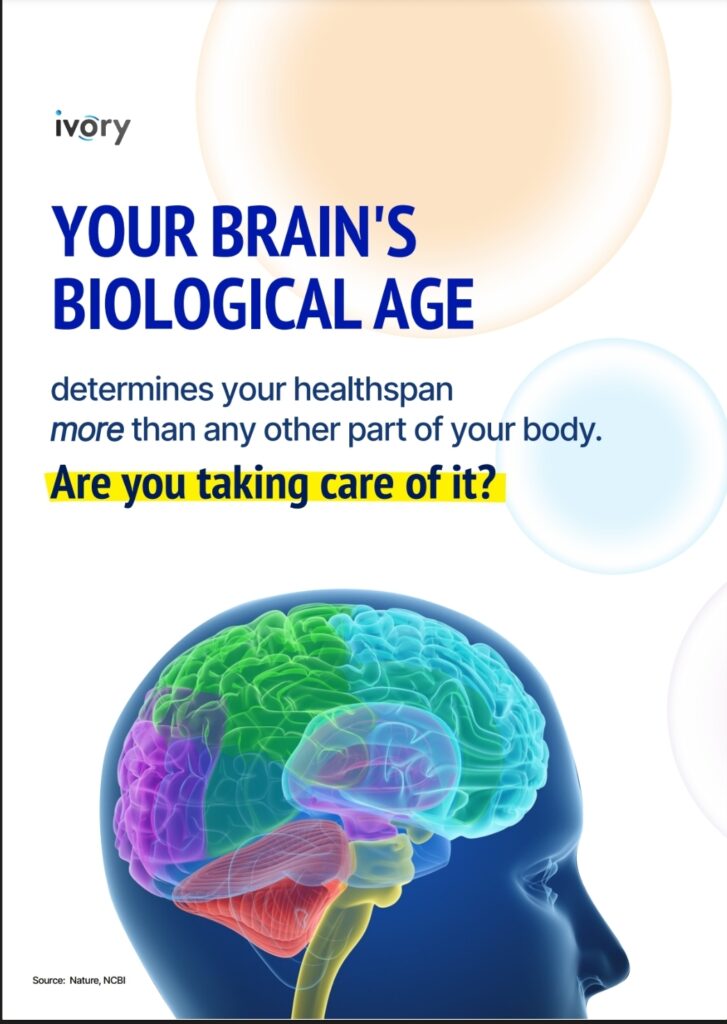
The future of healthcare will not be defined solely by diagnostic accuracy or clinical advancement—but by how effectively individuals engage with their own health journeys.
Preventive Cognitive Experience Design in Healthcare represents a fundamental shift: from detecting disease to designing behavior, from reporting risk to enabling action.
Ivory’s approach highlights a critical insight—the biggest gap in preventive health is not awareness, but experience architecture. If users do not understand, trust, or act on insights, even the most advanced diagnostics fail to create impact.
As India stands at the cusp of a cognitive health crisis—with millions entering high-risk age brackets—the real question is no longer whether early detection is possible.
It is whether it can be made accessible, intuitive, and habit-forming.
And that is, ultimately, a customer experience problem.
