AI literacy is emerging as a core employability skill in the age of enterprise transformation
Artificial intelligence is no longer confined to research labs, enterprise innovation teams, or advanced technology circles. Across industries, organizations are rapidly integrating AI into customer experience operations, analytics, decision-making systems, automation strategies, and workforce productivity initiatives. As this shift accelerates, one challenge is becoming increasingly visible: many learners and professionals are consuming AI content daily, but relatively few truly understand the fundamentals behind the technology.
This growing gap between AI exposure and AI clarity is creating strong demand for structured, beginner-friendly, and industry-aligned learning ecosystems. The rise of GenAI workforce readiness programs reflects this transformation, as educational institutions and enterprises seek practical approaches to building AI literacy at scale.
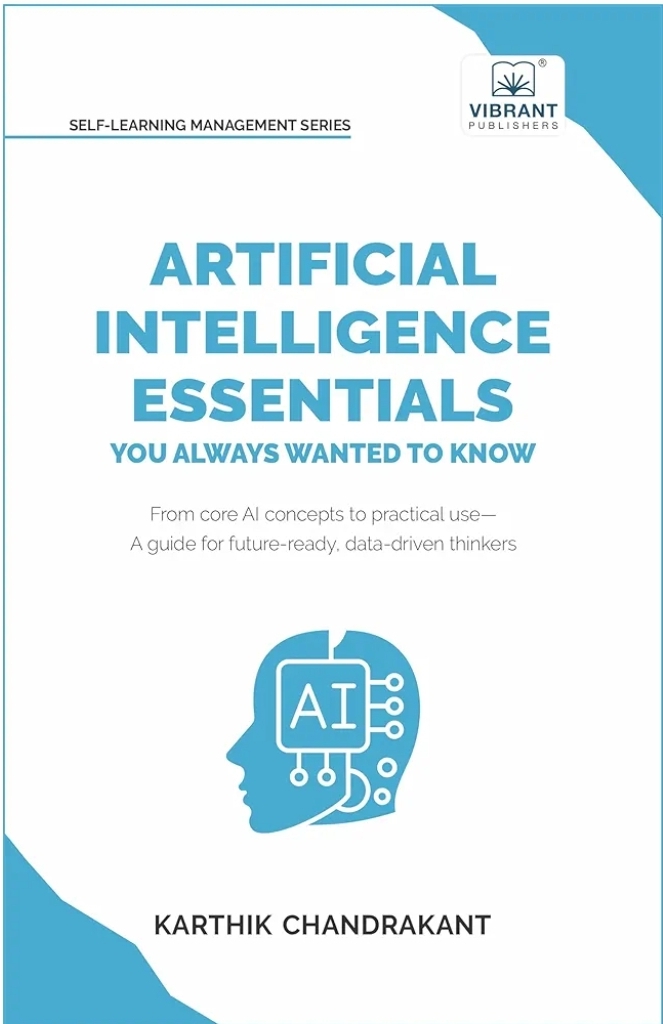
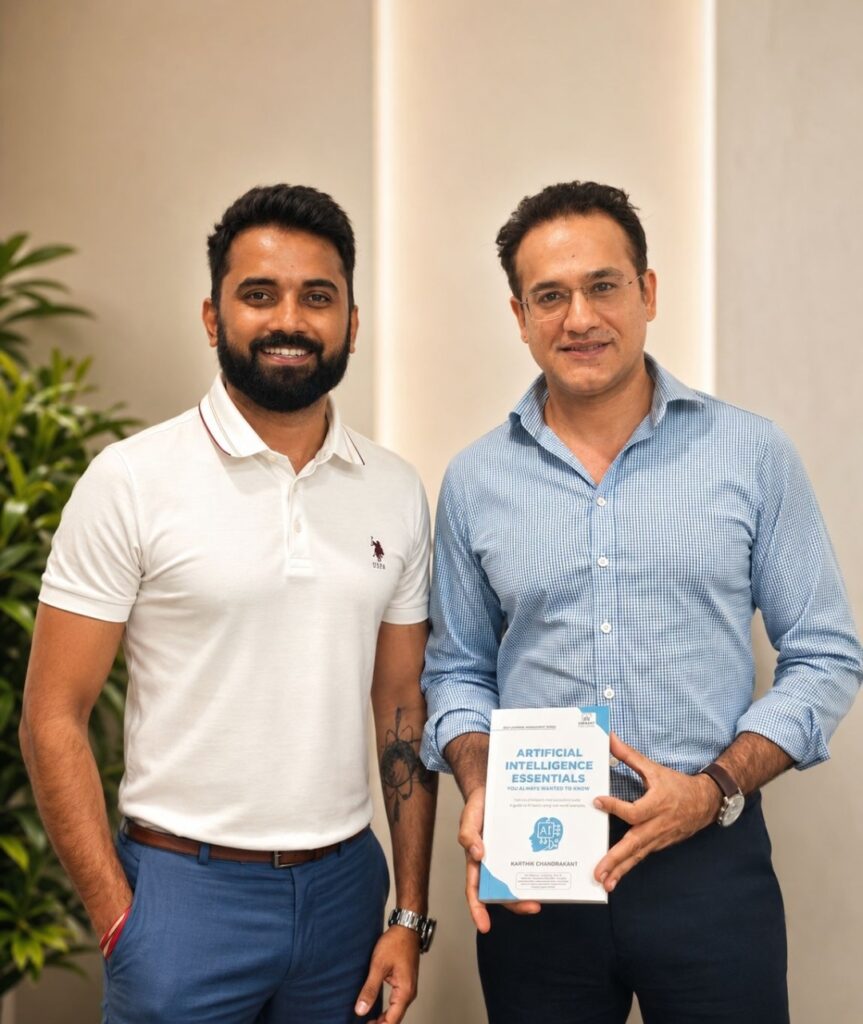
Against this backdrop, Imarticus Learning has announced the launch of Artificial Intelligence Essentials You Always Wanted to Know, a new book authored by Karthik Chandrakant, Senior Vice President and Head of Data Science & AI at Imarticus Learning. Published by Vibrant Publishers and available globally through Amazon India and Amazon US, the book aims to simplify artificial intelligence concepts for beginners, students, and working professionals.
The launch signals a broader industry movement toward accessible AI education designed not merely for technical specialists, but for the future workforce itself.
Why GenAI workforce readiness programs are becoming essential
The rapid emergence of generative AI has transformed how organizations think about productivity, customer engagement, analytics, automation, and employee capability development. Enterprises are now actively searching for talent that understands not only how AI tools work, but also how AI systems impact workflows, governance, ethics, and business outcomes.
This is where GenAI workforce readiness programs are becoming strategically important.
Traditional learning approaches often focused heavily on coding complexity or advanced theoretical frameworks. However, the modern workforce requires a broader AI foundation that includes:
- Understanding machine learning fundamentals
- Interpreting AI-generated outputs responsibly
- Applying AI tools in business contexts
- Recognizing ethical and governance implications
- Building confidence in AI-assisted workflows
- Developing cross-functional AI literacy
As enterprises move beyond experimentation into operational AI deployment, organizations increasingly need employees who can adapt to AI-enhanced environments regardless of whether they are in marketing, analytics, operations, customer experience, finance, or management.
The emphasis is no longer solely on producing elite AI engineers. Instead, businesses are prioritizing scalable AI understanding across the workforce.
Simplifying AI in an increasingly fragmented learning environment
One of the most important themes emerging from the Imarticus Learning announcement is the idea that AI learning itself has become fragmented.
Today’s learners are exposed to:
- short-form AI tutorials
- viral AI content
- fragmented social media explanations
- disconnected certification modules
- hype-driven AI conversations
- rapidly changing GenAI tool ecosystems
While access to information has increased dramatically, clarity has not necessarily followed.
Karthik Chandrakant’s book attempts to address this challenge by focusing on simplified explanations and foundational understanding rather than overwhelming technical depth. According to the company, the book covers areas including:
- Machine Learning
- Deep Learning
- Neural Networks
- Natural Language Processing
- Computer Vision
- Generative AI
- Ethical AI frameworks
- Real-world AI applications
- Career pathways in AI
The positioning reflects a significant industry insight: learners entering the AI economy often need confidence and conceptual structure before they can progress into advanced specialization.
This foundational approach aligns closely with how GenAI workforce readiness programs are evolving globally.
AI literacy is becoming the new digital literacy
For years, organizations treated digital literacy as a baseline workforce expectation. Employees were expected to understand productivity software, digital communication systems, online collaboration tools, and cloud-based workflows.
AI literacy is now entering a similar phase.
Professionals across sectors increasingly need working knowledge of:
- prompt-based AI interaction
- AI-assisted decision systems
- automation tools
- generative AI platforms
- data-driven workflows
- responsible AI practices
The implications extend far beyond technology teams.
Customer experience operations, for example, are increasingly integrating AI-driven chat systems, predictive analytics, personalization engines, voice intelligence, and workflow automation. Employees interacting with these systems need practical understanding of how AI operates, where its limitations exist, and how outputs should be evaluated.
This shift is creating demand for educational models that bridge technical understanding with business relevance.
GenAI workforce readiness programs therefore represent not only a skills initiative, but also a broader organizational transformation strategy.
Enterprise demand for AI-ready talent continues to rise
Another significant aspect of the Imarticus Learning announcement involves measurable employability outcomes tied to AI education.
According to the company, its Postgraduate Program in Data Science & Analytics with GenAI placed 582 students across 302 hiring companies. The program reportedly achieved a highest salary package of ₹23 LPA, while the average CTC stood at ₹6 LPA.
These numbers reflect a broader hiring trend visible across industries.
Organizations are aggressively searching for talent capable of contributing to:
- AI-powered analytics
- intelligent automation
- business intelligence modernization
- data science initiatives
- customer intelligence systems
- enterprise AI integration
- GenAI-assisted productivity environments
The increasing adoption of AI tools across sectors has created strong market demand for professionals who combine technical familiarity with business adaptability.
This explains why structured GenAI workforce readiness programs are attracting attention from learners seeking long-term career resilience.
The workforce transformation occurring today is not limited to creating new AI jobs alone. Existing roles are also evolving rapidly as AI becomes embedded within operational systems.
As a result, educational institutions are under pressure to develop learning frameworks that align more closely with real-world business environments.
The importance of ethical AI education
Another noteworthy dimension of the book is its emphasis on ethical AI.
As generative AI adoption expands, organizations are facing increased scrutiny regarding:
- bias in AI systems
- transparency
- accountability
- data privacy
- governance standards
- responsible deployment practices
This makes ethical AI education increasingly important within GenAI workforce readiness programs.
AI literacy without ethical awareness can create operational and reputational risks for organizations. Employees using AI systems must understand not only how to generate outputs, but also how to critically assess fairness, accuracy, and reliability.
The inclusion of ethical AI topics within foundational learning resources reflects the growing maturity of enterprise AI discussions.
Businesses are gradually recognizing that responsible AI adoption requires workforce-level understanding, not merely executive policy statements.
Why accessibility matters in AI education
One of the strongest strategic aspects of beginner-friendly AI education is accessibility.
Historically, AI learning was often perceived as intimidating due to:
- mathematical complexity
- technical jargon
- advanced programming requirements
- academic presentation styles
- research-heavy learning pathways
However, the democratization of AI tools has changed expectations.
Today, professionals from non-technical backgrounds increasingly want to understand:
- how AI affects their industry
- how AI may impact their role
- how to collaborate with AI systems
- how to transition into AI-related careers
- how to remain competitive in AI-driven workplaces
This creates a major opportunity for simplified, clarity-focused educational resources.
The success of future GenAI workforce readiness programs may depend heavily on their ability to reduce fear and confusion surrounding AI adoption.
Educational institutions that can balance simplicity with credibility are likely to play an important role in shaping the future workforce.
India’s expanding role in the AI talent ecosystem
India is emerging as a significant hub for AI talent development, particularly in areas related to analytics, automation, software engineering, customer operations, and digital transformation.
The country’s growing startup ecosystem, enterprise technology sector, and global capability centers are accelerating demand for AI-capable professionals.
At the same time, India’s large youth population creates enormous pressure on educational institutions to align learning outcomes with future employment markets.
This is where industry-focused programs become important.
Institutions like Imarticus Learning are positioning themselves at the intersection of:
- employability
- enterprise demand
- digital transformation
- AI capability building
- future-of-work education
The launch of an AI-focused educational book therefore represents more than a publishing announcement. It reflects the increasing commercialization and mainstreaming of AI literacy itself.
The future of workforce transformation will depend on AI clarity
One of the most important insights emerging from the current AI boom is that information abundance does not automatically create understanding.
The internet is saturated with AI conversations, tutorials, prompts, demos, and speculative predictions. Yet many professionals still struggle to answer fundamental questions about:
- what AI actually is
- how machine learning functions
- where GenAI is useful
- how AI systems create outputs
- how organizations should deploy AI responsibly
- which skills remain valuable in AI-enhanced environments
This clarity gap is becoming a major workforce challenge.
As organizations continue integrating AI into enterprise systems, the ability to build structured understanding may become one of the defining differentiators in professional education.
GenAI workforce readiness programs are therefore likely to evolve beyond technical upskilling into broader confidence-building ecosystems that help learners navigate a rapidly changing business landscape.
AI education is shifting from specialization to scalability
The larger industry takeaway from the Imarticus Learning announcement is that AI education is no longer targeting only elite technical audiences.
The future of AI capability development will likely depend on scalable workforce literacy.
Organizations increasingly need:
- AI-aware managers
- AI-capable analysts
- AI-assisted customer experience teams
- AI-literate operations professionals
- AI-ready business strategists
- AI-informed decision makers
This shift creates substantial opportunities for educational providers that can deliver practical, accessible, and industry-aligned learning models.
As generative AI continues reshaping enterprise operations, the importance of GenAI workforce readiness programs will likely grow across industries.
The launch of Artificial Intelligence Essentials You Always Wanted to Know reflects this broader transformation — one where AI understanding is gradually becoming a foundational professional capability rather than a niche technical specialization.
In the coming years, organizations may discover that the most valuable AI skill is not simply advanced technical expertise, but the ability to build confident, responsible, and adaptable AI-ready workforces at scale.
