
The workforce is undergoing rapid transformation as AI reshapes hiring, upskilling, and workforce validation. This interview explores how the Skyljo skill assessment platform is helping enterprises, vocational institutions, and government bodies conduct objective, AI-powered skill assessments while improving employability and workforce readiness.
About Skyljo
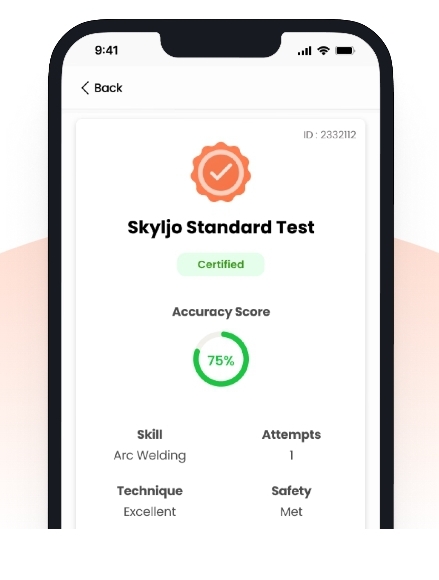
Skyljo is an AI-powered skill assessment platform that enables enterprises, industrial organisations, vocational institutions, and government bodies to evaluate workforce capabilities with accuracy, objectivity, and automation.
The Skyljo skill assessment platform combines proprietary AI models, augmented proctoring, anonymised evaluation, and real-world skill validation to reduce bias and standardise assessment at scale. Operating across B2B and B2G segments, Skyljo is focused on bridging the gap between skill development and employment through secure, “Made in India” technology.
About the Spokesperson: Ameet Padiyar, Founder, Skyljo
Ameet Padiyar is the Founder of Skyljo and brings nearly two decades of experience in business strategy, digital transformation, consumer marketing, product innovation, and P&L leadership.
Before founding Skyljo, he held leadership roles at Colgate-Palmolive, Reliance’s New Commerce initiative, and was part of the founding team that helped build JioMart’s hyperlocal commerce ecosystem. An alumnus of IIFT Delhi with an MBA in International Business, Ameet now leads Skyljo’s vision of building AI-powered, scalable, and unbiased workforce assessment solutions.
Entrepreneurial Journey
Q1. After successful leadership roles across Colgate-Palmolive, Reliance, and JioMart, what inspired you to build Skyljo, and what market gap were you determined to solve?
AP: My experience across large consumer and technology businesses showed me how much depends on getting the right people into the right roles. But I also saw a recurring problem: organisations often have limited ways of knowing what a person can actually do beyond a resume, certificate or interview.
The disparity is more apparent in the blue-collar and vocational industries, where a lot of talented people lack formal qualifications to showcase their skills. Skyljo addresses the very issue. We realised that formal skill evaluation can be done in a more effective, organised, and scalable way; employers should be able to test real skill sets, and workers should have more chances to prove their knowledge and skills.
Q2. How have your experiences in consumer businesses influenced your approach to building a technology platform for enterprise workforce assessment?
AP: Consumer businesses taught me to start with the problem rather than the technology. At scale, even a small friction point can have a significant impact, and the same thinking applies to workforce assessment. An assessment platform has to work for the evaluator, the organisation and, importantly, the person being assessed. My earlier experiences also reinforced the importance of keeping products simple and outcome-oriented. At Skyljo, we therefore focus on practical assessment, ease of use, scalability and actionable insights rather than adding technology for its own sake. The objective is to make skill evaluation more useful in actual hiring, training and workforce decisions.
Building the Business
Q3. What makes the Skyljo skill assessment platform fundamentally different from conventional online testing and assessment solutions?
AP: Traditional online assessments are often good at testing knowledge, but knowledge and practical ability are not always the same thing. Skyljo focuses more closely on what a person can demonstrate in a real or simulated work environment. Our video-led assessment approach allows organisations to evaluate practical skills, processes and job readiness in a more structured manner.
We also look beyond a single test score; we assist organisations by identifying the skill gaps, the positioning and capabilities of the workforce. It is not merely passing or failing the test but in providing a more accurate representation of an individual’s true ability for a certain role.
Q4. How does your proprietary AI improve assessment accuracy while ensuring fairness and consistency?
AP: AI at Skyljo is primarily an enabler for the assessment process, rather than a replacement for human judgement. It helps bring consistency to how assessment inputs are analysed and makes it possible to evaluate larger workforces without adding the same level of manual effort. Standardised assessment frameworks also reduce the room for individual evaluator preferences to influence outcomes.
Simultaneously, human oversight in areas of judgement or context continues to play a crucial role. We believe a high-quality assessment system to be one that combines technology with trained assessors. The goal is to make assessments more neutral and uniform without technology becoming a blind ‘black box’ to the candidates or the employers.
Product and Business Challenges
Q5. What were the biggest product and business challenges during Skyljo’s first year, and how did your team overcome them?
AP: One of the biggest challenges was understanding that assessment requirements can vary significantly between industries and even between roles within the same organisation. A manufacturing operator, for example, cannot be assessed in exactly the same way as a corporate employee. We spent considerable time understanding these differences and refining the assessment approach around practical requirements. Another challenge was building confidence in a new way of evaluating skills. Organisations are naturally cautious when assessment is linked to hiring or workforce decisions. We addressed this by focusing on practical use cases, working closely with users and continuously improving the platform based on what we learned from actual assessments.
Enterprise Impact
Q6. What business problems are enterprises trying to solve when they adopt the Skyljo skill assessment platform?
AP: The problems are fairly practical. Organisations want to know whether candidates or existing employees actually have the skills required for a particular role. They also want to reduce subjectivity in evaluation, identify workforce skill gaps and understand where additional training is needed. In large workforces, doing this manually can be time-consuming and inconsistent.
Skyljo assists in establishing a more systematic approach to these processes through skill assessments, video-led evaluations and workforce analysis. For employers, the larger goal is improved visibility into their workforce, understanding what skills they currently have, where potential gaps exist and how that might impact productivity or future workforce demands.
Q7. Which industries have shown the strongest adoption so far, and what common requirements do you see across them?
AP: Manufacturing and industrial workforce segments have been particularly relevant for us because these environments have a strong need for practical skill validation. We also see relevance across vocational training and enterprise workforce development. Despite differences between sectors, the underlying requirement is similar: organisations want a reliable way to understand whether a person is ready for a particular job and where additional training may be required.
In positions where hands-on skills matter a great deal, such as blue-collar jobs, most of a candidate’s skills and competence are not necessarily visible via the CV or any formal document. In these circumstances, a hands-on approach and structured skills assessment can be very powerful for an employer who is managing a large, widespread team.
Measurable ROI
Q8. How do you demonstrate measurable ROI for organisations investing in AI-driven skill assessment?
AP: ROI has to go beyond saying that an assessment is faster. We look at whether the assessment helps an organisation make better workforce decisions. That can include reducing assessment time, improving evaluator productivity, identifying skill gaps earlier, and helping organisations direct training towards the areas that actually need attention.
For employers, better matching of skills to roles can also improve workforce readiness and reduce avoidable hiring or training mismatches. The exact metrics depend on the use case, so we don’t believe in applying one ROI formula across every organisation. The important thing is to establish a clear baseline and measure improvement against it.
AI, Trust, and Responsible Innovation
Q9. AI-driven assessments often raise concerns around fairness and transparency. How does Skyljo address algorithmic bias and build trust among employers and candidates?
AP: The first step is understanding that AI cannot independently determine a fair assessment. The framework of assessment, the evaluation standards and human judgment are key elements. At Skyljo, we aim to standardise the assessment parameters and design AI tools to support evaluators instead of fully delegating the final decision to an algorithm. Our goal is to minimise biases and deviations while ensuring the process remains transparent. We also think assessments should be designed based on traits linked to job performance and not based on unrelated qualities such as personal characteristics or general education.
Ultimately, trust comes from making the evaluation process consistent, relevant and explainable to both the organisation and the candidate.
Q10. Data privacy has become a strategic priority for enterprises. What measures have you built into your platform to ensure security, compliance, and candidate confidentiality?
AP: Workforce assessment can include sensitive candidate and employee data, so we recognise that privacy cannot be an afterthought. We restrict the scope of the data we collect to that which is relevant to the assessment only. We are also committed to safeguarding assessment data and managing information generated through the platform.
Working with enterprises and institutions means security expectations will differ and we must deliver a platform that is compatible with their governance and compliance frameworks. For us, creating confidence means handling assessment data as sensitive workforce information rather than treating it as just one of many datasets.
India’s Skilling Ecosystem
Q11. India is investing heavily in workforce development. How do you see the Skyljo skill assessment platform supporting national skilling initiatives and vocational education?
AP: The overall skilling ecosystem in India is also developing through a number of initiatives like Skill India, NSDC, NCVET and PM SETU. However, training is only one component of the overall story. We need stronger mechanisms to determine whether the training has actually led to employment. This is where assessment can play an important role. Skyljo can support institutions and programmes by making practical skill evaluation more structured and scalable. Our pilot with NSDC has also helped us understand the requirements of large-scale skilling ecosystems. The broader opportunity is to create stronger links between training, assessment and employment, particularly for vocational and blue-collar workers.
Q12. Your collaboration with Don Bosco Institute of Technology reflects a focus on digitising ITIs. What impact do you hope such partnerships will create for students, institutions, and employers?
AP: The goal is to make vocational education more connected to the way employers actually evaluate skills. For students, an in-depth digital assessment can be a more accurate reflection of their competencies; for the institutions, this can mean better insights into learning achievements than just certifications.
Employers, meanwhile, can get a more consistent view of candidate capabilities. Digitisation should not mean simply putting an existing paper-based process online. The real value comes from using technology to make assessment more practical, measurable and relevant to industry requirements.
Skill Training and Industry Employability
Q13. From your perspective, what are the biggest gaps that still exist between skill training and industry employability?
AP: The main shortfall is that training and employability are frequently conflated. Completing a course does not guarantee that someone is capable of performing the role independently. There is also a disconnect between what training programmes teach and how employers assess practical capability. For blue-collar workers, the problem is even more visible because many skilled individuals don’t have formal credentials that reflect what they can actually do. We need stronger links between training, practical assessment and employment. A worker should ideally be able to move through a clear pathway, learn the skill, demonstrate it, understand the gaps and then be matched to relevant opportunities.
Product Innovation & Growth
Q14. As AI evolves rapidly, what new capabilities or innovations are next on the roadmap for the Skyljo skill assessment platform?
AP: We are exploring how to use assessment more meaningfully and contextually beyond generating a score. This ranges from an enhanced video-led assessment, enhanced workforce analytics, skill-gap mapping and closer links between assessment performance and learning pathways. We also see significant potential in using assessment data to understand workforce productivity and readiness at an organisational level. The direction is towards a more connected workforce intelligence layer where organisations can understand skills, identify gaps and make better workforce decisions. At the same time, we want to remain practical — every new capability needs to solve a real assessment or workforce problem rather than becoming technology for its own sake.
Q15. How do customer feedback and real-world assessment data shape your product development strategy?
AP: They are probably our most important inputs. Workforce assessment looks very different on paper compared with what happens on a shop floor or inside a training institution. Customer feedback helps us understand where an assessment works, where evaluators face friction and which outputs are actually useful to decision-makers. Real-world assessment data also helps us identify patterns in skills and gaps across roles. We use these learnings to refine assessment frameworks and improve the product. We don’t want to build in isolation and then ask organisations to adapt to the platform. The product needs to evolve around how assessment actually happens in the field.
Industry Outlook
Q16. How do you see AI transforming workforce assessment, recruitment, and talent development over the next five years?
AP: I see AI being more of an assessment enabler than a substitution for those involved in hiring and workforce development. It can assist organisations to assess larger populations, recognise common themes in skill gaps and make assessment procedures more consistent
Recruitment may gradually move away from heavily relying on resumes and towards a combination of credentials, demonstrated skills and role-specific assessments. For existing employees, the same data can help organisations understand where reskilling is required. The important shift will be from asking, “What qualification does this person have?” to asking, “What can this person actually do, and what support do they need to do more?”
Broader Digital Transformation
Q17. Looking ahead, what role do you envision Skyljo playing in India’s broader digital transformation and workforce competitiveness?
AP: India is undergoing a digital revolution, but it is more than just the hardware and the software. The key focus will be whether the people working within this industry can adapt to it. Skyljo’s job is to create a more effective layer of skill transparency, helping organisations understand human capital in a much more integrated manner.
We see a lot of potential across corporates, vocational institutes, government skilling initiatives and in the longer run to also make skills more quantifiable, especially for those who do not have many formal certifications. If India can combine its large workforce with better skill intelligence, it can strengthen its competitiveness across manufacturing and other sectors.
Q18. If you had one message for enterprise leaders, HR professionals, educators, and policymakers working to build a future-ready workforce, what would it be?
AP: We need to break out of the syndrome that certificates alone are enough to prove employability. Training is important, but it also becomes necessary to know if the individual is able to actually use that learning in a real work environment. The blue-collar workforce in India is a case in point, with millions of worthy people having no formal mechanism to prove their skills.
Enterprises, trainers and policymakers should start thinking of the complete loop of training, assessment, skill gap assessment and employment. Technology can help connect these pieces, but the goal should always remain simple: better visibility into skills and better opportunities for people based on what they can actually do.
Rapid-Fire
1. One word that defines Skyljo.
AP: Unbiased.
2. One leadership lesson you’ve carried throughout your career.
AP: Be part of the process, not just the result.
3. One technology that will reshape workforce development over the next decade.
AP: Video-led AI assessment.
4. One misconception organisations have about AI-based assessments.
AP: That AI should replace human judgement.
5. One milestone you hope Skyljo achieves by 2030.
AP: One Nation. One Skill Score- a standardised tech driven skill assessment for all.
Conclusion
As enterprises increasingly prioritise skills over credentials, the need for objective, scalable, and technology-driven workforce assessment has never been greater. AI is rapidly reshaping how organisations identify, validate, and develop talent, while governments and educational institutions seek more effective ways to bridge the gap between training and employment.
Through this conversation, Ameet Padiyar shares how the Skyljo skill assessment platform is leveraging artificial intelligence, augmented proctoring, and data-driven evaluation to transform workforce assessment across enterprises, vocational institutions, and public-sector initiatives. The discussion also explores responsible AI, product innovation, and the evolving expectations of employers in a skills-first economy.
As India advances its digital skilling agenda, platforms that combine technological innovation with measurable business outcomes are likely to play an increasingly important role. The insights from this interview offer valuable perspectives for CX leaders, HR executives, L&D professionals, technology decision-makers, educators, and policymakers seeking to build a future-ready workforce.
