Marketing’s AI conversation is entering a new phase. The industry is moving beyond awareness, experimentation and tool discovery. The focus is now shifting towards execution.
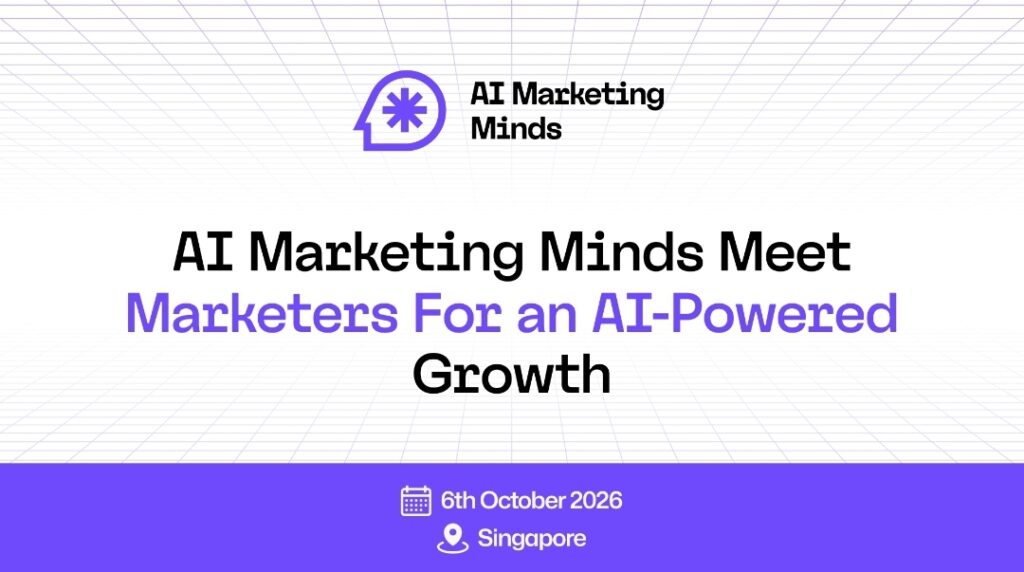
That shift is at the heart of AI Marketing Minds, a practical platform designed to help marketers, founders and AI practitioners apply artificial intelligence to real marketing operations.
Powered by Marketing Ninja, the initiative aims to close a growing gap between understanding what AI can do and deploying it effectively across marketing functions. Its emphasis is not on theoretical discussions about the future of AI. Instead, it focuses on workflows, automation, analytics and measurable business outcomes.
The approach reflects a broader transformation taking place across marketing. As campaigns become increasingly data-driven and customer journeys become more fragmented, organisations need systems capable of responding faster and operating at greater scale.
From AI Awareness to Operational Execution
For several years, marketing organisations concentrated on understanding generative AI, experimenting with prompts and evaluating an expanding universe of AI tools.
That phase is now giving way to a more demanding question: How can AI become part of everyday marketing execution?
This is where AI-powered marketing workflows and automation become strategically important.
Rather than treating AI as another standalone application, marketers can integrate it into connected processes spanning research, content creation, campaign development, personalisation, analytics and optimisation.
AI Marketing Minds is designed around this operational perspective. The platform focuses on helping professionals move beyond generic prompts and develop structured AI workflows that can support sophisticated marketing operations.
The focus areas include:
- AI tools for marketing workflows: Building integrated processes that connect multiple AI capabilities rather than relying on isolated prompts.
- Automation and analytics: Combining automated processes with data analysis and predictive capabilities to support faster decisions.
- Content and campaign execution: Reducing the time required to develop and deploy multi-channel campaigns while maintaining brand standards.
- Real-time optimisation: Using customer and campaign data to continually refine marketing activities.
This approach can fundamentally change how marketing teams allocate their time. Repetitive research, administrative work, content variations and data-heavy processes can increasingly be handled through automation.
That leaves marketers with more time for strategy, creative development, customer understanding and decision-making.
Turning Data Into Machine-Driven Growth
AI is also changing the relationship between marketing and data.
Traditional marketing has often relied on historical performance, market research, focus groups and creative intuition. These remain valuable inputs, but AI introduces the ability to process substantially larger volumes of information and identify patterns at speed.
Generative AI can help produce and adapt content. Predictive analytics can identify emerging patterns. Automation can connect insights with execution.
Together, AI-powered marketing workflows and automation can create a more responsive marketing operating model.
For performance marketers, this could mean generating and testing more creative variations. For growth teams, it could mean identifying opportunities across customer journeys faster. And, for brand managers, it could support high-volume content production while preserving consistency.
The objective is not to remove human judgement.
Instead, AI Marketing Minds positions AI as an amplifier of human capability. Machines can handle repetitive and data-intensive processes, while people remain responsible for strategic direction, creativity, empathy and brand thinking.
An Interactive Environment Rather Than a Conventional Conference
AI Marketing Minds is also taking a different approach to industry events.
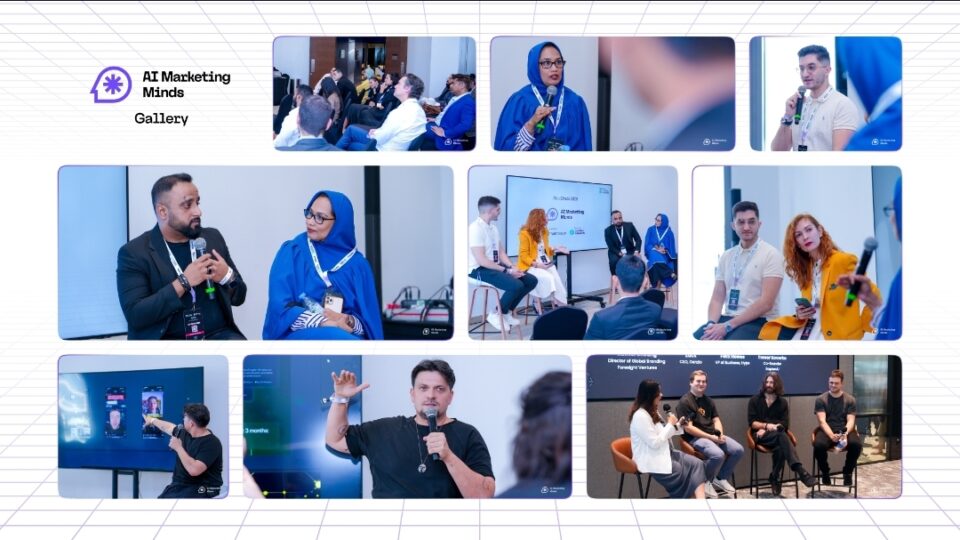
Its flagship gathering is positioned as an interactive environment rather than a conventional webinar or lecture-driven conference. The emphasis is on practical demonstrations, tactical discussions and collaboration between people building AI technology and those deploying it.
Attendees can expect live demonstrations and detailed examinations of AI platforms used in marketing. These sessions are intended to explore not only capabilities but also return on investment, limitations and potential deployment challenges.
The programme also includes fireside conversations with founders and growth executives who have experience implementing automated marketing systems.
Another important component is peer-to-peer knowledge sharing. Participants are expected to exchange practical approaches involving prompts, custom GPT structures, AI tools and workflow automations.
This creates an environment where marketers can learn not simply what a technology does, but how it can be integrated into an actual operating model.
Who Is AI Marketing Minds Designed For?
The initiative is aimed at professionals responsible for growth, marketing execution and AI adoption.
Performance marketers can explore ways to optimise advertising spend, automate creative variations and improve campaign performance across channels.
Founders and entrepreneurs can examine how AI can help build leaner growth operations without requiring proportional increases in headcount.
Growth strategists can explore ways to transform traditional funnels into more dynamic, data-driven revenue processes.
Creators and brand managers can investigate how AI can accelerate multimedia production while retaining creative direction and brand authenticity.
The initiative also targets AI enthusiasts and tool builders who want direct feedback from practitioners using these technologies in real-world marketing environments.
This interaction between technology builders and marketing practitioners could become increasingly important. Many AI products are developed around technical capabilities. Their real commercial value, however, depends on how effectively organisations integrate them into existing workflows.
The Human Marketer Remains at the Centre
One of the more significant questions surrounding marketing automation is whether AI will replace marketers.
AI Marketing Minds takes a different position.
Its underlying philosophy is that AI should amplify marketers rather than replace them. By taking over repetitive, administrative and data-intensive activities, AI can allow professionals to concentrate on areas where human judgement remains critical.
Strategy, storytelling, empathy, positioning and creative thinking cannot simply be reduced to automated outputs.
The emerging competitive advantage may therefore belong not to organisations that merely possess the most AI tools, but to those that know how to connect those tools with people, processes and business objectives.
In that environment, AI-powered marketing workflows and automation become less about replacing individual tasks and more about redesigning the marketing operating model.
Why the Shift Matters Now
Marketing teams are dealing with increasingly complex customer journeys, multiple digital touchpoints and rising expectations for personalisation.
At the same time, campaign cycles are becoming shorter. Content requirements are expanding. Customer data is growing rapidly. Teams are expected to test, learn and optimise continuously.
Legacy processes can struggle to keep pace with those demands.
The emerging model is more dynamic. Data informs decisions. AI supports execution. Automation connects processes. Humans provide strategic oversight.
For organisations beginning this transition, the challenge is not simply identifying an AI tool. It is determining where AI can create the greatest operational impact and then building repeatable processes around it.
That is the practical gap AI Marketing Minds is attempting to address.
Building the Next Marketing Operating Model
The significance of the initiative extends beyond another AI-focused marketing event.
The larger question is how marketing organisations will operate as artificial intelligence becomes embedded across their technology stacks.
The winning model is unlikely to be completely automated marketing. Instead, it is likely to be a hybrid operating model in which human expertise and machine intelligence work together.
In this model, AI-powered marketing workflows and automation can connect strategy with execution at a speed that traditional processes struggle to match.
AI Marketing Minds is positioning itself around this transition by creating a forum where marketers, founders, growth leaders and technology builders can examine what works, challenge assumptions and develop practical approaches to AI deployment.
As marketing moves further into an AI-led era, the differentiator may no longer be whether an organisation uses artificial intelligence.
It may be how effectively it puts AI to work.
About AI Marketing Minds
AI Marketing Minds is a global network focused on the practical application of artificial intelligence across branding and performance marketing. More information is available at https://www.aimarketingminds.ai/.
About Marketing Ninja
Marketing Ninja is a growth agency focused on advanced technology stacks, automated workflows and growth frameworks designed to help modern brands scale in a digital-first economy. More information is available at https://www.marketingninja.ai/.
