
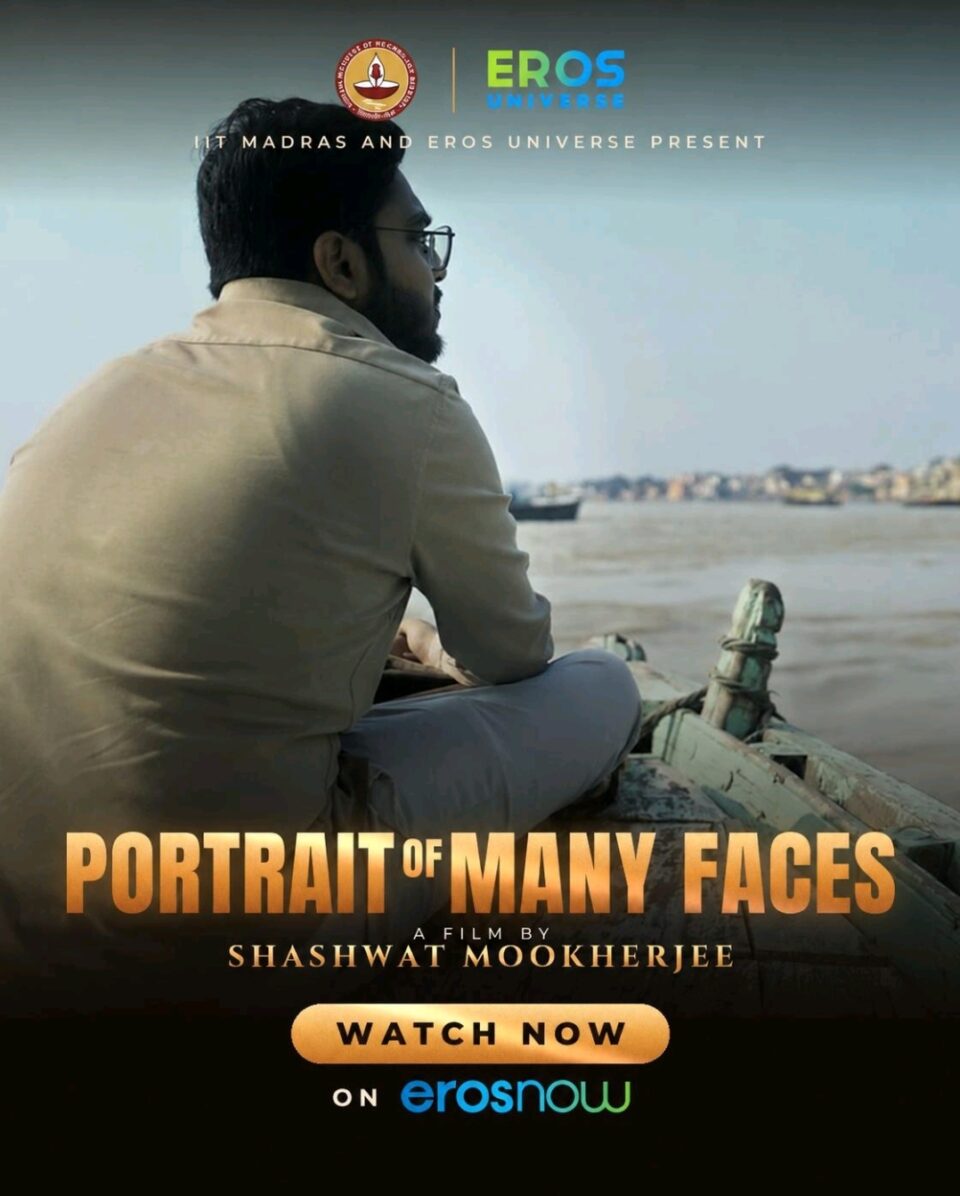
Portrait of Many Faces: What IIT Madras Reveals About the Future of Learner Experience
IIT Madras and Eros Universe bring 17 students’ journeys to the screen in Portrait of Many Faces, raising a bigger question for digital education: can access be translated into sustained learning, confidence and opportunity?
Portrait of Many Faces and the Changing Meaning of Educational Access
When a university expands access to thousands of learners, its achievement is usually measured through enrolment figures, qualifications and institutional reach. Yet those numbers reveal little about the everyday experience of a student trying to study while managing financial constraints, family responsibilities, geographical isolation or competing educational commitments.
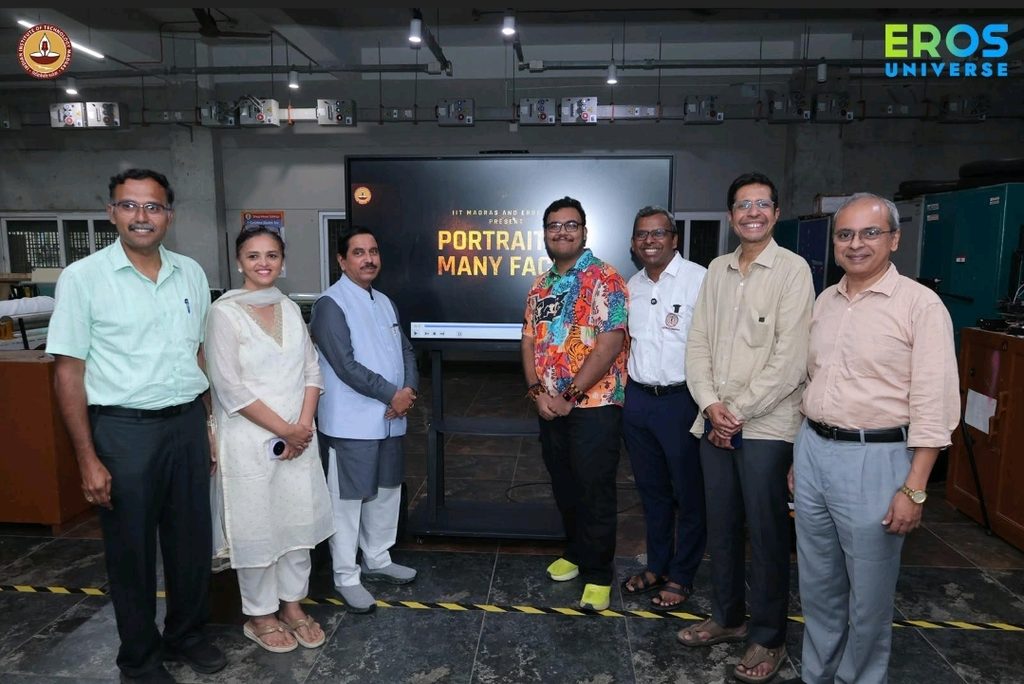
Portrait of Many Faces, produced by the Indian Institute of Technology Madras (IIT Madras) and Eros Universe, brings that human dimension into focus. Streaming free worldwide on Eros Now since 12 October 2026, the documentary follows 17 students from the IIT Madras BS Degree programme through their homes, circumstances and personal ambitions. Its media premiere took place at IIT Madras in Chennai on 15 October.
Directed and edited by programme alumnus Shashwat Mookherjee, the film presents students as narrators of their own journeys rather than as statistics in an institutional success story.
The distinction matters for customer experience (CX). In education, access is the beginning of a relationship, not its final outcome. A student may gain entry to a respected institution but still struggle with affordability, digital access, academic workload, assessment logistics or the confidence required to continue.
The documentary offers a way to examine these challenges through lived experience. It does not, by itself, establish programme-wide outcomes. Its larger value lies in prompting institutions to ask whether their systems make educational opportunity usable, sustainable and meaningful for different kinds of learners.
Portrait of Many Faces: From Institutional Reach to Individual Experience
IIT Madras has developed online BS degree pathways that allow learners to study beyond the conventional campus model. Its programme structure combines online learning with in-person examinations and offers multiple progression and exit pathways. In June 2025, the institute reported more than 38,000 students across its BS degree programmes, illustrating the scale of this alternative delivery model.
The institutional context is significant: high-quality education no longer needs to depend entirely on a student’s ability to relocate, attend campus daily or follow a single conventional undergraduate route.
However, geographical reach and effective accessibility are different things.
A student living far from a major city may gain access to lectures but still face unreliable connectivity, limited study space or responsibilities that restrict available learning time. Another may manage the coursework but find examination travel expensive. A third may need help understanding academic expectations or navigating administrative procedures.
These are not necessarily failures of curriculum. They are potential failures in the wider service surrounding it.
From a CX standpoint, the relevant question is whether the institution understands the complete learner journey—from discovering the programme and entering it to studying, seeking support, completing assessments and progressing towards a qualification.
The documentary’s focus on homes and everyday realities creates an opportunity to consider this journey beyond the classroom. Its 17 participants are representative voices, not a statistical sample capable of proving universal outcomes. Nevertheless, individual accounts can expose friction points that aggregate enrolment data cannot explain.
The deeper implication is that educational inclusion requires more than opening the digital door. It requires understanding what happens after a learner enters.
Why Flexible Education Changes the Institutional Model
Traditional higher education generally organises the student experience around a campus, timetable, cohort and common administrative structure. This model can support community and direct interaction, but it also imposes geographical and scheduling constraints.
Flexible digital programmes redistribute some of those constraints. Students can access learning materials from different locations and, depending on programme rules, combine study with employment or another degree. IIT Madras has also described multiple qualification stages within its BS programme structure.
The shift changes what institutions must manage.
In a campus-centred model, many learner needs are addressed through physical proximity: students can visit faculty, approach administrative offices or interact with peers between classes. In a distributed model, those same needs require deliberate digital and operational design.
A learner who cannot understand a course requirement may need a clear online explanation. Someone falling behind may need timely academic guidance. A student facing a payment difficulty may need transparent assistance rather than a confusing sequence of administrative steps.
Strategically, flexibility transfers part of the burden of coordination from the timetable to the learner—and therefore increases the importance of institutional support.
This is where the shift occurs: the institution is no longer delivering only educational content. It is orchestrating a distributed service involving teaching, technology, assessment, communication, payments and learner support.
The service succeeds when these components work together from the student’s perspective. An excellent lecture cannot compensate indefinitely for inaccessible support or an assessment process that makes participation impractical.
What the Documentary Reveals About Experience Design
Mookherjee’s position as both director and programme alumnus gives the film a personal connection to the experience it documents.
“From an early age, I wanted to work in cinema while also pursuing higher education, though combining the two once felt improbable. The IIT Madras BS Degree programme made that possible. This film grew out of a desire to give back to a programme that profoundly shaped my journey, and it became a responsibility to document the stories of students whose lives reflect a quiet transformation in Indian education.”
— Shashwat Mookherjee, Director and Editor, Portrait of Many Faces
His account illustrates a central principle of experience design: the value of a service often becomes visible when it enables a person to pursue goals that previously seemed incompatible.
The important distinction is between offering flexibility and making flexibility workable. A programme may permit students to combine education with other responsibilities, but the actual experience depends on workload, deadlines, instructional clarity and the availability of support.
Institutions can use this distinction to guide research. Student interviews, journey mapping, support-ticket analysis, assessment feedback and retention data can reveal where the intended experience diverges from the lived one.
The Portrait of Many Faces documentary uses interviews and personal environments to make individual experiences visible. That approach is useful for qualitative discovery, although it cannot substitute for systematic research across the full learner population.
The practical lesson for education providers is to treat student narratives as a source of questions, then test those questions against broader evidence.
The Competitive Benchmark: Three Models of Digital Learning
The competitive landscape is better understood through delivery models than through unsupported claims about which institution offers the best experience.
Level 1: Content-led digital learning. Platforms distribute lectures, tutorials and self-paced learning materials. This model can expand reach efficiently, but access to content does not automatically provide academic guidance, recognised qualifications or a coherent progression pathway.
Level 2: Structured online credentials. Universities and education providers combine digital coursework with formal assessment, defined learning outcomes and certificates or degrees. IIT Madras’s BS programme belongs in this broader category. Its online delivery, in-person examinations and staged qualifications illustrate how flexibility can coexist with structured academic requirements.
Level 3: Integrated learner ecosystems. In this aspirational model, content, assessment, mentoring, financial assistance, career guidance and learner analytics work as a coordinated service. The learner receives relevant support at critical moments instead of navigating disconnected systems independently.
These levels are analytical categories, not independently verified rankings of named competitors. Nor does a higher level necessarily guarantee better outcomes.
The strategic opportunity is to combine the reach of digital delivery with the continuity of a well-designed support system. Institutions that understand why learners disengage—and respond before temporary difficulties become permanent exits—may create a more durable experience than providers focused primarily on acquisition.
For customers in education, the equivalent of a successful service transaction is not simply registration. It is the ability to make meaningful progress towards a personal learning goal.
Technology Is the Enabler, Not the Outcome
The supplied announcement does not detail the programme’s learning-management architecture, analytics systems, artificial-intelligence capabilities or integration interfaces. It would therefore be premature to attribute the documentary’s impact to any particular technology stack.
Nevertheless, distributed education has clear operational requirements.
Learning platforms must present course materials and deadlines consistently. Assessment systems must communicate requirements and results clearly. Support channels must help students resolve problems without repeated explanations. Administrative systems must provide accurate information about fees, eligibility and progression.
Integration matters because friction often appears between systems rather than within individual applications. A student may complete an academic task but encounter confusion when administrative records, payment status or examination information do not align.
The answer is not necessarily to build a larger technology platform. Institutions should first identify the most consequential points of friction, establish ownership and determine whether existing systems can be connected or configured to address them.
Data can support this work, but it requires appropriate governance. Learner analytics should be used transparently and proportionately, with safeguards for personal information. Students should not be reduced to risk scores, nor should automated interventions penalise those already facing disadvantages.
Technology should make it easier to learn, obtain assistance and exercise agency. It should not merely make the institution easier to administer.
Measuring Learner Experience Beyond Enrolment
A large learner population is evidence of reach. It is not sufficient evidence of successful learning or a consistently positive experience.
Institutions need a balanced measurement framework that connects operational performance with learner progress.
Relevant measures include course engagement, assessment participation, progression between qualification stages, time taken to resolve support requests, student-reported effort, affordability-related interruptions and completion rates. Employment outcomes may also matter where career development is an explicit programme objective.
Each metric requires context. Low engagement may indicate disengagement, but it can also reflect a working student’s schedule. A delayed completion may signal a problem, or it may reflect a legitimate decision to study more slowly. A high satisfaction score may conceal barriers experienced by learners who have already left.
The more useful approach combines quantitative evidence with interviews and journey-level analysis. Institutions should examine differences across geography, income, age and other relevant circumstances while protecting student privacy.
A mature learner-experience operation would connect these findings to specific interventions, assign accountability and assess whether the intervention improves outcomes.
This is also where the documentary’s narrative form has practical value. Individual stories can help institutional leaders understand what a metric feels like in real life. They can guide investigation, but they should not be mistaken for proof of programme-wide effectiveness.
The CX Maturity Question: From Access to Sustained Progress
An institution can be digitally accessible without being fully learner-centred.
At an initial maturity level, the emphasis is on making content and services available online. At an intermediate level, the institution monitors participation, gathers feedback and resolves recurring problems. And, at a more advanced level, it coordinates support across the learner journey and uses evidence to improve progression, inclusion and outcomes.
This is a proposed maturity framework for analysis, not an independently audited rating of IIT Madras.
The available announcement supports the conclusion that the programme is designed to extend access through flexible delivery. It does not provide sufficient evidence to establish how consistently individualised support, predictive interventions or cross-system service integration operate.
That distinction is important. A credible assessment must separate demonstrated capabilities from desirable future practices.
For institutions seeking to progress, the trigger should be evidence of avoidable friction: repeated support requests, uneven assessment participation, financial interruptions or preventable withdrawals. Interventions could include clearer onboarding, targeted academic assistance, accessible administrative guidance and more transparent progression information.
The objective is not to remove academic rigour. It is to prevent avoidable service barriers from obstructing a learner’s ability to meet legitimate academic requirements.
Build, Buy or Partner: Making the Experience Operational
Educational institutions do not need to develop every capability internally.
Build where the institution’s distinctive academic model, assessment integrity or specialised learner-support practices require direct control. Internal ownership can improve alignment, but it creates continuing development and maintenance obligations.
Buy established learning, communication, case-management or analytics tools where requirements are standard and suitable products exist. Procurement may accelerate implementation, although integration, licensing costs, accessibility and data governance need careful evaluation.
Partner when specialist expertise, outreach, documentary storytelling or particular support services benefit from external capabilities. The Eros Universe and IIT Madras collaboration demonstrates a partnership in producing and distributing a documentary; it does not establish that the same model is appropriate for delivering academic services.
The risks are both technical and human. Fragmented systems can create inconsistent information. Poorly designed automation can make support harder to obtain. Insufficient accessibility testing can exclude learners whom the programme is intended to reach.
A sensible implementation sequence begins with journey mapping, prioritises high-impact friction points, establishes baseline metrics and pilots targeted improvements before scaling them.
Cost should be assessed alongside outcomes. Lower support expenditure is not a success if unresolved problems increase withdrawals. Faster processing is not an improvement if accuracy declines. Better experience should be evaluated through a combination of operational efficiency, learner effort, progression and educational quality.
What This Means for the Education Ecosystem
Vikram Tanna, CEO of Eros Now and Eros Universe, connected the film to the broader purpose of storytelling and access.
“Stories like these are what Eros has always believed in: real people, real homes and real aspirations, told with honesty. Portrait of Many Faces shows how access to education can change the trajectory of a life, and how many young Indians are shaping their futures on their own terms. We are proud to partner with IIT Madras to bring these voices to audiences everywhere, free on Eros Now, and grateful to the Hon’ble Union Minister of Education for watching the trailer and encouraging the team.”
— Vikram Tanna, CEO, Eros Now and Eros Universe
The partnership brings together an educational institution and a media distribution platform. Eros Innovation, the wider company described in the announcement, also positions cultural intelligence and digital applications within its business portfolio. However, the documentary’s release should not be interpreted as evidence that AI or Eros Innovation’s intelligence models were used to produce it.
The broader ecosystem implications extend beyond this film. Universities, digital-learning providers, employers and public institutions all have an interest in whether flexible education can reach diverse populations without weakening academic standards.
The relevant competitive advantage may lie in combining credible qualifications with dependable support and a clear understanding of learner needs. Institutions will also need to evaluate affordability, digital access, recognition of qualifications and the transition from education to work.
For policy-makers and education leaders, the challenge is to assess not only how many people can enter a programme but how many can participate meaningfully and progress under real-world conditions.
The Next Test Is What Happens After Access
IIT Madras Director Prof. Veezhinathan Kamakoti framed the programme’s social purpose through the principle of taking education to those who cannot readily afford it.
“Swami Vivekananda made a very profound statement about education. If the poor cannot afford education, education must reach the poor. Inspired by this, IIT Madras introduced BS off-campus programs, with more than 25% of students enrolled being below the poverty line. ‘Portrait of Many Faces’ is a very emotional and thought-provoking documentary which brings to you the success stories of how Vivekananda’s statement has been put into practice. I congratulate Shashwat Mookerjee and team for this wonderful effort and wish that this documentary reaches the nook and corner of this planet. Jai Hind.”
— Prof. Veezhinathan Kamakoti, Director, Indian Institute of Technology Madras
The documentary places personal experience at the centre of a larger debate about educational opportunity. Its significance lies less in offering a definitive verdict on digital education than in making the human consequences of access visible.
For institutions, the next stage is to connect those stories to systematic evidence: where learners struggle, which barriers are preventable, how support affects progression and whether the benefits reach students across different circumstances.
That is the central lesson of Portrait of Many Faces. Educational access creates the possibility of transformation, but the quality of the experience determines how effectively that possibility can be pursued.
The future of inclusive higher education will depend not simply on opening more doors, but on designing the systems that help learners move through them.
