
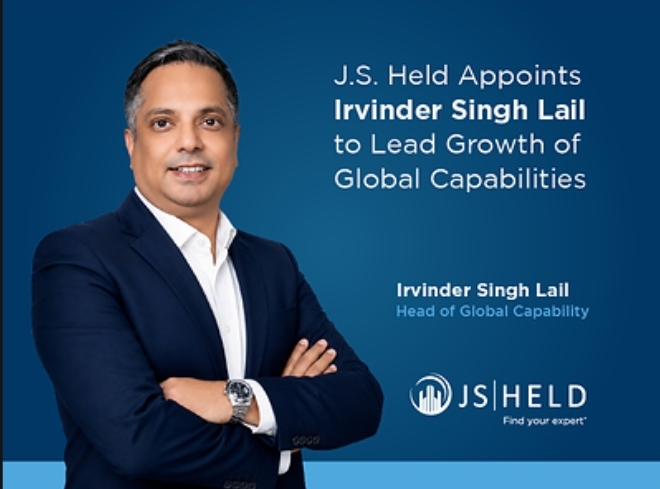
Enterprise consulting firms rarely make leadership appointments solely to fill an executive position. Increasingly, such decisions reflect a broader shift in how organizations intend to deliver value to clients operating in fast-changing and high-stakes environments. Key CX Benchmarks Irvinder Singh Lail Can Set Leading J.S. Held Global Capability therefore extends beyond a leadership announcement at J.S. Held; it signals a strategic move to redefine how global expertise, digital technologies, and operational excellence converge to improve customer outcomes.
With the appointment of Irvinder Singh Lail as Head of Global Capability, J.S. Held is reinforcing a business model that prioritizes speed, consistency, and seamless collaboration across international markets. Rather than expanding merely through geographic presence, the firm is investing in an operating framework that enables experts across continents to function as a unified organization. In today’s consulting landscape, where clients demand rapid access to specialized expertise and dependable execution regardless of location, operational capability has become a critical differentiator.
Why Key CX Benchmarks Irvinder Singh Lail Can Set Leading J.S. Held Global Capability Matters
The consulting industry has undergone a fundamental transformation over the past decade. Traditional consulting firms once relied heavily on localized expertise and region-specific delivery teams. While this model proved effective when projects remained geographically constrained, today’s business challenges are increasingly global, interconnected, and time-sensitive.
Organizations navigating cybersecurity incidents, regulatory investigations, financial disputes, climate-related events, operational crises, or complex litigation often require multidisciplinary expertise within hours rather than weeks. Clients no longer evaluate consulting firms solely on technical competence; they also assess responsiveness, coordination, transparency, and execution quality.
This changing expectation has elevated customer experience from a support function to a strategic capability. Enterprise clients increasingly judge advisory firms by how effectively they orchestrate expertise across global teams while maintaining consistency throughout the engagement lifecycle.
This is where the shift becomes significant.
Instead of treating capability centers merely as cost-efficient delivery hubs, firms are transforming them into strategic engines that accelerate innovation, improve knowledge sharing, standardize processes, and enable around-the-clock client engagement.
J.S. Held’s decision reflects this broader industry evolution. By formalizing global capability under dedicated leadership, the firm is investing not simply in operational scale but in building an integrated system that supports faster decision-making, higher service quality, and more resilient client delivery.
As Lee Spirer, President and Chief Executive Officer of J.S. Held, explains:
“The next phase of J.S. Held’s growth depends on how deliberately we build the firm, focusing not just on where we operate but on how our teams connect across regions to serve clients as one organization.”
This statement highlights an important strategic distinction. Growth is no longer measured only by market expansion; it is increasingly determined by how effectively organizations connect talent, technology, and processes across borders.
Building Capability Instead of Simply Expanding Capacity
At a structural level, Irvinder Singh Lail’s appointment represents more than operational oversight. It introduces enterprise-wide ownership of capability orchestration—a discipline that combines workforce strategy, technology enablement, standardized operating models, and organizational agility.
His mandate encompasses several interconnected priorities:
- Expanding global centers of expertise.
- Standardizing shared platforms across regions.
- Strengthening coordination between geographically distributed teams.
- Enhancing resource deployment for complex engagements.
- Supporting AI-enabled service delivery through scalable operating models.
Collectively, these initiatives indicate that J.S. Held is evolving from a traditionally distributed consulting organization toward a globally integrated consulting ecosystem.
This distinction matters because capability is fundamentally different from capacity.
Capacity focuses on increasing the number of people available to execute work. Capability, however, emphasizes ensuring the right expertise, supported by the right systems and technologies, can be mobilized efficiently at the right time. For enterprise clients, this difference directly influences response times, project quality, governance, and overall experience.
Leading Enterprise Transformation Initiatives
Irvinder Singh Lail’s professional background appears well aligned with this transformation. His experience across Alvarez & Marsal, Bain & Company, Ernst & Young, Swiss Re, AIG, Bupa, and Lloyds TSB Bank reflects extensive exposure to designing global operating models, establishing capability centers, and leading enterprise transformation initiatives.
Rather than approaching capability as an isolated HR or operations function, his experience spans strategy consulting, talent development, operational excellence, and organizational design—competencies increasingly essential for consulting firms seeking sustainable competitive advantage.
From a CX standpoint, this integration is particularly significant. Customers rarely experience internal organizational structures directly; they experience the outcomes those structures produce. Faster access to experts, smoother collaboration across regions, consistent communication, and reliable execution all contribute to stronger customer confidence and long-term trust.
This is where the leadership appointment begins to influence customer experience—not through visible front-end interactions alone, but through the operational architecture that enables those interactions to occur seamlessly.
Competition Is Increasingly Defined by Capability Networks, Not Office Networks
For decades, consulting firms measured their global strength by the number of countries they operated in or the size of their regional offices. Today, that equation is changing. Enterprise clients are less interested in where a firm has offices and more interested in how effectively it can assemble the right multidisciplinary team, regardless of geography.
This shift is particularly evident among leading global consulting organizations. Firms such as Accenture, Deloitte, PwC, EY, KPMG, Bain & Company, Boston Consulting Group (BCG), McKinsey & Company, and Alvarez & Marsal have invested heavily in global capability centers, digital collaboration platforms, AI-enabled knowledge management, and standardized delivery frameworks. Their competitive advantage increasingly stems from orchestrating talent across borders rather than simply maintaining a widespread physical footprint.
For J.S. Held, whose expertise spans technical, scientific, financial, and strategic consulting, the challenge is distinct. Many of its engagements involve high-stakes matters that demand rapid mobilization of highly specialized experts. In such scenarios, delays caused by fragmented processes or siloed regional operations can directly affect client outcomes.
This is where the appointment of Irvinder Singh Lail becomes strategically significant. His experience in building global operating models suggests a focus on creating a capability network where expertise can move seamlessly across regions, supported by common processes and shared digital platforms.
As Lee Spirer notes:
“The response we have already seen from prospective team members and from clients reinforces the market opportunity in front of us. Irvinder’s appointment reflects continued momentum in how J.S. Held builds for the clients who rely on us for high-stakes work.” — Lee Spirer, President & CEO, J.S. Held
The deeper implication is that J.S. Held is positioning operational excellence as a competitive differentiator. Rather than competing solely on expertise, it aims to compete on the speed, coordination, and consistency with which that expertise reaches clients.
Technology Is Becoming the Operational Backbone of Global Consulting
Technology alone does not create superior customer experience. Its value lies in how effectively it enables people, processes, and decision-making to work together. J.S. Held’s announcement underscores this principle by linking Irvinder Singh Lail’s role directly with the firm’s digital transformation agenda.
Working alongside Jessica Larson, Senior Vice President of Digital Transformation, Singh Lail will align global resourcing strategies with investments in automation, artificial intelligence (AI), and shared digital platforms. This signals an important shift from viewing technology as a support function to treating it as an integral component of the firm’s operating model.
At a practical level, this transformation is likely to involve several interconnected capabilities:
- AI-assisted workforce planning to match specialized expertise with client needs more quickly.
- Standardized collaboration platforms that enable globally distributed teams to work as a single unit.
- Shared knowledge repositories that reduce duplication and accelerate access to institutional expertise.
- Workflow automation to streamline repetitive administrative tasks, allowing consultants to focus on higher-value advisory work.
- Data-driven operational dashboards that provide real-time visibility into project progress, resource allocation, and service performance.
From a systems perspective, these technologies are not independent solutions; they form an integrated digital ecosystem. The effectiveness of AI, for example, depends on accurate data, standardized processes, and well-coordinated human expertise. Similarly, collaboration platforms deliver value only when supported by consistent governance and shared operational practices.
Jessica Larson captures this relationship succinctly:
“Human capital and digital capability are two sides of the same equation. As we scale automation and AI-enabled workflows across the firm, Irvinder’s work will ensure that our talent strategy expands in step, so that people and technology advance together rather than on separate tracks.” — Jessica Larson, Senior Vice President of Digital Transformation, J.S. Held
From a CX standpoint, this integration translates into faster response times, improved coordination, greater transparency, and more consistent service delivery—attributes that enterprise clients increasingly expect from trusted advisors.
From Operational Excellence to Customer Experience
The true measure of a global capability model is not the sophistication of its internal processes but the quality of outcomes it delivers for clients. Operational improvements matter only when they translate into tangible customer benefits.
For enterprise clients, the enhancements outlined by J.S. Held have several potential implications:
- Faster access to the most appropriate specialists, regardless of location.
- Improved continuity across multi-region engagements.
- Greater consistency in communication, methodologies, and deliverables.
- Reduced delays caused by fragmented workflows or organizational silos.
- Enhanced resilience during urgent, complex, or large-scale projects.
At a business level, these improvements can reduce project cycle times, improve resource utilization, lower operational friction, and strengthen client confidence. They also create a more scalable operating model, enabling the firm to grow without compromising service quality.
From a systems perspective, the integration of talent strategy, AI, and standardized operating practices supports a more adaptive organization—one capable of responding quickly to changing client requirements while maintaining governance and quality standards.
Reflecting this vision, Irvinder Singh Lail states:
“J.S. Held has a remarkable foundation of talented teams delivering exceptional client work globally. My focus will be on optimizing the operational layer, strengthening our coordination, unifying shared platforms, and unlocking significant value through our global capabilities. AI and digital technology will continue to advance our service model, allowing experts across regions to work as one team.” — Irvinder Singh Lail, Head of Global Capability, J.S. Held
This perspective reinforces a broader industry reality: the future of consulting will be shaped not only by expertise but by the ability to orchestrate that expertise through intelligent systems, collaborative technologies, and globally connected teams.
From Capability Building to Enterprise Maturity
From a CX maturity perspective, J.S. Held appears to be moving beyond operational optimization toward enterprise-wide capability orchestration. Many organizations reach a point where adding more people or opening new offices yields diminishing returns. Sustainable differentiation increasingly comes from integrating people, processes, and technology into a unified operating model.
J.S. Held’s latest move suggests that it is entering this next stage of maturity.
Rather than viewing talent acquisition, digital transformation, and service delivery as separate initiatives, the firm is bringing them together under a coordinated leadership framework. This integrated approach is essential for organizations managing complex, cross-border client engagements where responsiveness and consistency directly influence trust.
However, the real test lies ahead.
Formalizing a global capability model requires more than governance structures. Success depends on measurable improvements in customer experience and business outcomes. Over the next few years, Key CX Benchmarks Irvinder Singh Lail Can Set Leading J.S. Held Global Capability are likely to include:
- Reduced client response and mobilization times.
- Higher first-time resource matching accuracy.
- Increased cross-border collaboration across practices.
- Greater AI adoption without compromising expert judgment.
- Improved employee productivity through standardized platforms.
- Enhanced client satisfaction and long-term engagement.
- Better knowledge reuse across global projects.
These benchmarks move beyond operational metrics to evaluate how effectively capability investments translate into customer value.
Decision Intelligence: Lessons for Enterprise Leaders
The announcement also offers broader lessons for organizations pursuing digital transformation.
One of the most common mistakes enterprises make is investing heavily in AI, automation, or collaboration platforms without redesigning the underlying operating model. Technology can accelerate existing processes, but it cannot compensate for fragmented governance or disconnected teams.
J.S. Held’s approach suggests a different sequence:
- Define the operating model.
- Align talent strategy with business objectives.
- Integrate digital capabilities into everyday workflows.
- Standardize collaboration across regions.
- Scale continuously using measurable performance indicators.
For business leaders, this reinforces the importance of treating capability as a strategic asset rather than an operational function.
Organizations evaluating their transformation roadmap may consider three approaches:
- Build: Suitable for enterprises with sufficient scale and internal expertise to develop their own global capability framework.
- Partner: Appropriate for organizations seeking faster execution through consulting firms with established global delivery models.
- Buy: Relevant where acquiring specialized technologies or niche capabilities accelerates transformation.
For many enterprises, the optimal path will combine all three, balancing internal capability development with strategic partnerships and targeted technology investments.
Implications for the Consulting Industry
The consulting industry is entering a new competitive phase where capability orchestration may become as important as domain expertise.
Clients increasingly expect consulting partners to provide:
- Faster access to specialized experts.
- Integrated multidisciplinary teams.
- AI-enabled insights supported by human judgment.
- Consistent delivery regardless of geography.
- Transparent collaboration throughout engagements.
These expectations are reshaping recruitment, leadership development, technology investments, and organizational design across the sector.
For firms that fail to modernize their operating models, traditional advantages such as brand recognition or geographic presence may become less decisive. Conversely, organizations capable of integrating talent, technology, and standardized delivery will be better positioned to address increasingly complex client challenges.
This becomes particularly relevant in high-stakes consulting, where the quality of coordination can influence legal outcomes, financial recovery, operational resilience, or crisis response.
The Future of Global Capability Is Connected Capability
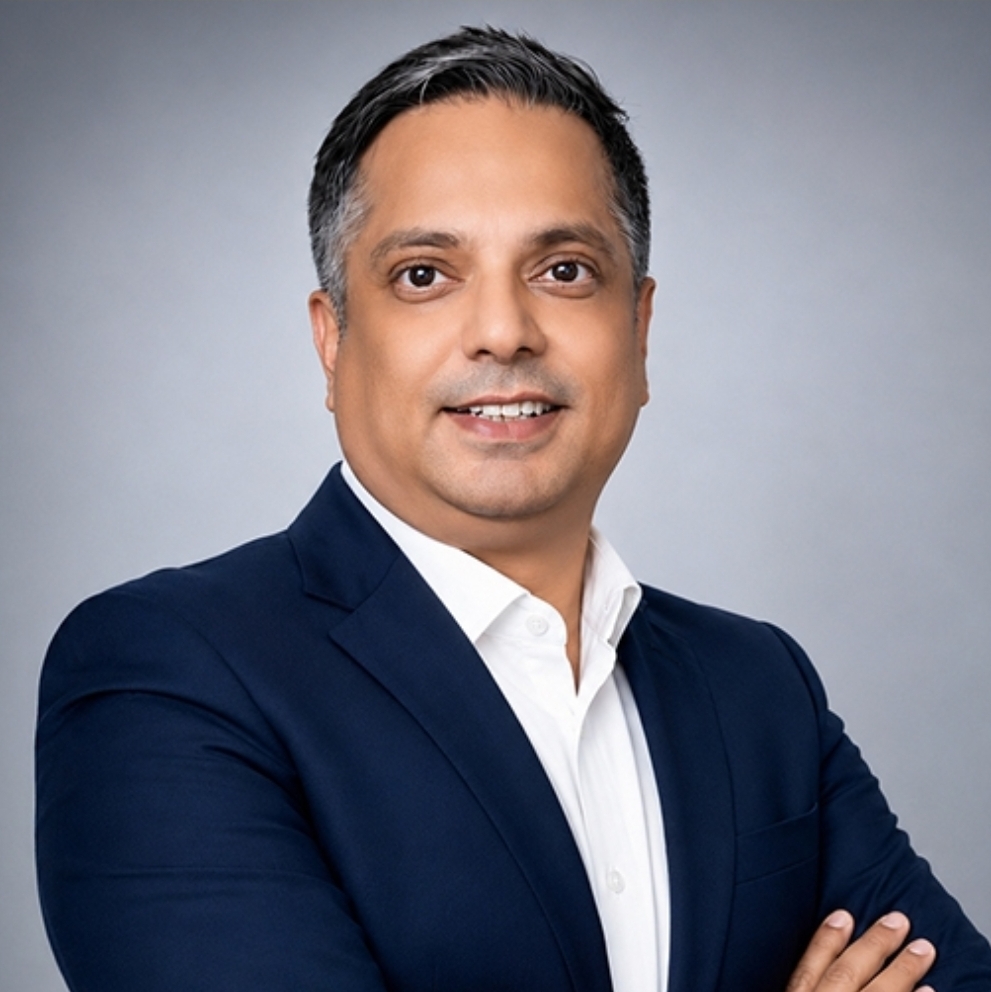
The appointment of Irvinder Singh Lail should not be viewed simply as an executive leadership change. It reflects a broader recognition that enterprise growth depends increasingly on how effectively organizations connect expertise across borders, supported by intelligent systems and scalable operating models.
As consulting continues to evolve, firms will likely compete less on the number of offices they operate and more on the strength of the networks they create—networks that seamlessly combine human expertise, digital technologies, and standardized processes.
J.S. Held’s investment in a dedicated Head of Global Capability indicates that it sees operational architecture as a strategic differentiator rather than a back-office function. Whether this translates into sustained competitive advantage will depend on disciplined execution, measurable outcomes, and continuous innovation.
For CX leaders, the announcement offers a useful reminder: exceptional customer experience is rarely created at the customer touchpoint alone. It is built through the invisible systems that enable organizations to respond faster, collaborate better, and deliver consistently.
Ultimately, Key CX Benchmarks Irvinder Singh Lail Can Set Leading J.S. Held Global Capability will be measured not by organizational charts or technology deployments, but by the confidence clients place in J.S. Held’s ability to solve their most complex challenges with speed, precision, and global coordination.
Key Takeaways
- J.S. Held is shifting from geographic expansion to capability-led global integration.
- Irvinder Singh Lail’s appointment aligns talent strategy, digital transformation, and operational excellence.
- AI and automation are positioned as enablers of consulting expertise rather than replacements for it.
- Competitive advantage in consulting is increasingly determined by capability orchestration, not office footprint.
- The most meaningful CX benchmark will be the firm’s ability to deliver faster, more consistent, and globally coordinated outcomes for clients while preserving the specialized expertise that defines its brand.
