

Building Safer Digital Habits for Kids: Why India’s Children Need More Than Parental Controls
Building Safer Digital Habits for Kids is becoming a behavioural challenge as smartphones, messaging platforms and AI chatbots reshape how children interact online. Kaspersky and KidZania India are responding through hands-on cybersecurity role-play that turns phishing, identity theft and cyberbullying from abstract warnings into practical experiences children can discuss and apply.
Children’s digital lives are changing faster than many household safety routines. Building Safer Digital Habits for Kids now requires more than telling them which links to avoid or how long they may use a device.
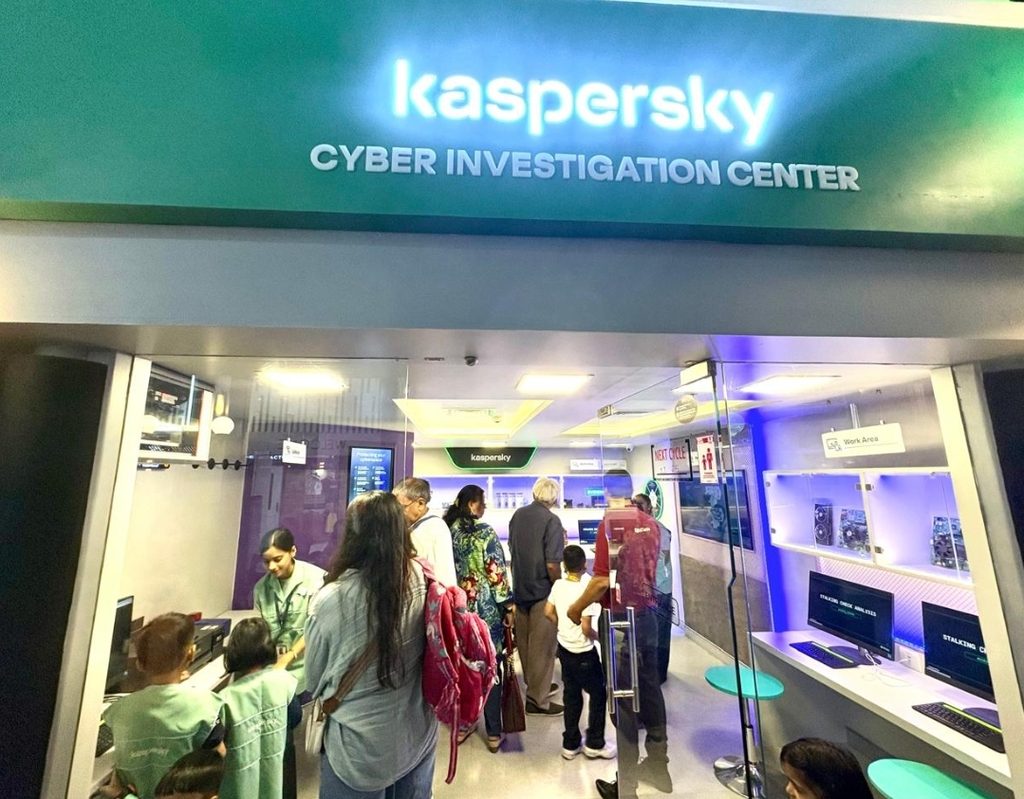
Kaspersky and KidZania India are testing a different approach at the Kaspersky Cyber Investigation Centre at KidZania Delhi NCR. Their 7 October 2026 Family Day brought parents and children into the same simulated cybersecurity environment that has been operating since April. The intervention matters because the risk landscape is shifting at the same time that children’s digital behaviour is becoming more complex.
Kaspersky Safe Kids data cited by the companies shows that communication and media activities dominate children’s online activity in India. On Android, Internet, Communication & Media represented 39.86% of activity, while Software, Audio, Video accounted for 34.89%. On Windows, the corresponding figures were 43.44% and 34.99%.
The more consequential difference concerns exposure to adult content. Kaspersky’s Q1 2026 data puts the share at 5.71% on Android compared with 1.91% on Windows.
That makes the smartphone more than another screen. It becomes a personal, always-available digital environment where communication, entertainment, search, AI and potentially harmful content converge.
Building Safer Digital Habits for Kids Starts With the Smartphone
The traditional family cybersecurity model often begins with the computer. The newer reality is more mobile.
Kaspersky’s figures indicate that children’s smartphones can expose them to a materially different risk profile from computers. The company’s data also shows that AI is entering the application mix. ChatGPT ranked seventh among the Top 20 apps used by children in India in the cited six-month period, with a 2.41% share.
That finding matters less because ChatGPT has reached a particular ranking and more because of what the ranking represents. AI is becoming part of children’s normal digital behaviour rather than remaining an adult productivity technology.
Jaydeep Singh, General Manager for India at Kaspersky, said:
“Children in India are now turning to AI chatbots for homework, quick answers and even conversation, alongside the messaging and video apps they have used for years, and most of this is happening on smartphones, where supervision tends to be lightest.”
The implication for customer experience is significant. A child interacting with a chatbot is not simply consuming content. The child is forming judgments based on an interactive system that can answer questions with confidence while still being wrong.
That requires a different kind of digital literacy.
Singh puts the shift directly: “It is no longer enough to tell a child not to click a suspicious link.” Children also need to question chatbot responses, recognise manipulative messages and understand when to seek adult help.
From a CX standpoint, this changes the design objective from restriction to resilience.
Parental controls remain useful. Kaspersky Safe Kids, for example, provides content filtering, app-use controls and screen-time management. Google’s Family Link similarly lets parents manage applications, screen time and content settings on supervised devices.
But controls are fundamentally preventive mechanisms. They do not necessarily teach a child what to do when something slips through.
That is where the Kaspersky–KidZania model becomes strategically interesting.
Building Safer Digital Habits for Kids Through Experience
The Cyber Investigation Centre places children aged six and above in the role of cyber investigators. They work through simulated cases involving phishing, identity theft and cyberbullying, use dedicated workstations equipped with Kaspersky security software and complete a 20-minute mission.
The experience ends with a personalised Cyber Investigator card.
The mechanics are simple, but the underlying CX principle is more sophisticated: behaviour is being taught through participation rather than instruction.
Tarandeep Singh Sekhon, Chief Business Officer, KidZania India, said:
“At KidZania, we believe children learn best when they get to experience the real world for themselves.”
That philosophy becomes especially relevant when the subject itself is invisible. A child cannot physically see a phishing attack or a malicious digital interaction. A role-play environment makes the threat tangible.
Sekhon described the partnership as bringing the digital world into KidZania by allowing children to “become cyber investigators, solve real-life inspired cases and discover how to stay safer online through doing, rather than simply being told.”
The deeper implication is that cybersecurity education can borrow from experience design. Instead of presenting a list of rules, organisations can create controlled environments in which users encounter a problem, make a decision and observe the consequence.
That is a much closer approximation of real digital behaviour.
The Strategic Shift From Control to Capability
The old model of child online safety can be simplified as:
Monitor → Filter → Restrict
The emerging model is:
Monitor → Explain → Practise → Decide → Escalate
The distinction matters.
A child who has only been told that phishing is dangerous may still hesitate when a convincing message appears. A child who has previously investigated a simulated phishing case has a mental model to draw upon.
This is where the shift occurs from cybersecurity as a technology problem to cybersecurity as a customer-experience problem.
For Kaspersky, the strategic opportunity extends beyond endpoint protection. For KidZania, it extends beyond entertainment and career role-play. The partnership creates a shared space where cybersecurity becomes a practical life skill.
The model is also inherently collaborative. The parent is not merely the administrator of a control system. The parent becomes part of the learning loop.
Singh said the Family Day allowed parents to “see that learning happen first-hand.” He added that when a child completes a phishing investigation and explains it to a parent, the experience demonstrates why hands-on learning can stay with the child in ways that a warning may not.
That is a meaningful CX design principle: the experience becomes stronger when the customer can explain it after completing it.
Where the Model Sits Against the Market
The competitive landscape can be viewed across three levels.
Level 1 — Control: device and account ecosystems provide screen-time management, application controls and content restrictions. Google Family Link, for example, gives parents tools to manage supervised accounts, apps and screen time.
Level 2 — Protection: dedicated digital-safety platforms add content filtering, monitoring, alerts and broader parental controls. Kaspersky Safe Kids operates in this layer.
Level 3 — Behavioural capability: the user is taught to recognise and respond to threats through simulated experience. This is where the Kaspersky–KidZania partnership differentiates itself.
The third layer does not replace the first two. It addresses a gap they cannot fully solve: what happens when the child encounters an unfamiliar situation that no filter perfectly anticipates?
The differentiation, therefore, is not another parental-control feature. It is the attempt to develop human judgment alongside technical protection.
The Technology Is Only One Part of the System
The Cyber Investigation Centre combines Kaspersky security software, simulated threat scenarios, guided role-play and facilitator-led learning.
Its technology layer includes the cybersecurity environment. Its orchestration layer is the mission structure. Its experience layer is the child-parent interaction surrounding the mission.
This matters because effective digital safety is rarely delivered by one control point.
A filtering engine can classify content. A parental-control platform can restrict an application. A security product can detect threats. But the child ultimately remains an actor inside the system.
The AI shift makes that human layer more important.
Kaspersky’s broader 2026 research has also documented the growing prominence of AI tools in children’s online activity and searches, reinforcing the idea that AI literacy is becoming part of digital safety rather than a separate technology topic.
Operationally, this translates to a new requirement: children need to understand not only whether something is safe, but also whether something is trustworthy.
CX Impact: Customer, Business and System
For the customer, the immediate value is confidence. Children gain practical familiarity with threats, while parents gain a more concrete understanding of the risks their children encounter.
For the business, the partnership creates a differentiated engagement model. Kaspersky can connect cybersecurity protection with education and family behaviour, while KidZania adds a relevant digital-life skill to its role-play portfolio.
For the system, the model connects three traditionally separate components: cybersecurity technology, family education and experiential learning.
That combination can improve the quality of the safety conversation at home.
The most important CX metric, however, should not simply be the number of children who complete a mission. It should be whether the experience changes behaviour afterwards.
That could eventually be measured through indicators such as threat-recognition accuracy, parent-child safety conversations, reporting behaviour, phishing recognition and sustained use of privacy controls.
Without those measures, experiential cybersecurity risks becoming a memorable attraction rather than a measurable behavioural intervention.
CX Maturity: Moving Toward Behavioural Resilience
The initiative can reasonably be placed at Level 3 — Behavioural Enablement on a five-level CX maturity model.
At Level 1, organisations provide basic protection.
At Level 2, they add monitoring, filtering and contextual controls.
At Level 3, they actively shape customer capability and behaviour.
The Kaspersky–KidZania model reaches Level 3 because it places learning inside the experience itself.
The gap is measurement. The next maturity trigger would be evidence that children retain and apply the skills beyond KidZania.
That creates a strategic opportunity for both companies: connect experiential learning with measurable post-visit behaviour.
Build, Buy or Partner?
For organisations considering similar programmes, the decision is less straightforward than buying another cybersecurity tool.
Build offers control over curriculum, measurement and brand experience but requires educational expertise and sustained investment.
Buy provides faster access to established parental-control or cybersecurity capabilities but does not automatically create behavioural learning.
Partner offers the strongest route when complementary capabilities already exist. The Kaspersky–KidZania model illustrates this logic: one organisation contributes cybersecurity expertise and another contributes experiential learning infrastructure.
The implementation risk lies in maintaining credibility. Cybersecurity education must remain accurate, age-appropriate and regularly updated as threats evolve.
The cost of failure is also broader than software performance. A poorly designed experience could create false confidence, where children remember the game but not the underlying behaviour.
The strongest implementation therefore combines technical protection, experiential education and measurable outcomes.
What This Means for the Digital-Safety Ecosystem
The initiative points to a wider shift in the market.
Cybersecurity companies will increasingly compete not only on detection and protection, but also on their ability to help customers understand risk.
Education providers will increasingly need to address digital behaviour as part of life skills.
Parents will increasingly operate as participants in a technology ecosystem rather than simply purchasers of parental-control products.
And children will increasingly interact with AI systems before they have developed mature skills for assessing authority, accuracy, manipulation and privacy.
This creates an emerging ecosystem opportunity around digital trust education.
Kaspersky‘s recommended practices reflect that broader approach: keep conversations open, give smartphones the same attention as computers, teach children that AI can be wrong, help them identify manipulation and regularly review settings as their digital behaviour changes.
The Next Frontier Is Judgment
The most important outcome of the Delhi NCR initiative may not be the Cyber Investigation Centre itself.
It is the idea behind it.
Children cannot be completely separated from digital risk. They will encounter unfamiliar messages, persuasive content, AI-generated answers, social pressure and increasingly sophisticated attempts at manipulation.
Technology can reduce exposure. Parents can provide guidance. Schools can teach concepts.
But eventually the child has to make a decision.
Building Safer Digital Habits for Kids therefore has to evolve from a protection objective into a capability objective. The question is no longer only whether a security system can block the threat. It is whether the child can recognise the situation, pause, question it and ask for help.
That is a much harder CX challenge.
It is also the one that will matter most as childhood becomes increasingly intertwined with AI-driven digital experiences.
