
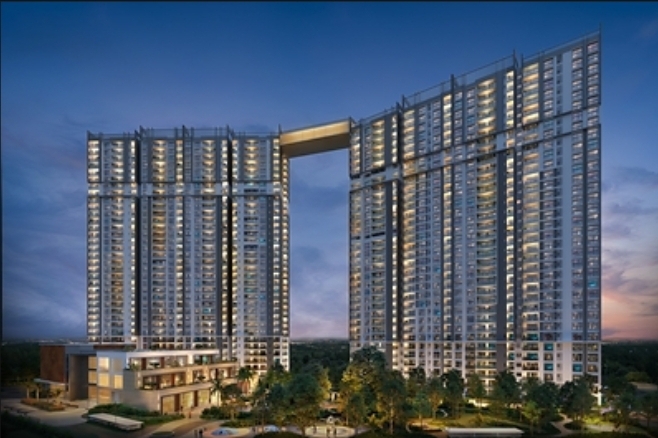
Mana Forest Province Bengaluru residential CX is emerging as a useful case study in how premium housing can move beyond amenities toward experience-led community design. Mana Projects has launched Forest Province, a 10-acre residential enclave within The Right Life, with an estimated ₹3,101 crore GDV and about 1,052 homes. Its 1+ acre urban forest, vehicle-free podium, pedestrian-first planning, club infrastructure and large-format residences position everyday experience as a central design consideration. For CX leaders, the development highlights a broader shift: customers increasingly evaluate environments through safety, convenience, continuity, wellness and community. That makes residential design increasingly relevant to customer trust and brand experience.
Real estate traditionally competes through location, specifications, pricing and amenities. However, premium residential CX increasingly depends on how consistently a development performs across everyday journeys. Mana Forest Province Bengaluru residential CX illustrates this transition from selling physical space to orchestrating an environment. Residents interact with security, mobility, recreation, workspaces, wellness facilities, landscaping and community areas every day. Each interaction can strengthen or weaken perceived value. Moreover, integrated developments create expectations around continuity: residents want predictable access, safe movement, convenient services and dependable infrastructure. The CX question therefore extends beyond the apartment itself. It asks whether the complete residential ecosystem reduces friction and creates confidence. This perspective makes urban design, circulation, community infrastructure and environmental quality part of the customer experience architecture.
Mana Projects positions Forest Province around differentiation rather than another conventional high-rise proposition. The architecture combines eight towers, limited residences per floor, large-format homes and extensive shared infrastructure. More importantly, the company places a 1+ acre forest at the centre of the residential experience. This creates a distinctive spatial identity that competitors cannot easily reproduce through standard amenity lists. The vehicle-free podium also changes how residents navigate shared spaces. Meanwhile, the three-clubhouse model separates fitness, wellness, work, leisure and social functions across ground and elevated environments. The strategy effectively bundles architecture, landscape, mobility and community into one proposition. From a competitive standpoint, Mana Projects is therefore selling an ecosystem rather than simply square footage, although execution quality will ultimately determine whether the proposition delivers its promised experience.
The strongest CX implications appear in the ordinary journeys residents make every day. A vehicle-free podium can improve perceived safety and encourage walking. Centralised green space can create a calmer transition between private homes and shared environments. Multiple club zones can reduce congestion and give residents more choice. These design decisions can strengthen trust when the physical experience consistently matches expectations. However, experience reliability depends on operational execution. Landscaping requires maintenance. Shared facilities require predictable availability. Security must protect residents without creating friction. Basement traffic systems must work smoothly. Digital access, visitor management and service responsiveness can also influence perceptions. Therefore, the project’s CX value will depend not only on its architecture but also on data protection, service continuity and the consistency of interactions across the resident lifecycle.
The development points toward a broader residential market shift. Buyers increasingly compare communities through the quality of the ecosystem surrounding their homes. Consequently, developers may need to treat experience architecture as a strategic discipline rather than a marketing layer. Enterprise decision-makers can draw a similar lesson: physical environments influence digital and service experiences because customers judge brands through complete journeys. Future residential projects may increasingly integrate wellness, mobility, environmental design, community programming and technology. At the same time, developers will face higher expectations around privacy, cybersecurity and responsible data use. The competitive question will gradually move from “What amenities do you offer?” to “How reliably does the entire experience work?”
Mana Forest Province Bengaluru: Why nature-led design is becoming a customer experience strategy
Bengaluru’s premium housing market is increasingly competing on more than location, floor plans and amenities. The launch of Forest Province by Mana Projects brings Mana Forest Province Bengaluru residential CX into focus by putting nature, mobility, community and everyday usability at the centre of a large residential proposition. The 10-acre enclave forms part of The Right Life, a 100+ acre integrated development, and carries an estimated Gross Development Value of ₹3,101 crore. The project will comprise approximately 1,052 units across eight residential towers, with homes ranging from roughly 1,700 to 2,800 sq. ft. However, its most consequential CX proposition may sit outside the apartments: a 1+ acre urban forest designed as the development’s ecological and social centre.
Why Mana Forest Province Bengaluru residential CX matters beyond real estate
Residential CX rarely receives the same analytical attention as banking, retail, hospitality or telecommunications. Yet homeowners experience dozens of service and environmental touchpoints every day.
They enter and exit the property, interact with security, navigate parking, use elevators, access recreational facilities, meet neighbours, work from shared spaces and depend on maintenance services. Parents assess children’s safety. Older residents evaluate accessibility. Professionals consider connectivity and convenience. Families judge whether common areas actually support the lifestyle promised during purchase.
Therefore, the customer experience begins long before residents enter their homes.
Forest Province attempts to address this broader journey through a combination of pedestrian-first planning, green spaces, club infrastructure and separation between vehicular and community areas.
That distinction matters because premium customers increasingly evaluate value through cumulative experience. A beautiful apartment can attract attention, but a well-designed ecosystem can determine long-term satisfaction.
Editorial Pull-Quote: “Premium residential CX is increasingly determined by what happens between the front door and the wider community.”
Nature becomes part of the experience architecture
The project’s defining feature is its 1+ acre ground-level forest. Mana Projects says the space will include more than 1,000 trees, shrubs and plants and draws inspiration from the Miyawaki forest approach.
The company positions the forest as a living ecological core rather than decorative landscaping. Its design aims to create biodiversity, greenery and a cooler and quieter microclimate.
From a CX perspective, that distinction is important.
Green space changes how residents experience a property. It can provide visual relief from high-rise density, create places for informal interaction and introduce a transition between private and communal life. Moreover, the forest gives the development a recognisable identity.
For a premium residential brand, identity matters because customers do not evaluate every feature independently. They form an overall perception of the place.
If the forest becomes a genuinely usable part of everyday life, it could become the project’s strongest experiential asset. If it becomes difficult to maintain or access, however, its CX value could decline.
That creates an important operational challenge for Mana Projects: the experience promise must survive beyond launch day.
Mana Forest Province Bengaluru residential CX puts mobility and safety into the design
The project also introduces a vehicle-free podium. Vehicular movement will move into basement levels through dedicated ramps, allowing the podium to prioritise pedestrians.
This may appear primarily architectural, but it carries direct CX consequences.
Removing vehicles from major shared areas can improve perceived safety and encourage walking. It can also create quieter spaces for children, families and residents who want to use communal areas without negotiating regular traffic.
However, good mobility design must work operationally. Basement access needs to remain efficient during peak periods. Visitors need intuitive navigation. Deliveries and service personnel need defined routes. Emergency access must remain reliable.
Consequently, the project’s CX performance will depend on whether the underlying circulation system works as smoothly as its design suggests.
Editorial Pull-Quote: “When mobility becomes frictionless, infrastructure stops being invisible and starts becoming part of the customer experience.”
The same principle applies to security. Residents expect protection, but excessive friction at entry points can damage convenience. The strongest residential experience therefore requires security systems that protect without unnecessarily disrupting everyday journeys.

A club model designed around different customer journeys
Forest Province will offer more than 46,000 sq. ft. of clubhouse infrastructure distributed across three distinct environments.
Club One will operate at ground level, connecting indoor recreation and swimming facilities with the central forest. The Sky Club will provide elevated lifestyle facilities with panoramic views. Its Sun Club will focus on fitness, co-working and wellness, while the Moon Club will emphasise social and leisure experiences.
This segmentation represents a more sophisticated approach than simply accumulating amenities.
Different residents use shared spaces differently. Someone working remotely may value co-working facilities. Another resident may prioritise fitness. Families may prefer recreation areas, while others may seek social or entertainment spaces.
By separating functions, the development can potentially reduce competing demands on common facilities.
However, this also creates a more complex service environment. More facilities mean more maintenance requirements, more operating processes and potentially more points where customer expectations can diverge from reality.
That makes service continuity critical.
A premium CX proposition cannot depend solely on opening a large clubhouse. Residents must find facilities available, clean, safe and functional when they expect to use them.
From architectural promise to trust and experience reliability
The statement from Mana Projects captures the intended positioning.
D. Kishore Reddy, CMD, Mana Projects, said:
“Forest Province is envisioned as a space where residents can reconnect with nature without stepping away from the city. With the central forest, pedestrian-first design, and thoughtfully planned community spaces, the development reflects our belief that modern luxury lies in creating environments that are calm, connected, and designed for long-term well-being.”
The quote highlights three important CX dimensions: calm, connectivity and long-term usability.
Yet these dimensions require more than architecture.
Trust emerges when customers repeatedly experience consistency between promise and delivery. For residents, that means landscaping remains maintained, common facilities operate reliably, security remains dependable and shared spaces remain usable.
Data protection also becomes increasingly important as residential ecosystems become more technology-enabled. Access control, visitor management, smart-home systems, parking systems, community applications and payment platforms can generate sensitive resident information.
Therefore, a future-ready residential CX strategy cannot treat cybersecurity and privacy as back-office issues. They form part of the trust equation.
Editorial Pull-Quote: “In connected residential communities, data protection becomes as important to trust as physical security.”
The larger township changes the customer proposition
Forest Province sits within The Right Life, a development exceeding 100 acres. The location close to the township’s entrance and upcoming office developments adds another dimension to the proposition.
The project is not positioning itself as an isolated residential tower cluster. Instead, it forms part of a larger ecosystem combining residential, workplace and social infrastructure.
That can influence the customer journey in significant ways.
Residents may value reduced commuting friction, access to nearby services and the ability to combine work and home within a connected environment. Families can also benefit when education, healthcare, retail and recreational infrastructure exists within a broader urban ecosystem.
East Bengaluru’s evolution strengthens this proposition. The area has developed beyond its earlier identity as primarily an IT-led growth corridor. Residential demand increasingly reflects the presence of education, healthcare, retail and social infrastructure.
As a result, location itself becomes an experience platform.
What developers can learn from Mana Forest Province Bengaluru residential CX
The project’s wider significance lies in what it says about premium residential competition.
Developers have traditionally differentiated through specifications: larger homes, taller towers, better finishes, swimming pools, gyms and landscaped gardens. Those features still matter. However, they increasingly function as components of a larger experience rather than standalone differentiators.
The more difficult competitive advantage lies in orchestration.
How quickly can residents move through the property? How safe do children feel? Can professionals work comfortably? Are community spaces genuinely usable? Does nature remain attractive after several years? Can residents access services without friction? Does technology make life simpler without compromising privacy?
These questions shift residential development closer to CX management.
Editorial Pull-Quote: “The next residential differentiator may not be the number of amenities, but how well the ecosystem orchestrates them.”
This also creates a measurement challenge. Developers may need to monitor resident satisfaction across individual journeys rather than relying only on periodic overall surveys.
Metrics could include facility availability, maintenance response times, security experience, visitor-processing time, complaint resolution, community engagement and digital-service reliability.
Such measures can turn residential CX from a marketing concept into an operational discipline.
The experience test begins after possession
The launch creates a strong proposition, but the real CX test will come after residents move in.
Nature-led design requires sustained horticultural management. Club infrastructure requires disciplined operations. Vehicle-free spaces require effective traffic management. High-rise living requires dependable elevators, utilities, security and emergency systems.
Moreover, resident expectations evolve.
A facility that feels innovative at launch can become ordinary within a few years. Therefore, developers need continuous listening mechanisms that identify changing expectations and emerging friction.
For Mana Projects, Forest Province offers an opportunity to demonstrate whether a nature-led, community-focused proposition can maintain its experiential value over time.
For the broader industry, it provides another signal that residential CX is expanding beyond the apartment itself.
The strongest premium communities may ultimately be those that make everyday life feel easier, safer, healthier and more connected.
That is where Mana Forest Province Bengaluru residential CX becomes more than a project-specific story. It reflects a wider shift in how customers define value in the built environment.
The development also demonstrates why Mana Forest Province Bengaluru residential CX should be evaluated through both physical design and operational delivery. The former creates the promise; the latter determines whether residents experience that promise consistently.
Editorial Pull-Quote: “A residential brand earns loyalty not when it delivers a spectacular launch, but when everyday life continues to work as promised.”
