
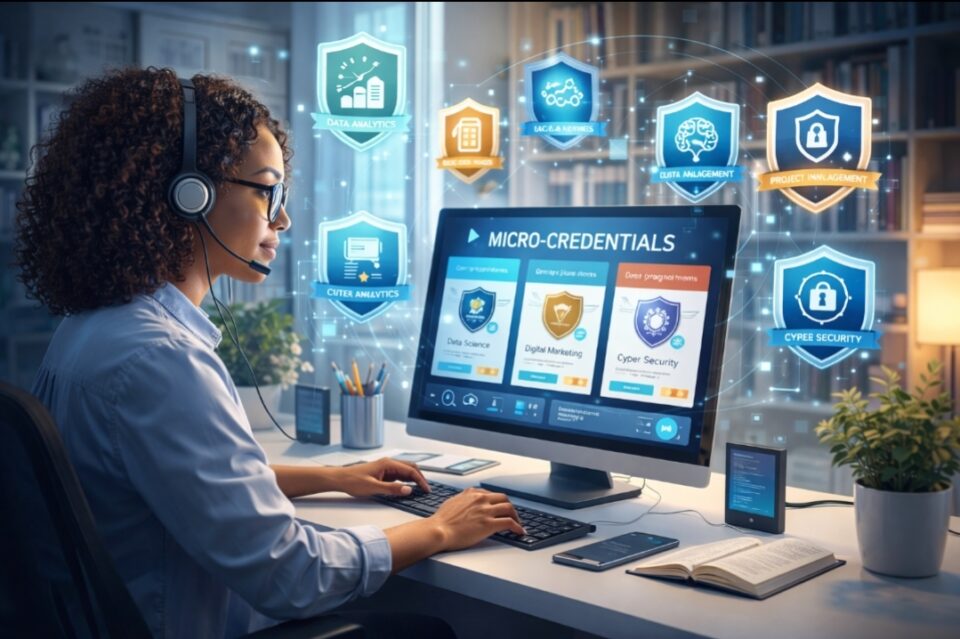
A new CXQuest.com analysis explores the major trends transforming education, business, and service industries—and why CX leaders must rethink how experiences are designed, delivered, and managed.
When AI Meets a Frustrated Customer
Imagine this.
A customer opens a banking app at 10:30 PM. A payment failed. They need help quickly.
The chatbot responds instantly.
But the answers feel scripted. The bot cannot access transaction history. It transfers the user to email support. The customer closes the app frustrated.
Now imagine the opposite experience.
The AI recognizes the failed transaction, apologizes proactively, and offers a one-tap refund. The issue resolves in seconds.
That difference defines the next era of customer experience.
Across industries—from education platforms to global enterprises—leaders are redesigning operations around AI, automation, and intelligent journeys. Yet the transformation is uneven. Many organizations still struggle with siloed teams, fragmented journeys, and disconnected data.
For CX and EX leaders, the real question is no longer whether change is coming.
The question is which trends will shape the next competitive advantage.
Below are the major trends transforming education, business, and service industries, along with practical insights CX leaders can act on today.
What Are the Key Trends Reshaping CX Across Industries?
The biggest trends include AI-powered service, micro-credentials in education, hybrid work models, hyper-personalization, and journey orchestration.
These trends matter because they redefine how organizations design experiences for customers, employees, and learners.
Organizations that align CX strategy with these trends gain faster innovation, stronger loyalty, and better operational efficiency.
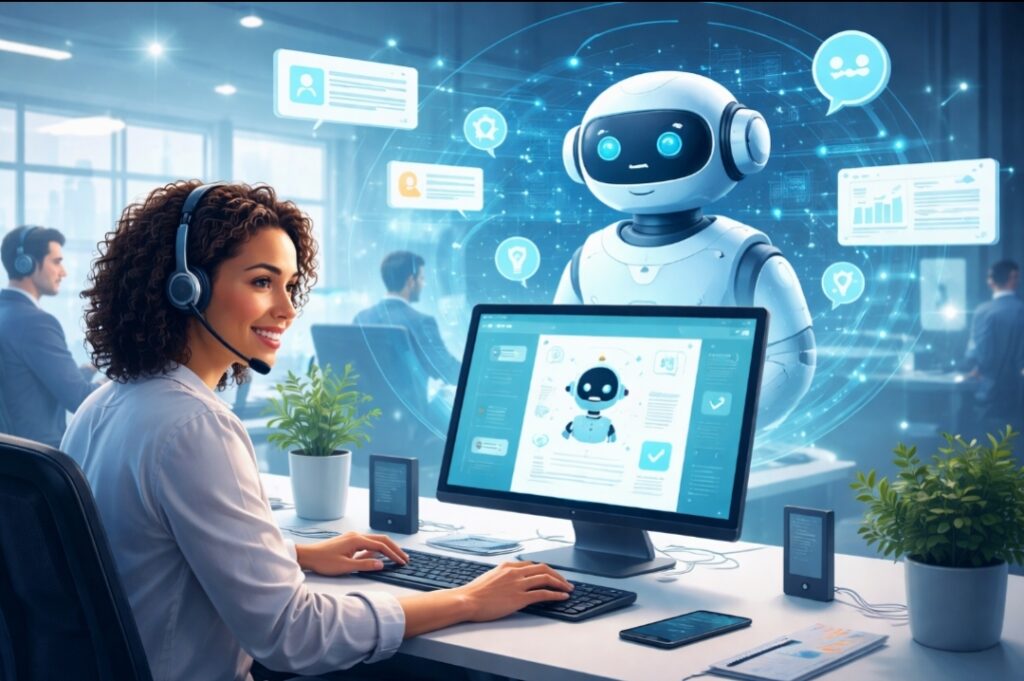
Trend #1: AI-Powered Customer Service
What Is AI-Powered Customer Service and Why Does It Matter?
AI-powered service uses machine learning, conversational AI, and automation to resolve customer needs faster and more intelligently.
It matters because customers now expect instant, contextual support across channels.
The Impact
Traditional customer service relies on human agents and manual processes.
AI changes this model dramatically.
Modern CX platforms now use:
- Conversational chatbots
- Predictive analytics
- Voice AI
- Automated ticket resolution
- Real-time knowledge retrieval
These technologies allow organizations to resolve issues before customers escalate them.
The shift also affects employee experience.
Support agents move from repetitive tasks to complex problem-solving and relationship management.
Real-World Example
Many global companies now deploy AI to handle high-volume support interactions.
Some telecom companies report 60–70% of customer queries resolved automatically through AI assistants.
Airlines use AI to rebook flights instantly during disruptions.
Retailers deploy AI chat systems that recommend products based on browsing history.
The result: faster resolution and reduced support costs.
Future Outlook (Next 2–3 Years)
AI will evolve from reactive chatbots to predictive service systems.
Systems will anticipate issues before customers ask for help.
Voice AI will also grow rapidly in contact centers.
The next generation of service platforms will combine AI, human agents, and automation into a single orchestrated experience.
Trend #2: The Rise of Micro-Credentials in Education
What Are Micro-Credentials and Why Do They Matter?
Micro-credentials are short, focused learning programs that certify specific skills rather than full degrees.
They matter because the job market now changes faster than traditional education systems.
The Impact
Universities once dominated education pathways.
Today, professionals prefer short, targeted learning programs that deliver immediate career value.
Micro-credentials provide:
- Flexible learning
- Industry-relevant skills
- Faster certification
- Lower cost education
For CX leaders in education platforms, this shift changes how learning journeys are designed.
Learning experiences must feel personalized, modular, and outcome-driven.
Real-World Example
Many global universities now offer micro-certifications in fields like data analytics, cybersecurity, and AI.
Professional platforms also offer short programs that employers recognize.
Technology companies partner with universities to create career-focused credentials aligned with industry needs.
Future Outlook (Next 2–3 Years)
Micro-credentials will become mainstream hiring signals.
Employers will increasingly evaluate skills portfolios rather than degrees.
Education platforms will evolve into lifelong learning ecosystems, where professionals continuously update their capabilities.
Trend #3: Hybrid Work and Employee Experience Transformation
What Is Hybrid Work and Why Does It Matter?
Hybrid work combines remote and in-office collaboration, supported by digital tools and flexible work policies.
It matters because employee experience now directly affects customer experience.
The Impact
When employees struggle with tools, processes, or collaboration, customers feel the consequences.
Hybrid models force organizations to rethink:
- Employee engagement
- Digital workplace design
- Collaboration workflows
- Leadership models
CX and EX leaders now work closely together.
A frustrated employee cannot deliver a great customer experience.
Forward-thinking organizations now treat EX as the foundation of CX.
Real-World Example
Many companies now run global support teams entirely remotely.
Cloud contact centers allow agents to handle calls, chats, and messages from anywhere.
Collaboration platforms enable distributed teams to share knowledge instantly.
Organizations that invested early in digital workplaces now see higher productivity and retention.
Future Outlook (Next 2–3 Years)
Hybrid work will become permanent.
Companies will invest more in:
- AI copilots for employees
- Digital workflow automation
- Virtual collaboration environments
Employee experience platforms will become central to CX strategy.
Trend #4: Hyper-Personalization Powered by Data
What Is Hyper-Personalization in CX?
Hyper-personalization uses real-time data and AI to tailor experiences for individual customers.
It goes beyond basic segmentation.
Instead, it delivers context-aware interactions in the moment.
The Impact
Customers no longer accept generic experiences.
They expect companies to understand:
- Preferences
- Behavior
- Intent
- Context
Hyper-personalization enables businesses to recommend products, content, or support solutions precisely when customers need them.
It improves:
- Conversion rates
- Customer satisfaction
- Brand loyalty
However, it also requires robust data governance and privacy practices.
Real-World Example
Streaming platforms provide one of the best examples.
They recommend content based on viewing history and engagement patterns.
Retail brands use similar technology to create personalized product suggestions and promotions.
Financial apps provide spending insights tailored to individual habits.
Future Outlook (Next 2–3 Years)
Hyper-personalization will move from marketing into end-to-end customer journeys.
Every interaction—from onboarding to support—will adapt dynamically based on customer behavior.
Companies that fail to personalize experiences risk losing relevance.
Trend #5: Journey Orchestration Platforms
What Is Journey Orchestration and Why Do CX Teams Need It?
Journey orchestration connects data, systems, and teams to manage customer journeys across every touchpoint.
It matters because modern journeys span multiple channels, teams, and technologies.
The Impact
Most organizations still operate in silos.
Marketing owns campaigns. Support owns service. Product owns digital experiences.
Customers, however, see one brand.
Journey orchestration platforms break down these silos by unifying data and workflows.
They allow CX leaders to:
- Map journeys in real time
- Trigger automated responses
- Align teams around shared customer outcomes
This capability transforms CX from reactive support into proactive experience management.
Real-World Example
Some digital banks now orchestrate customer journeys across mobile apps, chat support, and notifications.
If a payment fails, the system automatically:
- Sends a notification
- Offers troubleshooting
- Connects the customer with support if needed
The experience feels seamless because the underlying systems work together.
Future Outlook (Next 2–3 Years)
Journey orchestration will become a core CX capability.
AI will analyze journeys continuously and recommend improvements.
Organizations will move from static journey maps to living journey systems.
Key Insights for CX Leaders
Several patterns connect these trends.
1. AI is becoming the operating system of experience.
AI will power service, analytics, personalization, and automation.
2. Experience design now spans customers and employees.
Great CX requires strong EX foundations.
3. Skills are evolving faster than traditional education models.
Continuous learning will define workforce competitiveness.
4. Data is the fuel of personalization and automation.
Organizations without integrated data platforms will struggle to compete.
Common Pitfalls CX Leaders Should Avoid
Many transformation initiatives fail due to predictable mistakes.
Technology-first thinking
Organizations deploy AI tools without clear customer journey strategies.
Siloed ownership
Teams optimize individual metrics rather than end-to-end experiences.
Ignoring employee experience
Employees need the right tools and training to deliver great service.
Poor data integration
Fragmented data prevents personalization and automation.
Avoiding these pitfalls requires cross-functional collaboration and strong CX governance.
A Simple Framework for Navigating These Trends
CX leaders can use a four-step framework to guide transformation.
1. Map Critical Journeys
Identify high-impact customer journeys across channels.
2. Align Teams Around Outcomes
Break down silos between marketing, service, product, and IT.
3. Introduce Intelligent Automation
Use AI and automation to improve speed and accuracy.
4. Measure Experience Continuously
Track customer and employee feedback to refine journeys.
This structured approach helps organizations scale CX improvements systematically.
Frequently Asked Questions
Why are CX trends affecting education and business industries?
Customer expectations influence every sector. Education platforms, businesses, and service providers must deliver seamless digital experiences.
How does AI improve customer experience?
AI enables faster responses, predictive support, and personalized interactions, improving satisfaction and operational efficiency.
Why is employee experience critical to CX success?
Employees deliver customer interactions. When they have better tools and workflows, service quality improves.
What role does data play in modern CX strategies?
Data enables personalization, predictive analytics, and journey orchestration. Without integrated data, CX improvements remain limited.
How should organizations prioritize CX transformation?
Start with high-impact journeys, align cross-functional teams, and gradually introduce automation and AI capabilities.
Actionable Takeaways for CX Leaders
- Identify three high-friction customer journeys and prioritize improvement efforts.
- Audit AI readiness across support, analytics, and automation capabilities.
- Break down silos between CX, EX, and IT teams to align experience strategies.
- Invest in unified customer data platforms to enable personalization.
- Train employees to collaborate with AI tools, not compete with them.
- Implement journey orchestration technology for real-time experience management.
- Track both CX and EX metrics to understand experience performance.
- Experiment continuously with new digital experience models.
The next era of customer experience will not be defined by individual tools.
It will be defined by how intelligently organizations connect people, data, and technology to deliver meaningful experiences.
For CX leaders, the opportunity is enormous.
Those who understand these trends—and act on them early—will shape the future of experience across industries.
