

Ever been trapped in a chatbot loop when all you needed was a human who could decide?
Now imagine that frustration stretched across 30 days, legal filings, and court adjournments.
That is not a service failure.
That is a broken justice experience.
For most CX leaders, courts feel untouchable—slow, complex, resistant to change.
Yet thousands of disputes in U.S. state courts now resolve in days, not weeks, using a platform built quietly out of Chennai.
At the center of this shift is Aditya Shivkumar—a practicing advocate with over 15 years at the Madras High Court, UK-certified mediator, and Co Founder of Resolve Disputes Online, RDO Group Ltd, a platform to tackle dispute resolution, designed in India for the world. His platform has delivered 67% ROI, accelerated throughput, and earned trust in one of the world’s most conservative institutional environments.
67% ROI, Accelerated Throughput, and Earned Trust
What makes this story compelling for CX leaders is not the technology.
It is the philosophy.
Aditya does not “disrupt” courts.
He designs CX for institutions where trust, due process, and fairness are non-negotiable.
Beyond justice systems, his work in sports and esports governance mirrors the same principles—athlete-first experience, clean systems, and governance that outlives individual leaders.
This CXQuest interview explores what happens when CX thinking graduates from apps to institutions, and why the future of experience design may belong to people who understand systems, not screens.
Justice Systems: CX is Customer Transformation
Q1. What CX win in your journey surprised you the most?
AS: CX is often known within the industry as Customer Experience, but I would paraphrase this to be the X factor in enterprise journey for a B2B client and it’s end users. Customer Experience is very different to offering an X factor for the customer – who in this case happens to be the business itself. In my view CX is Customer Transformation. In B2B, nothing is a surprise, because the standards of user experience has to be higher than a B2C offering.
The watershed moment for our clientele was Covid, where the last pillar to embrace technology, the legal profession, embraced technology to ensure it survived during the Covid years. I would not state what surprised me, but the will of ensuring every B2B client had a Chief Innovation Officer in the Judiciary is what made the experience transformative.
Q2. When did you realize courts also have “customers,” even if they never use that word?
AS: When you realise that your users demand world class, state of the art products for them to work with the courts, that is when courts realise that they need to move towards tranforming their outlook to how they perceive their users. An individual or an entity approaching the wheels of justice, is now wanting a feel good factor. This has been witnessed in the US, India and other mature legal economies. Courts are going the last mile to ensure there is a “wow” factor of coming to court.
Biggest Misconception about Legal and Judicial Systems
Q3. What is the biggest misconception CX leaders have about legal and judicial systems?
AS: That you don’t need to bring in design principles and technological pivots into the legal and judicial systems !
Q4. How did your mediation background shape RDO’s experience design principles?
AS: In the last 15 years or so in the legal field, I have had the privilege of wearing many hats : 1. Litigant – End User of the Court
2. Advocate – Being a key stakeholder in the judicial process
3. Co Founder of RDO – translating 1 and 2 to ensure that technology is able to address the key gaps that both litigant and advocates would need in a system.
Therefore, RDO’s design principles is based on what a legal user would aspire to have in their platform. This laid the foundation for RDO’s growth in initial years of its journey.
Q5. What moments in a dispute journey matter most to user trust?
AS: It is when they realise that the platform is a safe place for both sides of the dispute to arrive at a consensus. Tech acts as an emotional anchor for users to a dispute, this anchor provides them an equal footing to resolve their disputes. Another factor we have witnessed is the play on colors within the platform that performs a key role within the psyche of an user. If they can trust the tech and the tech can provide subtle prompts by keeping the focus on the objective on hand – to resolve the dispute, this is what matters to the end user.
Justice Systems: Balancing Speed with Fairness
Q6. How do you balance speed with fairness in high-stakes CX environments?
AS: Being fair to both speed and technology !
Q7. What CX metrics actually resonate with judges and court administrators?
AS: Excellent question, by using our platform they can first hand see how technology has an impact on the court’s top line and bottom line. When we refer to top line and bottom line in the judicial parlance, top line : reduction of pendency and bottom line – user satisfaction. These two metrics will inform the judges and court administrators on how they tackle a key problem faced world over : efficient and affordable justice. I call this the Justice Care economy, where companies like RDO attempt to tackle the last mile problem of providing critical justice care for courts and it’s end user.
Q8. Why do institutions trust tools that feel boring more than tools that feel innovative?
AS: This trend is changing, else we won’t be in business ! I believe Covid is to be thanked for, for as an entrepreneur I believe the pandemic is a good crisis to happen for the legal profession: it got them to rise up from their slumber of trusting legacy systems. Pandemic/Crisis taught them to love innovation, for there is no pandemic for institutions world over.
Managing Change Fatigue Inside Conservative Systems
Q9. How does RDO manage change fatigue inside conservative systems?
AS: We have faced none ! we have serviced clients from South East Asia to even powering a Jewish dispute resolution center in our initial years.
Q10. What does “good friction” look like in justice and governance CX?
AS: “Good friction” in justice and governance CX is the kind of resistance that protects fairness without strangling progress. It is the deliberate pause in the system that says, “Let’s double check this before someone gets hurt.”
In courts, policing, welfare delivery, taxation, or licensing, not all smoothness is good. A system that is too slick can quietly slide into bias, corruption, or error. Good friction builds trust.
Q11. How do you reconcile CX-cost conflicts in AI-orchestrated dispute models?
AS: Today with AI, you can resolve 75% of cookie cutter disputes, however it can never replace years of experience of human intelligence. I don’t see this as cost conflicts but I see as an opportunity for people working in technology to reskill and upskill themselves. AI is here to stay, but only as a companion in the last bastion where tech has never been a best friend : the legal field.
Justice Systems ROI when Outcomes are Trust and Legitimacy
Q12. What proves ROI when outcomes are trust and legitimacy, not conversions?
AS: The ROI in the legal technology and justice care economies aren’t unit metrics. it is the experience of coming to the most daunting place for 90% of the population – the courts and coming out with a feeling of satisfaction. To achieve this state, courts are investing enormous time, effort and monies on how they can value to the last mile justice care experience for the litigant.
Q13. How does institutional CX differ from enterprise or consumer CX frameworks?
AS: In a level playing world – no difference. A whatsapp or an Instagram story is the same experience that a litigant will expect from a justice care economy within the next 18 months.
Q14. What lessons from sports governance apply directly to justice systems?
AS: Ability to be resilient, transformative and ensure that litigant wins and justice prevails in a time bound manner.
Q15. As AI enters courts, what experience failures should leaders avoid at all costs?
AS: Do not outsource your thinking to AI, the human brain is the most powerful tool in today’s world. leaders must ensure AI is at best a companion and not a replacement for critical thinking. courts are the last bastion for justice for litigants, it’s therefore important to ensure that AI is a good friend !
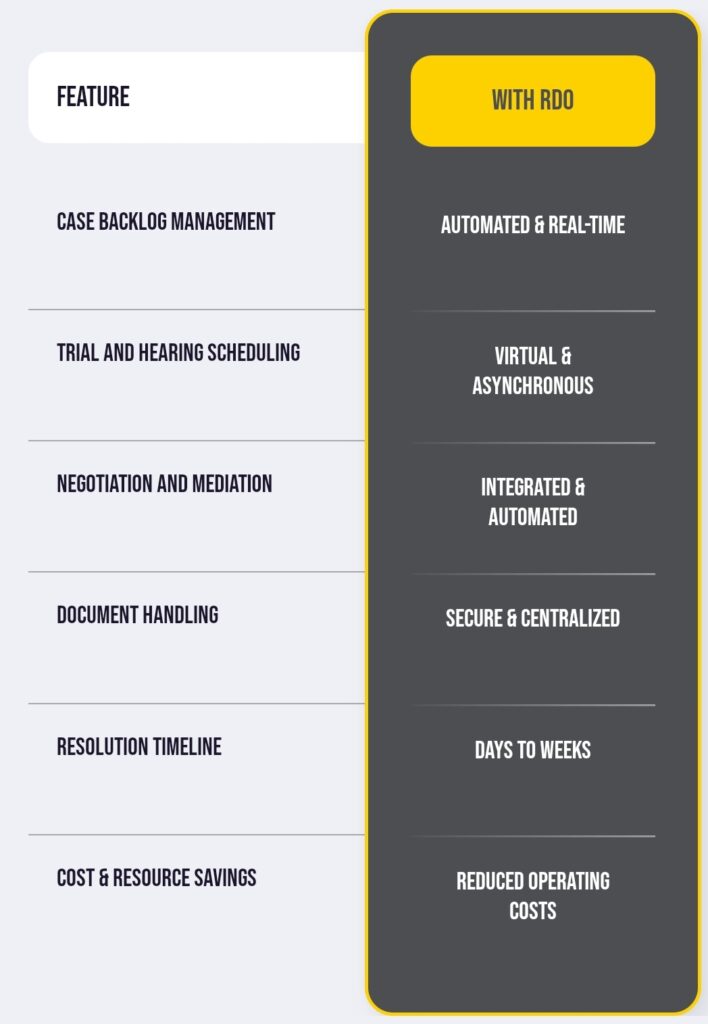
Justice Systems CX: Courts, Governance Bodies, and Public Institutions
This conversation with Aditya Shivkumar reframes CX where it is rarely discussed—courts, governance bodies, and public institutions.
Key insights stand out clearly:
CX is infrastructure, not interface, in high-trust systems
Speed without legitimacy destroys experience
Institutions adopt tools that strengthen authority, not replace it
Governance is an experience delivered over decades
As CX leaders experiment with agentic AI, automation, and orchestration, Aditya’s work is a reminder:
the highest-impact CX problems are not always the loudest ones.
They sit quietly in systems that shape lives at scale.
Explore more perspectives like this in our AI in CX, Enterprise CX, and Public Systems Experience hubs on CXQuest.com—and ask yourself one question:
If CX can work for courts, where else have we underestimated its power?
