

Imarticus Learning Reports India’s Largest Placement Cycle Signals a Structural Shift in Outcome-Based Education: A New Benchmark in Outcome Accountability
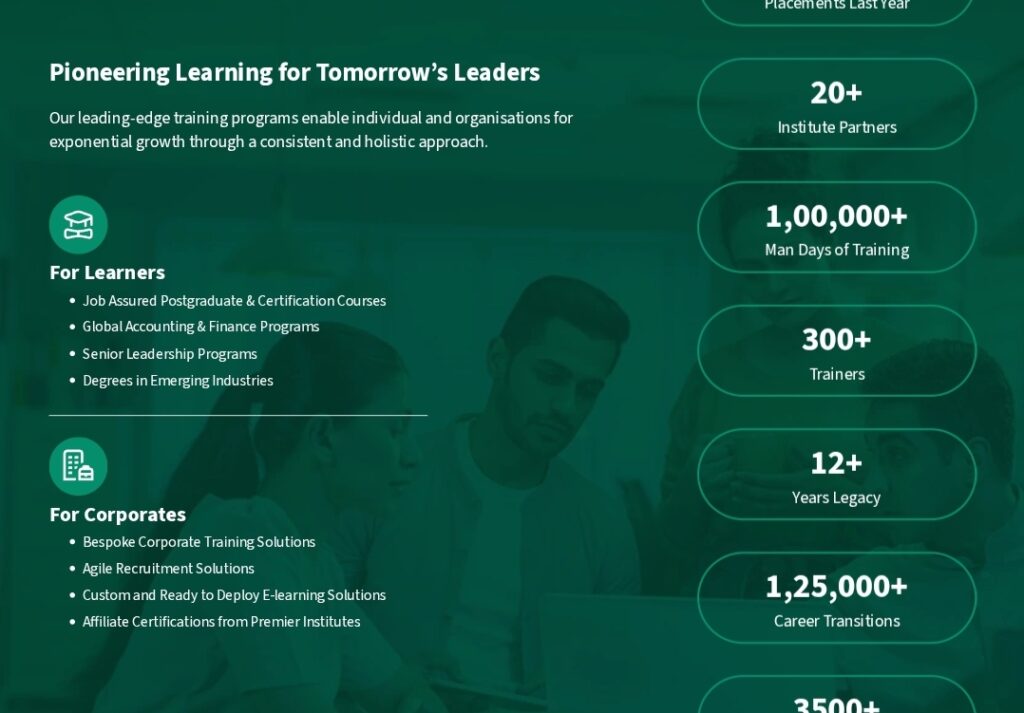
Imarticus Learning Reports India’s Largest Placement Cycle, marking a defining moment in how education outcomes are measured in India’s evolving skilling economy. With over 4,500 placements and an estimated ₹160 crore in annual salaries, Imarticus Learning has moved beyond training delivery into measurable employment impact.
This becomes critical when viewed against the backdrop of rising graduate unemployment. Traditional education systems continue to optimize for degrees, not outcomes. The deeper implication is that education without employability is losing relevance.
What we are witnessing is not just scale—it is the emergence of accountability-led education models.
Why Imarticus Learning Reports India’s Largest Placement Cycle Matters
At a structural level, Imarticus Learning Reports India’s Largest Placement Cycle because it has aligned its operating model with enterprise hiring demand, not academic frameworks.
Companies such as Goldman Sachs, JP Morgan, Morgan Stanley, Deutsche Bank, Wells Fargo, Nomura, Societe Generale, Citi, Northern Trust, MSCI, State Street Bank, CRISIL, Hexagon, Flipkart, NTT Data, HDFC Bank, Wipro, Hitachi Energy, Pfizer, Cartesian Consulting, and Furlenco represent a cross-sector validation of this model.
This becomes critical when enterprises are under pressure to reduce hiring inefficiencies. Instead of training talent post-hiring, they increasingly expect job-ready candidates at entry.
The deeper implication is clear:
Education providers are now becoming embedded extensions of enterprise talent strategy.
From Courses to Career Pipelines: The Strategic Shift
The traditional education model treated placement as a secondary outcome. The new model treats placement as the primary deliverable.
“The education sector today needs to focus on outcomes. 4500 placements in one year, across finance, data science, and AI, with 500+ companies hiring our learners. The model is straightforward: train people in what the market actually needs, and take responsibility for the outcome.” — Nikhil Barshikar, Founder & CEO, Imarticus Learning
Strategically, this indicates a shift from:
- Content ownership → Outcome ownership
- Curriculum delivery → Career pipeline orchestration
This is where the shift occurs: institutions are no longer judged by what they teach, but by where their learners land.
Competitive Positioning: A Hybrid Advantage
In a crowded EdTech landscape, differentiation is increasingly tied to placement credibility.
- Platforms like UpGrad, Great Learning, and Simplilearn emphasize certification-led growth
- University-linked programs (IIMs, IITs, ISB) emphasize brand and academic rigor
- Outcome-first models (Masai, Newton) emphasize placement guarantees
Imarticus Learning sits at a unique intersection:
- Deep domain specialization (finance + analytics + AI)
- Strong enterprise hiring integration
- Scaled placement execution
This hybrid positioning allows it to operate not just as a learning provider, but as a talent pipeline infrastructure layer.
Technology as the Invisible Engine
While the announcement foregrounds placement numbers, the underlying system is inherently technology-driven.
At an operational level, this includes:
- Demand sensing through employer networks
- Curriculum alignment engines
- Candidate performance tracking systems
- Placement orchestration platforms
This becomes critical when placements are distributed across 500+ companies. Such scale cannot be achieved without systematic matching algorithms and feedback loops.
The deeper implication is that Imarticus Learning is effectively running a closed-loop talent system, where:
Demand → Training → Assessment → Placement → Feedback → Iteration
CX Impact: From Learning Experience to Career Outcomes
From a CX standpoint, this marks a fundamental redefinition of value.
Customer (Learners):
The learner journey is no longer evaluated by course satisfaction but by employment outcomes and salary uplift.
Business (Enterprises):
Companies benefit from reduced hiring costs, faster onboarding, and improved productivity.
System (Education Ecosystem):
Education becomes quantifiable through ROI metrics, such as placement rates and compensation benchmarks.
This becomes critical when learners begin to select programs based on placement data transparency, not curriculum marketing.
The deeper implication is that CX in education is now outcome-indexed.
Maturity Curve: Where the Model Stands
Imarticus Learning operates at an advanced CX maturity level, characterized by:
- Measurable outcomes
- Direct accountability
- Economic value delivery
However, the model is not without challenges.
Scaling such systems requires:
- Continuous employer engagement
- Dynamic curriculum updates
- Consistent placement quality
The trigger for the next evolution will be the ability to maintain personalization at scale.
Decision Intelligence: What Others Should Do
For institutions evaluating this model:
Build vs Buy vs Partner
- Build: High investment, slow time-to-market
- Buy: Limited adaptability
- Partner: Most viable pathway
Risk Assessment
- Dependence on hiring cycles
- Sector-specific demand fluctuations
Implementation Complexity: Medium–High
The deeper implication is that institutions must re-architect themselves around employability outcomes, not academic structures.
Industry Implications: A Talent Supply Chain Reset
The ripple effects of Imarticus Learning Reports India’s Largest Placement Cycle extend beyond one company.
Talent:
Shift toward role-specific, industry-aligned skilling
Competition:
Institutions now compete on placement outcomes, not pedagogy
Ecosystem:
Blurring boundaries between:
- Education providers
- Recruitment firms
- Workforce platforms
This becomes critical as the education ecosystem transforms into a talent supply chain network.
The Future: Education as a Managed Service
Imarticus Learning Reports India’s Largest Placement Cycle not as an isolated achievement, but as an indicator of what lies ahead.
The future model of education will likely include:
- Continuous upskilling cycles
- Subscription-based learning
- Embedded hiring pipelines
The deeper implication is that education will evolve into a managed career service, rather than a one-time degree experience.
Final Takeaways
- Placement is emerging as the primary CX metric in education
- Curriculum is becoming dynamically aligned to market demand
- Education providers are transforming into talent infrastructure players
Imarticus Learning Reports India’s Largest Placement Cycle, and in doing so, signals a larger transformation—from education systems to employment systems.
The question now is not whether this model will scale.
It is whether traditional institutions can adapt fast enough to remain relevant.
