
Accenture and Databricks Expand Partnership to Scale Enterprise AI Adoption
Accenture and Databricks have expanded their long-standing collaboration to accelerate the adoption of enterprise-scale AI applications and autonomous agents. The announcement includes the formation of a dedicated Accenture Databricks Business Group, designed to help organizations operationalize AI by building unified, AI-ready data foundations. The move reflects a broader shift in enterprise priorities—from experimentation with AI to measurable business outcomes driven by production-grade deployments.
At its core, the partnership aims to address one of the most persistent challenges in enterprise AI: fragmented data environments that limit scalability and impact. By combining Accenture’s transformation and consulting capabilities with Databricks’ data and AI platform, the companies are positioning themselves to support organizations in embedding AI into everyday business processes.

Julie Sweet, Chair and CEO of Accenture, emphasized the importance of modern data architectures in enabling scalable AI, while Ali Ghodsi, CEO and Co-Founder of Databricks, highlighted the growing focus on business outcomes as the primary measure of AI success.
“AI success is increasingly measured by business impact, not experimentation.”
The Evolving CX Imperative: Real-Time, Intelligent, and Scalable
Customer experience has entered a phase where expectations are shaped by immediacy, personalization, and contextual relevance. Customers increasingly expect organizations to anticipate needs, resolve issues proactively, and deliver consistent experiences across channels.
This evolution is closely tied to advancements in data and AI. However, despite significant investments, many organizations continue to struggle with operationalizing these technologies. AI initiatives often remain confined to pilot projects due to challenges such as siloed data, inconsistent governance, and limited accessibility to insights.
For CX leaders, the ability to unify data and deploy AI at scale is becoming a critical capability. Without a cohesive data foundation, even the most advanced AI models cannot deliver consistent or meaningful customer outcomes. As a result, the focus is shifting from isolated tools to integrated platforms that enable real-time decision-making across the enterprise.
“Unified data foundations are becoming essential for scalable customer experience.”
Strategic Alignment: Building the Enterprise AI Layer
The expanded partnership between Accenture and Databricks reflects a strategic alignment aimed at capturing the growing demand for enterprise AI transformation. Accenture is reinforcing its position as a large-scale transformation partner capable of integrating AI into complex business environments, while Databricks is extending its role from a data platform provider to a broader AI ecosystem enabler.
The creation of a dedicated business group indicates an effort to industrialize AI deployment. Rather than approaching AI as a series of bespoke projects, the partnership seeks to standardize and scale implementations across industries. This approach reduces complexity and accelerates time-to-value for organizations navigating digital transformation.
From a competitive standpoint, this positions the partnership within a rapidly evolving landscape where cloud providers, data platforms, and consulting firms are converging. The ability to offer an integrated solution—combining technology, expertise, and execution—has become a key differentiator.
“Enterprises are shifting from isolated chatbots to coordinated AI agent systems.”
Technology Foundations: From Data to Intelligent Agents
The collaboration is built around a set of technologies designed to enable scalable AI adoption.
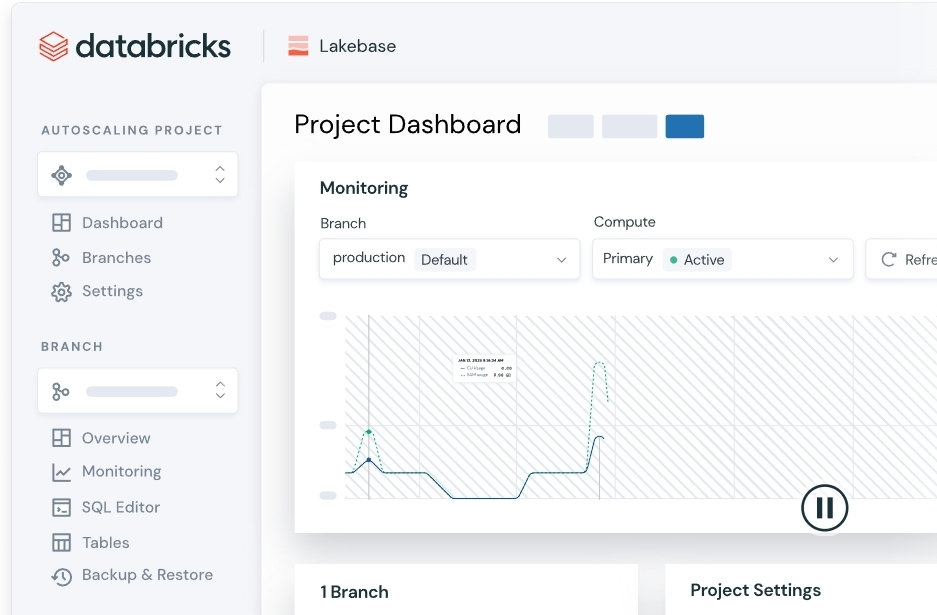
Lakebase introduces a serverless database architecture optimized for AI workloads, enabling organizations to manage both transactional and analytical data in a unified environment. This approach, in fact, simplifies data management and supports the development of AI applications that require real-time access to high-quality data.
Genie provides a conversational interface that allows employees to interact with enterprise data using natural language. By lowering the barrier to data access, such tools can democratize insights and enable faster, more informed decision-making across business functions.
Agent Bricks focuses on the development of AI agents capable of reasoning over enterprise data and executing complex tasks. These agents represent a shift from traditional automation toward more autonomous systems that can adapt to changing conditions and support dynamic workflows.
Therefore, together, these technologies form a cohesive ecosystem that connects data, analytics, and AI capabilities, thus, enabling organizations to move from insight generation to action in real time.
“Data accessibility is emerging as a key driver of CX agility.”
CX Impact: Reducing Friction and Enhancing Decision-Making
The implications of this partnership for customer experience are, in fact, significant. A unified data foundation, thus, enables organizations to maintain a consistent view of the customer across touchpoints, reducing discrepancies and improving the quality of interactions.
AI-powered tools can streamline customer journeys by automating routine processes and providing employees with real-time insights. For example, applications in retail pricing intelligence demonstrate how AI can enhance decision-making and improve value propositions for customers.
Internal use cases, such as digital assistants for enterprise functions, also play a critical role. By improving employee experience and productivity, organizations can indirectly enhance customer interactions, as employees are better equipped to respond to customer needs.
Operational efficiency is another key outcome. Integrated AI systems reduce latency in decision-making, enabling faster responses and more agile service delivery. At the same time, advancements in explainability and governance can help build trust in AI-driven interactions, which is increasingly important in customer-facing applications.
“The integration of data, AI, and workflows is redefining enterprise operations.”
Industry Implications: The Rise of AI Ecosystems
The expanded collaboration highlights a broader industry trend toward integrated AI ecosystems. Organizations are moving away from fragmented toolsets and adopting platforms that combine data management, analytics, and AI capabilities into a unified framework.
The emergence of multi-agent systems is particularly noteworthy. These systems enable coordinated AI processes that can handle complex workflows, marking a shift from simple automation to more sophisticated, autonomous operations.
For the industry, this trend is driving increased competition among technology providers and system integrators. The ability to deliver end-to-end solutions that integrate technology with implementation expertise is becoming a critical success factor.
At the same time, the emphasis on governance, scalability, and interoperability underscores the need for robust frameworks that can support long-term AI adoption.
Looking Ahead: From Data Strategy to Experience Strategy
As AI continues to evolve, the focus for enterprises is shifting from technology adoption to business impact. For CX leaders, this means aligning data and AI initiatives with broader customer experience strategies.
The Accenture–Databricks partnership underscores the importance of building a strong data foundation, enabling accessibility, and ensuring governance. These elements are essential for translating AI capabilities into meaningful customer outcomes.
Looking ahead, as a result, the integration of AI into core business processes is likely to accelerate. In fact, organizations that can effectively combine data, technology, and human expertise will be better positioned to deliver differentiated and resilient customer experiences.
In this context, partnerships that bridge the gap between technology and execution, in fact, play a central role in shaping the future of customer experience and digital transformation.
Key Takeaways
- AI is moving from experimentation to enterprise scale
Organizations are prioritizing production-grade AI deployments that deliver measurable business outcomes, rather than isolated pilots or proofs of concept. - Unified data foundations are critical for CX success
Fragmented data remains a major barrier. Integrated platforms that combine data, analytics, and AI are becoming essential to deliver consistent, real-time customer experiences. - AI agents are reshaping how work gets done
The shift toward multi-agent systems signals a move from reactive automation to proactive, autonomous decision-making across customer and operational workflows. - Employee access to data is a CX differentiator
Conversational AI tools that democratize data access can significantly improve decision speed, consistency, and service quality across customer touchpoints. - Partnership ecosystems are accelerating transformation
Enterprises increasingly rely on combined technology and consulting expertise to reduce complexity and speed up AI adoption at scale. - Governance and trust are becoming central to AI in CX
As AI becomes embedded in customer interactions, transparency, explainability, and responsible data use are critical to maintaining trust. - Operational efficiency and CX outcomes are converging
AI-driven workflows not only improve internal efficiency but also directly impact customer satisfaction through faster, more accurate, and personalized interactions.
