
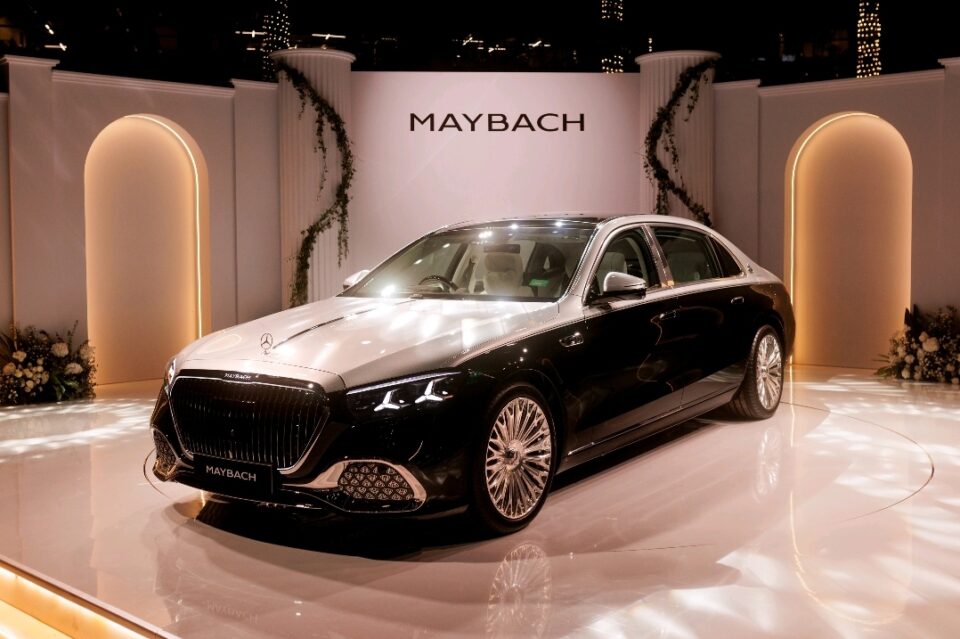
Mercedes-Maybach S 580e: When Electrification Becomes a Luxury CX Strategy
Luxury automotive competition is entering a phase where electrification alone is no longer sufficient. The real differentiator is how seamlessly technology disappears into the customer experience. The Mercedes-Maybach S 580e brings that question directly into India’s ultra-luxury segment, combining plug-in-hybrid flexibility with a four-seat First-Class cabin, advanced digital systems, intelligent suspension and Maybach craftsmanship.
Mercedes-Benz India has launched the vehicle in an exclusive 30-unit run, positioning it as India’s first electrified Mercedes-Maybach. Priced at INR 3.35 crore, it combines a 3.0-litre petrol PHEV powertrain, 4MATIC and 585 hp with an extensive technology and comfort architecture.
The more important story, however, is not the number of horsepower or speakers. It is what the launch says about the future of luxury customer experience.
Mercedes-Maybach S 580e and the New Meaning of Luxury
Luxury used to be relatively easy to decode: craftsmanship, materials, performance, space and exclusivity.
Electrification complicates that formula. Customers increasingly expect their vehicles to provide flexibility across different journeys while also delivering quietness, connectivity and intelligent assistance.
The Mercedes-Benz strategy is explicitly built around customer choice. Santosh Iyer, Managing Director & CEO, Mercedes-Benz India, says the company is seeing rising demand for plug-in hybrids among top-end customers and wants customers to choose the technology that best suits their lifestyles.
That is a significant CX proposition.
Instead of presenting electrification as a forced transition, Mercedes-Benz is positioning ICE, BEV and PHEV as different routes to the desired experience.
The result is a more flexible definition of luxury: the freedom to decide how the vehicle should behave becomes part of the premium proposition.
From Vehicle Specification to Experience Architecture
The Mercedes-Maybach S 580e combines a six-cylinder plug-in-hybrid system with 4MATIC, delivering 585 hp and 750 Nm. Its 22 kWh usable battery provides a WLTP-certified electric range of up to 98 km, while Mercedes-Benz says real-world electric driving can reach approximately 100 km under suitable conditions.
But the technology story goes considerably further.
MB.OS provides the digital foundation. MBUX brings together the passenger display, 3D driver display, augmented reality, head-up display and navigation. Cloud-based AIRMATIC can use navigation data to anticipate road conditions and adjust damping. Rear-axle steering can extend to 10 degrees, supporting manoeuvrability and stability.
This is where the shift occurs.
The automobile is no longer simply a machine with digital features attached to it. It is becoming a coordinated experience system.
The customer does not need to understand that architecture. In fact, the better the architecture works, the less visible its complexity should become.
The Competitive Battle Moves Beyond the Specification Sheet
Luxury manufacturers can increasingly match individual technologies.
One brand can provide advanced ADAS. Another can offer a large digital display. Another can deliver a powerful electric motor or sophisticated suspension.
The harder task is integrating those capabilities into a coherent experience.
The Maybach proposition sits toward the higher end of that experience-orchestration spectrum because the technology extends across propulsion, cabin comfort, digital interaction, ride dynamics, safety and charging.
That creates three competitive levels.
At Level 1, electrification is principally a powertrain proposition.
At Level 2, electrification becomes part of the broader vehicle experience.
At Level 3, the vehicle becomes an orchestrated ecosystem in which propulsion, software, cabin, charging and personalization reinforce each other.
Mercedes-Benz is attempting the third model.
The competitive question therefore becomes less about who has the longest feature list and more about who can make complexity feel effortless.
Technology Must Disappear Into the Passenger Experience
The four-seat First-Class rear compartment is central to this proposition.
Executive rear seats, a full-length Business Centre Console, wireless charging, temperature-controlled cup holders, rear MBUX controls and adaptive ambient lighting transform the rear cabin into a private lounge.
For a chauffeur-driven customer, this is not secondary functionality. It is the product.
The Burmester High-End 4D system follows the same philosophy. Its 31 speakers, eight exciters and 1,610-watt output create an immersive audio environment, with Dolby Atmos and sound personalization adding another layer.
Yet the CX value is not really the specification.
The value is whether the passenger experiences a quieter, more comfortable and more personalized journey.
This distinction matters because luxury customers often pay for effortlessness, not technological complexity.
Mercedes-Maybach S 580e Turns Electrification Into a CX Layer
The electric driving capability changes the sensory character of the vehicle.
The vehicle can operate in electric mode at speeds of up to 140 km/h, while dedicated Maybach, Electric and Battery Hold modes give customers greater control over how the powertrain is used. Adjustable recuperation, including one-pedal driving, adds another dimension.
Charging is similarly incorporated into the ownership experience.
The vehicle supports 11 kW AC and up to 60 kW DC charging, while Mercedes-Benz says it provides a complimentary home charging solution with every vehicle. MB.CHARGE Public Stations extend access to compatible public charging infrastructure.
From a CX standpoint, this is important.
Charging is no longer merely an infrastructure problem. It becomes part of service design.
For the customer, the benefit is convenience. For the business, it can reduce friction around PHEV ownership. For the wider system, it connects the automobile to an ecosystem outside the vehicle.
The Maturity Question Is Still Open
The launch can reasonably be classified as an integrated CX proposition.
Powertrain, software, cabin technology, charging, safety and ride comfort are being presented as interconnected elements rather than isolated features.
However, one important layer remains unproven.
The release provides extensive specifications but does not provide customer-experience metrics such as satisfaction, retention, repeat purchase, digital engagement or ownership-lifecycle outcomes.
That distinction matters.
A technically integrated vehicle is not automatically an integrated customer experience.
Mercedes-Benz will ultimately need to demonstrate that the architecture translates into measurable improvements in how customers perceive, use and remain connected to the brand.
What Should Automotive Leaders Learn?
The strategic lesson extends beyond luxury vehicles.
First, choice is becoming a CX capability. Customers increasingly want technology aligned with circumstances rather than a single mandated architecture.
Second, software is becoming an orchestration layer. The value of an operating system such as MB.OS lies not simply in its existence but in how it coordinates multiple experiences.
Third, the passenger is becoming an increasingly important digital user. Rear-seat interfaces, audio, charging and comfort systems can be as strategically important as driver-facing technology.
Fourth, ecosystem design is becoming part of premium service design. Charging infrastructure and digital services extend the ownership journey beyond the vehicle.
Finally, luxury is moving from abundance to effortless orchestration.
The strongest premium experience may not be the one with the most technology. It may be the one in which the customer notices the technology least because everything simply works.
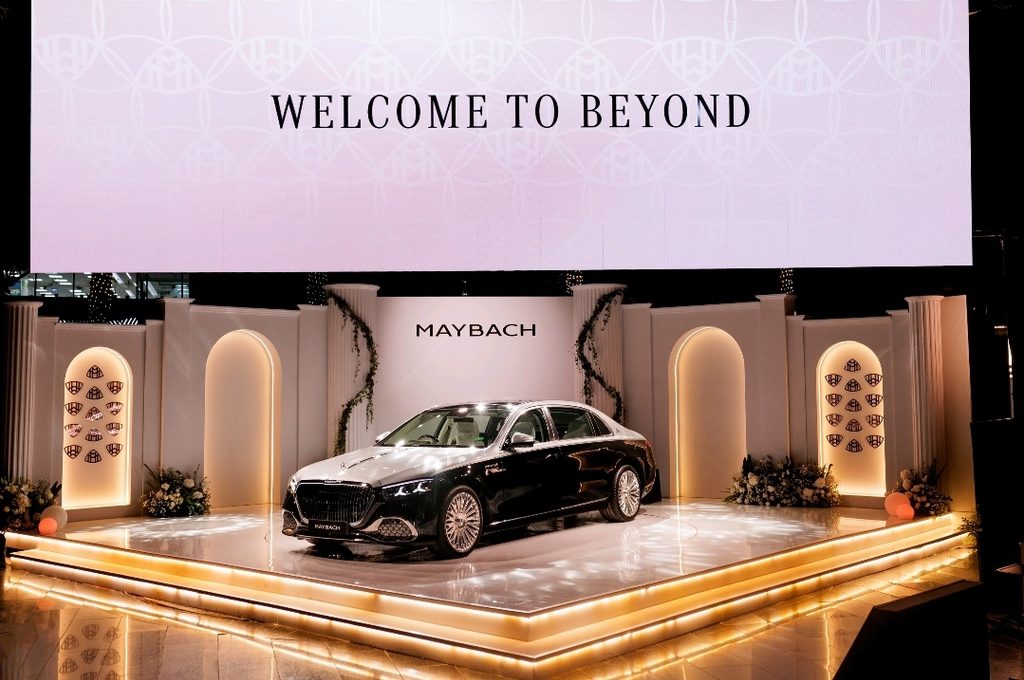
The Future of Luxury May Be Choice Without Complexity
Mercedes-Benz India is entering the next stage of luxury mobility with a proposition that combines combustion-engine flexibility, electric driving, software, connected services and traditional Maybach craftsmanship.
The broader significance of the Mercedes-Maybach S 580e is therefore not simply that it electrifies a flagship luxury nameplate.
It illustrates a larger shift in CX strategy.
The future luxury customer may not ask whether a vehicle is electric, hybrid or combustion-powered in isolation. The more consequential question may be whether the vehicle can intelligently adapt to the customer’s circumstances without compromising the experience.
That is the real test of luxury electrification: more choice for the customer, without more complexity for the customer.
Mercedes-Benz has put that proposition on the road. The next measure will be whether the ownership experience proves it.
