

Mahindra International School Pune Signals a Shift in International Education Leadership
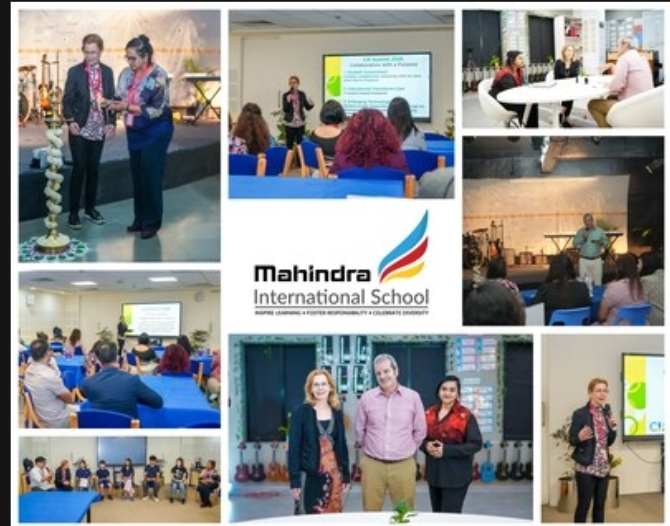
Mahindra International School Pune is positioning itself at the center of a structural shift in India’s international education landscape. By hosting senior leadership from the Council of International Schools (CIS) and convening educators from across Pune and Mumbai, the institution has extended its role beyond academic delivery into ecosystem leadership.
This engagement was not a ceremonial milestone. It was a strategic convergence focused on accreditation frameworks, socially responsible leadership, and the future of assessment models in global education systems.
“International education is moving from isolated institutional excellence to collaborative ecosystem leadership.”
The significance lies in the transition from institution-level excellence to network-driven capability building. As education systems face increasing complexity, isolated improvements are no longer sufficient.
Expanding the Definition of Educational Experience
The definition of “customer experience” in education is undergoing a fundamental expansion. Academic outcomes alone no longer define institutional value. Students and parents now evaluate schools based on a broader spectrum—global exposure, emotional resilience, ethical grounding, and future readiness.
Mahindra International School Pune reflects this shift through its emphasis on intercultural competence and socially responsible leadership. With a diverse student body representing over 35 nationalities, the institution integrates global perspectives directly into its experience design.
At the same time, operational pressures are intensifying. Delivering international curricula has become a baseline expectation. Schools must now demonstrate how their systems prepare learners for real-world challenges such as climate change, inequality, and geopolitical uncertainty.
“The future of education experience lies in integrating academic rigor with global citizenship.”
This dual demand—higher expectations and greater complexity—is reshaping how institutions design and deliver educational experiences.
Strategic Positioning Through Ecosystem Leadership
Mahindra International School Pune’s decision to host CIS leadership reflects a deliberate strategic move. It reinforces its alignment with global standards while positioning the school as a regional convening authority.
Joel Cohen, School Director, contextualized the initiative as more than a visit, framing it as recognition of the school’s long-standing commitment to excellence. However, the deeper implication lies in the school’s evolving role—from participant to orchestrator within the education ecosystem.
By bringing together educators from multiple institutions, the initiative fosters shared problem-solving around curriculum alignment, student wellbeing, and higher education transitions. This reduces fragmentation and creates a more cohesive regional framework.
“Leadership in education is increasingly defined by the ability to convene, not just compete.”
This model reflects a broader shift seen across industries, where influence is determined by the ability to build and manage ecosystems rather than operate in isolation.
Accreditation as a System of Continuous Transformation
A central theme of the programme was the evolving role of accreditation. Traditionally, accreditation functioned as a periodic validation mechanism—an external audit conducted at fixed intervals.
The CIS framework introduces a different paradigm. It embeds continuous self-assessment, peer evaluation, and iterative improvement into institutional processes. Governance, safeguarding, curriculum design, and assessment methodologies are all integrated into a dynamic system of performance management.
Jane Larsson, Executive Director of CIS, highlighted the engagement observed during the visit, reinforcing the importance of active participation in such frameworks.
More importantly, the discussion introduced emerging assessment models that move beyond standardized testing. These models aim to capture a broader range of competencies, including critical thinking, collaboration, and intercultural understanding.
“Assessment is shifting from measuring knowledge to evaluating capability.”
This transition fundamentally changes how educational outcomes are defined, measured, and communicated to stakeholders.
Translating Operations into Experience Outcomes
For students, these structural changes translate into tangible improvements in learning experience. The inclusion of a student-led panel engaging directly with CIS leadership demonstrates a shift toward participatory experience design.
Students are no longer passive recipients of education; they are active contributors to institutional dialogue. This enhances engagement, builds confidence, and aligns learning with real-world relevance.
For parents, accreditation frameworks provide a layer of assurance. They signal that the institution adheres to globally recognized standards and is committed to continuous improvement.
“Trust in education is built through transparency, not just outcomes.”
Operationally, collaboration across schools enhances consistency in educational delivery. Families navigating international education pathways benefit from more predictable and aligned systems, reducing uncertainty and friction.
A Structural Shift in the Industry
The initiative led by Mahindra International School Pune reflects a broader structural shift within international education. Regional clusters are emerging as critical nodes of collaboration and innovation, replacing historically centralized models.
In India, where the number of CIS-accredited institutions remains relatively limited, such regional engagements accelerate capability development and knowledge exchange. They also create localized platforms for addressing shared challenges within a global framework.
Simultaneously, accreditation bodies are redefining their roles. They are transitioning from evaluators to ecosystem enablers—facilitating dialogue, collaboration, and continuous improvement across institutions.
“The future of international education will be shaped by interconnected networks, not isolated institutions.”
This shift has direct implications for competitive dynamics. Schools that remain isolated may struggle to keep pace with those integrated into collaborative ecosystems.
Future Outlook: Toward Adaptive Learning Ecosystems
The trajectory of international education is increasingly clear. Institutions are moving toward adaptive ecosystems where strategy, operations, and experience are continuously aligned.
Mahindra International School Pune’s initiative provides a practical example of how this transition can be operationalized. By integrating global accreditation frameworks with regional collaboration, the school is extending its influence beyond institutional boundaries.
The emphasis on socially responsible leadership is particularly significant. As global challenges intensify, education systems must prepare students not only for professional success but also for meaningful societal contribution.
“Education systems must evolve from knowledge delivery platforms to capability development ecosystems.”
This evolution requires a fundamental rethinking of how value creates and delivers. Continuous improvement, stakeholder engagement, and ecosystem alignment will become central to institutional strategy.
For CX leaders across industries, the parallels are clear. Experience is no longer delivering through isolated touchpoints. Rather, it is co-creating across interconnected systems.
Mahindra International School Pune’s approach demonstrates how that principle applies within education, offering a blueprint for ecosystem-driven transformation.
Key Takeaways
- Accreditation is evolving into a continuous, embedded system of institutional improvement rather than a periodic compliance exercise
- Student agency is becoming a critical lever in designing meaningful and participatory educational experiences
- Regional collaboration among institutions is emerging as a key driver of innovation and standardization
- Competency-based assessment models are reshaping how educational success is defining and measuring it.
- International education is transitioning toward ecosystem-based models that emphasize alignment, transparency, and global readiness
