
India’s AI-Led Climate Push: What CX Leaders Must Learn from Google’s Resilience Playbook and AI-Powered Climate Resilience
Imagine This Scenario
A flood alert reaches a farmer in Bihar seven days early.
A traffic signal in Bengaluru adjusts in real time.
An air quality dashboard in Delhi updates before children leave for school.
Behind each moment sits an invisible layer of AI, data partnerships, and cross-sector collaboration.
Now imagine your CX team operating with that level of foresight.
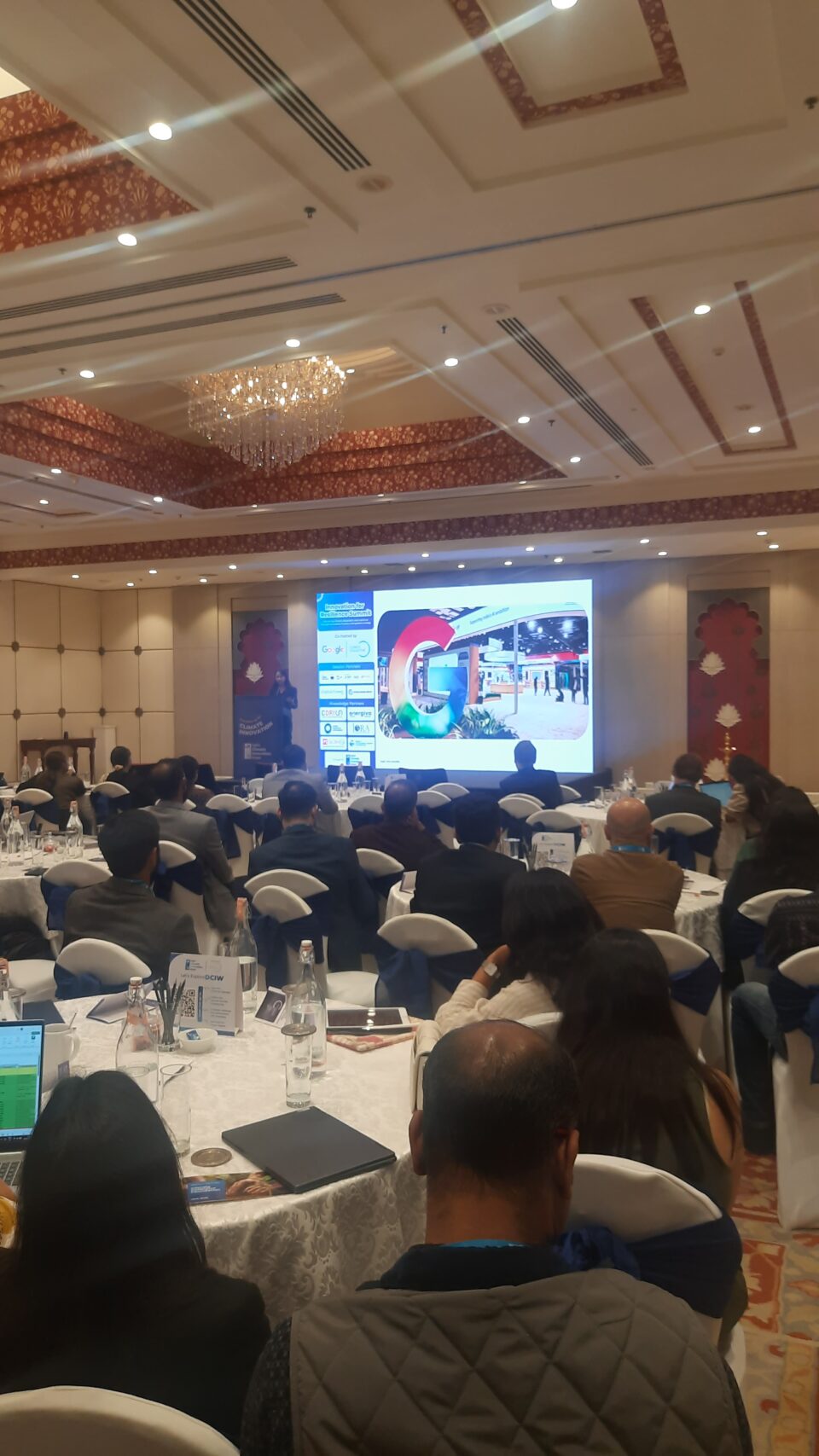
That was the energy at the Innovation for Resilience Summit during Delhi Climate Innovation Week in New Delhi.
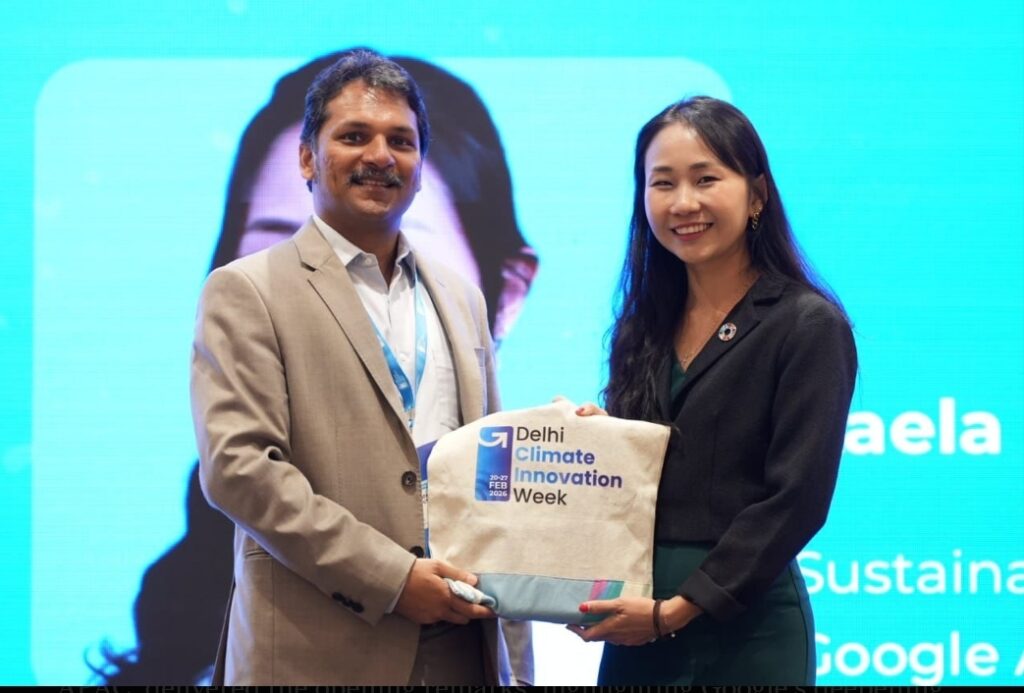
On stage, Kaela Montgomery, Sustainability Program Manager at Google APAC, declared that India is leading the climate resilience response — powered by AI.
For CX and EX leaders, this is not climate news.
It is a strategy case study.
What Is AI-Powered Climate Resilience — And Why Should CX Leaders Care?
AI-powered climate resilience uses predictive data systems to anticipate risks and protect communities, infrastructure, and economies. For CX teams, it demonstrates how predictive intelligence transforms fragmented journeys into proactive ecosystems.
Climate resilience is no longer policy rhetoric.
It is operational design.
Montgomery highlighted three scaled initiatives:
- Flood Hub delivering riverine flood forecasts up to seven days in advance
- Project GreenLight optimizing traffic signals to reduce emissions
- Real-time air quality monitoring across 150+ Indian cities
These are not pilots.
They are production-grade systems.
That distinction matters.
According to the Bharat AI Startup Report 2026:
- India’s AI market may reach $126 billion by 2030
- 47% of enterprises are moving from pilot to production
The defining challenge is no longer experimentation.
It is repeatable enterprise adoption.
That is the same inflection point most CX teams face today.
Why Does Moving from Pilot to Production Break Most CX Transformations?
Because pilots optimize for proof. Production demands trust, governance, integration, and sustained adoption.
CX leaders often celebrate proof-of-concept wins.
Then reality hits:
- Data lives in silos
- IT and CX lack shared ownership
- AI lacks training context
- Business units resist change
Montgomery framed it clearly:
Access, trust, and go-to-market execution define scale.
This is a universal transformation principle.
Google’s announcement of a $15 billion AI hub investment in India — its largest outside the US — signals infrastructure-level commitment.
Infrastructure is what separates ambition from resilience.
What Can CX Teams Learn from Flood Hub’s Design?
Predictive CX begins with shared data ecosystems, not dashboards.
Flood Hub forecasts riverine floods seven days ahead.
That leap from hours to days changes behavior.
But the magic is not prediction.
It is coordination.
Flood systems integrate:
- Satellite data
- Hydrological modeling
- Government alerts
- Local language dissemination
Replace “flood” with “customer churn.”
The blueprint is identical.
| Flood System Element | CX Equivalent |
|---|---|
| Satellite Data | Behavioral analytics |
| River Modeling | Journey analytics |
| Government Alerts | CRM triggers |
| Local Dissemination | Omnichannel messaging |
The insight:
Resilience requires orchestration, not reporting.
How Does Project GreenLight Redefine Operational CX?
Operational experience is customer experience. AI that reduces friction upstream improves trust downstream.
Project GreenLight uses AI to optimize traffic signals.
Less congestion.
Lower emissions.
Better urban flow.
In CX terms, this equals:
- Reduced wait times
- Smarter routing
- Dynamic queue management
- Workforce forecasting
Operational friction creates emotional erosion.
EX friction accelerates CX failure.
GreenLight shows how data-driven micro-adjustments create macro-level trust.
Is India Becoming the Global South’s AI Resilience Hub?
Yes — because ecosystem orchestration is happening at policy, startup, and enterprise levels simultaneously.
Climate Collective Foundation has supported 1,457 early-stage climate tech startups.
Portfolio companies raised $235 million in post-programme funding.
Nearly one-third are women-led.
The Summit also included partners like:
World Bank Group
GIZ
Coalition for Disaster Resilient Infrastructure
This is ecosystem thinking.
Not vendor thinking.
CXQuest has repeatedly argued that experience transformation fails in isolated departments.
India’s climate model proves that transformation succeeds when:
- Policy aligns
- Capital aligns
- Technology aligns
- Implementation aligns
CX requires the same.
What Framework Can CX Leaders Borrow from Climate Resilience?
Here is a practical adaptation:
The R.E.S.I.L.I.E.N.C.E. Framework for CX
R — Risk Mapping
Identify journey vulnerabilities before customers feel them.
E — Ecosystem Integration
Break data silos across marketing, ops, IT, and service.
S — Scenario Modeling
Use AI to simulate churn, demand spikes, or complaint surges.
I — Infrastructure Commitment
Invest in long-term architecture, not short-term tools.
L — Local Context Adaptation
Customize messaging by geography and persona.
I — Institutional Trust Building
Ensure explainable AI and transparent governance.
E — Enterprise Adoption Discipline
Move from pilot to repeatable rollout frameworks.
N — Network Collaboration
Partner with startups and ecosystem players.
C — Continuous Optimization
Treat CX as a dynamic signal system.
E — Emotional Impact Measurement
Track trust, not just transactions.
This is resilience thinking applied to experience.
Common Pitfalls When Scaling AI in CX
- Over-indexing on pilots
- Ignoring change management
- Underfunding integration
- Treating AI as automation, not augmentation
- Measuring output, not outcomes
Google’s India strategy avoids these traps by:
- Investing in infrastructure first
- Building at scale
- Embedding partnerships
- Designing for public trust
Key Insights for CX & EX Leaders
- Predictive intelligence builds emotional security.
- Ecosystems outperform departments.
- Infrastructure signals seriousness.
- Trust accelerates adoption.
- Scale demands governance discipline.
India’s climate resilience push is not a sustainability story.
It is a blueprint for transformation maturity.
FAQ: Long-Tail Questions CX Leaders Are Asking
How can AI improve proactive customer communication?
AI analyzes patterns and predicts disruptions before customers experience them.
What does moving from pilot to production require in CX?
Clear ownership, integration architecture, governance, and training.
How do we build trust in AI-driven customer journeys?
Use explainable models, transparent policies, and human oversight.
What can climate resilience teach about customer loyalty?
Resilience builds confidence. Confidence builds loyalty.
Why do ecosystem partnerships matter in CX transformation?
No single vendor owns the full journey.
Tightened for Google Discover & PAA Dominance
India is scaling AI for flood forecasting, traffic optimization, and air quality at national levels.
Google’s $15B AI hub investment signals infrastructure-first transformation.
47% of Indian enterprises are shifting from pilots to production.
The real lesson for CX leaders: predictive, ecosystem-driven models outperform siloed automation.
Resilience equals orchestration, trust, and long-term commitment.
Actionable Takeaways for CX Professionals
- Map your top three journey risks using predictive analytics.
- Audit where AI pilots are stuck. Identify integration blockers.
- Establish a cross-functional AI governance council.
- Allocate budget for infrastructure, not just tools.
- Develop a repeatable pilot-to-production rollout playbook.
- Measure emotional trust metrics quarterly.
- Build startup partnerships for innovation velocity.
- Communicate AI purpose clearly to employees and customers.
Climate resilience and customer resilience share the same DNA.
Both demand foresight.
Both demand collaboration.
And, both demand infrastructure.
India may be leading the climate response.
The question for CX leaders is simple:
Are you building for reaction — or resilience?
