
India’s Tier‑2 GCC Wave: What It Really Means For CX And EX
Global capability centers are quietly rewriting the geography of experience.
The most important action is not happening in Bengaluru or Gurugram anymore.
It is playing out in places like Kochi, Coimbatore, Bhubaneswar, and Indore.
For CX and EX leaders, that shift is not a real‑estate story.
It is a fundamental redesign of how customer journeys and employee journeys get built, delivered, and scaled.
This article explores what the Tier‑2 GCC surge means for customer and employee experience leaders.
It uses the latest Tier‑2 GCC data as a springboard and then connects it to real execution choices for CX and EX teams.
The Tier‑2 GCC Shift In One Glance
India hosts more than 1,600 GCCs today, with hundreds more expected in the next few years.
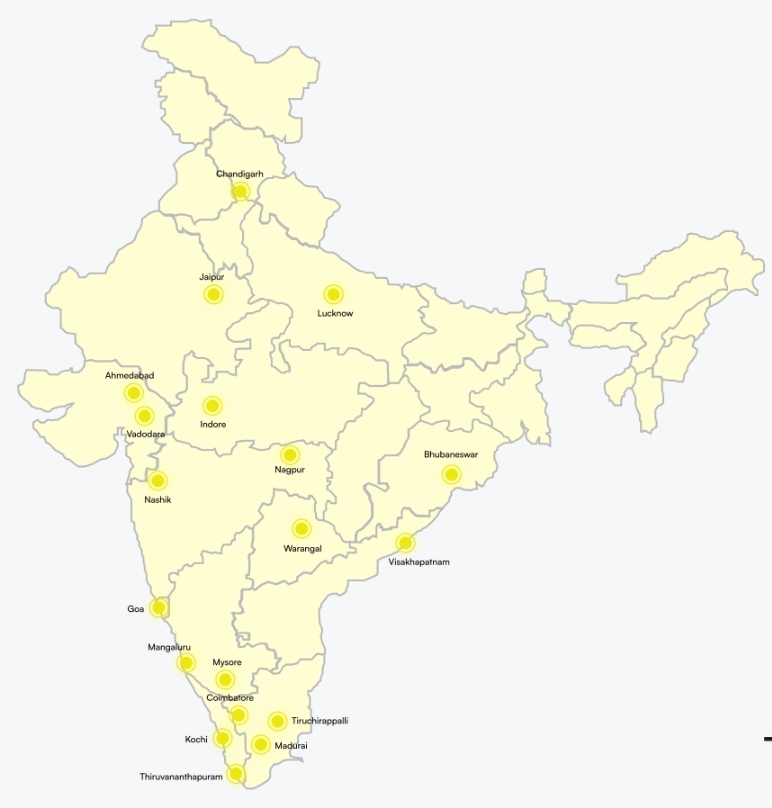
Over 170 of these centers now operate across 18 Tier‑2 cities outside the traditional six metros.
Tier‑2 locations have grown their share of total GCCs from 5 percent in 2019 to 7 percent by 2025, with roughly two new centers opening every week nationally.
These sites cover cities such as Ahmedabad, Vadodara, Indore, Bhubaneswar, Coimbatore, Kochi, Mysuru, Madurai, Mangaluru, Warangal, and others.
This is no longer a fringe experiment.
The pattern resembles the early Tier‑1 growth curve, but with better policy readiness and faster maturity cycles.
Beyond Cost Arbitrage: The New CX/EX Value Equation
The traditional GCC narrative focused on labor arbitrage and transactional back‑office work.
Tier‑2 hubs now undercut that stereotype at multiple levels.
They typically offer around 25 percent lower cost bases compared to major metros, with attrition that is 20–30 percent lower.
STEM talent pools in these locations have grown by roughly 25 percent over five years, supported by strong state policy pushes in regions such as Tamil Nadu, Karnataka, Uttar Pradesh, and Gujarat.
Those numbers change the CX and EX value equation:
- Lower attrition drives more stable frontline and specialist teams, which improves journey continuity.
- Deeper STEM pools enable more sophisticated analytics, AI, and platform work closer to the customer stack.
- Policy support and infrastructure readiness reduce friction in scaling new experience‑centric programs.
Tier‑2 GCCs are emerging as core R&D, AI, and digital engineering ecosystems rather than just low‑cost execution shops.
For CX leaders, that means innovation work and run‑ops can now co‑exist in the same Tier‑2 footprint.
What Actually Lives Inside Tier‑2 GCCs
Tier‑2 GCCs in India host a broad set of functions that sit at the heart of modern CX.
The most prominent include software and platform engineering, data and AI, analytics, cloud, infrastructure, and cybersecurity.
On the industry side, these centers support ER&D and product engineering, IT and digital operations, plus BFSI and fintech domains.
In practical terms, that means the very engines that shape digital journeys, decisioning, personalization, and security often run from these cities.
Maturity levels differ across locations:
- Seed centers have fewer than 100 FTEs and often act as digital pilot sites, such as Kochi with about 70 people.
- Early‑scale centers house 100–300 FTEs, like Warangal at around 160 employees.
- Mature hubs can exceed 300 FTEs, with examples such as Bhubaneswar above 300 and Vadodara around 400.
This mix allows enterprises to test new CX or EX constructs in smaller teams, then ramp into deeper engineering or operations hubs once value is visible.
Where Momentum Is Concentrating – And Why It Matters
Several Tier‑2 locations are starting to specialize, which has direct implications for CX and EX design.
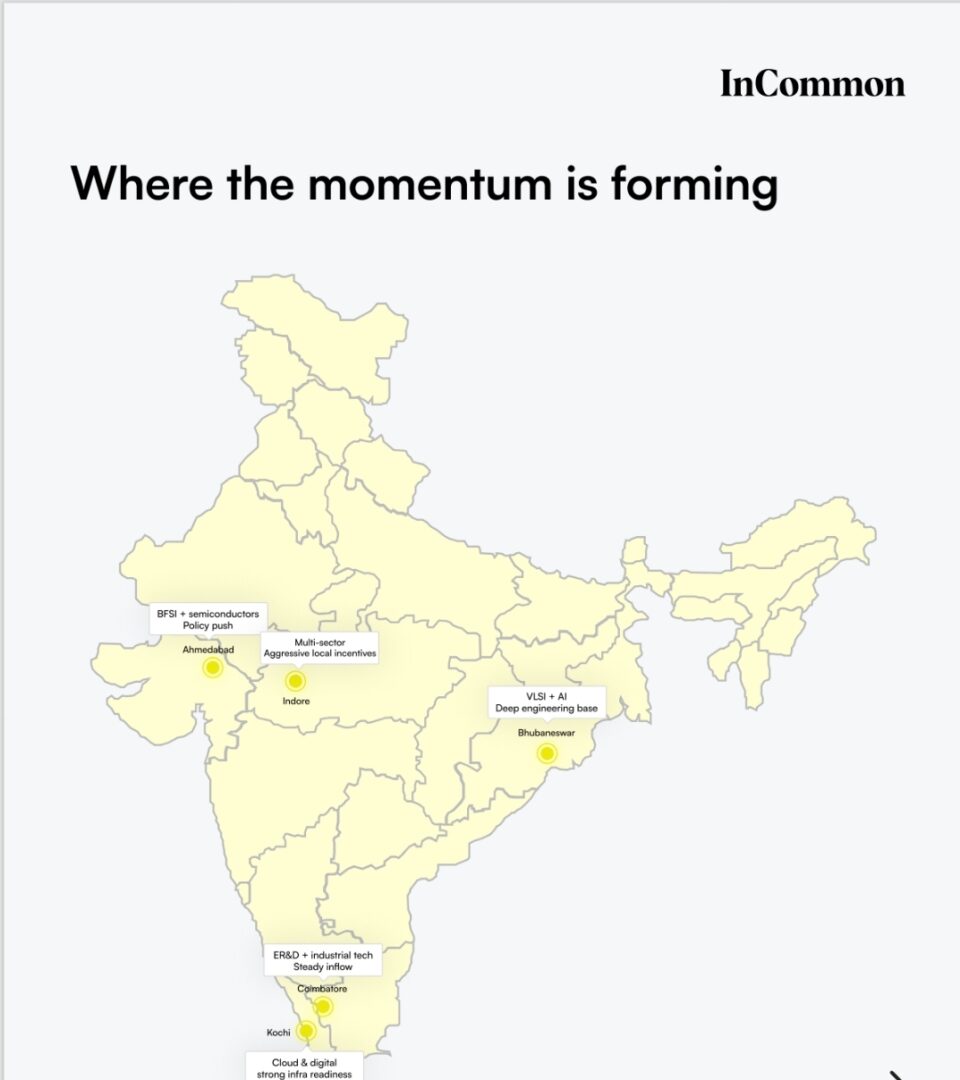
Ahmedabad, Indore, Bhubaneswar, Coimbatore, and Kochi feature strongly in the current momentum map.
- Ahmedabad combines BFSI and semiconductor strengths with policy support, making it ideal for secure, regulated customer journeys.
- Indore focuses on VLSI and AI, positioning it well for intelligent automation and hyper‑personalization use cases.
- Bhubaneswar and Coimbatore bring deep engineering bases and strong ER&D and industrial tech capabilities, which help for product‑led experience design.
- Kochi offers strong digital and cloud capabilities with solid infrastructure readiness, benefitting always‑on, omnichannel CX.
Several of these cities also attract aggressive local incentives, which accelerates investment in employee‑friendly campuses and enablement ecosystems.
For EX leaders, that can translate into better local amenities, learning clusters, and more balanced work‑life options compared with Tier‑1 metros.
CX Impact: From Support Factory To Experience Engine
As Tier‑2 GCCs shift from transactional work to core digital and AI roles, CX outcomes change.
Experience leaders can rethink what gets done where, without sacrificing quality or speed.
Three big CX consequences stand out:
- Faster experimentation: Seed and early‑scale centers in Tier‑2 cities are natural test beds for new channels, journeys, and AI‑led service models.
- Richer data loops: Co‑locating analytics, AI, and operations teams in Tier‑2 hubs tightens feedback loops across journeys.
- Integrated design and delivery: Deep engineering capabilities in cities like Bhubaneswar and Vadodara reduce the gap between experience design and platform execution.
For a CX leader, that means pilot programs no longer need to remain isolated innovation theater.
They can scale into mainstream operations in the same city, under the same leadership and culture frame.
EX Impact: Stability, Belonging, And Career Gravity
Employee experience is often the hidden winner in the Tier‑2 GCC story.
Lower attrition rates, rising STEM supply, and strong policy backing create a more stable environment for long‑term careers.
Smaller cities also tend to offer shorter commutes, lower living costs, and stronger community ties.
That context supports higher belonging scores and better day‑to‑day experience, if employers design thoughtfully.
For EX leaders, Tier‑2 hubs open several strategic possibilities:
- Build hub‑and‑spoke leadership models where Tier‑2 managers own end‑to‑end journeys, not just fragments.
- Design differentiated employee value propositions for Tier‑2 talent, emphasizing growth, recognition, and local impact.
- Use Tier‑2 sites as primary venues for capability academies, guilds, and cross‑functional pods.
As these centers move up the value chain, they become magnets for ambitious professionals who want both challenging work and livable cities.
CX And EX Strategy: How To Design For Tier‑2
To convert the Tier‑2 GCC surge into tangible experience advantage, leaders need a deliberate playbook.
The default “lift and shift” model from Tier‑1 will not unlock the full potential.
1. Anchor CX Ambitions In Location Strengths
Each Tier‑2 city now displays a distinct capability signature, whether it is AI in Indore, deep engineering in Coimbatore, or cloud strength in Kochi.
CX leaders should align strategic customer initiatives with these strengths instead of treating all sites as interchangeable.
For example, an enterprise could base its personalization and decisioning engine in an AI‑heavy Tier‑2 site, while locating secure financial journeys in a BFSI‑strong city like Ahmedabad.
This harnesses local ecosystems, academic partners, and policy incentives already in motion.
2. Make Tier‑2 Centers Full Journey Owners
Avoid configuring Tier‑2 GCCs as mere “support arms” for Tier‑1 or onshore teams.
Instead, assign them ownership of entire sub‑journeys or product experience slices.
That means giving a Tier‑2 hub end‑to‑end responsibility for a digital claims journey, onboarding flow, or co‑branded product line.
Full ownership deepens accountability, speeds decision‑making, and strengthens local leadership pipelines.
3. Integrate Design, Data, And Delivery
With software engineering, data, AI, and cloud teams co‑located in many Tier‑2 centers, there is a rare chance to truly integrate experience design with build and run.
CX and EX leaders should embed designers, journey owners, and behavioral researchers directly inside these cross‑functional pods.
That structure enables:
- Faster testing of journey hypotheses.
- Real‑time access to operational data and signals.
- Smoother handshakes between product, engineering, and operations.
When such pods sit in cities with strong ER&D bases, they can influence not just digital touchpoints but also product features and service models.
4. Engineer EX For Tier‑2 Reality
Design employee experience with the specific Tier‑2 context in mind, not as a carbon copy of Tier‑1.
That includes career frameworks, learning journeys, leadership visibility, and community engagement.
Some powerful EX moves include:
- Positioning Tier‑2 hubs as centers of excellence for specific skills, such as AI engineering or cybersecurity.
- Building local leadership academies that prepare managers to run global portfolios from these locations.
- Partnering with local universities to create early‑career programs and continuous upskilling pipelines.
With attrition already structurally lower, these investments compound over time and deliver stronger CX continuity.
Governance, Risk, And Resilience
As GCC footprints spread across Tier‑2 cities, governance complexity naturally increases.
However, it also creates a more resilient operating model.
Tier‑1 GCC growth followed a pattern where centers arrived first, infrastructure followed, talent deepened, and policy evolved.
Tier‑2 is now walking the same path, but with lessons baked in and governments able to move faster.
For CX and EX leaders, that calls for:
- Standardized experience frameworks and metrics that travel across all locations.
- Localized playbooks for risk, compliance, and customer trust, especially in regulated sectors.
- Distributed leadership models that avoid single‑city concentration risk.
As Tier‑2 gains share, the broader effect is a more balanced and resilient GCC landscape that narrows gaps between metros and smaller cities.
About The Tier‑2 GCC Report
The insights in this article are informed by a 2025 GCC report titled “The Tier‑2 Swipe,” which tracks the rise of Tier‑2 Indian cities as global capability center hubs. InCommon’s GCC Tier 2 Report 2025 is carrying an in-depth interesting analysis and findings.
The report maps more than 170 GCCs across 18 Tier‑2 cities, analyzes headcount bands, functional portfolios, and sectoral focus, and highlights cost, attrition, and talent dynamics that distinguish these locations from Tier‑1 metros.
It also outlines how state‑level policies, infrastructure investments, and STEM talent growth are accelerating the shift from cost‑focused centers to core R&D, AI, and digital engineering ecosystems.
Credit for the original research, data visualizations, and Tier‑2 city mapping belongs to the authors and publishers of “The Tier‑2 Swipe” GCC report.
Practical Takeaways For CX And EX Leaders
To convert the Tier‑2 GCC surge into real CX and EX gains, leaders can focus on a few practical steps.
- Re‑map your experience footprint: Audit which journeys, channels, and platforms currently sit in Tier‑1 only, and identify candidates to seed or scale in Tier‑2.
- Match journeys to city strengths: Align key initiatives with the natural capability clusters of cities such as Ahmedabad, Indore, Bhubaneswar, Coimbatore, and Kochi.
- Give Tier‑2 hubs full ownership: Assign complete journeys or value streams, not just fragments, to Tier‑2 leaders and teams.
- Invest in integrated pods: Co‑locate CX design, data, AI, engineering, and operations in Tier‑2 centers to accelerate innovation.
- Design differentiated EX: Create a tailored employee value proposition for Tier‑2 sites that leverages local advantages and supports long‑term careers.
- Strengthen multi‑city governance: Build a unified CX and EX measurement framework, while allowing local experimentation within clear guardrails.
India’s Tier‑2 GCC network is spreading fast and moving up the value chain.
CX and EX leaders who treat these cities as strategic experience engines, not just capacity pools, will shape the next decade of competitive differentiation.
