
India’s Defence Manufacturing Strategy: What CX and EX Leaders Must Learn From It
Imagine this.
A procurement officer reviews a multi-crore defence order.
An MSME supplier in Tamil Nadu waits for certification clearance.
A global OEM evaluates India’s FDI norms.
Meanwhile, policy teams revise acquisition rules for 2026.
Different stakeholders.
Different incentives.
High stakes.
Zero room for fragmentation.
Now pause.
Does this sound very different from your CX transformation journey?
Siloed teams. Legacy systems. AI ambitions. Fragmented journeys.
Everyone wants outcomes. Few align on orchestration.
India’s defence transformation is not just an industrial story.
It is a masterclass in ecosystem-scale strategy execution.
Let’s decode it.
What Is India’s Defence Transformation and Why Should CX Leaders Care?
India’s defence transformation is a policy-led shift from import dependence to domestic production scale. It mirrors enterprise CX transformation: align policy, technology, ecosystem, and execution around long-term outcomes.
For decades, India ranked among the world’s largest arms importers.
That dependency created strategic risk and economic leakage.
Today, the approach has shifted:
- Build domestic manufacturing.
- Strengthen supply chains.
- Scale exports.
- Ensure long-term capability sovereignty.
This is not incremental reform.
This is system redesign at national scale.
And the parallels to CX transformation are striking.
How Big Is the Strategic Commitment?
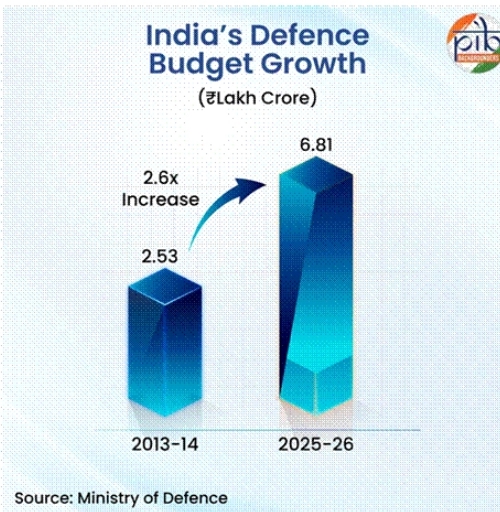
The numbers reveal intent. Budget and production growth signal multi-year structural transformation, not tactical spending.
India’s defence budget rose from ₹5.73 lakh crore in FY23 to ₹7.85 lakh crore in FY27.
That’s nearly 40% growth.
Production more than doubled:
- ₹74 thousand crore in FY17
- ₹1.5+ lakh crore in FY25
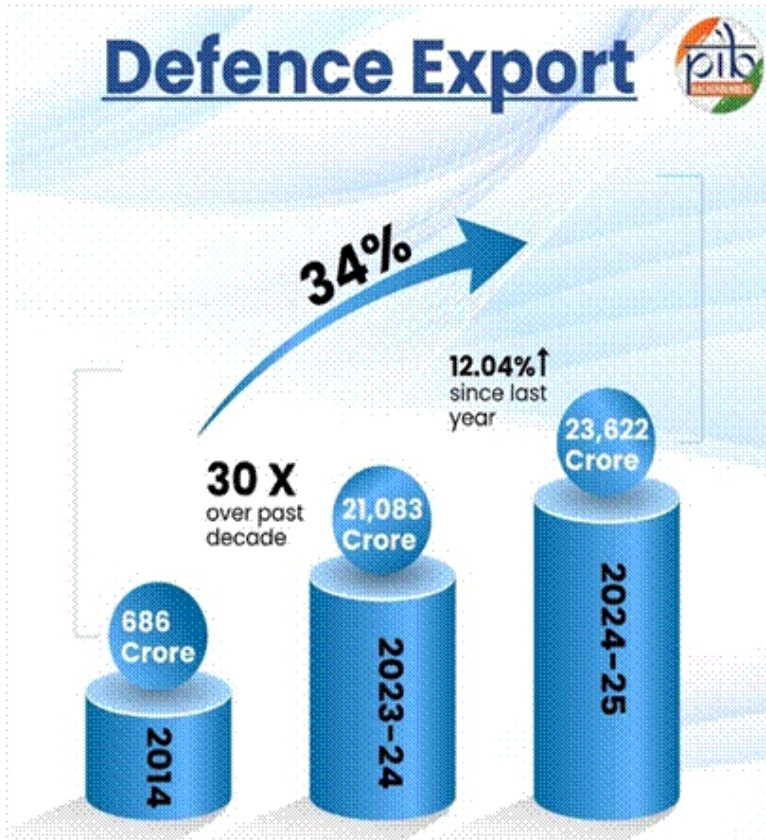
Exports surged 15.5x:
- ₹1,522 crore in FY17
- ₹23,622 crore in FY25
By 2029, targets include:
- ₹3 lakh crore in production
- ₹50,000 crore in exports
These are not annual experiments.
They are outcome-backed strategy commitments.
CX leaders should note this carefully.
Transformation accelerates when leadership commits to visible, measurable, multi-year targets.
What Policy Frameworks Enabled the Shift?
Policy alignment preceded production scale. Clear frameworks reduced ambiguity and created execution discipline.
Several structural levers drove change:
1. Defence Acquisition Procedure (DAP) 2020
Mandated higher indigenous content.
Reduced import dependency.
Draft DAP 2026 aims to accelerate timelines further.
Lesson for CX: Governance precedes innovation.
Without clear rules, AI pilots remain pilots.
2. Positive Indigenisation List (PIL)
Specified items must be procured domestically.
Lesson for CX: Define “non-negotiables.”
Set experience standards that teams cannot bypass.
3. Defence Industrial Corridors
Uttar Pradesh and Tamil Nadu clusters integrate supply chains.
Lesson for CX: Create cross-functional “experience corridors.”
Centralized orchestration beats distributed chaos.
4. FDI Liberalisation
74% automatic route. Up to 100% via government approval.
Lesson for CX: Ecosystem inclusion accelerates capability maturity.
Transformation is rarely internal-only.
Partners matter.
Why Is This a Blueprint for CX and EX Transformation?
Because defence transformation solved three universal enterprise problems: silos, capability gaps, and trust deficits.
Let’s break that down.
1. Siloed Stakeholders → Integrated Ecosystems
Defence involves:
- Government
- Public sector units
- Private players
- MSMEs
- Global OEMs
Coordination failure would derail outcomes.
Instead, India moved toward cluster-based integration.
In CX, the same fragmentation exists:
- Marketing owns acquisition.
- Operations owns fulfillment.
- IT owns platforms.
- HR owns EX.
Customers experience all of it.
Fragmentation kills trust.
2. Capability Gaps → Structured Indigenisation
Rather than immediate self-sufficiency, India created phased indigenisation.
Capability maturity takes time.
In CX, AI ambitions often exceed data maturity.
Defence teaches us:
- Phase complexity.
- Sequence capability build.
- Align roadmap with industrial reality.
3. Trust Deficit → Policy Transparency
Clear procurement norms build investor confidence.
Similarly, CX transformations fail when governance lacks clarity.
Trust scales ecosystems.
Opacity shrinks them.
The Defence-to-CX Strategy Translation Framework
Below is a direct mapping.
| Defence Strategy Lever | CX/EX Translation |
|---|---|
| Budget expansion | Visible executive sponsorship |
| DAP governance | Experience governance framework |
| Indigenisation List | Defined CX standards & metrics |
| Industrial Corridors | Cross-functional journey orchestration |
| Export push | Brand credibility & differentiation |
| Multi-year order books | Long-term CX ROI visibility |
This is not analogy for analogy’s sake.
It’s structural equivalence.
What Outcomes Prove the Strategy Is Working?
Production doubled. Exports multiplied 15x. Order books hit record levels. These signal structural momentum, not cyclical spikes.
Defence companies now sit on multi-year order pipelines.
That ensures:
- Revenue predictability
- Manufacturing stability
- Investor confidence
In CX, similar outcomes include:
- Higher retention
- Predictable lifetime value
- Reduced churn volatility
- Employee engagement lift
Outcomes validate strategy.
Without measurable outcomes, transformation remains narrative.
What Are Common Pitfalls CX Leaders Must Avoid?
Most CX transformations fail due to fragmented governance, unclear ownership, and unrealistic timelines.
Pitfall 1: AI Before Architecture
Defence didn’t scale production before setting procurement rules.
Don’t deploy AI before fixing data architecture.
Pitfall 2: Tactical Wins Without System Redesign
Pilot projects don’t equal transformation.
Industrial corridors changed supply chain structure.
Your CX must redesign operating models.
Pitfall 3: Underestimating Ecosystem Complexity
Defence integrates MSMEs and global OEMs.
CX integrates partners, vendors, and tech stacks.
Map dependencies before scaling.
How Does This Strengthen EX (Employee Experience)?
Large-scale transformation demands employee alignment, not just policy reform.
Defence indigenisation required:
- Skill upgrades
- Vendor certification
- Technology transfer
Similarly, CX transformation requires:
- AI literacy
- Journey ownership
- Cross-functional KPIs
EX drives CX.
Industrial strategy proves it.
Key Insights for CX Leaders
- Transformation begins with governance clarity.
- Ecosystem orchestration beats isolated optimization.
- Visible budget signals seriousness.
- Phased capability building reduces failure risk.
- Outcome targets create execution discipline.
- Trust multiplies scale.
Frequently Asked Questions
How does defence manufacturing relate to customer experience strategy?
Both involve multi-stakeholder orchestration under complexity. Governance, ecosystem alignment, and phased execution drive success in both domains.
Why is long-term budgeting critical for CX transformation?
It signals commitment, reduces short-termism, and enables platform investments that compound over time.
What can AI leaders learn from defence indigenisation?
Sequence capability development. Build domestic data strength before over-relying on external AI tools.
How do industrial corridors translate to enterprise strategy?
They resemble cross-functional experience hubs that integrate data, technology, and operations under shared accountability.
What role does policy transparency play in transformation?
Clear governance builds trust among internal teams and external partners, accelerating execution speed.
Actionable Takeaways for CX and EX Leaders
- Define three non-negotiable CX standards across all journeys.
- Create a multi-year experience investment roadmap.
- Establish cross-functional “experience corridors” with shared KPIs.
- Phase AI deployment based on data maturity levels.
- Tie CX metrics to revenue visibility and retention targets.
- Build ecosystem governance frameworks for partners.
- Publish quarterly CX performance dashboards internally.
- Align EX capability building with CX ambition.
India’s defence sector is still evolving.
But the trajectory is unmistakable.
From policy push to production scale.
From import dependence to export ambition.
And, rom fragmentation to structured orchestration.
CX leaders face the same challenge.
The question is simple:
Will your transformation remain a series of pilots?
Or will it become a coordinated, ecosystem-scale strategy?
History shows one thing clearly.
Scale rewards structure.
