

Imagine a boardroom where metrics flash on screens and strategies unfold on slides, yet the real story simmers in the quiet moments—when an employee hesitates before serving a customer, or a team meeting reveals unspoken frustrations that ripple outward to erode trust. This is the human terrain where Annette Franz, CCXP, has navigated for over 30 years, transforming invisible cultural currents into tangible business triumphs that redefine success. Culture doesn’t just influence experience—it defines it, and in today’s interconnected business landscape, customer and employee experiences are more entwined than ever, demanding voices like Annette’s that cut through the noise with clarity and conviction.
What Makes CX and EX Vibrant and Sustainable?
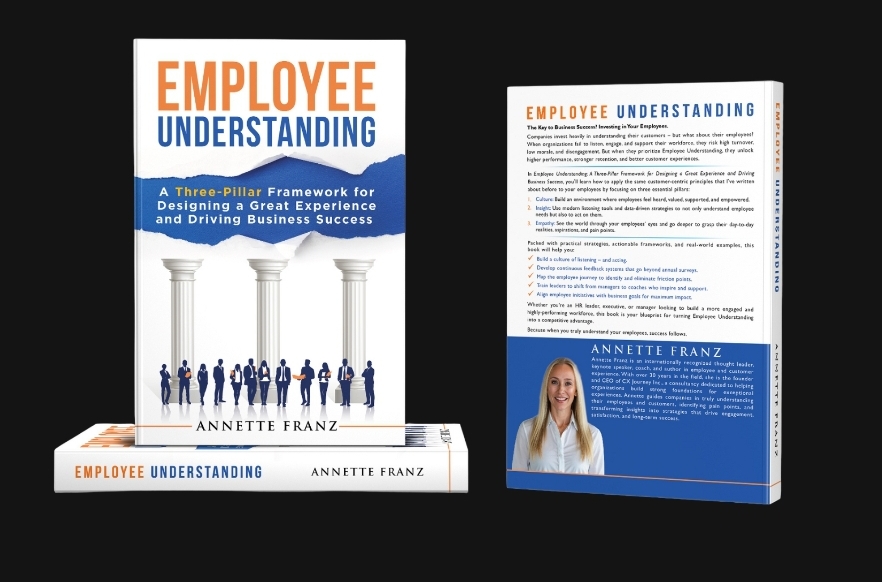
As Founder and CEO of CX Journey Inc., Annette doesn’t merely consult; she unearths the foundational values, trust, and empathy that make Customer Experience (CX) and Employee Experience (EX) not just viable, but vibrant and sustainable. Her journey traces back to the early trenches of customer service evolution, where she witnessed firsthand how misaligned cultures sabotage even the most ambitious initiatives, sparking her transformative philosophy: culture drives behavior, and behavior drives outcomes. With three decades guiding brands across industries, she’s helped forge authentic, human-centric cultures that empower teams and elevate customer relationships, authoring seminal works like Customer Understanding: Three Ways to Put the “Customer” in Customer Experience, Built to Win: Designing a Customer-Centric Culture That Drives Value for Your Business, and Employee Understanding: A Three-Pillar Framework for Designing a Great Experience and Driving Business Success.
A globally recognized thought leader, keynote speaker, and top influencer in CX and EX, Annette leads conversations that delve beyond surface-level metrics into the soul of organizational thriving. In this exclusive CXQuest.com spotlight, she recounts tales from reshaping global brands, dissects the anatomy of cultural shifts with battle-tested insight, and charts a practical path for leaders ready to rewrite their organization’s story—from fostering engaged employees who anticipate needs to building long-term value through empathy-led strategies. This isn’t abstract theory; it’s a blueprint for meaningful change in a shifting global economy.
Fixing the Culture Fixes the Outcomes
Q1. You’ve often said that fixing the culture fixes the outcomes. Could you share what sparked that realization early in your career?
AF: That realization came from watching teams with the same strategy, tools, and goals produce wildly different results. It also came from observing brands known for their great culture – and the results they were achieving.
Early in my career, I kept seeing that the differentiator wasn’t talent or process; it truly was the environment people were working in. When trust was low, everything took longer. When the environment was toxic, productivity, creativity, and innovation stumbled. And, when people felt safe, supported, and connected to purpose, they moved mountains.
At some point it clicked: outcomes aren’t random. They are cultural artifacts. If you fix the culture – how people communicate, how they’re supported, how they’re empowered – you fix the outcomes almost automatically. That insight has shaped every role I’ve taken since.
What do Organizations Actually Lack?
Q2. When you founded CX Journey Inc., what was the core problem you wanted to solve for organizations struggling with customer centricity?
AF: Most organizations don’t lack intent. They lack coherence. They lack knowledge. And they are lacking when it comes to execution, given the lack of knowledge. CX Journey Inc. was founded to help companies move from fragmented, performative customer-centricity to something operational and sustained.
The core problem is that customer experience is often treated as a program or a department, not a business discipline anchored in culture, leadership, and employee experience.
Beyond that, both culture and the employee experience are treated as afterthoughts, when they are the precursors to a great customer experience.
We help organizations connect those dots and turn aspiration into execution.
How to Differentiate Between Organizations that Truly “Get” CX and Those Still Struggling
Q3. After working across industries for over 30 years, what separates organizations that truly “get” CX from those still struggling?
AF: The difference is leadership. If the CEO and the executive team “get it,” are engaged, and give their full commitment, success happens. Full stop.
Organizations that “get it,” align culture, leadership behaviors, employee experience, and decision-making around understanding customers and solving problems for them. Those that struggle tend to chase metrics, tools, or trends in isolation.
Strong CX organizations listen deeply, act decisively, and close the loop consistently. Weak ones collect data, check the box, and call it progress.
Q4. How has the CX profession evolved, and which shifts excite you most today?
AF: The profession itself has evolved by becoming recognized as a profession. When I first started my career 30+ years ago, it wasn’t even a thing. It is today.
That’s the good news.
The bad news is that everything is now CX. Every role is now a CX role. It’s not. Sure, people are involved in delivering the experience, but they are not all CX professionals. This has diluted the profession, without a doubt. Every technology platform is now CX. It’s not. Technology supports and facilitates the experience, but it is not the experience.
How to Make EX a Genuine Strategic Priority?
Q5. Many brands talk about putting employees first, but few operationalize it effectively. What’s the biggest cultural hurdle leaders must overcome to make EX a genuine strategic priority?
AF: Many leaders still equate employee experience with perks or engagement scores, rather than trust, respect, autonomy, and enablement. The real hurdle is accepting that employees are not resources to be managed but humans to be understood. That requires humility, consistency, and a willingness to change leadership behavior, not just policies.
There’s also the recognition (or lack thereof) that culture is the precursor for the employee experience. Culture serves as the foundation upon which every aspect of the employee experience is built. Without a strong, intentional culture efforts to enhance employee experience can feel disjointed, superficial, or even inauthentic.
Q6. In your recent book Employee Understanding, you introduced a three-pillar framework. How can leaders practically implement this model to bridge the gap between employee expectations and organizational reality?
AF: The three pillars are Culture, Insight, and Empathy. So, the most important thing is to deliberately design your culture to put people first, to listen, and to make sure everyone is treated with care and respect. That is truly the foundation.
Then move on to listening differently. Move beyond surveys to continuous, contextual understanding of what employees experience and why. Then align systems – performance, recognition, decision making – to reflect that understanding.
Finally, equip leaders at every level to act on insight. The framework works when understanding drives empathy and action, not when it becomes another diagnostic exercise.
Common Misconception Between EX and CX
Q7. What’s a common misconception leaders still hold about the link between employee engagement and customer experience performance?
AF: Sadly, the common misconception is that there is NO link between EX and CX. Many leaders see EX and CX strategies as two different tracks, owned by different departments (e.g., HR vs. CX).
As a result, the strategies are developed in isolation; employee needs get treated as HR issues rather than, oftentimes, structural/procedural issues; customer needs get treated as business outcomes; metrics don’t align; and feedback loops are broken.
When EX and CX are treated like separate conversations, they become separate realities. In reality (pun intended), they’re deeply intertwined. The customer experience is the product of your internal culture, systems, and support. Happy, engaged employees deliver better service, are more productive, and build stronger customer relationships.
Q8. How can organizations measure the “health” of their culture before it begins to affect EX and CX outcomes?
AF: By paying attention to leading indicators, not lagging ones. Look at decision latency, escalation patterns, internal friction, psychological safety, and how often values are compromised under pressure. Culture health shows up in how work gets done long before it shows up in attrition or NPS scores.
In addition, there are tools out there like MarketCulture’s MRI or PwC’s Culture Thumbprint that can assist you in measuring your culture’s health.
What is Understanding Before Designing?
Q9. You often emphasize “understanding before designing.” In a data-saturated world, how can CX leaders balance analytics with empathy when interpreting voice-of-customer or voice-of-employee insights?
AF: Data tells you what happened; empathy tells you why it mattered. The balance comes from pairing quantitative signals with qualitative context, e.g., stories, journey maps, immersion programs, and lived experiences.
CX leaders must resist the urge to optimize numbers without understanding people. Insight without empathy leads to efficiency; insight with empathy leads to impact.
Q10. Many transformation programs lose momentum because they lack cultural accountability. What structures or metrics have you seen work best to sustain culture change beyond the initial enthusiasm?
AF: Culture change sticks when it’s built into governance. That means clear ownership, cross-functional involvement, leadership scorecards tied to cultural behaviors, and regular reviews that treat culture as seriously as financial performance.
If leaders aren’t held accountable for how outcomes are achieved, not just whether they are, culture change will stall.
Real Reason for Middle Management Resistance
Q11. What role does leadership modeling play in culture transformation, especially when middle management resists?
AF: Leadership modeling is non-negotiable. Middle managers don’t resist change; they resist inconsistency. When senior leaders say one thing and reward another, resistance is rational. Visible, sustained behavior change at the top – modeled to reflect the culture leaders are intentionally designing – gives middle management permission and protection to lead differently.
Q12. How can organizations integrate EX and CX strategies within digital transformation initiatives without losing the human touch?
AF: Integrating EX and CX into digital transformation without losing the human touch is one of the defining leadership challenges of this era. The organizations that get it right don’t treat EX and CX as parallel tracks; they treat them as a single ecosystem where employee experience drives customer experience, and technology amplifies (not replaces) humanity.
And that starts by designing technology around human needs rather than process convenience. Digital transformation should remove friction, not relationships. When EX and CX leaders are involved early, before tools are selected, technology becomes an enabler of better experiences rather than a barrier to them.
Q13. What advice would you give emerging CX professionals trying to champion culture-led change in environments where leadership buy-in is limited?
AF: Anchor your case in business outcomes, not ideology or theory. Always. Start small, prove value, and build credibility through results. Focus on influence before authority and remember that culture change is a long game. Persistence, communication, and evidence will take you further than passion alone.
Enduring Myth about CX or EX
Q14. If you could change one enduring myth about CX or EX, what would it be?
AF: OK, this is a fun one. There are so many! So let me just pick one each, one for EX and one for CX.
Employee Experience
Employee experience is the same as employee engagement. This is one of the most damaging myths. Engagement is one of the outcomes of a great employee experience, not the experience itself. You don’t improve engagement by aiming at it. You improve it by designing a work environment where employees feel valued, supported, and empowered.
It’s an important one to clarify because without knowing what each one means and how they are linked, we don’t properly set the strategy and design for the right thing.
Customer Experience
Customer experience is just customer service; customer experience and customer service are one and the same. While customer service is an important aspect of the customer experience, it’s not the only component. It’s one of those interactions in the definition, and it’s also how we interact with customers, i.e., we service them. Customer experience encompasses the entire journey a customer takes with a company, from need through purchase and post-purchase interactions.
This is a dangerous myth because it leads to the “everything is CX” conundrum, where all jobs are CX positions, all software is CX software, etc. It’s not.
What’s the Future of CX and EX Leadership?
Q15. Finally, after decades of championing culture transformation, what gives you hope about the future of customer and employee experience leadership?
AF: The growing recognition that culture is a competitive advantage, not a side conversation gives me hope. It’s the foundation. We’ve seen how defining the core values and the associated behaviors – and then socializing and operationalizing all of that – drives change and becomes the operating system that the organization sits on and works through.
More leaders are finally connecting people, performance, and purpose. The future belongs to organizations willing to understand before they optimize and to leaders brave enough to change themselves first.
Given that, I’m still not going to make any predictions about the future because most organizations are still stuck in the basics!
Culture is not Inherited or Accidental
As this conversation fades, Annette Franz’s words linger like a clarion challenge issued to every leader: culture isn’t inherited or accidental—it’s meticulously architected, one deliberate, values-driven choice at a time, powering every experience from the inside out. From her front-row seat to the CX revolution, she’s chronicled empires rising on the pillars of empathy, purpose, and understanding, while others falter on indifference and misalignment—always circling back to her central truth that understanding people precedes understanding profits, and that businesses cannot design exceptional customer experiences without first nurturing the internal ecosystem of empowered employees.
Her frameworks have armed organizations against digital disruption and economic volatility, proving that engaged teams don’t just serve customers—they anticipate, innovate, and co-create value in ways metrics alone could never predict. In an era where experience defines brand relevance amid AI advancements and shifting workforce expectations, Annette’s voice cuts through decisively: the human core of business remains irreplaceable, and fixing the culture fixes the outcomes for sustainable growth. Her consulting, mentorship, and advocacy continue to shape industries, offering actionable paths for elevating workplace environments and strengthening customer bonds.
For leaders inspired to act, Annette’s wisdom awaits at cx-journey.com—a gateway to her books, resources, and the cultural revolution equipping tomorrow’s organizations for enduring success. The story of your next chapter, built on culture-led transformation, starts here – https://www.cx-journey.com
