
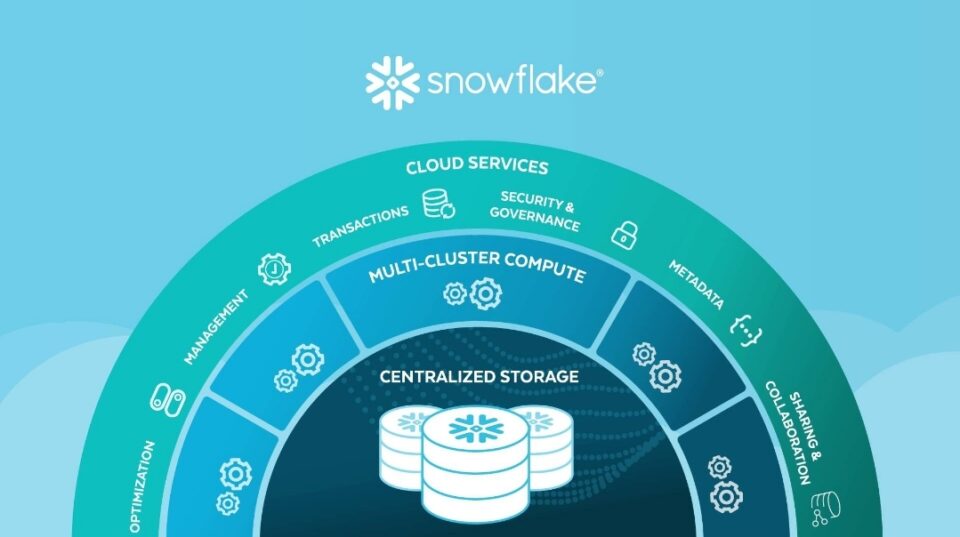
Direct-to-consumer brand Wakefit is accelerating its AI-first transformation with Snowflake’s AI Data Cloud. The goal is simple: unify data, automate intelligence, and deliver faster customer insights.
How Wakefit Is Using AI Data Platforms to Transform Customer Experience in D2C Retail
Imagine ordering a mattress online. You have questions about firmness, delivery, or warranty. Instead of waiting in a long support queue, an intelligent chatbot answers instantly. Meanwhile, the company already knows common product issues from previous customer calls. Finance teams reconcile invoices automatically. Sales teams track demand patterns in real time.
This is not a futuristic scenario. It is the new operating reality for digital-first brands.
India’s fast-growing Direct-to-Consumer (D2C) sector is entering an AI-first transformation phase, where customer experience (CX), operational intelligence, and data governance intersect.
A new collaboration between Wakefit and Snowflake demonstrates how unified data platforms can power that transformation.
By leveraging the AI Data Cloud, Wakefit is embedding AI into workflows across customer service, operations, and analytics. The result: faster insights, reduced manual work, and a more responsive customer experience.
For CX and EX leaders facing fragmented data, siloed teams, and slow analytics, the Wakefit story offers practical lessons.
What Is an AI Data Cloud and Why CX Teams Need It?
An AI Data Cloud unifies data, analytics, and AI on a single platform. It allows organizations to build AI models directly where data resides, avoiding fragmented pipelines.
Many CX teams struggle with scattered data systems. Customer calls live in one platform. Product data lives elsewhere. Marketing analytics sits in another tool.
The result is slow insights and disconnected journeys.
Wakefit faced similar challenges.
As a digital-first brand, Wakefit manages its entire value chain. That includes product design, manufacturing, logistics, and customer support.
However, its earlier architecture relied on separate AI workflows and external APIs.
This created several problems:
- Long turnaround times for reports
- Complex AI pipelines for engineering teams
- Limited governance over AI consumption
- Slower experimentation cycles
The company needed a unified platform.
Snowflake’s AI Data Cloud became the backbone.
Why Data Fragmentation Hurts Customer Experience
Fragmented data directly impacts CX performance.
When data lives in silos:
- Support teams lack product insights
- Marketing lacks customer sentiment signals
- Operations cannot predict demand
Customers experience this as delays, inconsistent responses, or poor product recommendations.
Wakefit wanted to eliminate these gaps.
By adopting Snowflake’s platform, the company centralized data, analytics, and AI in one environment.
This allowed teams to build AI solutions directly where the data lives, reducing complexity.
How Wakefit Is Embedding AI Across Customer Journeys
Wakefit’s AI transformation spans multiple functions. But several use cases directly impact customer experience.
Intelligent FAQ Chatbot for Faster Support
AI chatbots often frustrate customers. They fail to understand context.
Wakefit approached this differently.
Using Snowflake Cortex Search, the company built an intelligent FAQ chatbot for its Zense sleep product range.
The system provides instant, context-aware responses.
Benefits include:
- Reduced support wait times
- Lower dependency on human agents
- Faster resolution of product queries
This improves the first contact resolution rate, a key CX metric.
Voice of Customer Analytics from Call Data
Customer feedback often hides in call recordings.
Most companies struggle to analyze this data at scale.
Wakefit built a Voice of Customer analytics system using Snowflake Cortex AI features like transcription and completion models.
The platform analyzes support calls automatically.
It identifies:
- Product complaints
- Delivery issues
- Customer sentiment trends
These insights feed product teams and operations.
The result is faster issue resolution and product improvements.
AI-Powered Decision Intelligence for Business Teams
Wakefit also introduced role-based analytics agents.
These Snowflake Intelligence agents allow employees to ask questions in natural language.
Sales leaders can ask:
“Which cities show rising demand for mattresses?”
Marketing teams can ask:
“Which products generate the most customer complaints?”
The system returns insights instantly.
This democratizes data access across the organization.
According to Wakefit’s Head of Data, Puneet Tripathi:
“Data is the backbone of our business, enabling our people to make more informed decisions across the value chain.”
How AI Automation Improves Operational Efficiency
Customer experience does not depend only on support teams.
Operations also shape the experience.
Late deliveries, invoice disputes, or partner delays affect CX outcomes.
Wakefit automated several operational workflows.
One example is AI-driven retail invoice processing.
Using Snowflake Cortex AI features like:
- PARSE_DOCUMENT
- AI_CLASSIFY
- AI_COMPLETE
Wakefit automated invoice reconciliation.
This reduces manual effort and improves accuracy.
Retail partners benefit through faster payment processing and fewer disputes.
This improves the partner experience (PX), another critical element of modern CX ecosystems.
Why Unified Data Governance Matters in AI Transformation
Many organizations rush into AI adoption.
But they ignore governance.
This creates risks:
- Uncontrolled AI usage
- Data privacy concerns
- Compliance issues
Wakefit solved this by building AI solutions directly inside the Snowflake environment.
This ensures:
- Controlled access to datasets
- Secure analytics workflows
- Standardized AI usage
For large enterprises, governance is the difference between AI experimentation and AI scalability.
Key Insights for CX Leaders
Wakefit’s transformation highlights several lessons for CX and EX leaders.
1. AI Works Best Where Data Lives
Moving data between systems slows innovation. Unified platforms accelerate experimentation.
2. Voice of Customer Data Is Underutilized
Call recordings contain valuable insights. AI transcription unlocks this intelligence.
3. Natural Language Analytics Democratizes Data
Employees should not depend on data teams for every query.
4. Operational Automation Impacts CX
Invoice automation, logistics insights, and demand forecasting improve customer outcomes.
Common Pitfalls in AI-Led CX Transformation
Many organizations struggle with AI initiatives.
The most common mistakes include:
Fragmented AI experiments
Different teams deploy disconnected tools.
Lack of governance
Uncontrolled data usage leads to compliance risks.
Over-engineering solutions
Complex AI pipelines delay deployment.
Ignoring employee experience
AI must empower employees, not overwhelm them.
Wakefit avoided these pitfalls by focusing on platform unification.
What the Wakefit-Snowflake Partnership Signals for D2C Brands
India’s D2C market is evolving rapidly.
Customers now expect:
- Faster support
- Personalized recommendations
- Transparent product information
AI will become essential to meet these expectations.
According to Snowflake India Managing Director Vijayant Rai:
“Digital-first brands like Wakefit are delivering customer-centric innovation in a competitive environment.”
AI capabilities embedded within data platforms will increasingly drive:
- product innovation
- supply chain intelligence
- customer service transformation
Wakefit plans to expand AI adoption across its operations.
The goal is an AI-first operating model.
How CX Leaders Can Replicate This Strategy
CX leaders should treat AI transformation as a platform decision, not just a technology experiment.
Successful initiatives follow a clear roadmap.
A Simple AI-CX Framework
| Step | Focus Area | Key Outcome |
|---|---|---|
| 1 | Data consolidation | Eliminate silos |
| 2 | Voice of Customer analytics | Capture insights |
| 3 | AI automation | Reduce manual effort |
| 4 | Natural language analytics | Empower employees |
| 5 | Governance and security | Enable scalable AI |
This approach ensures AI improves both customer and employee experience.
FAQ: AI Data Platforms and Customer Experience
How does AI improve customer experience in retail?
AI analyzes customer behavior, feedback, and support interactions. This enables faster support, personalized recommendations, and proactive issue resolution.
What role does data unification play in CX transformation?
Unified data allows organizations to connect insights across marketing, product, and support teams. This eliminates journey fragmentation.

Why is Voice of Customer analysis important?
Customer calls and feedback reveal product issues, sentiment trends, and service gaps. AI tools help extract insights from large datasets.
How can AI improve employee experience?
Natural language analytics allows employees to query data easily. This reduces reliance on technical teams.
What challenges do companies face in AI adoption?
The biggest barriers include data silos, governance issues, complex pipelines, and lack of cross-functional alignment.
Actionable Takeaways for CX Leaders
- Audit your CX data architecture. Identify fragmented systems across marketing, support, and operations.
- Centralize customer data. Build a unified data platform before scaling AI initiatives.
- Implement Voice of Customer analytics. Use AI transcription tools to analyze call recordings.
- Deploy intelligent support bots. Focus on contextual responses rather than scripted flows.
- Democratize analytics. Enable natural language data queries for non-technical teams.
- Automate operational workflows. Invoice processing, logistics insights, and partner management impact CX.
- Establish AI governance early. Define access controls, security policies, and usage standards.
- Measure outcomes continuously. Track metrics like support resolution time, customer sentiment, and repeat purchases.
The Wakefit transformation illustrates a critical shift.
AI is no longer just a feature.
It is becoming the operating system for modern customer experience.
For CX leaders navigating fragmented data, siloed teams, and rising customer expectations, unified AI platforms could become the decisive competitive advantage.
