
TrendAI™: Rethinking Cybersecurity for the AI-Driven Enterprise
Trend Micro’s decision to rebrand its enterprise cybersecurity business as TrendAI™ reflects a structural shift in how organizations must approach security in an AI-first world. As artificial intelligence becomes embedded across enterprise operations—from customer engagement to decision automation—the traditional boundaries of cybersecurity are expanding.
The move signals a transition from protecting systems to governing intelligent, autonomous behaviors. This repositioning underscores a growing industry realization: AI is not just another layer in the technology stack; it is redefining how businesses operate, compete, and deliver customer experiences.
AI, CX, and the Expanding Risk Landscape
Customer experience is increasingly orchestrated by AI systems. From conversational interfaces to predictive personalization engines, AI is now central to how organizations engage customers. However, this shift introduces a new class of risks.
Autonomous systems can act unpredictably, data flows are more distributed, and decision-making is often opaque. For CX leaders, this creates a dual mandate: deliver seamless, intelligent experiences while ensuring those experiences remain secure, reliable, and trustworthy.
“Cybersecurity is becoming a core component of experience design, not just infrastructure protection.”
Failures in AI governance—whether through incorrect decisions, bias, or breaches—can directly impact customer trust. As a result, security is no longer an isolated IT concern; it is a frontline CX issue.
Strategic Shift Toward AI-Centric Security
The transition to TrendAI™ reflects a broader strategic pivot. The company is moving away from a portfolio-led approach toward a unified platform model designed to address AI-era challenges.
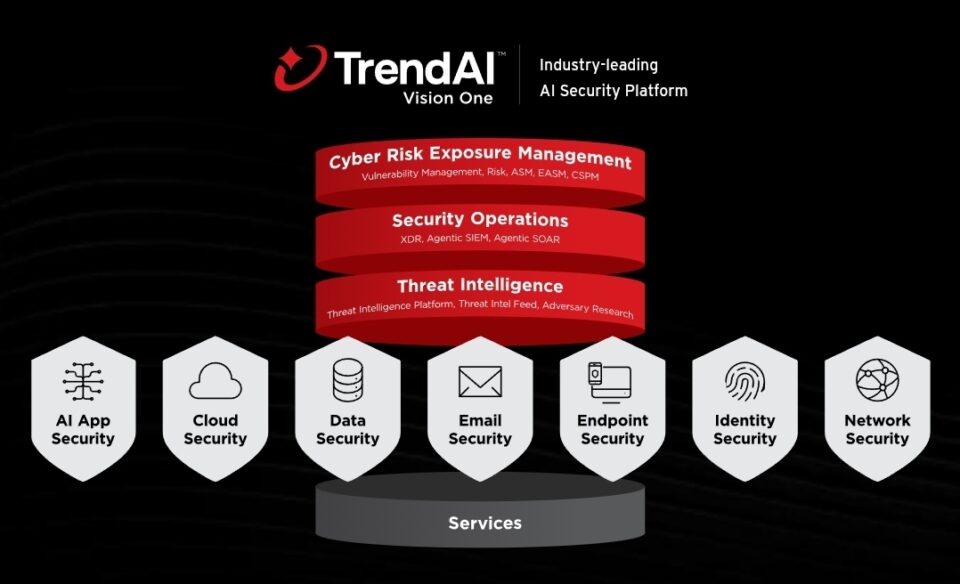
At the center of this strategy is TrendAI™ Vision One™, which integrates threat detection, risk exposure management, and operational visibility across cloud, endpoint, network, and AI environments. This consolidation aligns with enterprise demand for simplified, integrated security architectures.
From a competitive standpoint, this positions the company within a growing category of AI-native cybersecurity providers. Rather than competing solely on detection capabilities, the focus shifts toward enabling enterprises to manage risk holistically across increasingly complex ecosystems.
From Detection to Governance: A New Security Paradigm
A defining aspect of this shift is the move from reactive threat detection to proactive governance of AI systems.
TrendAI™ emphasizes four key capabilities: visibility into AI usage, contextual understanding of interactions, policy enforcement over system behavior, and human oversight at critical decision points. Together, these elements reflect a governance-first approach to cybersecurity.
“Security must evolve from reacting to events to understanding intent and governing machine-driven actions.” — Sharda Tickoo, Country Manager for India & SAARC
This shift acknowledges that in AI-driven environments, risks are not always external threats—they can emerge from within systems themselves, through unintended behaviors or flawed decision logic.
At the leadership level, the emphasis is also on aligning security with business transformation.
“Enterprises are redesigning how work gets done around AI, data, and agentic systems. Our role is to ensure they can do so with confidence, control, and resilience.” — Eva Chen, CEO
This perspective positions cybersecurity as an enabler of innovation rather than a constraint.
Implications for Customer Experience
For CX leaders, the implications are immediate and far-reaching. As AI systems increasingly mediate customer interactions, their performance, reliability, and integrity directly influence experience quality.
Enhanced visibility into AI operations enables organizations to detect anomalies before they impact customers. Policy-driven controls ensure consistency across automated interactions, reducing the likelihood of errors or unintended outcomes.
“AI governance will define the next era of customer trust.”
Operationally, integrating security into AI workflows improves efficiency by automating threat detection and response. This reduces downtime and supports uninterrupted customer journeys—particularly critical in digital-first environments.
Transparency is another key benefit. As organizations gain deeper insight into AI behavior, they can better explain decisions, address customer concerns, and build trust through accountability.
“Visibility and control over AI systems are now essential for consistent customer experiences.”
Industry-Wide Implications
The rebranding highlights a broader convergence of AI, cybersecurity, and customer experience. As enterprises accelerate AI adoption, security strategies must evolve accordingly.
This is likely to drive increased investment in AI observability, lifecycle governance, and integrated risk management platforms. Vendors will differentiate not only through threat detection but through their ability to manage autonomous systems at scale.
Ecosystem collaboration will also become more important. Partnerships in incident response, adversarial testing, and risk advisory signal a shift toward continuous validation and improvement of security postures.

The Road Ahead for CX and Digital Transformation
Looking ahead, the intersection of AI and cybersecurity will become a defining factor in digital transformation success. Organizations that can effectively govern AI systems will be better positioned to deliver consistent, high-quality customer experiences.
This requires a shift from reactive security models to embedded, proactive risk management. It also demands cross-functional alignment—bringing together CX, IT, security, and data teams to ensure cohesive strategies.
TrendAI™’s repositioning reflects this evolving landscape. By focusing on governance, visibility, and control, it highlights the growing role of cybersecurity as a foundational element of customer experience.
For CX leaders, the message is clear: as AI reshapes customer journeys, trust, resilience, and transparency will become the primary differentiators.
KEY TAKEAWAYS
Cybersecurity is evolving into a CX enabler
Security is no longer a backend function—it directly shapes customer trust and experience outcomes.
AI governance is the new priority
Managing how AI systems behave, decide, and interact is becoming central to enterprise risk strategies.
Unified platforms are gaining traction
Organizations are moving toward integrated solutions that provide end-to-end visibility across complex environments.
Proactive security replaces reactive defense
Enterprises must anticipate risks within AI systems rather than respond after incidents occur.
Trust will define competitive advantage
In AI-driven ecosystems, organizations that ensure transparency and reliability will lead in customer experience.
