
When AI Infrastructure Becomes the Experience: What CX Leaders Can Learn from Infosys and ExxonMobil’s Immersion Cooling Play
Ever been on a video call that lagged just as the customer was about to sign?
The apology feels small. The damage doesn’t.
Behind that moment sits an invisible truth many CX leaders ignore: experience collapses when infrastructure cracks. AI models stall. Clouds overheat. Energy costs spike. And customers feel it before dashboards do.
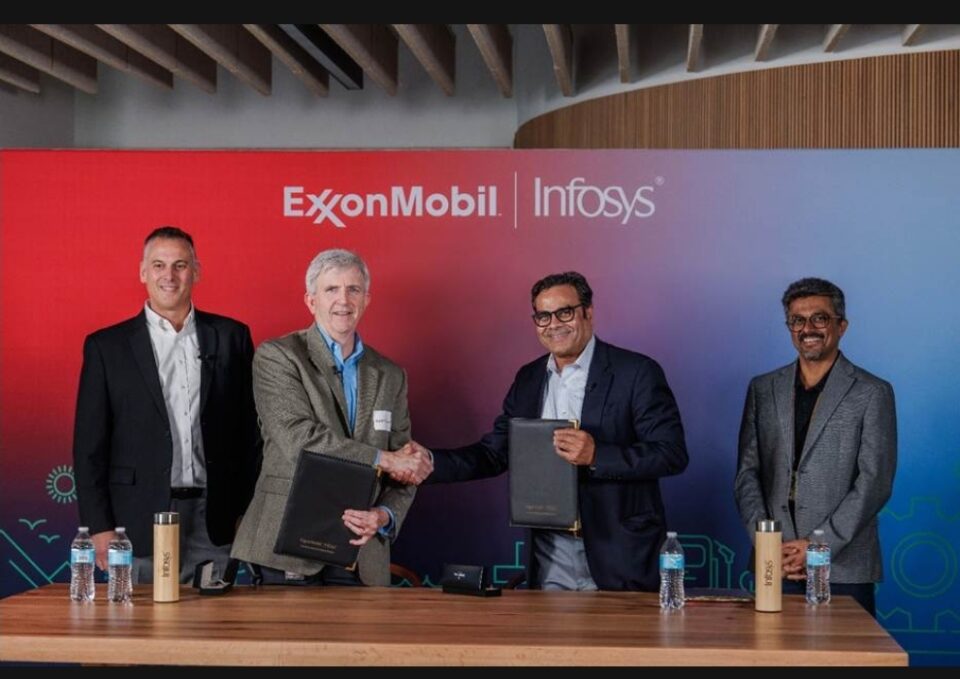
That’s why the expanded collaboration between and matters far beyond data centers. It reframes infrastructure as a frontline CX lever, not a backend cost center.
This is not a cooling story.
It’s a CX systems story—about scale, trust, sustainability, and operational resilience in an AI-first world.
What Is Immersion Cooling—and Why Should CX Leaders Care?
Immersion cooling is a data center technology that submerges hardware in thermally conductive fluids to dissipate heat efficiently.
For CX teams, it directly impacts AI uptime, latency, sustainability metrics, and service reliability.
AI-powered journeys strain infrastructure. Generative AI, real-time analytics, and personalization engines push compute densities beyond air cooling limits. When infrastructure fails, CX breaks silently—through delays, degraded insights, and broken promises.
Immersion cooling changes that equation.
By leveraging ExxonMobil™ Data Center Immersion Fluids, Infosys aims to unlock denser AI workloads with lower energy costs, while improving sustainability outcomes. For CX leaders, that means experience continuity at scale.
Why This Collaboration Signals a Shift in CX Thinking
Most CX strategies stop at software. This one doesn’t.
Infosys brings AI orchestration and cloud scalability. ExxonMobil brings thermal and energy expertise. Together, they address a problem CX leaders increasingly inherit: AI ambition without infrastructure readiness.
The collaboration integrates:
- for AI-driven optimization
- for secure, scalable deployment
- ExxonMobil’s immersion fluids for energy-efficient cooling
This stack reframes infrastructure as an experience enabler, not a hidden dependency.
How Does AI Infrastructure Directly Shape Customer Experience?
AI infrastructure determines how fast, reliable, and responsible your CX can be.
It affects response times, personalization accuracy, service uptime, and ESG credibility.
Here’s the CX chain reaction:
- AI workloads spike → servers overheat
- Cooling fails → throttling begins
- Latency rises → journeys fragment
- Trust erodes → customers churn
Immersion cooling interrupts this spiral by stabilizing performance under extreme AI loads.
Infosys Topaz adds another layer: real-time optimization. Cooling operations adapt dynamically. Maintenance becomes predictive. Energy use aligns with demand.
For CX leaders, this means fewer firefights and more experience consistency.
What Makes This More Than a Sustainability Play?
Because sustainability and CX now share the same KPIs.
Customers increasingly judge brands by:
- Reliability under peak demand
- Transparency in carbon impact
- Ability to scale responsibly
As Ashiss Kumar Dash, EVP & Global Head at Infosys, notes, the collaboration targets measurable outcomes—lower energy costs, reduced carbon emissions, and scalable AI infrastructure.
Those outcomes translate directly into:
- Lower cost-to-serve
- More resilient digital touchpoints
- Stronger trust narratives
Sustainability here isn’t branding. It’s operational credibility.
How Infosys Topaz and Cobalt Close the CX–IT Gap
Infosys Topaz enables AI-first optimization across infrastructure operations.
Infosys Cobalt ensures those capabilities scale securely across clouds and data centers.
CX leaders often struggle with silos:
- AI teams build models
- IT teams manage infrastructure
- CX teams handle fallout
This collaboration collapses those walls.
Topaz uses AI to:
- Predict cooling demand
- Optimize energy usage in real time
- Reduce downtime risks
Cobalt ensures:
- Cloud portability
- Security and compliance
- Seamless enterprise integration
The result is experience-ready infrastructure, not just AI-ready infrastructure.
Who Benefits Most from This Approach?

Organizations running AI-intensive, always-on experiences.
Infosys highlights applicability across:
- Financial services
- Telecom
- Manufacturing
- Energy
- Government
Think of:
- Banks running real-time fraud detection
- Telcos optimizing network experiences dynamically
- Governments scaling citizen services with AI assistants
In all cases, CX reliability depends on compute stability.
As Alistair Westwood from ExxonMobil Product Solutions points out, this partnership enables infrastructure that is smarter, more efficient, and more resilient.
Resilience is the quiet hero of CX.
A Practical CX Framework: Infrastructure-to-Experience Continuum
Here’s a CXQuest-style framework CX leaders can apply immediately:
1. Infrastructure Awareness
Map where AI workloads touch customer journeys.
Identify latency-sensitive moments.
2. Thermal Risk Assessment
Audit cooling constraints under peak AI demand.
Include sustainability metrics.
3. AI-Driven Optimization
Adopt real-time monitoring and predictive maintenance.
Avoid reactive scaling.
4. Cloud-First Deployment
Ensure portability across hybrid environments.
Reduce lock-in risk.
5. Experience Assurance
Tie infrastructure KPIs to CX outcomes.
Measure impact on uptime, NPS, and resolution speed.
This is how infrastructure becomes experience strategy.
Common Pitfalls CX Leaders Should Avoid
- Treating infrastructure as “IT’s problem”
- Scaling AI without thermal readiness
- Ignoring sustainability until regulation hits
- Measuring CX without operational context
Each pitfall leads to fragile experiences.
Key Insights for CX and EX Leaders
- AI experiences fail quietly when infrastructure strains
- Cooling efficiency directly affects journey reliability
- Sustainability now influences trust, not just compliance
- AI optimization must extend below the application layer
- Cross-industry collaboration accelerates CX resilience
How This Aligns with CXQuest Thinking
CXQuest consistently emphasizes systems thinking in experience design. This collaboration exemplifies that philosophy.
Experience excellence no longer lives only in:
- Journey maps
- Personas
- Interfaces
It lives in:
- Compute density
- Energy efficiency
- Operational resilience
CX leaders who ignore this layer risk building beautiful journeys on unstable ground.
FAQs for CX and Digital Leaders
How does immersion cooling impact customer experience directly?
It improves uptime, reduces latency, and stabilizes AI-driven services during peak demand.
Is this relevant only for hyperscalers?
No. Enterprises running AI-heavy workloads also face cooling and energy constraints.
What role does AI play in cooling optimization?
AI predicts demand, optimizes energy use, and enables proactive maintenance.
How does sustainability affect CX metrics?
Customers associate sustainable operations with trust, reliability, and brand credibility.
Can CX teams influence infrastructure decisions?
Yes—by tying experience outcomes to operational and energy KPIs.
Actionable Takeaways for CX Professionals
- Audit where AI infrastructure impacts customer journeys.
- Partner with IT on thermal and energy readiness discussions.
- Link uptime and latency to CX KPIs explicitly.
- Demand AI-driven optimization below the application layer.
- Include sustainability metrics in CX governance.
- Prepare infrastructure for AI scale before demand spikes.
- Treat resilience as a core experience promise.
The future of CX will not be won in dashboards alone.
It will be won in the invisible systems that keep experiences alive when demand surges.
Infosys and ExxonMobil just reminded the market of that truth.
