
How Sustainability Innovation Is Becoming a CX Strategy: Lessons from the Zayed Sustainability Prize 2026
A CX leader’s déjà vu moment
The chatbot answers politely.
The dashboard shows green metrics.
The ESG report looks impressive.
And yet, customers are still frustrated.
They wait too long for healthcare access.
Food arrives spoiled.
Cooling fails in peak summer.
Water leaks go undetected for months.
Now imagine a different reality.
A child is screened for neurodevelopmental challenges through play.
A grocery package actively prevents waste.
Cooling is delivered as a service, not a product.
Water systems fix themselves before citizens complain.
This is not a distant sustainability dream.
It is operational CX in action.
The Zayed Sustainability Prize 2026 winners offer a powerful signal:
The future of customer experience will be designed through sustainability systems, not surface-level touchpoints.
For CX and EX leaders facing siloed teams, AI gaps, and fragmented journeys, these stories are more than inspiration.
They are blueprints.
What Is the Zayed Sustainability Prize—and Why Should CX Leaders Care?
Short answer: It is a global innovation platform showing how human-centered sustainability delivers measurable CX outcomes at scale.
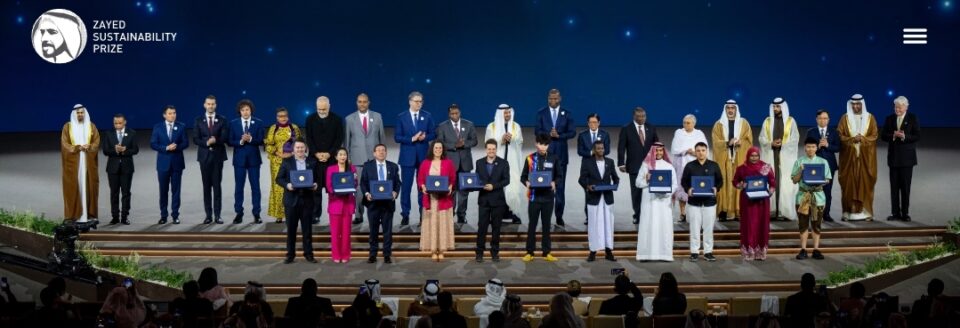
The Zayed Sustainability Prize, established in 2008, recognises organisations solving critical global challenges across Health, Food, Energy, Water, Climate Action, and Global High Schools. In 18 years, its 128 winners have impacted over 411 million lives globally.
In 2026 alone:
- US$5.9 million was awarded
- 11 organisations and schools were recognised
- Solutions spanned AI diagnostics, Cooling-as-a-Service, IoT water systems, circular food packaging, and more
For CXQuest readers, the relevance is clear.
These innovations succeed because they:
- Remove friction from essential journeys
- Redesign value delivery models
- Align technology, emotion, and outcomes
That is CX at its core.
Why Sustainability Is No Longer Separate from CX Strategy
Short answer: Because customers now experience sustainability as service quality, not brand positioning.
Sustainability used to sit in reports.
CX lived in contact centres.
That separation is collapsing.
Today:
- Access is the experience
- Reliability is the experience
- Affordability is the experience
When cooling fails, health suffers.
When water leaks persist, trust erodes.
And, when food spoils, loyalty disappears.
The 2026 Prize winners prove a critical shift:
Sustainability innovation works when it redesigns the entire customer journey—not just the product.
How Do the 2026 Winners Redefine Customer Journeys?
Short answer: By rebuilding journeys around outcomes instead of transactions.
Let’s examine what CX leaders can learn.
Health CX: Can AI Make Diagnosis Feel Human?
Answer: Yes—when AI is designed around play, empathy, and speed.
Winner: Jade (UAE)
Jade reimagines neurodevelopmental screening through a gamified, AI-driven platform.
It combines cognitive assessments, eye-tracking, and personalised learning.
CX impact:
- Diagnostic wait times shrink dramatically
- Children stay engaged through play
- Parents receive clearer, faster insights
Scale:
- Used in 450+ institutions
- Across 179 countries
- Supporting 180,000+ children
CX lesson:
AI adoption succeeds when it reduces anxiety, not just cost.
Food CX: What If Packaging Actively Prevented Dissatisfaction?
Answer: Then food waste becomes a CX failure you can design out.
Winner: N&E Innovations (Singapore)
Their biodegradable antimicrobial packaging:
- Uses upcycled food waste
- Achieves 99.9% antimicrobial effectiveness
- Delivers bacterial counts 4.5x lower than conventional materials
CX impact:
- Longer shelf life
- Fewer complaints
- Higher trust in freshness
More than 400,000 sustainable packs are already in market.
CX lesson:
The experience continues after purchase—especially in food.
Energy CX: Why Is Cooling Becoming a Service, Not a Product?
Short answer: Because customers value outcomes over ownership.
Winner: BASE Foundation (Switzerland)
BASE’s Cooling-as-a-Service model:
- Removes upfront capital costs
- Delivers affordable, low-carbon cooling
- Operates in 68 countries
Impact:
- 130 GWh electricity saved annually
- 81,000 tonnes CO₂ avoided
- 2,500 jobs created
CX lesson:
Subscription and service models reduce friction while expanding access.
Water CX: Can Infrastructure Become Proactive?
Answer: Yes—when AI and IoT work silently in the background.
Winner: Stattus4 (Brazil)
Their AI- and IoT-enabled system:
- Monitors 5,000 km of water networks
- Identifies 22,000+ potential leaks
- Saves 5.56 billion litres of water daily
CX impact:
- Fewer outages
- Faster fixes
- Higher public trust
Serving over four million people.
CX lesson:
The best CX is often invisible.
Climate Action CX: How Does Resilience Become an Experience?
Short answer: When communities feel safer, employed, and empowered.
Winner: Build up Nepal
Their eco-brick model:
- Produces earthquake-resistant bricks
- Uses low-carbon processes
- Creates local green jobs
Impact:
- 3.3 million bricks produced
- 12,000+ homes built
- 110,000 tonnes CO₂ avoided
CX lesson:
Long-term trust grows from tangible resilience.
What About the Next Generation of CX Innovators?
Short answer: They are already designing system-level journeys.
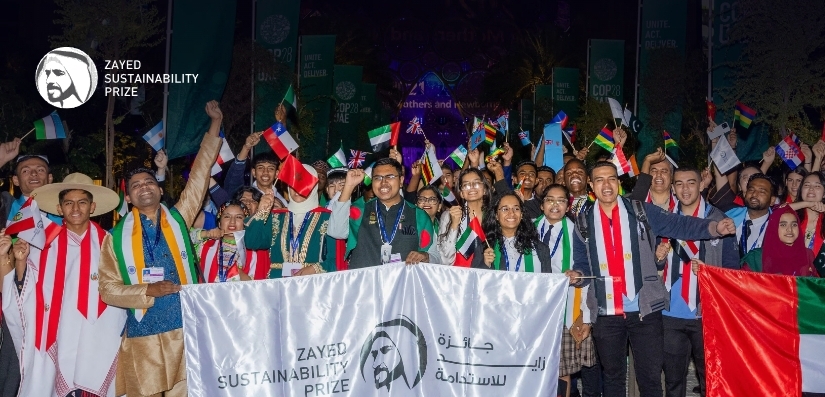
The Global High Schools category funds youth-led sustainability solutions. Each year, six schools receive up to US$150,000.
In 2026, finalists included schools from: Canada, Uganda, Jordan, Türkiye, Maldives, and Thailand.
India Spotlight: Kikani Vidhya Mandir, Coimbatore
India’s presence remains strong.
Kikani Vidhya Mandir emerged as a South Asia finalist for its Algae-IoT Carbon Capture Initiative.
Key features:
- AI-powered mechanical “trees”
- Algae capture CO₂ more efficiently than plants
- IoT sensors optimise performance
The school plans to deploy 100 units across schools and urban sites.
CX relevance:
Education, climate action, and technology are converging into experiential learning ecosystems.
India’s track record also includes:
- Periwinkle Technologies (Health, 2025)
- S4S Technologies (Food, 2022)
- SELCO (Energy, 2018)
What CX Framework Emerges from These Winners?
Short answer: A shift from touchpoint design to outcome orchestration.
The Sustainable CX Stack
1. Outcome-First Design
Start with human needs, not channels.
2. Embedded Intelligence
AI operates quietly, improving reliability.
3. Access Over Ownership
Service models beat asset models.
4. Local Adaptation
Global scale requires local relevance.
5. Measurable Impact
Trust grows from visible results.
This aligns with CXQuest’s broader work on journey orchestration, intelligent operations, and trust-led CX.
Common Pitfalls CX Leaders Should Avoid
- Treating sustainability as branding
- Isolating ESG teams from CX teams
- Measuring sentiment without outcomes
- Deploying AI without emotional context
- Scaling globally without local insight
Key Insights for CX and EX Leaders
- Sustainability is now a CX capability.
- AI succeeds when it removes friction, not people.
- Infrastructure reliability shapes brand trust.
- Outcome-based models outperform product-based ones.
- Youth innovation signals future CX norms.
Frequently Asked Questions (FAQ)
How does sustainability directly improve customer experience?
By reducing friction, improving access, and increasing reliability across essential journeys.
Can sustainability innovation scale without hurting CX consistency?
Yes, when solutions are locally adapted and outcome-driven.
What role does AI play in sustainable CX?
AI enables predictive, proactive, and personalised experiences at scale.
Why should CX leaders care about infrastructure innovations?
Because failures in water, energy, or health become CX failures instantly.
How can CX teams partner with ESG teams effectively?
By aligning on shared outcome metrics, not parallel reports.
Actionable Takeaways for CX Professionals
- Map sustainability touchpoints across priority journeys.
- Redesign metrics around outcomes, not interactions.
- Pilot service-based models where access is a barrier.
- Embed AI to predict issues before customers complain.
- Partner with operations and ESG early, not late.
- Localise solutions while scaling platforms.
- Track trust as a long-term CX KPI.
- Learn from education and youth-led innovation models.
The Zayed Sustainability Prize 2026 sends a clear message:
The future of customer experience will not be designed only in CX labs.
It will be built in clinics, kitchens, classrooms, cooling systems, and city pipelines—
where sustainability becomes the experience itself.
For CXQuest readers, that future has already begun.
