
Unifying Intelligence After the Code: How Harness’s AI Expansion Reimagines EX and CX in the Software Delivery Era
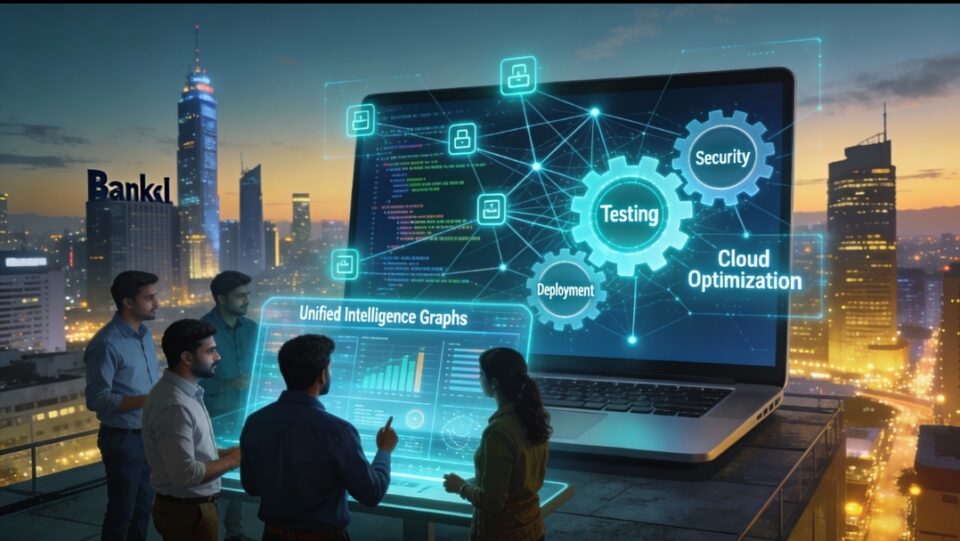
Imagine a developer in Bangalore pushing the final line of code on a critical product update. The real challenge begins after that — testing, securing, deploying, monitoring, and optimizing across distributed clouds. Hours turn into days, and what should be a seamless release becomes a multi-team relay race with silos and context switches. How about After-Code Intelligence?
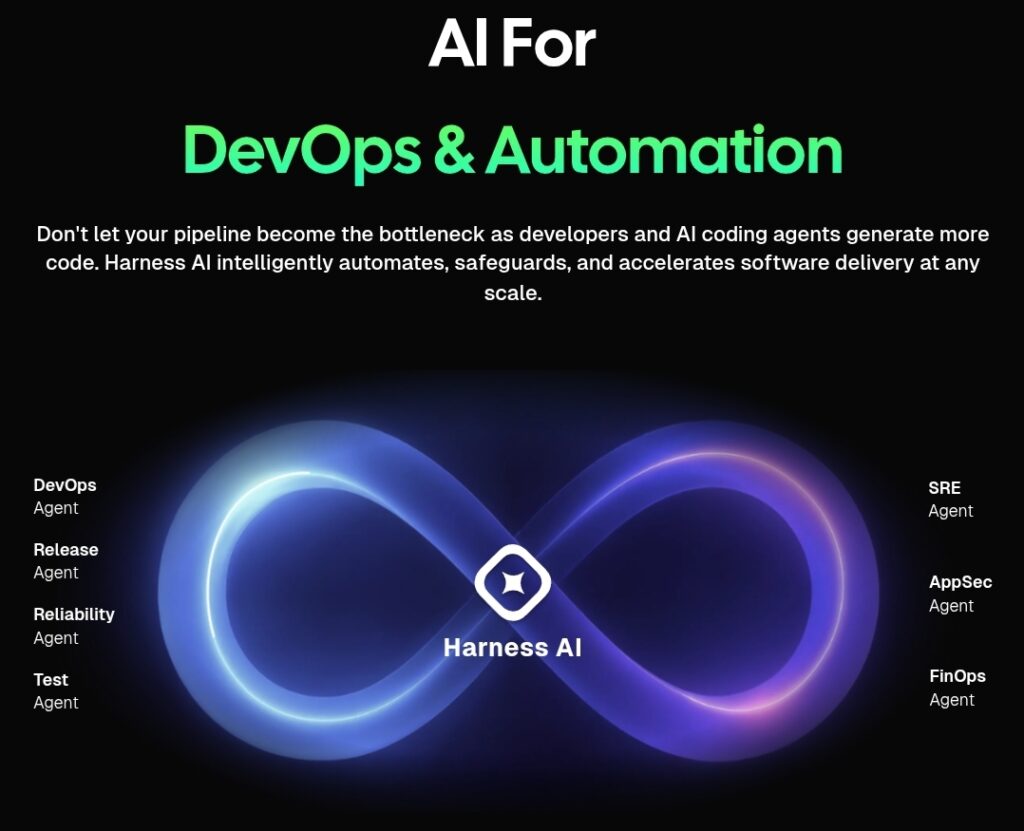
Now, imagine if intelligent automation orchestrated that entire “after-code” journey — eliminating toil, predicting issues, optimizing cost, and freeing teams to innovate faster. That shift is exactly what Harness, the AI DevOps Platform™, is engineering as it scales its India R&D ecosystem by 75%. But beyond AI innovation, the deeper transformation at play is cultural — a convergence of CX, EX, and AI strategy in the fabric of modern software delivery.
What Is “After-Code Intelligence” and Why It Matters for CX and EX?
After-code intelligence refers to applying AI and automation across the post-development lifecycle — encompassing testing, deployment, cost optimization, and security.
In simple terms, it addresses where 60–70% of developer effort truly lies: after the code is written. For enterprise CX and EX leaders, this shift signals a new frontier — where operational AI not only accelerates delivery but amplifies both developer experience (DX) and downstream customer experience (CX).
Key Insight: Intelligent, end-to-end DevOps transforms how teams collaborate, making reliability and speed integral to the customer promise.
When DevOps teams spend less time firefighting, they reclaim creativity. Faster releases mean faster feature delivery, while integrated feedback loops ensure that customer issues become data — not roadblocks.
Companies like United Airlines and Choice Hotels use Harness to accelerate release cycles by 75% and cut costs by 60%. For a CX leader, that’s more than efficiency; it’s the agility to respond to experience signals in real-time.
Why Is Harness Investing Heavily in India’s AI R&D Ecosystem?
Harness’s Bangalore-based AI R&D Center is not a cost hub — it’s the strategic core shaping the future of AI DevSecOps. The team’s growth to over 480 employees, scaling toward 1,000, marks a decisive pivot toward unified intelligence.
Quick Take: Harness is betting that AI innovation thrives where deep engineering meets contextual experience — and India offers both.
From generative AI testing to cloud cost optimization, the company’s knowledge graph–driven automation aims to connect every node of the delivery chain. Top talent sourced from IITs, BITS, and other premier universities is building intelligent systems that “learn from every deploy” — a far cry from traditional script-driven automation.
As Jyoti Bansal, founder and CEO, noted, this is about execution at scale, not experimentation. The India R&D expansion is a blueprint for how organizations can align AI investments with human growth, autonomy, and purpose — the pillars of EX transformation.
How Does Unified Intelligence Translate to Customer-Centric Agility?
Unified intelligence breaks down silos between testing, securing, deploying, and operating software. The result is not only speed but systemic resilience — essential to sustaining trust in digital CX.
When tools and teams operate within a single intelligent graph, errors and inconsistencies surface faster. AI models trained on historical delivery data can predict bottlenecks, preempt risks, and recommend optimizations.
This shift creates what we might call “experience continuity” — ensuring that every internal process aligns to a frictionless external experience.
Example:
If an airline app update introduces latency, a traditional pipeline might identify the issue post-deployment. In a unified environment like Harness’s, predictive AI flags anomalies before rollout, preventing downstream customer friction.
For CX leaders, that difference is revolutionary — turning reactive support into proactive assurance.
What Can CX and EX Leaders Learn from Harness’s AI Engineering Playbook?
The implications extend well beyond software. Harness’s growth story offers four CX/EX leadership lessons for organizations navigating AI-driven transformation:
- Build AI fluency across roles. Don’t isolate AI in data science. Integrate it into operations, quality, and experience delivery.
- Design for autonomy. Empower teams with intelligent systems that simplify decisions rather than dictate them.
- Align AI with purpose. Focus automation where it reduces toil, not where it erases human value.
- Invest in intelligence architecture. Unified data and delivery pipelines mirror the “connected journeys” CX teams aim to build.
By operationalizing these principles, EX and CX evolve symbiotically. When developers experience fewer barriers, customers experience fewer disruptions.
How Does AI-Driven DevSecOps Solve Journey Fragmentation?
Journey fragmentation in CX often mirrors technical fragmentation in EX systems. Siloed data and disjointed tools create blind spots.
Harness’s AI DevSecOps model demonstrates how experience alignment can emerge from systemic integration. By merging with Traceable and acquiring Qwiet AI, Harness unified the critical layers of the software lifecycle — from code security to cost governance — into a cohesive intelligence layer.
Quick Answer: AI DevSecOps creates connected feedback loops, making technical and customer journeys visible, measurable, and improvable.
This visibility transforms metrics into meaning: instead of tracking deployment times or NPS scores in isolation, leaders can map how software reliability impacts satisfaction and how engineering velocity correlates with engagement.
Common Pitfalls in Scaling AI-Driven Teams
Even forward-thinking companies risk missteps when scaling AI implementations. Based on broad industry patterns, here are common pitfalls:
- Over-automation: Applying AI where human judgment is still essential.
- Isolation of data: Failing to unify learning loops across R&D, operations, and support.
- Neglecting EX: Ignoring the psychological load of change on engineering teams.
- Short-term optimization: Chasing performance gains without aligning to long-term experience metrics.
- Limited measurement: Using output metrics (speed, cost) without tracking outcome metrics (reliability, satisfaction).
Avoiding these traps requires a framework that connects AI governance, experience design, and delivery maturity — not as parallel tracks, but as an integrated operating system.
Framework: The AI-Experience Maturity Model
| Stage | Focus | Outcome | CX/EX Impact |
|---|---|---|---|
| 1. Automation | Task-level AI adoption | Efficiency gains | Faster, cheaper processes |
| 2. Integration | Cross-function orchestration | Reliability, reduced silos | Stable experience delivery |
| 3. Intelligence | Predictive and prescriptive analytics | Proactive issue prevention | Consistent, resilient CX |
| 4. Transformation | Unified experience intelligence | Outcome-based governance | Differentiated trust and loyalty |
Harness is operating between stages 3 and 4, moving from predictive intelligence to unified governance — the stage where AI becomes a strategic experience differentiator.
FAQ: AI, DevOps, and Experience
Q1. How can CX leaders participate in AI DevOps conversations?
By framing software delivery not as IT efficiency, but as the foundation of customer trust and speed.
Q2. What’s the link between developer experience and customer experience?
High developer satisfaction correlates with faster, more reliable releases — directly influencing customer loyalty.
Q3. How soon can organizations realize value from “after-code” AI automation?
Early adopters report measurable deployment and cost benefits within three to six months of implementation.
Q4. How can organizations avoid AI burnout among developers?
Create “choice-driven” automation — letting teams decide where AI assists versus replaces manual work.
Q5. Is unified DevSecOps viable for non-tech enterprises?
Yes. Industry leaders in retail and banking are adopting similar intelligence layers to scale securely and responsively.
Q6. How do mergers like Harness–Traceable enhance CX?
They unify security, deployment, and delivery intelligence, ensuring every customer-facing feature is safe, performant, and stable.
Actionable Takeaways for CX Leaders
- Redefine CX through EX. Prioritize internal user journeys as the bedrock of customer satisfaction.
- Map “after-code” bottlenecks. Identify where operational lags distort customer outcomes.
- Adopt unified intelligence frameworks. Move from siloed automation to connected orchestration.
- Build AI governance councils. Involve CX, EX, and tech leaders in shared intelligence strategies.
- Track experience continuity. Measure how software reliability translates to customer trust.
- Invest in reskilling. Help teams develop AI-literate behaviors and decision confidence.
- Start small, scale fast. Pilot unified intelligence in one workflow, then expand across journeys.
- Communicate with outcome language. Frame AI goals around customer and employee impact — not just efficiency.
Harness’s expansion signals more than hiring momentum; it marks a shift in how AI, human experience, and business outcomes intertwine. As CX and EX leaders, the challenge is to harness (pun intended) intelligence not only to deliver software faster — but to deliver trust, autonomy, and purpose at scale.
