
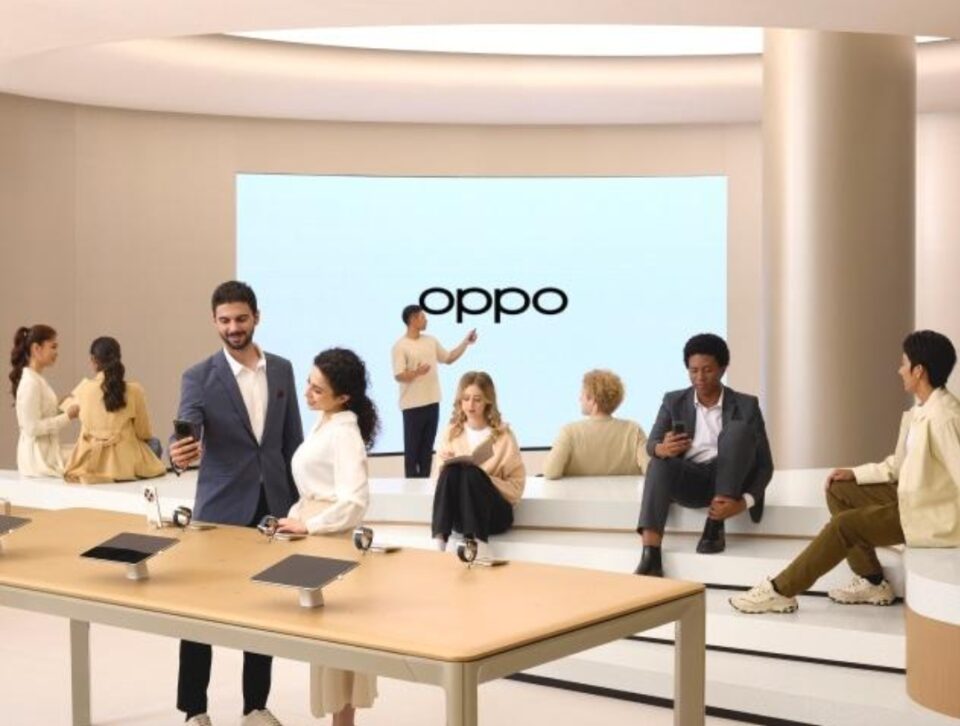
OPPO Service Center 3.0 Pro: Redefining After-Sales as a CX Differentiator
The expansion of OPPO Service Center 3.0 Pro across India marks a decisive shift in how smartphone brands approach after-sales service. With plans to scale to over 150 locations by 2026, OPPO India is repositioning service from a backend function to a frontline experience lever.
In a market where device innovation is increasingly incremental, the competitive battleground is moving toward lifecycle experience. As smartphones become essential to payments, work, and communication, downtime is no longer an inconvenience—it is a disruption. This elevates after-sales service into a critical moment of truth in the customer journey.
“After-sales is no longer a support function—it is a defining layer of customer experience.”
Rising Expectations and Operational Pressure
Customer expectations around service have undergone a structural transformation. Today’s users demand more than resolution—they expect visibility, predictability, and speed. Long wait times, unclear repair processes, and inconsistent service experiences are no longer tolerated.
At the same time, brands face the operational challenge of scaling service networks across geographies while maintaining uniform quality. This is particularly complex in a market like India, where demand spans metros as well as Tier II and Tier III cities.
The expansion of OPPO Service Center 3.0 Pro reflects a response to this dual pressure—meeting elevated expectations while managing operational complexity at scale.
“Service quality is now judged not just by outcomes, but by how transparent and predictable the journey feels.”
Strategic Intent: Competing Beyond the Product
The acceleration of OPPO Service Center 3.0 Pro is not merely an infrastructure decision—it is a strategic repositioning. As product differentiation narrows, brands are increasingly competing on experience continuity beyond the point of sale.
This move signals an offensive strategy. Rather than reacting to service gaps, OPPO is proactively investing in service as a differentiator. The intent is clear: strengthen customer retention, improve brand trust, and create a consistent experience layer that competitors may struggle to replicate quickly.
Goldee Patnaik, Head of Communications at OPPO India, emphasizes the focus on delivering “transparent, efficient, and consistent experiences across touchpoints,” highlighting the role of service in shaping long-term customer perception.
“Owning the post-purchase journey is becoming central to owning the customer relationship.”
How OPPO Service Center 3.0 Pro Works
At an operational level, OPPO Service Center 3.0 Pro integrates digital systems into physical service environments to streamline and enhance the service journey.
Key elements include:
- Digital check-in systems to reduce manual intake friction
- Real-time queue updates that provide clarity on wait times
- Dynamic digital signage to guide customers through the process
- Face-to-face repair workflows that improve transparency
- Standardized layouts and service flows for consistency across locations
Unlike traditional service centers—where processes remain largely invisible—this model exposes key stages of the service journey to the customer. The result is a more informed and controlled experience.
“Transparency is being engineered into the service journey, not added as an afterthought.”
Translating Operations into Experience
The real impact of OPPO Service Center 3.0 Pro lies in how operational improvements reshape customer perception.
Speed: Digital workflows reduce intake delays and improve first response time.
Transparency: Customers gain visibility into repair processes, reducing uncertainty.
Consistency: Standardized environments ensure predictable experiences across locations.
Comfort: Redesigned service spaces improve the physical experience of waiting.
This combination addresses a fundamental gap in traditional service models—the disconnect between backend efficiency and customer perception.
By making processes visible and predictable, OPPO is aligning operational execution with experiential outcomes.
“Customers value control and clarity as much as they value speed.”
Industry-Wide Implications
The expansion of OPPO Service Center 3.0 Pro signals a broader shift in the consumer electronics industry. After-sales service is no longer a reactive function—it is becoming a strategic differentiator.
This raises the competitive bar. Other smartphone brands will need to:
- Invest in digitally enabled service environments
- Improve transparency in repair workflows
- Reduce turnaround times through process optimization
The industry is moving toward experience-led service ecosystems, where service quality directly influences brand loyalty and repeat purchase behavior.
“Service infrastructure is evolving into a core component of brand strategy.”

Future Outlook: Toward Experience-Orchestrated Service Networks
Looking ahead, the evolution of service models will likely accelerate. The next phase will involve deeper integration of predictive diagnostics, remote support capabilities, and AI-driven workflow optimization.
OPPO Service Center 3.0 Pro represents an early but meaningful step toward this future—where service centers are not just repair hubs, but orchestrated experience environments.
As expectations continue to rise, brands that can deliver seamless, transparent, and fast after-sales experiences will gain a measurable advantage in customer retention and lifetime value.
“The future of customer experience will be defined by how effectively brands manage the moments after the sale.”
Key Takeaways
- After-sales service is emerging as a primary CX differentiator in the smartphone market
- Transparency in repair processes is becoming a critical driver of customer trust
- Hybrid physical-digital service models are replacing traditional service setups
- Standardization is essential to delivering consistent experiences at scale
- Investments in service infrastructure directly impact retention, loyalty, and brand perception
