

What NASA Blockchain Experiment Teaches CX Leaders About Trust, Safety, and the Future of Customer Experience
Ever trusted a system you couldn’t see—until it failed?
Picture this.
A customer tracks a flight disruption through three apps.
The airline says one thing.
The airport says another.
Air traffic data lags behind both.
Nobody lies.
Yet nobody agrees.
That moment—when data trust fractures—is where customer experience quietly collapses.
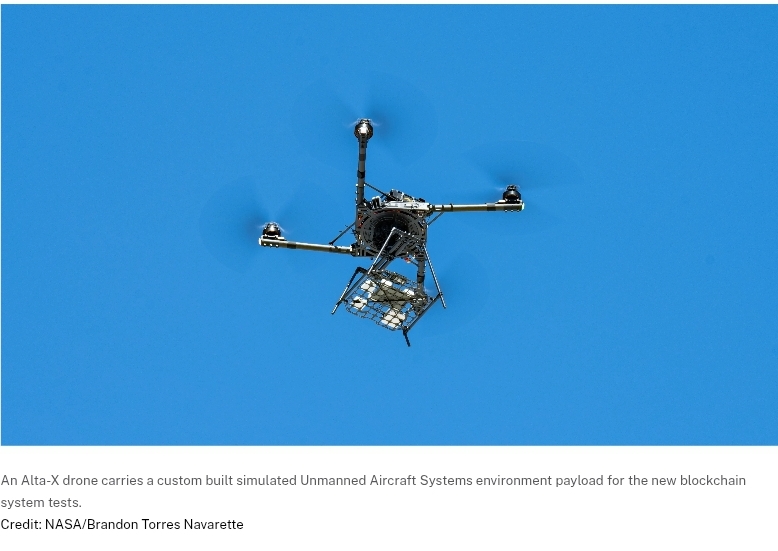
In January 2026, NASA tested a blockchain-based system to protect real-time flight data using drones at its Ames Research Center.
The goal was not speed.
It was trust, integrity, and resilience.
For CX and EX leaders, this experiment offers a powerful lesson:
The future of experience depends less on touchpoints—and more on trustworthy systems underneath them.
This article explores what NASA’s blockchain work means for CX leaders navigating siloed teams, AI gaps, and fragmented journeys.
What Is NASA Actually Solving—and Why Should CX Leaders Care?
Short answer: NASA is securing shared, real-time data across multiple actors without relying on a central authority.
For CX teams, this mirrors a familiar struggle.
Multiple systems.
Multiple owners.
One customer journey.
When data flows break, experience breaks first.
NASA’s blockchain test focused on protecting flight data from interception, manipulation, or loss.
CX leaders face the same challenge with customer data—only across CRM, marketing, support, partners, and AI layers.
Why Is Trust Becoming the New CX Battleground?
Short answer: Customers judge experiences by reliability, not just convenience.
Speed matters.
Personalization matters.
But trust matters more.
In aviation, untrusted data risks lives.
In CX, it risks loyalty.
Modern CX environments suffer from:
- Conflicting customer records
- AI models trained on outdated data
- Partner ecosystems sharing partial truths
NASA recognized that layered security was no longer enough.
CX leaders are reaching the same conclusion.
What Makes Blockchain Different From Traditional CX Architectures?
Short answer: Blockchain creates a shared source of truth without central control.
Traditional CX systems depend on hubs.
CRM becomes the “master.”
Data lakes promise unification.
But hubs fail when:
- Teams resist ownership loss
- Partners lack access
- Updates lag behind reality
NASA used blockchain because it:
- Distributes data across trusted nodes
- Records every change immutably
- Verifies data in real time
For CX, this reframes governance entirely.
How Does NASA’s Drone Test Translate to CX Reality?
Short answer: Replace drones with journeys, telemetry with interactions, and airspace with ecosystems.
NASA tested blockchain using:
- Autonomous drones
- Ground control stations
- Simulated and real-time data
CX environments operate similarly:
- Customers act independently
- Channels operate semi-autonomously
- Systems exchange constant signals
In both cases, no single actor owns the full picture.
NASA proved blockchain can:
- Secure data exchanges
- Preserve accuracy under stress
- Scale across environments
CX leaders should pay attention.
Where CX Systems Break Today—and Why Blockchain Matters
Short answer: Experience breaks where data integrity fails.
Common CX pain points include:
- One customer, multiple identities
- AI agents giving inconsistent answers
- Partners acting on stale information
These issues stem from systemic trust gaps, not frontline behavior.
Blockchain addresses this by:
- Making data tamper-evident
- Ensuring all parties see the same version
- Creating accountability without bureaucracy
This aligns with CXQuest’s core principle: Experience quality reflects system quality.
What CX Use Cases Mirror NASA’s Blockchain Model?
Short answer: Any journey involving multiple stakeholders benefits most.
High-impact CX scenarios include:
- Omnichannel support
Agents, bots, and partners act on shared interaction histories. - Subscription ecosystems
Billing, usage, and service data stay synchronized. - Regulated industries
Financial services, healthcare, and travel require audit-ready CX. - AI-driven journeys
Models rely on verified, real-time data.
NASA’s test validated blockchain under real-world conditions.
CX leaders can apply the same logic to customer ecosystems.
How Does This Shift the Role of AI in CX?
Short answer: AI becomes more reliable when data trust is engineered, not assumed.
AI fails silently.
It produces confident answers from flawed inputs.
NASA’s approach highlights a key insight:
Secure data pipelines matter more than smarter algorithms.
For CX leaders:
- Blockchain stabilizes training data
- AI agents inherit verified context
- Decisions become explainable
This reduces hallucinations, contradictions, and customer frustration.
What Framework Can CX Leaders Use to Apply This Thinking?
Short answer: Move from journey mapping to journey integrity design.
The TRUST Framework for CX Systems
T — Transparency
All stakeholders see the same data state.
R — Resilience
No single system failure breaks the journey.
U — Unified Truth
One version of customer reality exists.
S — Security by Design
Data protection is embedded, not layered.
T — Traceability
Every interaction is auditable.
NASA’s blockchain test operationalized all five.
Key Insights CX Leaders Often Miss
- Trust scales experience faster than features
- Security is part of experience, not IT
- Decentralization reduces friction, not control
- AI maturity depends on data integrity
These insights separate reactive CX teams from strategic ones.
Common Pitfalls When CX Teams Explore Blockchain
- Treating blockchain as a CX tool, not infrastructure
- Overengineering before defining trust problems
- Ignoring governance and adoption
- Expecting immediate ROI
NASA started with specific risks, not abstract innovation.
CX leaders should do the same.
How Does This Strengthen E-E-A-T in CX Organizations?
Short answer: Trustworthy systems reinforce expertise and authority.
When customers:
- Receive consistent answers
- See fewer corrections
- Experience fewer escalations
They perceive competence.
Internally:
- Teams trust shared data
- Decisions accelerate
- Accountability improves
This is Experience, Expertise, Authority, and Trust—engineered.
What Should CX Leaders Learn From NASA’s Approach?
Short answer: Start small, test in real conditions, and design for ecosystems.
NASA didn’t rebuild aviation.
It tested one secure data loop.
CX leaders should:
- Pilot blockchain in one journey
- Include partners early
- Measure trust outcomes, not just efficiency
This aligns with CXQuest’s guidance on system-first CX transformation.
Frequently Asked Questions (FAQ)
Is blockchain overkill for customer experience?
Not when journeys involve multiple systems, partners, or AI agents.
Does blockchain replace CRM or CDP platforms?
No. It complements them by securing shared data states.
Is this relevant outside regulated industries?
Yes. Any ecosystem-based CX benefits from shared trust.
How expensive is blockchain for CX use cases?
Costs depend on scope. Start narrow to control investment.
Will customers notice blockchain-enabled CX?
They notice fewer errors, faster resolution, and consistency.
Actionable Takeaways for CX Leaders
- Identify one journey where data trust breaks today
- Map all systems and stakeholders touching that journey
- Define what “shared truth” should look like
- Pilot a decentralized data validation layer
- Integrate AI only after data integrity improves
- Measure trust outcomes, not just speed
- Build governance before scaling
- Educate teams on system-level CX thinking
Final Thought
NASA didn’t adopt blockchain to sound futuristic.
It adopted it to protect trust under pressure.
CX leaders face the same challenge—just closer to the customer.
The next frontier of experience isn’t empathy alone.
It’s engineering trust into the systems that deliver it.
For more system-level CX insights, explore the strategy and technology hubs on CXQuest.com.
