
GalaxEye Launches Mission Drishti: From Satellite Launch to Decision Intelligence Infrastructure
GalaxEye Launches Mission Drishti, introducing the world’s first OptoSAR satellite that combines SAR and optical imaging on a single platform. This enables continuous, all-weather Earth observation, reducing data gaps and accelerating decision-making across defense, agriculture, and disaster response ecosystems.
When Visibility Gaps Become Strategic Risks
GalaxEye Launches Mission Drishti at a moment when Earth observation systems are hitting a structural ceiling. For decades, satellite intelligence has been constrained by intermittent visibility—clear images when weather permits, blind spots when it doesn’t.
Within the first phase of deployment, this mission signals a shift from episodic observation to continuous intelligence.
From a CX standpoint, this is not a marginal improvement. It directly impacts:
- Decision latency
- Operational certainty
- Risk exposure
This becomes critical when organizations rely on satellite data for time-sensitive, high-stakes decisions. The deeper implication is that data gaps are no longer tolerable—they are operational liabilities.
GalaxEye Launches Mission Drishti and the Collapse of Fragmented Sensing
The legacy Earth observation model is inherently fragmented:
- Optical satellites provide clarity but fail under cloud cover
- SAR satellites ensure penetration but lack intuitive visual context
- Fusion happens post-capture, often with delays
GalaxEye Launches Mission Drishti eliminates this fragmentation by integrating Electro-Optical (EO) and Synthetic Aperture Radar (SAR) sensing directly at the platform level.
This is where the shift occurs.
Instead of stitching together incomplete datasets, users receive pre-fused, analytics-ready intelligence.
Strategically, this transitions the value chain from:
- Data acquisition → Data interpretation → Insight generation
to:
- Integrated sensing → Native fusion → Decision output
The deeper implication is ownership of the intelligence layer, not just data supply.
Strategy: From Satellite Deployment to Platform Control
Mission Drishti is not just a technical milestone—it is a platform strategy in motion.
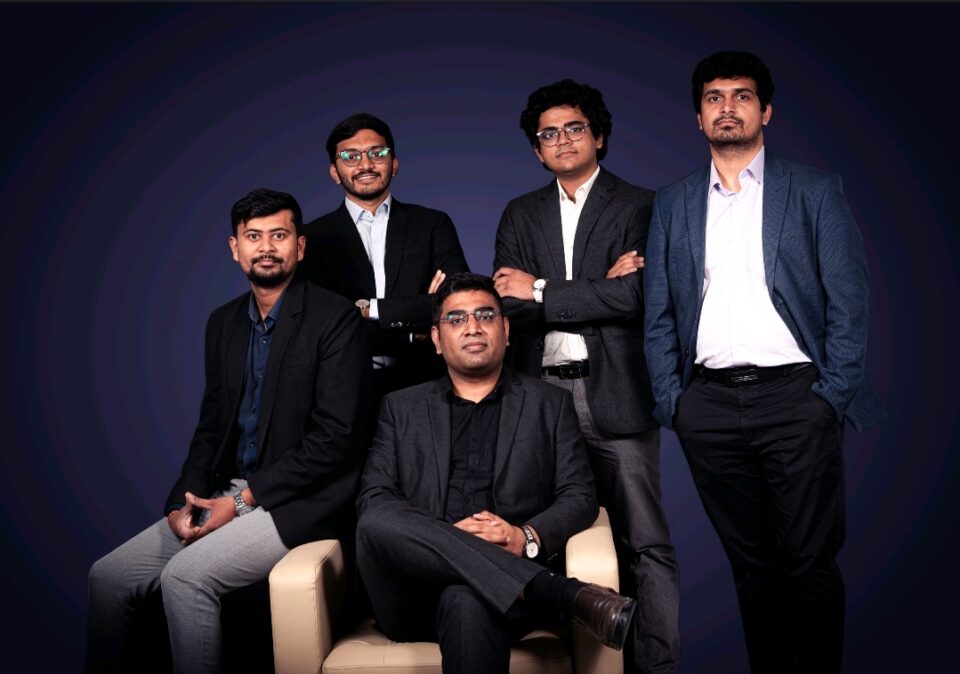
“Mission Drishti marks our first mission and the culmination of over five years of sustained R&D to develop this breakthrough technology.” — Suyash Singh, Founder & CEO, GalaxEye
At a structural level, this signals three strategic moves:
- Capability Ownership: Controlling both sensing and fusion layers
- Market Positioning: Moving from imagery vendor to intelligence provider
- Scalability Intent: Building a constellation-driven data infrastructure
This becomes critical when the market begins valuing decision reliability over raw data access.
The deeper implication is that GalaxEye is positioning itself not as a satellite company, but as a decision infrastructure provider.
Competition Shifts from Scale to Reliability
The global Earth observation market has traditionally rewarded:
- Satellite count
- Revisit frequency
- Resolution quality
However, GalaxEye Launches Mission Drishti introduces a new competitive variable—data continuity.
L1 players like Maxar and Planet Labs dominate in scale.
L2 players like ICEYE specialize in SAR depth.
But GalaxEye’s OptoSAR creates a new category:
- Integrated sensing with continuous output
This is not competing within existing benchmarks—it is redefining them.
The deeper implication is clear: Competition will shift from “who captures more” to “who delivers more reliable intelligence.”
Technology That Integrates, Not Aggregates
At the core of Mission Drishti is a hardware-level fusion architecture.
Components:
- Synthetic Aperture Radar (SAR)
- Electro-Optical (EO) sensors
- AI-driven fusion systems
Orchestration:
SAR ensures all-weather, day-night coverage.
EO delivers visual interpretability.
Traditionally, these operate in silos.
GalaxEye synchronizes them at the point of capture.
Integration:
The real innovation lies in:
- Simultaneous data acquisition
- AI-based real-time fusion
- Direct delivery of analytics-ready outputs
Operationally, this translates to:
- Reduced processing overhead
- Lower latency
- Higher data integrity
This becomes critical when time-to-insight directly affects outcomes.
CX Impact: From Data Access to Decision Confidence
From a CX standpoint, GalaxEye Launches Mission Drishti addresses the most persistent challenge in geospatial intelligence—trust.
Customer Impact:
- No blind spots due to weather
- Faster access to actionable insights
- Reduced dependency on multiple vendors
Business Impact:
- Lower integration costs
- Improved SLA performance
- Higher ROI on data consumption
System Impact:
- Simplified data pipelines
- Reduced processing layers
- Scalable intelligence delivery
At a structural level, this marks a shift from: “Do we have data?” → “Can we trust the decision derived from it?”
The deeper implication is that CX metrics will evolve toward confidence, continuity, and speed.
Maturity: Advanced but Scaling-Dependent
Mission Drishti operates at an advanced CX maturity level, where systems deliver:
- Predictive reliability
- Integrated intelligence
However, the next inflection point lies in:
- Constellation expansion
- Global coverage density
This becomes critical because intelligence value increases with frequency and consistency of observation.
The gap is not capability—it is scale of deployment.
Decision Intelligence: Rethinking Adoption Models
Mission Drishti forces organizations to rethink their Earth observation strategy.
Build vs Buy vs Partner:
- Governments: Prefer partnership models
- Enterprises: Lean toward data procurement (buy)
- Defense: Hybrid approach
Risk Assessment:
- High capital intensity
- Launch dependency
- Regulatory complexity
Implementation Complexity:
- Reduced on integration side
- Moderate on adoption and alignment
This is where the shift occurs: Organizations must decide whether to modernize legacy architectures or leapfrog into integrated intelligence platforms.
Industry Implications: A New Layer in the Space Economy
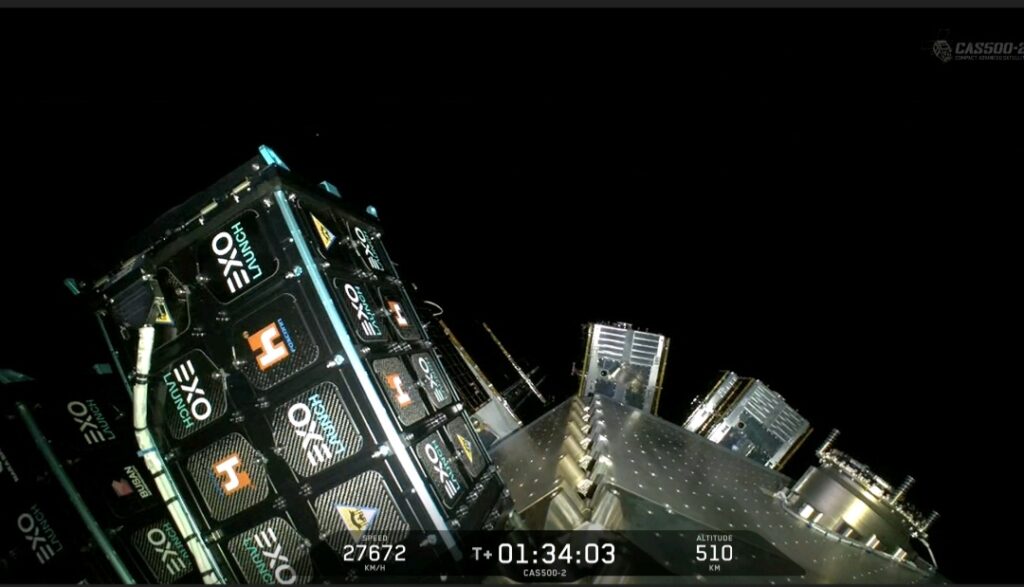
The successful deployment reflects a broader transformation.
“The sustained effort over the last five to six years on confidence-building, capacity-building, and the commercialisation of India’s private space technology ecosystem is now showing tangible results.” — Dr Pawan Goenka, Chairman, IN-SPACe
Talent:
Rising demand for AI + geospatial hybrid skillsets
Competition:
Pressure on incumbents to integrate sensing capabilities
Ecosystem:
Strengthening of public-private collaboration models
This becomes critical as data reliability becomes a competitive moat in the global space economy.
The Future: Toward Continuous Intelligence Systems
GalaxEye’s roadmap extends beyond a single satellite toward a multi-satellite OptoSAR constellation.
This signals a future where:
- Data gaps disappear
- Monitoring becomes continuous
- Decisions become near real-time
At a structural level, Earth observation evolves into always-on intelligence infrastructure.
Final Takeaway
GalaxEye Launches Mission Drishti not merely as a technological achievement, but as a paradigm shift in Earth observation architecture.
By collapsing sensing, fusion, and intelligence into a single system, it moves the industry from fragmented data ecosystems to continuous decision intelligence platforms.
The deeper implication is unavoidable:
The winners in this space will not be those who collect the most data—
but those who deliver the most reliable decisions.
