
The New CX Imperative: Trust, Transparency, and Technology in Balance for 2026
When was the last time you stayed loyal to a brand after a poor experience? Chances are, not long. Today’s customers, empowered by choice and driven by conscience, switch brands with faster reflexes than ever. They’ll forgive a glitch, but not dishonesty. They’ll embrace automation, but never at the cost of empathy.
The Sogolytics Experience Index: Customer Edition (CX) 2026 makes it clear — companies cannot buy loyalty with convenience anymore. Only reliability, transparency, and respect can sustain it. After surveying more than 1,000 U.S. consumers, the study reveals a defining truth for 2026: CX success depends on how responsibly brands balance human trust and technological precision.
Let’s break down what’s shaping this new CX standard and how businesses can rise to it.
The Reality Check: Consistency Beats Perfection
Inconsistent experiences are now CX’s biggest vulnerability. While 40% of consumers were satisfied with their most recent interaction, only 24% feel that satisfaction extends to their typical brand experiences. That’s an enormous credibility gap.
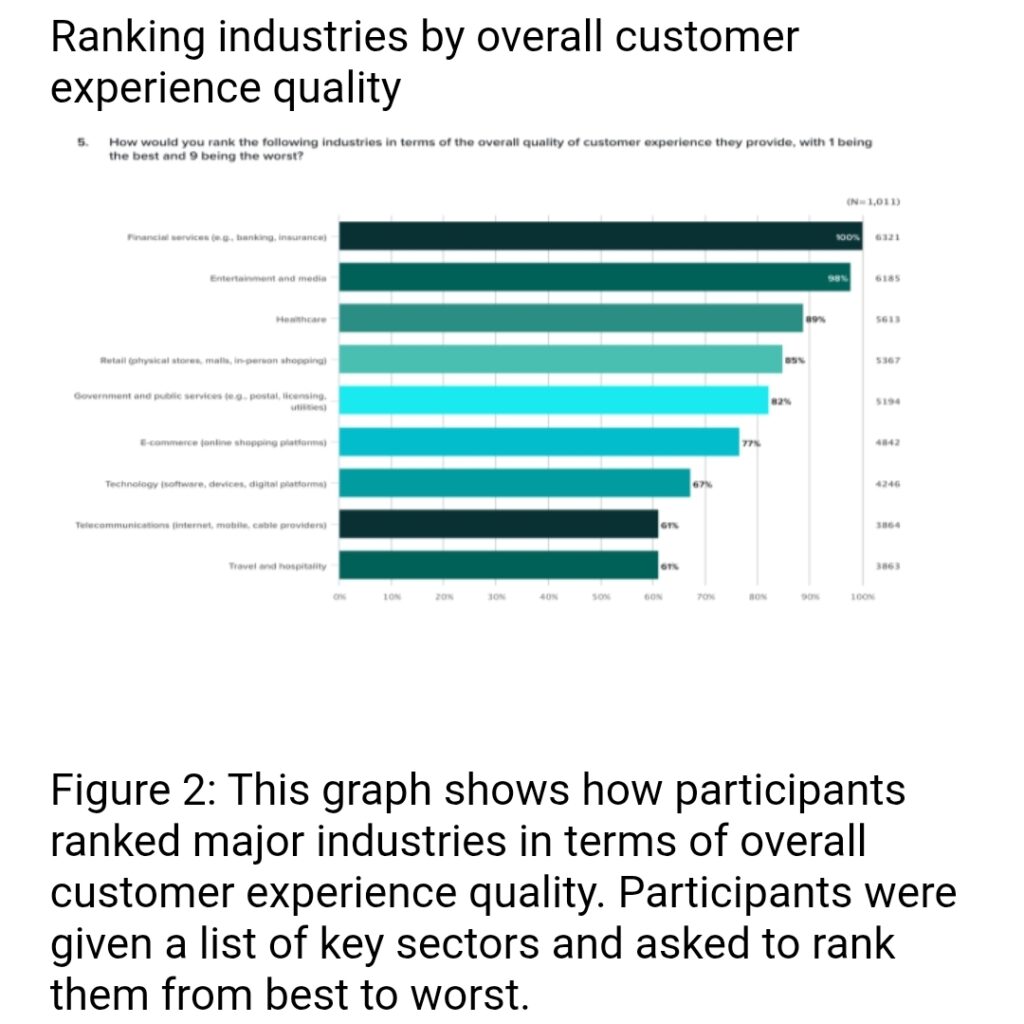
Customers judge brands not by their best moments, but by their everyday reliability — and most brands are falling short. Financial services and entertainment sectors lead on CX quality, while telecom and travel lag due to poor reliability, delayed resolutions, and confusing communication.
The takeaway is simple: consistency builds trust; inconsistency breaks it. A single “wow” moment can’t offset a lifetime of average ones.
Rising Expectations, Shrinking Patience
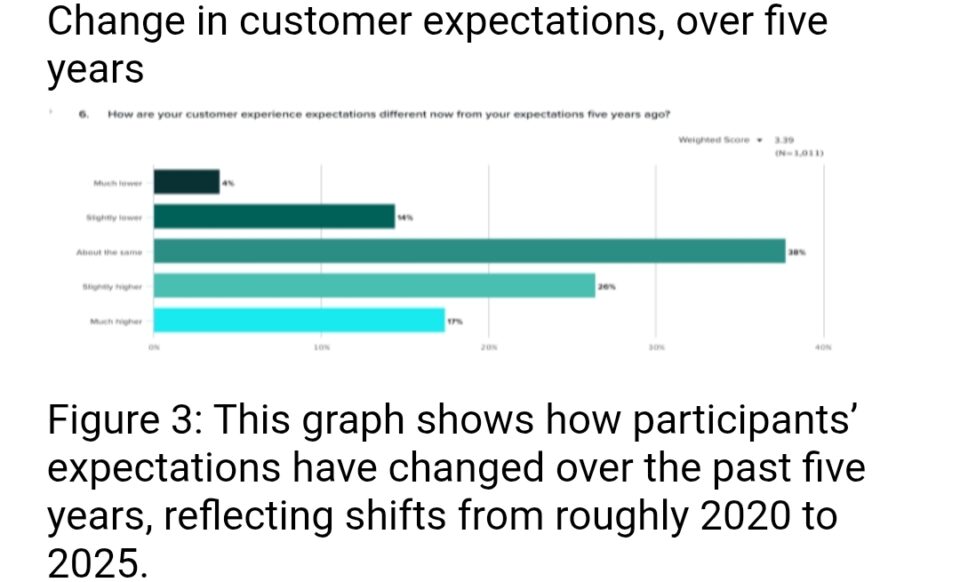
Since 2020, the bar for customer expectations has been steadily rising. Nearly half of respondents said their expectations in 2025 were higher than five years prior, with Millennials (52%) and Gen Z (46%) reporting the steepest climb. The educated segments — those with master’s degrees or higher — showed the strongest increase in expectations, demanding faster, clearer, and fairer interactions across all digital touchpoints.
The message to brands is unmistakable:
“What used to delight now merely satisfies. And what once satisfied may now disappoint.”
Consumers expect companies to meet four fundamental needs before they “wow”:
- Privacy protection — 68% now demand stronger safeguards.
- Transparency — 60% expect honesty in communication and pricing.
- Respect — 39% say courteous staff defines excellent CX.
- Reliability — 33% prioritize speed and issue resolution over novelty.
As CX strategist Melissa Kelly commented in Sogolytics’ analysis, “Frictionless experience isn’t about removing effort alone — it’s about removing uncertainty. Customers want to know they’re safe and valued while interacting digitally.”
AI’s Double-Edged Presence: Useful, But Not Trusted (Yet)
Automation is no longer a future strategy — it’s a current necessity. Yet, the findings show that trust in AI for CX remains fragile. Only 19% believe it improves their experience, while 22% think it harms it, and a cautious 32% sit on the fence.
What drives acceptance is context. Nearly half (43%) are comfortable using AI for faster service, but that openness collapses in emotionally charged moments such as healthcare consultations (54%), financial discussions (46%), or conflict resolution (47%).
In short, customers say: “Use AI when it helps me, not when it replaces empathy.”
Their biggest worries about AI?
- Inaccurate or unreliable results (39%)
- Privacy and data security risks (39%)
- Job loss and loss of human connection (38%)
- Lack of empathy (37%)
Older consumers express stronger skepticism, while Gen Z shows conditional optimism. The implication for CX leaders is profound: automation should empower human agents, not eliminate them.
Brands winning in this hybrid era design experience ecosystems where AI handles efficiency and humans handle empathy — a balance that turns speed into trust.
Personalization Fatigue and the Privacy Paradox
Personalization remains important — 52% of consumers rated it “very or extremely important” — yet only 18% are highly satisfied with how brands deliver it. The problem isn’t that personalization exists; it’s that it often feels hollow, intrusive, or irrelevant.
At the same time, trust around data use remains tenuous: only 32% of consumers feel comfortable with companies using their personal data to improve experiences, while 38% feel actively uncomfortable. Boomers are the most distrustful, and women express slightly lower comfort levels than men.
Interestingly, transparency about data acts as a trust multiplier.
- 72% want companies to be more open about data use.
- 67% say clear privacy explanations boost their loyalty.
- 47% would abandon a brand that sells their data without consent.
As privacy legislation and public scrutiny intensify, personalization will only succeed when customers feel in control. The emerging best practice: move from data extraction to data consent — and from predictive personalization to participatory personalization.
Trust: The Ultimate Differentiator
In an era of automation, trust remains the most human currency in business. Respondents ranked honest communication (42%), respectful treatment (39%), and fair pricing (35%) as the biggest trust drivers — above policies or marketing promises.
Data protection and consistent product or service quality also reinforce credibility. But when companies fail to align their words and actions, the fallout is swift. Almost half of respondents will switch brands after a single unresolved issue, even if they were once loyal.
Values alignment is another dimension of trust. Two-thirds of consumers now say a brand’s social and environmental stance somewhat influences their purchase decisions. However, overplaying activism or appearing performative risks backlash. Customers favor authentic responsibility, not grandstanding.
Brands like Patagonia, Salesforce, and REI continue to set this standard — embedding values into purpose, not campaigns.
Feedback Without Follow-Through: The Silent Killer of CX
While 54% of consumers give feedback each year, many doubt its impact. Only 32% believe their input leads to visible change; the rest see their voices vanish into the void.
Customers still prefer email (41%) as the primary channel for feedback, followed by text (29%), phone (26%), and social media (25%). Younger audiences, however, lean toward in-app channels or social platforms, underscoring the need for omnichannel listening.
The insight here is critical: gathering feedback is easy, acting on it — and communicating the action — is rare. Closing the feedback-action loop directly correlates with stronger loyalty and referral intent.
In the words of a Sogolytics analyst, “Every unanswered feedback form is a missed retention opportunity.”
Conditional Loyalty: Earned Every Day
Three out of four customers identify as “somewhat” or “very loyal,” but that loyalty is fragile. A single poor experience prompts one in three to consider switching. Repeat customers stay with brands that show integrity, not inertia.
When asked what drives long-term loyalty, respondents prioritized:
- Product/service quality (22%)
- Fair pricing (21%)
- Excellent customer service (15%)
Across demographics, the message echoes — loyalty is conditional, and trust is renewable only through consistent, values-driven performance.
CX 2026: The Path Forward
Looking ahead, customers see the defining priorities for the next decade as:
- Reducing costs (44%)
- Protecting data (43%)
- Balancing automation with human interaction (27%)
- Improving transparency and fairness (21%)
Notably, only 16% still rank personalization as a top-three focus. That shift marks a generational turning point. Convenience and customization matter less than honesty, cost fairness, and data security.
Brands entering 2026 need to anchor CX strategy in a new equation.
Human-centered AI, data transparency, and operational consistency form the new trinity of experience excellence.
As Sogolytics researchers summarized, “In the next era of CX, simplicity and sincerity will outperform hype and hyper-personalization.”
Actionable Takeaways for CX and EX Leaders
- Redefine reliability as the new wow.
Audit every customer journey for consistency. Map and fix points of friction that create uneven experiences. - Humanize your automation.
Use AI for speed, but train agents for empathy. Integrate escalation pathways that preserve trust when digital tools misfire. - Treat data transparency as a CX asset.
Publish plain-language privacy policies. Communicate updates proactively instead of reactively. - Close the feedback-action gap.
Publicize “you said, we did” impact stories. Reinforce that input drives evolution. - Build trust through fairness.
Offer transparent pricing, responsible messaging, and visible accountability when things go wrong. - Empower your employees as experience amplifiers.
Great EX fuels great CX. Employees who feel respected and informed deliver that same consistency outward.
Final Word: 2026 Belongs to the Balanced
As CX enters a decade of digital dependency, the companies that will lead aren’t those with flashiest tools, but those that balance empathy with efficiency and innovation with integrity.
Technology may set the pace, but humanity sets the direction. In 2026, the best experiences won’t just be seamless — they’ll be sincere.
