
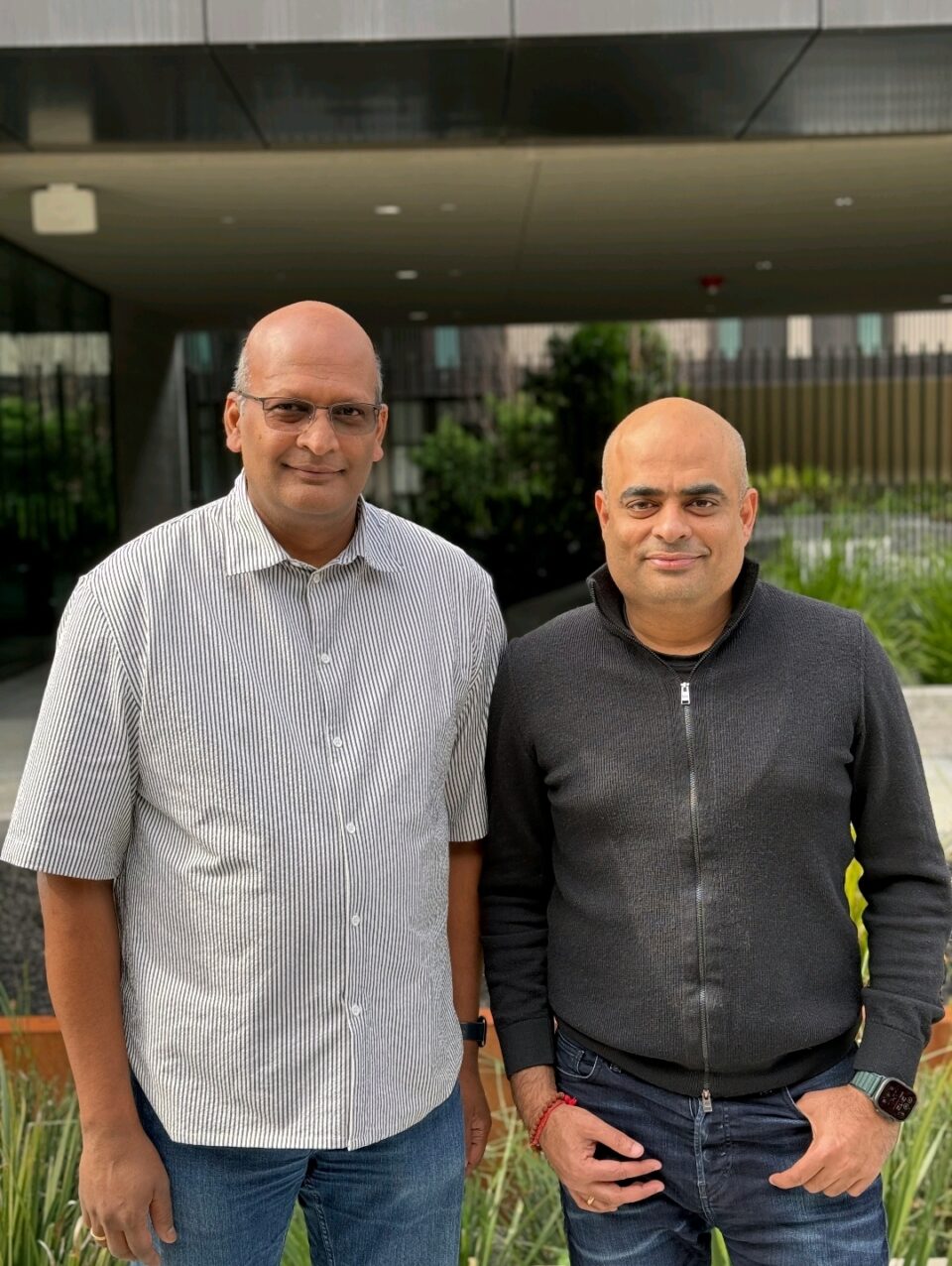
In our latest CXQuest.com interview, Sandeep Menon shares how Auxia is building an agentic marketing platform that is redefining how enterprises engage customers at scale.
The evolution of customer experience is accelerating—from reactive engagement models to proactive, AI-driven orchestration. Enterprises are no longer satisfied with segmentation-based personalization; they are investing in systems that can make millions of real-time decisions per second. This shift is redefining how organizations approach customer journeys, data infrastructure, and value creation.
Under the leadership of Sandeep Menon, Co-Founder and CEO, Auxia has emerged as a powerful force in agentic marketing—processing billions of events daily and delivering autonomous, cross-channel customer decisions. With rapid global expansion, strong customer retention, and enterprise adoption, Sandeep’s perspective offers valuable insights into how CX is becoming a continuously learning, AI-driven system.
Agentic Marketing Transforming CX Strategy
Q1. Sandeep, Auxia is pioneering what many call “agentic marketing.” How do you define this concept, and how does it fundamentally reshape customer experience strategy?
SM: So if you think about marketing in the last 10 to 15 years, the big innovation has been in programmatic ads. Platforms like Google and Meta enabled you to assign a budget, assign a goal, and they would programmatically bring you traffic. That is a huge innovation. But what happens after that? How do you activate customers, engage them, monetize them, retain them? That part is still very broken and predominantly rules-based.
What we mean by agentic marketing is moving away from that static, rules-based world to one where a suite of AI agents can help marketers determine what is the hyperpersonalized journey that each individual customer should take. Not a broad segment, not a cohort, but every user treated as a cohort of one. You need to talk to me as if I am the specific individual you’re talking to.
And the agents don’t just optimize a single message or a single channel. They orchestrate the entire customer journey, across email, in-app, SMS, and web experiences, continuously deciding what should happen next for each customer and where that interaction should occur. That’s fundamentally different from the old model of setting up rules and hoping they hold.
Agentic Marketing Automation vs Customer Empathy and Brand Authenticity
Q2. As AI takes a more active role in decision-making, how do you ensure that customer empathy and brand authenticity are not lost in automation?
SM: I think the fundamental thing you need to deliver to enterprises and their customers is transparency and control. Both are central to how we’ve built our system.
The role of AI here is not to replace empathy but to enable it at scale. Nobody ever said, ‘I found this incredibly useful, relevant message from a company I have a relationship with, and I didn’t like it.’ The fatigue that people experience is from getting things that are not useful. The promise of AI, then, is to restore that human touch by deeply understanding each user and making sure what you deliver is hyperpersonalized and relevant. And very often, our models determine that sending a message actually does not add value, and in those cases, we don’t send it. That restraint is part of authenticity.
The marketer’s job then shifts to what they should be doing: setting the vision, defining the strategy, and establishing the guardrails. The AI handles the complexity so marketers can focus on the storytelling and the genuine connection.
Organizational Shifts Necessary for Enterprises
Q3. Auxia’s customers are scaling usage across multiple teams—what organizational shifts are necessary for enterprises to truly operationalize real-time CX orchestration?
SM: This is a really important topic and I’ll be honest, the change management challenge is often underestimated.
AI doesn’t just change what we build, it also changes how companies organize around it to take advantage of it. In an AI-first world, assumptions around who should do what break down. If you think about most marketing teams today, you have so many disparate functions – a product marketer, a performance marketer, a data analyst, lifecycle, operations. The boundaries between those roles were drawn for a pre-AI era. And what we’re increasingly seeing is that those boundaries no longer serve the way teams need to work.
Here’s the thing about agentic systems – they don’t follow linear instructions. They explore, they adapt, they co-create. That requires teams to become more modular, more cross-functional, and more experimentally oriented. Think fewer silos, faster handoffs, and roles that are fluid by design. If you look at the teams that are most effective in driving growth, it comes down to speed of experimentation. If you can experiment more and at scale, you learn quicker. That’s what agentic systems enable, but only if the organization is structured to take advantage of it.
The companies that embrace this shift will outlearn the ones that don’t. We’ve seen this with every previous technology wave. The smartest marketers during the internet shift were the ones who embraced digital – we used to call them “digital natives.” The ones who were reluctant had a really tough time transitioning. I think we are going to see the exact same thing with AI.
CX as a Unified Function
Q4. Do you see the future of CX as a unified function, or will marketing, product, and support continue to operate as distinct but connected ecosystems?
SM: One of the meta trends that we see happening is a fusing of roles. If you think about most marketing teams today, you have so many disparate functions needed to put a campaign out and drive result: a product marketer, a performance marketer, a data analyst, operational support, lifecycle marketing. Increasingly what we are seeing is that the role of marketing and product is also coming together, just as on the other side you see the same happening between product managers and engineers.
We believe we are moving to a world where, rather than large marketing teams, most large companies would have fewer supermarketers. And these supermarketers would interact on a daily basis with a suite of AI agents that help them deliver what big marketing teams of the past used to do, just much more effectively.
So I do think functions converge. Not overnight, but the direction is clear. Just as today working without a laptop or a computer is something which we can’t think about — tomorrow, for the teams of the future, not working with a set of AI agents would be unthinkable.
Key Technical and Data Challenges
Q5. Auxia processes over 10 billion events daily—what are the key technical and data challenges in delivering real-time, individualized experiences at this scale?
SM: This is an area where I am incredibly proud of what our team has built. When we started Auxia, we spent most of the first year developing the core infrastructure needed to deploy a solution at this scale. My co-founders and I came from Google, where we had the privilege of building and operating some of the largest consumer-facing systems in the world. That experience is foundational to how we think about infrastructure at Auxia.
The challenge of working at this scale is that you need to do several things simultaneously, and do them well. First, you need the ability to connect to and understand both structured and unstructured data from multiple disparate data sources across an enterprise. Second, all of this has to happen in real time, so handling peak loads of 15,000 queries per second and processing over 10 billion events per day is a must. That is a 3x capacity increase since early 2025.
And third, the system has to get smarter over time. Across millions of interactions, we track the decision and its corresponding outcome, training our models so the 100 billionth decision is meaningfully smarter than the first. Building infrastructure like this is not something you bolt on after the fact. It has to be in the DNA of the company from day one, and that’s exactly how we approached it.
Unified and Actionable Customer View
Q6. Data fragmentation is a persistent challenge for enterprises. How does Auxia enable a unified, actionable customer view across channels?
SM: The unified view across channels is where this really matters for the customer experience. The core problem today is that most enterprises treat each channel as a separate system. Your email tool makes one decision, your in-app messaging makes another, your web personalization makes another. There is no shared understanding of the customer across those touchpoints, so you end up with a customer who gets an email promoting a product she already bought in the app yesterday. That is the fragmentation problem in practice, and it is incredibly common.
What Auxia does differently is that we sit as a single intelligence layer that has a deep understanding of each individual user across all of those channels. We are talking about 10,000 to 15,000 signals per user, signals that are not siloed by channel but represent the full picture of who that person is, what they have done, and what they are likely to need next. So when our decision agent determines what should happen next for a customer, it is making that decision with full context – whether the interaction should be an in-app nudge, an email, an SMS, or a change to what they see on the website. The system continuously decides not just what to say, but where and when to say it. That’s a unified, actionable customer view across channels.
Concerns Around Explainability, Governance, and Control
Q7. With AI-driven systems often perceived as opaque, how do you address enterprise concerns around explainability, governance, and control?
SM: Every AI tool that needs to succeed in this new era must focus on trust and transparency. Unless you have explainability, transparency, and controls, you are not going to succeed.
There are three things I would call out. Number one is that across our customers, we’re executing hundreds of millions of AI decisions per day. For each of these decisions, you have the ability to go back and audit and understand what went into that decision. That is an extremely important aspect for any company, for any marketer, understanding not just the output, but what went into the decision-making.
Number two is what we call the Analyst Agent. One of my frustrations as a marketer was that I would launch campaigns, and then if I wanted to determine what worked or what didn’t work, I had to rely on a data scientist or spend endless hours with Excel. Now imagine you can get those answers within the platform through natural language. That’s what the Analyst Agent does — it gives you the transparency into your data without the bottleneck.
Number three is guardrails. Marketers should have the ability to set controls at a company level, at a program level, and even at an individual customer level. When our models execute, they check against all of those guardrails before executing on the campaign. The goal is to give marketers confidence that the system is acting within the boundaries they’ve defined.
Culture that Keeps Customer-centricity at the Core
Q8. Auxia has rapidly expanded its team and global footprint—how are you building a culture that keeps customer-centricity at the core while scaling?
SM: We left Google with a clear mission — to build the agents for the supermarketers of the future. And in many ways, as Jeff Bezos always says, we’re still day zero of that mission.
What anchors us is the customer impact. When marketing teams see what Auxia can do, they don’t stop at one use case — they expand across the business. That’s what drove 6x growth in monthly decisions per customer and 176% net dollar retention. Those numbers tell us we’re delivering real value, not just checking a box.
This effort to understand our customers starts with our engineers joining customer calls and persists into the quality of people we bring in. Rich Anstett joining as CRO, Yoshi Tsugu leading our expansion in Japan, and Eric Barbour on product marketing, these are people who deeply understand the enterprise customer’s world. Whether we’re in Palo Alto, Tokyo, or Bangalore, the North Star remains the same: are we helping our customers provide better, more personalized experiences to their end users? Because ultimately that’s what drives the business metrics.
Organizations Adopting Agentic CX Platforms
Q9. What new capabilities or roles do you believe will become essential as organizations adopt agentic CX platforms?
SM: I definitely believe this is about augmentation rather than replacement. But that doesn’t mean the marketing organizations of today will look the same as the marketing organizations of tomorrow. Absolutely not.
The way I think about it — with every technology shift, what the best people do is use the technology to become more strategic. The supermarketer of the future wants to work on strategic problems: deeply understanding customer needs, tailoring campaigns, and tailoring the product to suit those needs. All of the many repetitive, mundane tasks are things that every marketer I talk to would absolutely need and want help on so they can use their time for more strategic thought.
The Analyst Agent is a good example. It effectively gives every marketer what amounts to a built-in data scientist, so the marketer’s role shifts toward being the expert, the manager of these expert agents. You also see new adjacencies. Just as we got roles like marketing automation specialists and econometricians in the last decade that nobody would have predicted, you’ll see new roles emerge around AI strategy, agent orchestration, and prompt design for marketing systems.
Rethinking Traditional CX Metrics and KPIs
Q10. With autonomous decisioning in play, how should organizations rethink traditional CX metrics and KPIs?
SM: I think the way you measure has to evolve with the system.
Let me start with what I think needs to change. Traditional CX measurement tends to focus on channel-level vanity metrics – open rates, click-through rates, impressions – in isolation. Those have their place, but they do not tell you whether you are actually growing the business or building a lasting relationship with the customer. You can have incredible open rates on email and still be stuck on what I call the reacquisition treadmill, where you are spending money to re-acquire the same customer over and over because you never cultivated a real relationship.
The KPIs that matter in an agentic world are the ones tied to real business outcomes:
–Customer lifetime value (LTV): not as a backward-looking calculation but as something you are actively optimizing for in real time.
–Activation and onboarding completion rates: the first five to seven days of a customer’s journey are critical in determining long-term stickiness and LTV.
–Incremental revenue impact: not just “did revenue go up” but “can we attribute this revenue to the decisions the system made versus a control group?”
–Retention and churn reduction: because the most expensive customer is the one you already had and lost.
–Cross-sell and upsell conversion: this is where you see whether you truly understand a customer’s needs or are just guessing.
There is one more metric that I think is underappreciated: speed of experimentation. If you look at the teams that are most effective in driving growth, it comes down to how quickly they can test, learn, and adapt. We took one customer from running two to three experiments a month to 20 to 30 running in parallel. That acceleration in learning velocity is itself a KPI, because the faster you learn, the faster everything else improves.
Measurable Improvements in Activation, Retention, or Lifetime Value
Q11. Can you share examples of how real-time journey orchestration translates into measurable improvements in activation, retention, or lifetime value?
SM: I think the impact shows up in three ways that matter most to enterprise leaders.
First, speed of execution. A global publisher ran three years’ worth of experiments in three months. A major bank went from two or three experiments a month to over 20 running in parallel. That kind of compression changes how fast you learn and how fast you grow.
Second, operational efficiency. A telco customer had over 25 employees doing the work that Auxia’s agents now handle. Another company lacked the data science, engineering, and analyst resources to even measure their experiments, and Auxia filled that gap entirely. We’re enabling companies to do more with significantly fewer people in these roles.
Third, and this is the one that gets the CEO’s attention, top-line revenue impact. One customer generated $12 million in annualized incremental revenue from their first use case alone. An online marketplace saw an 84% lift in cross-category lifetime value. These are not marginal improvements. This is what happens when you replace the campaign-based model entirely and let the system orchestrate every customer interaction in real time.
Differentiating Leaders from Laggards
Q12. Looking ahead, what will differentiate leaders from laggards in the adoption of AI-driven CX over the next few years?
SM: I have been fortunate enough to be part of a couple of previous big shifts — the cloud shift, the mobile shift at Google, and the move to internet in the early 2000s. One of the things that is both exciting and challenging about the current shift is the pace of change. Even top researchers in the field tell me they feel they’re not able to keep up.
But history rhymes. Think about the early to mid-2000s — that’s when the first really good digital marketers evolved. The smartest ones were the people who embraced digital, who became what we used to call ‘digital natives.’ The ones who were reluctant to make that change had a really tough time transitioning.
I think we are going to see the exact same thing with AI. The leaders are the ones moving beyond pilots into autonomous systems that drive actual revenue. They’re the ones who understand that the gap between companies adopting agentic marketing systems and those still running on campaigns and segments is going to widen fast. The companies that move now will compound their advantage — in data, in customer experience, and in revenue. Because every decision that flows through the system makes the next one smarter. That compounding effect is real, and it’s the reason timing matters.

Agentic Marketing Customer Experience Enters a New Era
As agentic marketing customer experience enters a new era, the rules that once defined engagement are rapidly becoming obsolete. Static journeys and rule-based personalization are giving way to intelligent systems that adapt in real time—reshaping how brands interact with their customers.
At the center of this transformation is Sandeep Menon, who is leading Auxia’s efforts to build an agentic marketing platform capable of orchestrating billions of decisions daily. The company’s growth—reflected in its expanding global presence and strong customer adoption—signals a broader shift toward autonomous CX systems.
Auxia’s agentic marketing platform doesn’t just analyze customer data; it acts on it instantly, determining the most relevant experience across channels. This ability to operate at scale—processing massive volumes of events while optimizing for business outcomes like retention and lifetime value—represents a significant leap forward for enterprise CX.
But with this shift comes new complexities. Organizations must rethink how teams collaborate, how data is structured, and how success is measured. Perhaps most importantly, they must balance the efficiency of automation with the need for trust and transparency.
In this conversation, Sandeep Menon offers a nuanced perspective on these challenges, sharing how Auxia is helping enterprises navigate the transition to AI-driven, real-time customer experience—and what the future of CX might look like in an increasingly autonomous world.
Key CX Leadership Insights
Agentic marketing transforms CX from reactive personalization to proactive orchestration
Real-time decisioning enables direct impact on revenue-driving metrics like retention and LTV
Organizational alignment across functions is critical for CX success at scale
Trust and transparency are essential for enterprise adoption of AI-driven CX
Data readiness is the foundation of next-generation customer experience
CXQuest Editorial Reflection
Sandeep Menon’s perspective underscores a pivotal shift in the agentic marketing CX landscape. As AI systems become central to decision-making, the role of leadership is evolving—from managing processes to designing intelligent systems like agentic marketing. The future of CX will depend not only on technological capability but also on how thoughtfully organizations integrate automation with human intent.
