In today’s global business landscape, the concept of building offshore teams is no longer about plugging resource gaps or lowering costs. It’s about creating agile, empowered extensions of a brand—teams capable of driving innovation, product ownership, and culture at speed and scale. Nowhere is this transformation more palpable than in India, where the next wave of Global Capability Centers (GCC) is rewriting the very playbook of growth and customer experience.
Amidst this shifting tide stands InCommon.ai, a trailblazing full-stack operator dedicated to the ambitions of growth-stage startups and private equity-backed firms. From its inception, InCommon’s mission has been to prove that India’s value proposition is not just in numbers, but in outcomes, impact, and long-term partnership. Rather than chasing headcounts, InCommon builds high-performance teams with precision—using deep talent mapping, assessment-driven hiring, and a community ethos that connects the brightest talent to the boldest brands.
A Complete Paradigm Shift
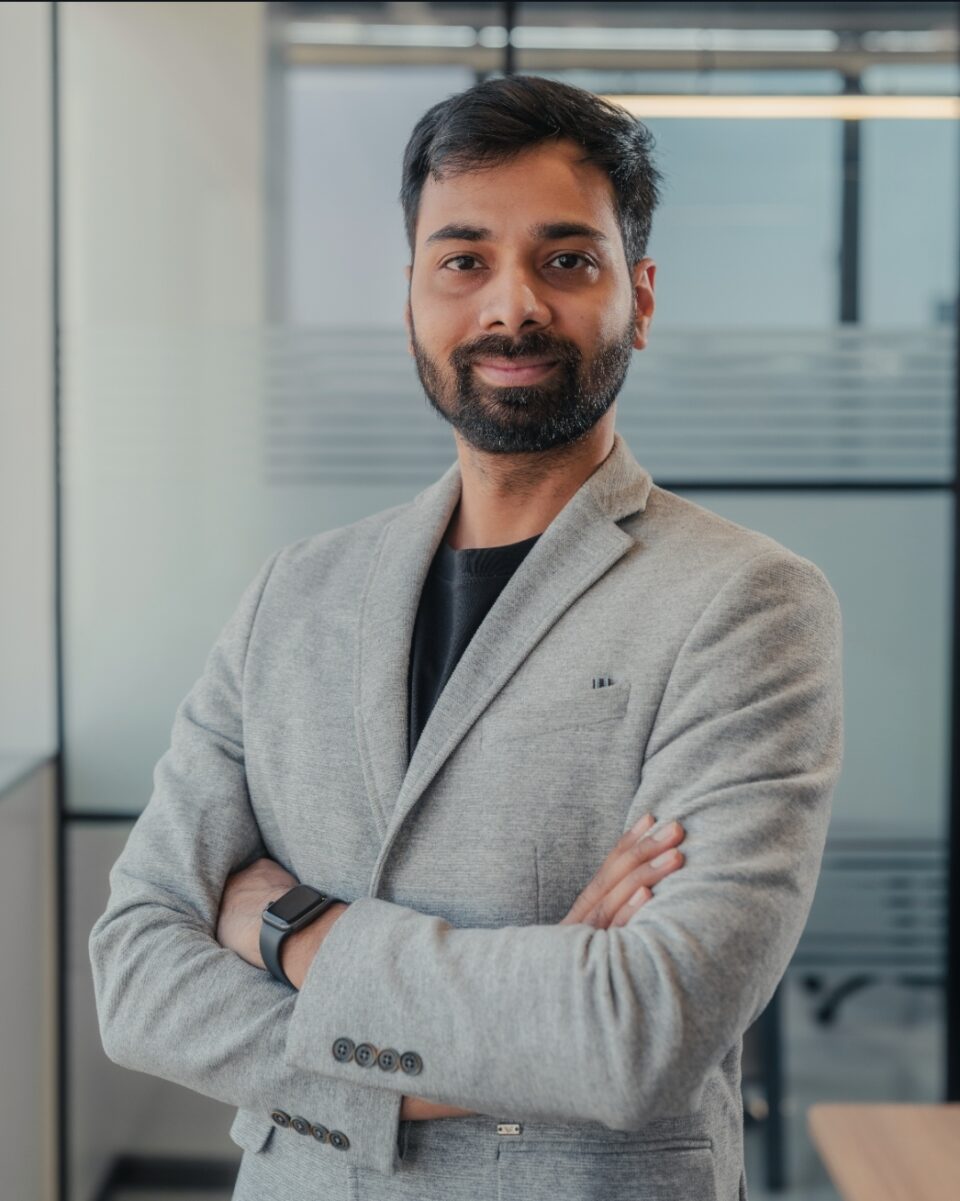
This is more than operational support; it is a complete paradigm shift. The vision of India as a nexus of technology, leadership, and opportunity is methodically replacing the traditional narrative of India as a back-office cost center. Today, we sit down with Piyush Kedia, Co-Founder and CEO of InCommon, to explore this evolution. We trace the company’s journey from a founder’s realization of market gaps to its rapid success in setting up multiple outcome-aligned GCCs across competitive sectors. Together, we’ll examine how outcome-driven team models, referral-powered hiring, structured assessment, and vibrant talent communities are enabling ambitious companies to scale with confidence—fulfilling the promise of India as a formidable innovation engine for the world.
Welcome Questions for Piyush Kedia, Co-Founder and CEO of InCommon
Q1. Piyush, can you share the story behind InCommon’s founding—what gap did you and Roshan set out to fill in the GCC market?
PK: When Roshan and I started InCommon, we had both seen first-hand how much untapped potential India held for global companies. The country has deep engineering talent, experienced leadership, and an ambition level that matches any major market. Yet most growth-stage companies weren’t ready to access this potential properly. Instead, many VC- and PE-backed firms were choosing Poland or Eastern Europe, not because those hubs were inherently better, but because India lacked a single operator who could own the journey end-to-end: org design, leadership hiring, workspace, entity setup, governance, and full accountability.
Our mission was to change that. We wanted India to become the default choice for global expansion by offering the same speed, structure, and quality companies expect anywhere else. That insight became the foundation for InCommon. We built a model that allows companies to scale in India with speed, visibility, and control, but without the overhead. End-to-end ownership, predictable execution, and an operator-led experience became our core differentiators, designed to unlock India’s talent at the pace modern companies require.
Common Misconceptions About Setting Up Teams
Q2. What are some common misconceptions global founders have about setting up teams in India today?
PK: Many global founders still approach India with outdated assumptions. They believe India is primarily a cost-saving destination rather than a hub capable of building product, data, and R&D teams that deliver core roadmap work. Many assume that only Fortune 500 companies can justify a GCC, when in reality well-funded mid-market and PE-backed companies can successfully build 30–150 member hubs. Another misconception is treating India as a monolith, overlooking the major differences between Bengaluru, Pune, Hyderabad, Chennai, NCR, and tier-2 cities when it comes to talent density, cost, and stickiness.
Founders also tend to think hiring in India is “easy”, post a job, hire fast, and move on, when senior talent is actually highly discerning, and leadership hiring typically happens through trust networks and referrals rather than cold outreach. Finally, many assume they can simply copy-paste their HQ org structure into India without adapting for time zones, product lifecycle, or local leadership depth, which is how GCCs end up functioning as ticket factories instead of true innovation nodes.
Growth-stage Startups
Q3. How does InCommon’s day-to-day approach differ for a growth-stage startup versus a large enterprise seeking India delivery?
PK: For growth-stage startups, we operate like an extension of the founding and exec team. That means tighter feedback loops, more hands-on role design, and a heavy focus on the first 10–30 hires who will ultimately define culture and velocity. We start with the “jobs to be done” and the business outcomes that need to be delivered in the next 12–18 months, then reverse-engineer the organisation design, rather than defaulting to “hire a squad because that’s what others do.”
With large enterprises, the engagement shifts. We spend more time aligning with established processes, risk frameworks, security posture, and multi-region delivery models, while still pushing for agility and meaningful local decision-making. Decision velocity looks different too: startups need quick moves with clear ownership, whereas enterprises often require staged pilots, multiple stakeholders, and thoughtful change management across global offices.
Across both ends of the spectrum, one constant remains: we insist on strong India leadership, clear swim-lanes with HQ, and outcome-based dashboards. The difference lies in how we govern and pace the build, always tuned to the organisation’s maturity, context, and long-term ambitions.
Proprietary Talent Mapping
Q4. Can you walk us through your proprietary talent mapping and benchmarking process? How does this influence outcome-first team builds?
PK: We begin by decoding the client’s existing org, skills, seniority, decision rights, and “where the real work happens” across product, engineering, data, GTM, and ops. From there, we map this against India’s talent graph: identifying which cities, companies, and networks house similar skills, architectures, domains, and compensation bands, using both our proprietary data and partner platforms.
We benchmark roles not by titles alone but by stack, complexity, ownership level, and business impact, which helps us avoid “Senior Engineer in name only” mismatches. This mapping then shapes a clear hiring thesis: which roles should be built in India, the right seniority mix to deliver the target outcomes, and realistic timelines and budgets.
Because we design from outcomes backward, the goal isn’t to “fill seats” but to build pods and teams that can structurally own SLAs, features, and roadmaps, rather than functioning as overflow capacity.
Referral-led Sourcing
Q5. InCommon places importance on referral-led sourcing and community events like the GCC Breakfast series. What impact do these strategies have on the quality of hires and leadership access?
PK: Senior leaders in India, especially in engineering and product, rarely respond to cold outreach for “another offshore center.” They move through trust, referrals, and credible communities. That’s why our GCC Leaders Breakfast series and invite-only talent networks give us direct, warm access to executives who have built and scaled teams at top product companies.
Much of India’s top 1% talent is surfaced through referral pathways, people who have worked together and can vouch for each other’s capability. We wanted our clients to access that network at scale. So we built an invite-only community of India’s leading engineers, operations leaders, and GTM professionals. Whenever we’re hiring for new build-outs, this network is briefed and incentivized to refer trusted, high-caliber peers.
This model gives our clients access to otherwise unreachable, passive candidates, enabling faster, more reliable, and higher-signal hiring, especially for leadership and specialist roles. The GCC Breakfast Series strengthens this even further by creating a space where practitioners exchange playbooks and connect with companies building in India. These communities also function as a pattern-recognition layer, allowing us to bring lessons from multiple GCC builds back into each client engagement.
Structured Assessments and Platforms
Q6. What role do structured assessments and platforms like BarRaiser play in your hiring model? How do they reduce risk for client companies?
PK: We believe every key hire should be evaluated against a consistent, role-specific rubric, not based on “good conversation” vibes. Platforms like BarRaiser help us standardise technical and functional interviews while eliminating individual interviewer bias and fatigue.
For clients, this significantly reduces the risk of false positives, where someone interviews well but performs poorly on the job, and false negatives, where strong talent is screened out because of non-standard backgrounds. We pair these structured assessments with contextual rounds that focus on product thinking, ownership, and alignment with the client’s way of working.
This layered model, which combines referral-led sourcing with structured evaluation, gives founders and PE sponsors confidence that India hires will perform at the same bar as HQ teams.
Q7. With mid-market GCCs maturing at 1.4× the rate of larger peers, what factors enable this agility and innovation?
PK: Mid-market companies often move faster because they operate with clearer, sharper mandates: “We need this hub to own X outcomes within the next 12–18 months.” This creates far more focused team design. They also tend to empower India leadership earlier with real product and delivery ownership, rather than keeping critical decisions locked at HQ.
Their governance is leaner, with fewer approval layers, shorter decision cycles, and a greater willingness to experiment with new locations, tech stacks, and team structures. Compensation and incentives can also be shaped more competitively relative to local markets, which helps attract builders who want impact and visibility rather than just brand labels.
Our data from tier-2 GCC builds shows that mid-market companies treating India as a strategic node, not merely a cost lever, compound learning and innovation much faster than larger peers.
Product-driven Innovation Hubs
Q8. How have you transformed the perception of India-based teams from backend cost centers to product-driven innovation hubs?
PK: We rarely try to reshape perception before the build begins. What we have seen consistently is that perceptions shift only after the right structure is in place, the right leaders are hired, and India teams are given real ownership. When teams in India start owning product areas, data platforms, or automation roadmaps and begin shipping visibly and with quality, global organisations naturally stop viewing India as a cost center.
Our role is to create the conditions that make this shift inevitable: strong India leadership, the first 10–30 hires who are true builders, integrated communication with HQ, and outcome-based governance. Once India teams deliver, the perception changes on its own. We simply enable that evolution.
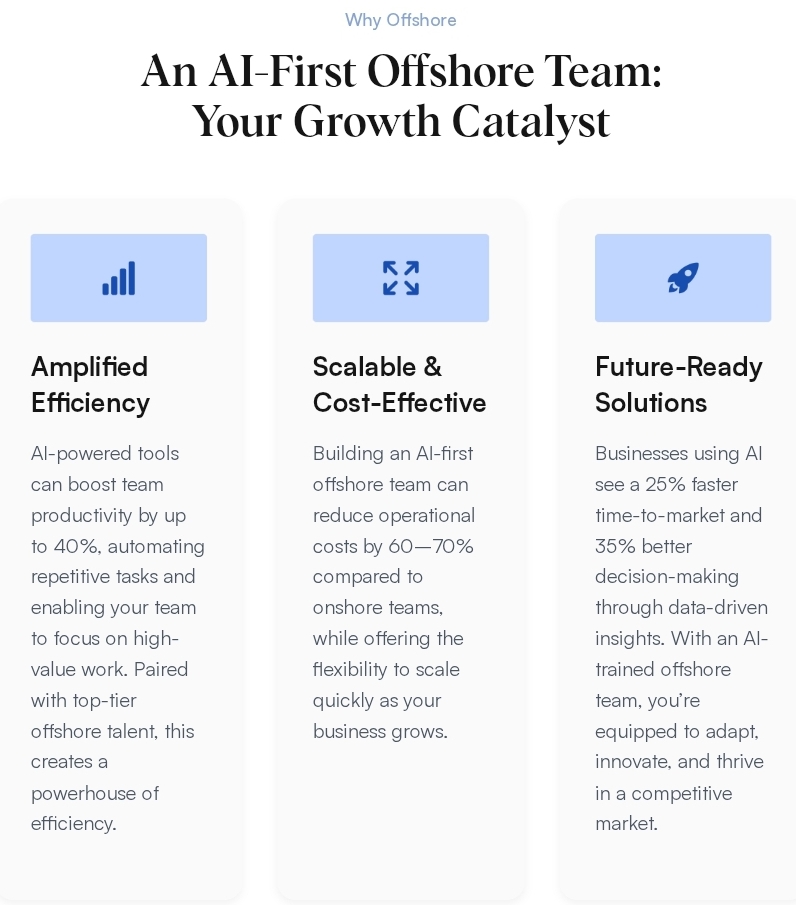
Q9. AI and automation are reshaping hiring and team structures. How does InCommon integrate these technologies into GCC builds for sustained competitive advantage?
PK: We treat AI as an infrastructure layer across the entire talent lifecycle: sourcing, screening, matching, and generating ongoing performance insights. On the sourcing side, we use AI-enabled tools to map talent pools, infer skills from noisy profiles, and prioritise candidates who match both the technical stack and the operating context.
During interviews, structured assessment platforms and our internal tools help us capture deeper signals and standardise evaluation across cities and interviewers. For clients, we design orgs and roles that assume an AI-augmented future, with leaner teams, higher leverage per engineer or analyst, and a balanced mix of builders and integrators.
This ensures that the GCC is not just AI-aware but AI-native, where teams are set up to adopt, extend, and benefit from automation rather than be disrupted by it.
Future Trends in Offshore Team-building
Q10. What are some future trends you foresee in offshore team-building—especially around AI, automation, and cloud-native design?
PK: We expect offshore team-building to move toward smaller, higher-leverage teams that own significant outcomes, supported by AI-assisted development, testing, and operations. Cloud-native platforms will increasingly be designed with observability and multi-region resilience from day one, making it easier for distributed teams to collaborate and take end-to-end ownership of systems.
Data and ML teams will become more tightly integrated into product pods rather than sitting in centralized “report factories,” and India hubs will play a major role in enabling that fusion. We also anticipate more experimentation with tier-2 and tier-3 cities that offer strong talent, better retention, and lower costs, made possible by remote-first collaboration tools.
From a partner standpoint, the winners will be those who can align org design, technology choices, and talent strategy, rather than simply providing seats and payroll.
India’s Evolution as a GCC Destination
Q11. As India evolves as a GCC destination, what challenges remain for mid-market companies, and how is InCommon helping overcome these hurdles?
PK: As India matures as a GCC destination, mid-market companies still face several challenges. The first is noise: the market is crowded with vendors offering everything from pure staffing to cookie-cutter centers, making it difficult for founders to understand what “good” truly looks like. The second is sequencing, deciding what to build first, which city to invest in, how much leadership to hire locally versus relocate, and how to phase the overall investment. The third is cultural, centred on integrating India teams into the global organisation so they gain real ownership without creating friction or an “us vs them” dynamic.
We address these challenges with a clear, proven playbook that includes data-backed location choices, outcome-first org design, curated leadership networks, and structured governance. This helps mid-market companies build confidently and operate with clarity from day one.
Innovation Hubs Leveraging Emerging Technologies
Q12. India’s GCCs are increasingly appearing as innovation hubs leveraging emerging technologies. How do you see blockchain, cryptocurrencies, and decentralized finance (DeFi) influencing the way Global Capability Centers operate and create new value for startups and PE-backed companies? What role does InCommon play in integrating these technologies into GCC team-building and strategy?
PK: For startups and PE-backed companies in fintech and adjacent sectors, India-based GCCs are becoming natural homes for blockchain, DeFi, and digital asset engineering, as well as the associated risk, analytics, and compliance teams. India has a deep pool of cryptography, distributed systems, and financial engineering talent, along with product managers who understand both technology and regulated markets.
We are seeing GCCs being leveraged not only to build core blockchain and DeFi platforms but also to develop the surrounding risk, surveillance, analytics, and compliance infrastructure that is essential for institutional adoption. InCommon’s role is to design teams that blend blockchain engineers, security specialists, data talent, and product and operations profiles, ensuring they can operate effectively within rapidly evolving regulatory and infrastructure landscapes.
We also guide founders on location strategy, hiring patterns, and governance models so these teams can innovate responsibly. The goal is to balance speed with controls, particularly important for regulated or soon-to-be-regulated products, and enable GCCs to become true innovation hubs in the decentralized finance ecosystem.
Closing and Thank you Note
Fast-growing markets and smarter team- building models attract the business world, while InCommon.ai drives change by elevating not just how they build teams, but why. The company’s outcome-first philosophy, deep investment in talent communities, and commitment to both transparency and flexibility signal a new era for Global Capability Centers in India.
For founders, CX leaders, and investors alike, the InCommon story is a testament to the possibilities unleashed when companies view their offshore presence not as a function, but as a future-facing strategy. India, through the lens of InCommon.ai, becomes far more than a destination—it emerges as a catalyst for ideas, agility, and enduring value.
Our conversation with Piyush Kedia offers both inspiration and practical wisdom for anyone shaping customer experience or trying to scale on a global stage. It’s clear that artnerships, outcomes, talent, and technology are shaping the future of GCCs today.. We thank Piyush for joining us and offering a candid window into the road ahead for high-performance teams and customer-centric growth, powered from the very heart of India.
