

In this CXQuest leadership conversation, we speak withKarthik K Raman about how AI-powered publishing infrastructure is reshaping brand engagement.
Customer experience is rapidly expanding beyond traditional service interactions. Today, every brand touchpoint—advertising, retail, packaging, media, and digital engagement—has become part of the customer journey.
As attention spans shrink and marketing budgets face greater scrutiny, brands are shifting from impression-driven marketing to experience-driven engagement. The rise of AI, interactive media, and measurable consumer journeys is redefining how companies design, deliver, and measure CX.
We are living in this evolving landscape. Platforms that combine AI, real-time interaction, and frictionless consumer experiences are becoming critical infrastructure. Especially, for modern marketing and CX ecosystems.
AI-powered Publishing Engine
Karthik K Raman plays a pivotal role at Flam. Here he leads both marketing and product strategy. Especially, for an AI-powered publishing engine designed to transform everyday brand touchpoints into interactive and measurable consumer experiences.
He has a background spanning technology, finance, product management, and growth marketing. And his experience advising more than 35 global organizations. Karthik brings a uniquely multidisciplinary perspective to building AI-driven engagement systems.
Under his leadership, Flam is helping brands move beyond passive advertising. Toward interactive consumer journeys powered by AI, real-time engagement, and measurable conversion paths.
Customer Engagement and Experience
Q1. Traditional advertising has long relied on impressions and reach. In your view, what fundamental shift is taking place in how brands must think about customer engagement and experience today?
KKR: Brands are now thinking beyond just videos. We’ve seen traditional ads like newspaper placements, OOH, and radio spots, all of which were passive media with untrackable impressions and reach. Then came videos, reels, and micro-storytelling, which introduced metrics like view time, CTR, reach, and impressions—along with likes and shares. But now, we’ve moved into a new phase where the metrics are far more meaningful. It’s not just about how long a user watches an ad anymore; it’s about how engaged they are with it. We’ve opened up a whole new dimension where users don’t just consume content—they interact with it. Brands now offer storytelling that allows users to engage, discover, and participate. This is a breakthrough in advertising and marketing, one that will redefine how brands connect with their audiences.
Transforming Everyday Touchpoints into AI-powered Interactive Moments
Q2. At Flam, the idea of transforming everyday touchpoints into interactive moments is central to the platform. What inspired this vision, and how does it reshape the way brands approach CX and marketing?
KKR: At Flam, our vision is to reimagine how consumers experience content. This vision is rooted in the simple insight that while consumer attention has become fragmented, intent and curiosity still have a powerful impact if activated in the right way. And that’s exactly where Flam fits in. We’re a deep-tech startup pioneering AI-native content, enabling brands to create and publish app-less interactive experiences through simple QR codes or links.
This approach really changes the way brands think about Customer Experience (CX) and marketing. Instead of relying on passive content, we’re focusing on creating real, engaging moments at every touchpoint. By making these moments interactive, we allow brands to connect with their audiences in a much more meaningful way. It’s about moving beyond just delivering content to inviting consumers to actively engage with the brand, fostering stronger relationships in the process.
Building Truly Engaging Customer Journeys
Q3. Many organizations still treat marketing, CX, and product as separate functions. From your experience, how important is cross-functional alignment in building truly engaging customer journeys?
KKR: Marketing, product, and technology teams need to work closely together to ensure that creative storytelling is supported by the right infrastructure and user experience.
When these functions align, brands can deliver more seamless, engaging, and measurable customer journeys across touchpoints.
Q4. Flam’s app-less infrastructure enables brands to activate experiences across TV, print, retail, packaging, and live events. How should organizations rethink their omnichannel CX strategy when every touchpoint becomes interactive?
KKR: Flam’s platform enables brands to launch interactive content across multiple touchpoints, including digital platforms, broadcast TV, mass media, retail, OOH, packaging, and messaging channels.
When traditional media become interactive, brands can create connected consumer journeys across both physical and digital environments. This allows audiences to move seamlessly from a physical or broadcast touchpoint into a deeper digital experience, enabling stronger engagement and measurable interaction. Organisations need to shift from channel-based planning to journey-led design, where every touchpoint is connected and contributes to a continuous consumer experience rather than operating in isolation
AI-native Publishing Infrastructure
Q5. AI is transforming multiple aspects of marketing and customer experience. How does Flam’s AI-native publishing infrastructure enable brands to move from static content to dynamic, personalized interactions?
KKR: Flam’s AI‑native publishing infrastructure lets brands move from static content to dynamic, two‑way conversations in a few key ways. We are laser-focused on shipping the GenAI tools that brands and enterprises have been yearning for. Flam has galvanised marketers around the world. Now we’re taking it to the next level with a full-stack enterprise suite of products across channels, to make them engaging, measurable, and interactive.
That means brands can turn a single campaign into a whole family of personalised interactions: different avatars, variations of a story, or tailored prompts that respond to how someone engages. The result is less ‘one‑size‑fits‑all’ content and more living, reactive experiences that feel built for the individual, not just the audience segment.
Reducing Friction in Digital Engagement
Q6. One challenge brands often face is reducing friction in digital engagement. How does the app-less model—through QR codes and web links—lower barriers to participation and drive higher engagement?
KKR: The app‑less model flips the script on friction: instead of asking people to download, register, and navigate a new app, brands meet them where they already are, via a simple QR scan or a weblink. That one‑click entry massively lowers the barrier to participation because there’s no install, no sign‑up wall, and no mental effort to remember yet another login.
With a simple QR code scan or link, users can instantly access an interactive experience directly from their smartphone browser. Since most smartphones already have built-in QR code readers in their camera apps, participation becomes effortless: just point, tap, and engage.
People jump in, play, and engage with the brand in seconds, which naturally drives higher engagement, longer dwell time, and more repeat interactions.
Fostering a Culture of Experimentation and Learning
Q7. Innovation in CX platforms requires strong collaboration between product, engineering, and marketing teams. How do you foster a culture of experimentation and learning within Flam?
KKR: At Flam, our vision is to build an AI-first content ecosystem that continuously evolves through experimentation and learning. We encourage rapid prototyping and real-world testing across campaigns, allowing teams to learn directly from consumer interactions and engagement data. This ensures that insights are quickly translated into product and experience improvements.
Q8. Your background spans computer science, finance, and product strategy. How has this multidisciplinary approach influenced how you lead teams and build customer-centric products?
KKR: My background in computer science, finance, and product strategy has given me a habit of looking at every problem through multiple lenses at once. It helps me balance what’s technically possible with what users actually do and how that translates into real business outcomes for brands.
At Flam, that mindset shows up in how we build AI‑driven experiences: they’re built to be technically robust, easy to use, and tightly aligned with the actual needs of brands and consumers. In my role leading marketing and product, it also means I’m comfortable moving between data, tech, and customer stories, which is exactly what it takes to scale customer‑centric products in a fast‑moving AI landscape.
Measuring Engagement, Attribution, and Conversion
Q9. One of the most persistent challenges in marketing and CX is proving ROI. How does Flam enable brands to measure engagement, attribution, and conversion across physical and digital environments?
KKR: The challenge isn’t that brands can’t measure ROI; it’s that physical and digital are often treated as separate worlds. Flam helps brands stitch them together by turning every experience, consumer touchpoint – billboard, print, QR, or screen, into a trackable, measurable journey.
Each interactive activation generates clear signals: dwell time, interaction depth, repeat visits, and direct actions like link‑clicks or WhatsApp conversations. Because these experiences are built on an AI‑native stack, brands can see not just what someone did, but how they behaved, and connect offline touchpoints to online outcomes.
Economics of Experience-led Marketing
Q10. Flam reports significantly higher engagement and conversion metrics compared to traditional advertising. What do these numbers reveal about the economics of experience-led marketing?
KKR: These numbers aren’t just nice‑to‑have—they reveal that experience‑led marketing is becoming the economically rational choice, not just the ‘cool’ one. When Flam campaigns achieve higher engagement rates and conversions four times better than traditional formats, it’s clear that audiences pay attention when they’re pulled into something interactive, personal, and memorable.
From an economics standpoint, this flips the old trade‑off: brands are not just spending more on richer experiences, they’re actually getting more value per rupee. Higher dwell time, deeper interaction, and stronger recall mean less wasted media spend, fewer spray‑and‑pray campaigns, and more repeat visitors, loyalty, and long‑term ROI. In short, experience‑led marketing stops being a ‘cost centre’ and starts looking like the most efficient way to earn attention and trust in a noisy world.
Shaping the Future of Customer Experience
Q11. As AI continues to evolve, how do you see interactive media and real-time engagement shaping the future of customer experience?
KKR: Interactive media and real‑time engagement are turning customer experience from a one‑way broadcast into a two‑way conversation. When every ad, page, or QR code can respond in real time, pulling you in, adapting to what you do, and feeling less like a machine and more like a helpful human. CX stops being ‘managed’ and starts being an experience.
Think of it like this: instead of pushing the same message to everyone, brands will meet customers in the moment, with personalized, interactive experiences that react to their choices, mood, or even where they are in the journey. That’s where Flam’s Fandom, Flacon, Fable, and native interactive experiences come in: they make every touchpoint feel like a micro‑interaction tailored to the person, not the audience segment.
Q12. India is emerging as a major contributor to global AI innovation. From Flam’s perspective, what role will India’s talent and ecosystem play in shaping the next wave of CX and marketing technology?
KKR: From Flam’s lens, India isn’t just catching up in AI, it’s quietly rewriting the rules of CX and marketing tech. Our talent here doesn’t just code or design; they live inside the chaos of a billion‑user, mobile‑first, vernacular internet. That’s what forces us to build experiences that feel human, not just ‘smart’, and that mix of empathy and innovation is exactly what the next wave of CX will be built on.
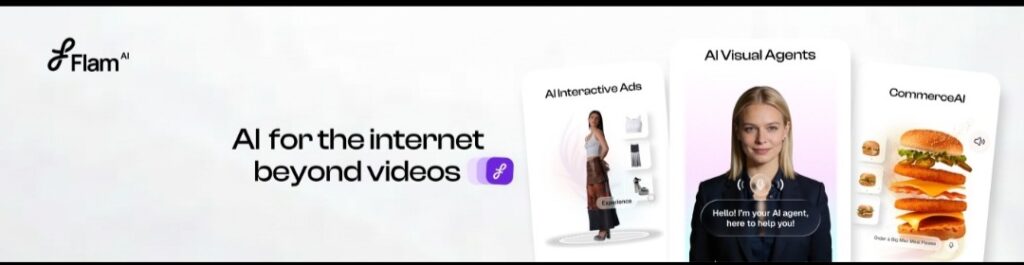
From Impressions to AI-powered Interactions: Reimagining Brand Engagement
Customer experience no longer limit to service interactions or digital interfaces. Increasingly, every brand encounter—from a television advertisement to a product package—forms part of the customer journey.
For decades, marketing success measure through reach, impressions, and clicks. Yet in a world where consumers are inundated with content, these metrics no longer capture what truly matters: engagement, interaction, and measurable outcomes.
This shift is driving a new generation of AI-powered technology platforms designed to make brand experiences more immersive, interactive, and accountable.
Karthik K Raman believes the future lies in transforming passive brand encounters into active consumer journeys.
At Flam, he leads marketing and product strategy for an AI-powered publishing infrastructure that enables brands to convert everyday touchpoints into interactive digital experiences.
Founded in 2021, Flam is building a platform that allows brands to deploy AI-powered campaigns instantly through QR codes or web links, seamlessly connecting physical media, retail environments, and digital platforms.
The approach eliminates the friction traditionally associated with app downloads or specialized hardware, enabling consumers to engage instantly from any mobile device.
Growing Power of Experience-led Marketing
The results highlight the growing power of experience-led marketing. Flam reports engagement rates up to 49 times higher than traditional advertising and conversion rates four times greater across integrated campaigns.
But beyond the metrics, the broader transformation lies in how brands design customer experiences.
Rather than treating marketing channels as separate silos, Flam’s infrastructure allows organizations to turn television ads, packaging, retail displays, and events into data-rich engagement moments.
This shift represents a fundamental change in marketing economics. Every consumer interaction becomes measurable, interactive, and capable of driving immediate action—from product discovery to purchase.
For Karthik, the convergence of AI, mobile technology, and real-time analytics is creating an entirely new operating system for brand engagement.
With operations spanning San Francisco and Bengaluru, Flam also reflects a growing trend: India’s increasing role in shaping global AI innovation.
As brands worldwide seek more accountable and engaging customer experiences, platforms that combine AI-driven personalization, frictionless access, and real-time measurement are poised to redefine how companies connect with their audiences.
Key CX Leadership Insights
Customer experience now extends into marketing and media interactions
Interactive engagement is replacing passive advertising models
App-less infrastructure removes friction from consumer journeys
AI enables real-time personalization and measurable engagement
Experience-led marketing delivers stronger ROI than impression-based campaigns
CXQuest Editorial Reflection
The evolution of CX increasingly ties to how brands design engagement ecosystems rather than isolated campaigns.
The conversation with Karthik K Raman offers a compelling look. Especially, into how AI-powered platforms can transform everyday interactions into meaningful customer journeys.
Organizations look to bridge the gap between marketing impact and business outcomes. The next frontier of CX may well lie in interactive, measurable, and frictionless brand experiences.
