
What CX and EX Leaders Can Learn from HCLTech’s 2026 Fortune Recognition
A familiar CX leadership moment
It’s 9:17 a.m.
You’re staring at three dashboards that disagree with each other.
CSAT is up.
Employee attrition is rising.
Your AI pilot looks impressive in demos—but customers still repeat themselves across channels.
Someone in the room asks the question no one wants to answer:
“If we’re investing so much in experience, why doesn’t it feel… admired?”
That tension—between activity and admiration—is where modern CX and EX leadership now lives.
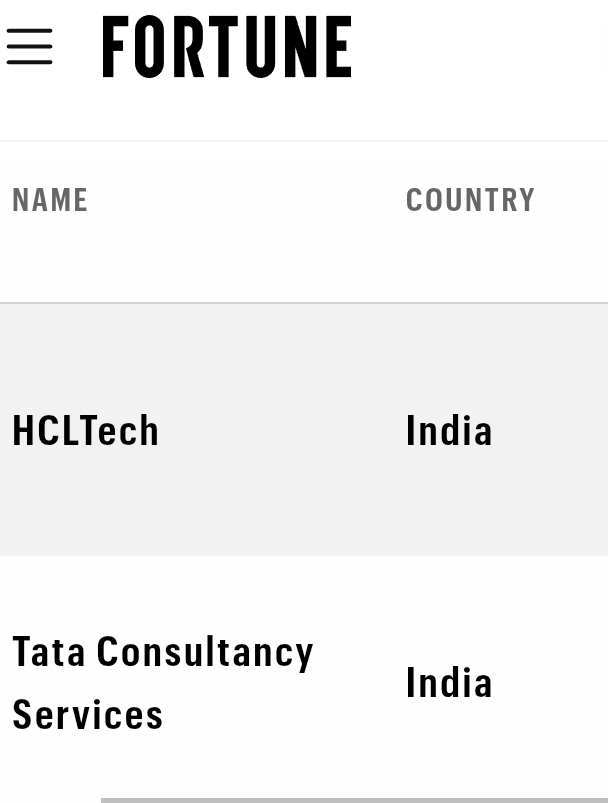
And it’s exactly why recognitions like HCLTech being named to Fortune’s World’s Most Admired Companies 2026 list matter far beyond branding headlines.
This isn’t about trophies.
It’s about how experience-led companies align technology, people, and purpose at scale—and what CX leaders can operationalize from it.
HCLTech’s 2026 Fortune Recognition: What Does “Most Admired” Really Mean for CX and EX Teams?
Short answer: Admiration is the outcome of consistent experience design across customers, employees, partners, and society—not a campaign or metric.
Fortune’s ranking evaluates companies on nine parameters, including leadership quality, innovation, talent attraction, and social responsibility. These are not siloed traits. They are experience signals.
For CX and EX leaders, “most admired” status reflects three realities:
- Experience is felt before it is measured
- AI only works when culture and capability align
- Trust compounds faster than technology advantage
Admiration is what happens when journeys connect instead of fracture.
HCLTech’s 2026 Fortune Recognition: Why This Recognition Matters Now, Not Later
Short answer: 2026 is the year CX ambition collides with AI reality.
CX leaders face a paradox:
- Customers expect human warmth + machine speed
- Employees expect meaning + modern tools
- Boards expect ROI from AI investments
Many organizations have AI everywhere—and coherence nowhere.
HCLTech’s recognition lands at a moment when leaders must answer a harder question:
How do we scale intelligence without losing humanity?
The companies admired today solved that problem yesterday.
What HCLTech’s Story Signals to Experience Leaders
Short answer: Experience leadership is no longer about touchpoints—it’s about systems thinking.
HCLTech was recognized for:
- Technology-led innovation
- Long-term value creation
- Stakeholder trust
- Talent attraction
- Social responsibility
None of these live inside a single CX function.
They emerge when:
- EX informs CX decisions
- AI augments judgment, not replaces it
- Purpose guides prioritization
As CEO C. Vijayakumar notes, the focus remains on meaningful, AI-driven outcomes—not AI theater.
That phrase matters.
Meaningful outcomes require experience orchestration, not automation chaos.
What Is Experience Orchestration—and Why CX Teams Need It?
Short answer: Experience orchestration connects people, platforms, and purpose across the entire enterprise.
Most CX failures don’t happen at the frontline.
They happen between teams.
Experience orchestration solves for:
- Fragmented journeys
- Conflicting incentives
- Isolated AI pilots
- Disconnected employee tools
Instead of asking:
“How do we improve this channel?”
Orchestration asks:
“How does this decision echo across the ecosystem?”
The Admiration Flywheel: A CX–EX Framework
Here’s a practical framework CXQuest leaders can adapt:
1. Purpose Before Platforms
Admired companies align AI investments to why they exist, not what’s trending.
- Purpose guides use cases
- Values shape automation boundaries
- Ethics inform data strategy
Without this, AI accelerates inconsistency.
2. Employee Experience as the First Customer Journey
Employees experience the organization before customers do.
If tools frustrate teams:
- Customers feel it
- Brand trust erodes
- AI adoption stalls
HCLTech’s scale—226,000+ people across 60 countries—makes this non-negotiable.
3. AI as a Teammate, Not a Replacement
A. AI works when it:
- Removes friction
- Enhances judgment
- Preserves accountability
B. AI fails when it:
- Obscures ownership
- Automates empathy
- Replaces context with confidence
Admired companies design AI with human override built in.
4. Leadership Consistency Across Touchpoints
Customers notice when leadership words and frontline reality diverge.
Admiration grows when:
- Leaders model experience values
- Decisions reinforce stated priorities
- Short-term trade-offs don’t betray trust
Consistency is the most underrated CX capability.
How Technology-Led Innovation Supports Experience (When Done Right)
Short answer: Technology should simplify lives, not impress slides.
Many CX stacks are overengineered and under-loved.
Admired organizations:
- Reduce tool sprawl
- Integrate data meaningfully
- Design for adoption, not features
HCLTech’s positioning across AI, cloud, engineering, and software highlights a critical insight:
Experience innovation lives at the intersection of systems, not inside tools.
Common CX Pitfalls That Block Admiration
❌ Treating CX as a department
Experience is an outcome of organizational behavior, not a team.
❌ Measuring satisfaction, ignoring trust
High CSAT does not equal high admiration.
❌ Scaling AI without reskilling humans
Automation without enablement creates silent resistance.
❌ Optimizing journeys in isolation
Local improvements can damage global experience.
What CXQuest Leaders Should Steal (Yes, Steal) from Admired Companies
Operational behaviors worth copying:
- Cross-functional experience councils
- Shared CX–EX success metrics
- Ethics-by-design AI governance
- Leadership immersion in frontline journeys
Admiration is built in meetings, incentives, and hiring decisions—not brand films.
Key Insights for CX and EX Leaders
- Admiration is a lagging indicator of experience maturity
- AI success depends more on culture than capability
- Employee trust predicts customer trust
- Experience fragmentation is a leadership issue, not a CX issue
- Purpose is the most scalable experience design tool
How Does This Apply to Your Organization Right Now?
Short answer: Start where friction is loudest—not where technology is newest.
Ask these questions:
- Where do customers repeat themselves?
- Where do employees workaround systems?
- Where does AI create confidence but not clarity?
- Where do metrics improve but trust doesn’t?
Those are your experience fault lines.
A Simple Experience Orchestration Checklist
Use this as a CXQuest-ready diagnostic:
| Area | Question | Signal |
|---|---|---|
| Leadership | Do leaders share CX accountability? | Yes = alignment |
| EX | Do employees trust internal tools? | Yes = adoption |
| AI | Can humans override AI decisions? | Yes = safety |
| Data | Is insight shared across teams? | Yes = coherence |
| Purpose | Can teams explain why changes happen? | Yes = belief |
FAQ: What CX Leaders Are Quietly Asking
Is “Most Admired” just a branding exercise?
No. It reflects peer, analyst, and leadership perception shaped by lived experience.
Can mid-sized companies apply these lessons?
Yes. Orchestration matters more than scale.
Does AI actually improve CX outcomes?
Only when paired with clear ownership and human judgment.
How do you connect CX and EX metrics?
Use shared outcomes like trust, effort reduction, and time-to-resolution.
What’s the biggest risk CX leaders face in 2026?
Mistaking automation progress for experience progress.
Actionable Takeaways for CXQuest Leaders
- Audit journey fragmentation across teams, not channels
- Map employee pain points before adding new CX tech
- Define “meaningful AI outcomes” in plain language
- Create shared CX–EX accountability metrics
- Design AI with escalation and override paths
- Embed purpose into prioritization decisions
- Reduce tool sprawl before expanding capability
- Make leadership experience visible, not aspirational
Final thought
Companies don’t become admired by accident.
They earn it—decision by decision—by refusing to separate technology from humanity, customers from employees, and innovation from responsibility.
That’s the real experience advantage.
And in 2026, it’s the only one that compounds.
