
When Civic Engagement Becomes a Designed Experience: What CX Leaders Can Learn from Rashtragranth
Ever wondered why citizens remember a play longer than a policy?
Picture this.
A college student walks into a theatre hall with mild curiosity.
Two hours later, she walks out debating constitutional duties with strangers.
No syllabus. No lecture. And, no compliance mandate.
Just experience.
That is not accidental impact.
That is intentional experience design.
As CX and EX leaders wrestle with disengaged customers, fragmented journeys, and AI-led fatigue, a surprising case study is emerging from Maharashtra’s cultural ecosystem. A Marathi theatre production called Rashtragranth is quietly doing what many large institutions struggle to achieve—turning abstract systems into lived, emotional experiences.
This article explores Rashtragranth not as art alone, but as a masterclass in civic experience (CivX) design, with lessons CX leaders can apply across public services, enterprises, and purpose-driven brands.
What Is Rashtragranth and Why Does It Matter to CX Leaders?
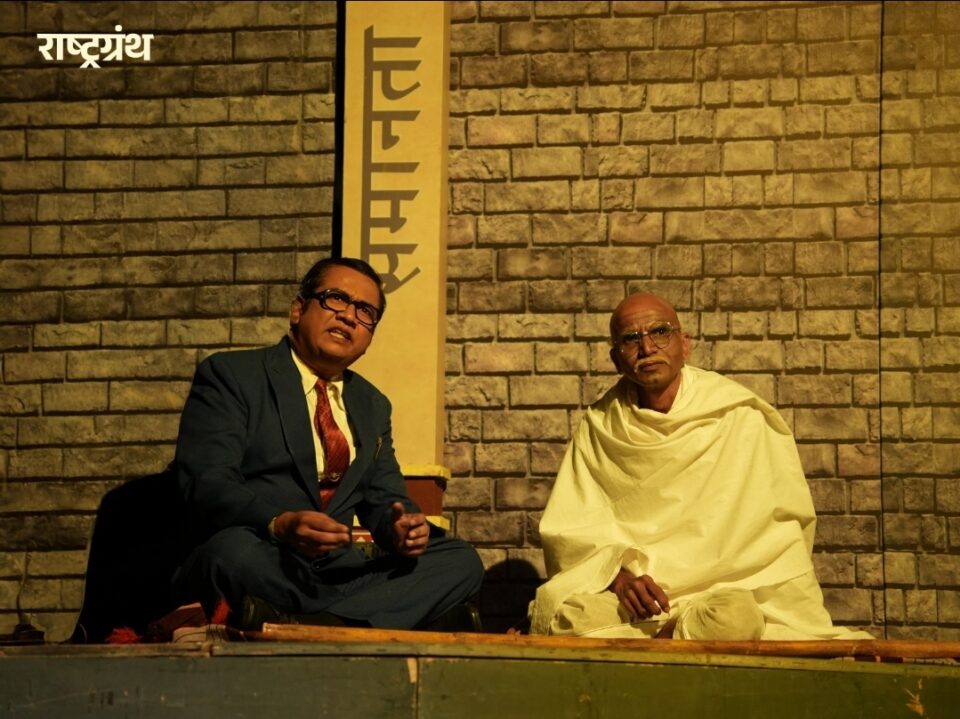
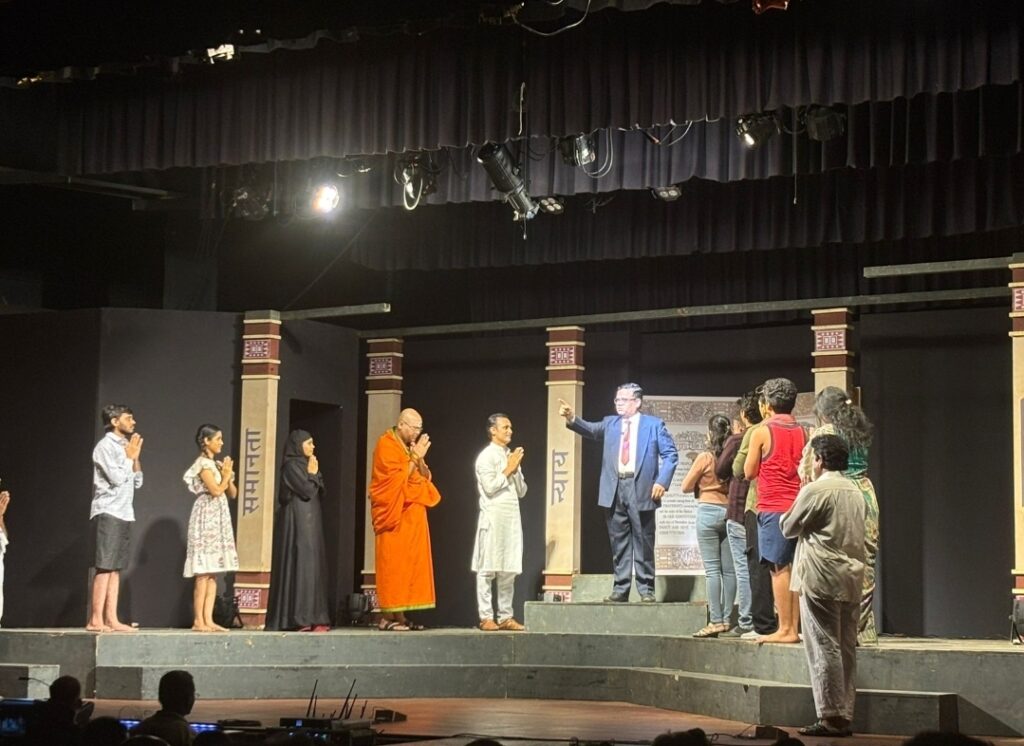
Short answer: Rashtragranth is a 120-minute immersive theatre production that translates constitutional literacy into emotional, participatory experience.
Launched publicly around Republic Day 2026, after free pilot shows across 9–10 districts of Maharashtra, Rashtragranth is India’s first large-scale theatrical production centered entirely on the Constitution of India. Produced by Darshan Mahajan of Artistic Humans and culturally supported by Culturally by ShubhLab, the play blends storytelling, music, historical settings, and contemporary civic dilemmas.
For CX professionals, this matters because Rashtragranth solves a familiar problem:
How do you make complex systems feel personal, memorable, and actionable?
That is the same challenge faced by:
- Banks explaining financial literacy
- Governments driving digital adoption
- Enterprises onboarding employees into culture
- Brands communicating purpose beyond marketing slogans
Why CX Needs to Look Beyond Business Journeys
Short answer: Because experience is emotional before it is transactional.
Most CX models still focus on:
- Touchpoints
- Metrics
- Channel efficiency
Yet human behavior is driven by:
- Meaning
- Identity
- Belonging
Civic experiences sit at the intersection of emotion, trust, and participation—the same triangle CX leaders aim to influence.
Rashtragranth treats the Constitution not as documentation, but as lived infrastructure. That shift—from information delivery to experience orchestration—is where modern CX is heading.
From Constitution Text to Civic Experience: The Design Shift
Short answer: Rashtragranth reframes the Constitution as a journey, not a document.
Traditional constitutional education relies on:
- Textbooks
- Ceremonial speeches
- Academic distance
Rashtragranth replaces this with:
- Narrative immersion
- Emotional pacing
- Relatable characters
- Sensory memory
The production spans two acts and recreates 15 historical locations, featuring 51 characters, original music by Milind Joshi, costumes by Chaitrali Dongre, and stage design by Sandesh Bendre. Written by Prasad Thorve and Abhiram Bhadkamkar, and directed by Kumar Sohoni—an NSD alumnus and Sangeet Natak Akademi Award winner—the play fuses credibility with accessibility.
In CX terms, this is high-trust storytelling combined with high-recall design.
Key Insight: Theatre as Civic Infrastructure
Bold truth: Rashtragranth is not content. It is infrastructure.
Just as CX platforms enable customer journeys, Rashtragranth enables civic journeys:
- Awareness → Reflection → Dialogue → Identity
The Government of Maharashtra recognized this institutional value. The Office of the Hon’ble Chief Minister acknowledged the production for its national relevance and social impact.
Hon’ble Chief Minister Shri Devendra Fadnavis noted how theatre connects citizens with constitutional values such as democracy, social justice, gender equality, and rights and duties.
For CX leaders, this validates a powerful idea:
Experience design becomes infrastructure when it shapes behavior at scale.
What CX Frameworks Can We Extract from Rashtragranth?
1. The Emotional Translation Framework
Short answer: Convert abstract principles into human moments.
The Constitution is abstract.
So are many CX goals—trust, loyalty, purpose, compliance.
Rashtragranth translates abstraction through:
- Characters that embody dilemmas
- Conflicts audiences recognize
- Emotional peaks tied to values
CX application:
- Replace policy-heavy communication with story-driven scenarios.
- Map emotions alongside journey stages.
- Design moments of moral choice, not just decision trees.
2. The Participation Loop Model
Short answer: Experience works when audiences feel included, not instructed.
Rashtragranth succeeded with:
- Free pilot shows across districts
- Feedback-led iteration
- Youth and first-time theatre-goers
This mirrors agile CX loops:
- Prototype → Observe → Refine → Scale
CX application:
- Pilot experiences in safe environments.
- Treat users as co-creators.
- Scale only after emotional validation.
3. The Trust-by-Design Principle
Short answer: Credibility must be embedded, not advertised.
The production anchors trust through:
- Institutional recognition
- Esteemed cultural contributors
- Alignment with national initiatives like Har Dil Mein Samvidhan
Trust is not a message. It is architecture.
CX application:
- Embed authority into experience design.
- Use credible voices, not louder claims.
- Build trust cues into every interaction.
Common CX Pitfalls Rashtragranth Avoids
Pitfall 1: Information Overload
The play does not explain every article. It evokes understanding.
Pitfall 2: Top-Down Messaging
Audiences discover meaning rather than being instructed.
Pitfall 3: One-Size-Fits-All Design
Plans to scale into 10 languages respect cultural nuance.
Pitfall 4: Short-Term Impact Thinking
The production builds a movement, not a moment.
Experience Economy Meets the Orange Economy
Short answer: Rashtragranth proves CX can drive livelihoods and sustainability.
Each performance sustains over 50 artists and technicians, with potential to scale to 500+ livelihoods. The production embraces:
- Regional art ecosystems
- Zero-waste practices
- Inclusive access design
This positions Maharashtra, especially Mumbai, as a cultural innovation hub within India’s growing Orange Economy.
For CX leaders, this expands the ROI lens:
- Experience drives economics.
- Purpose fuels participation.
- Sustainability strengthens brand legitimacy.
What Makes This a CX Story, Not Just a Cultural One?
Because Rashtragranth demonstrates:
- Journey orchestration across awareness, engagement, and advocacy
- Experience consistency across districts
- Emotion-led retention over information recall
In CXQuest terms, this is Experience-Led Transformation—a theme echoed across our CX strategy, AI-in-CX, and human-centered design hubs.
Expert Voices, Human Intent
Producer Darshan Mahajan, Founder of Artistic Humans, describes Rashtragranth as more than a play. He frames it as a bridge between art, education, and citizenship—using emotional storytelling to make constitutional awareness inclusive and powerful.
Prathmesh Navalkar, Founder of Culturally by ShubhLab, highlights the ecosystem approach—supporting artists, integrating workshops, enabling assistive technologies, and lowering ticket barriers.
For CX leaders, this reinforces a key truth:
Great experiences are built by ecosystems, not departments.
CX Checklist: Applying Rashtragranth Principles to Your Organization
| CX Challenge | Rashtragranth Insight | CX Action |
|---|---|---|
| Low engagement | Emotional immersion | Design narrative journeys |
| Trust deficit | Institutional credibility | Embed authority cues |
| Siloed teams | Cultural collaboration | Build experience ecosystems |
| Scaling issues | Language adaptation | Localize with intent |
| Short-term metrics | Movement mindset | Measure impact over time |
FAQs: Civic Experience Design for CX Leaders
How is civic experience different from customer experience?
Civic experience focuses on participation, trust, and identity rather than transactions, but uses similar design principles.
Can enterprises apply theatre-based experience models?
Yes. Storytelling, role-play, and immersion are powerful tools for onboarding, change management, and learning.
Is this scalable beyond Maharashtra?
The model is designed for multi-language, multi-state expansion, making it highly scalable.
How does this relate to AI-led CX?
As AI automates efficiency, human-led experience design differentiates meaning and trust.
What metrics matter in civic or purpose-led CX?
Engagement depth, recall, dialogue generation, and behavior change matter more than NPS alone.
Key Insights for CXQuest Readers
- Experience precedes understanding.
- Emotion outperforms explanation.
- Trust must be designed, not declared.
- Cultural relevance accelerates adoption.
- Purpose-driven CX scales when ecosystems align.
Actionable Takeaways for CX Leaders
- Map emotional moments alongside customer journeys.
- Replace policy-heavy content with narrative scenarios.
- Pilot experiences before scaling technology.
- Design for inclusion, not assumption.
- Treat users as participants, not recipients.
- Measure meaning, not just metrics.
- Build experience ecosystems across partners.
- Anchor purpose into every interaction.
Final Thought
Rashtragranth reminds us that the most powerful experiences do not persuade.
They invite.
For CX leaders navigating AI disruption, trust erosion, and attention fatigue, the future lies not in louder messaging—but in designed meaning.
And sometimes, the best CX lesson does not come from a boardroom.
It comes from a stage.
