
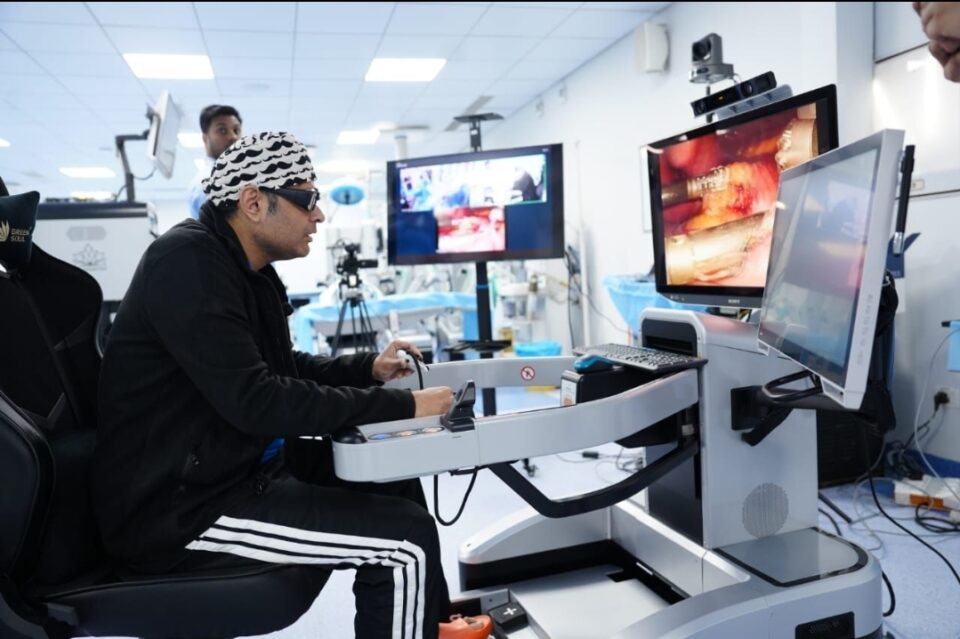
When Care Travels Faster Than Doctors: What Robotic Telesurgery Teaches CX Leaders About Trust, Scale, and Responsibility
Healthcare is no longer confined to hospitals—or even geography. With India completing its first robotic telesurgery marathon and crossing 100 successful remote procedures, the conversation is shifting from “Can this work?” to “What must be true for this to scale responsibly?”
For CX leaders, policymakers, and digital health builders, robotic telesurgery offers more than medical innovation. It is a live case study in high-stakes customer experience, where failure is irreversible, trust is fragile, and systems—not individuals—define outcomes.
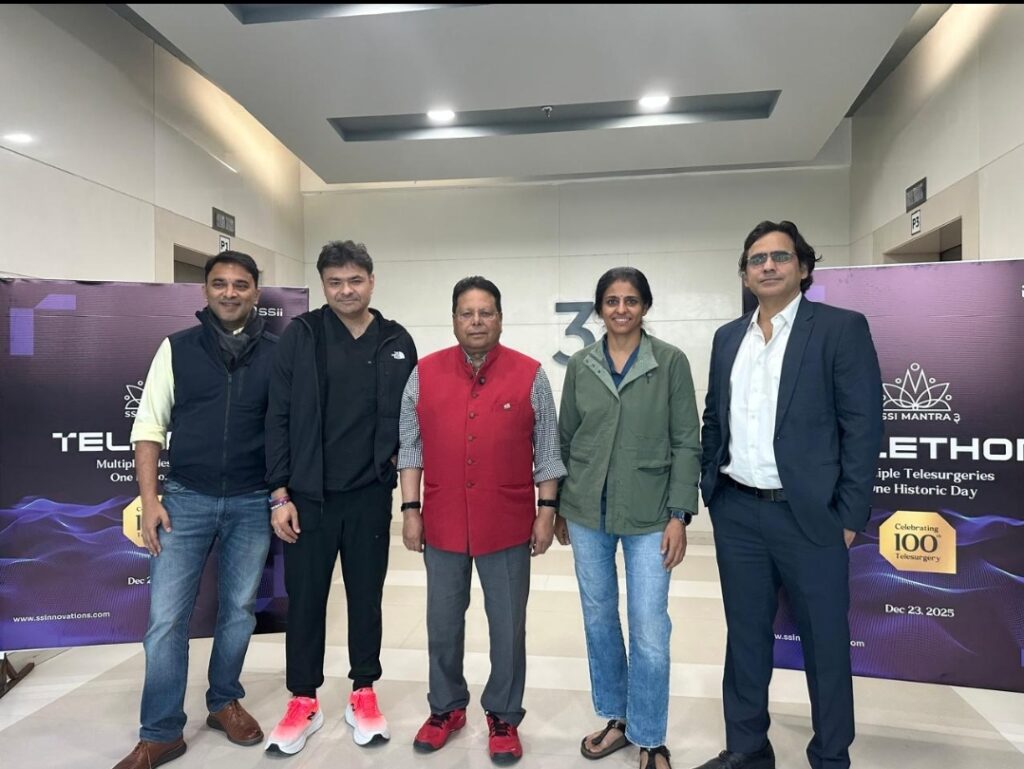
Here are nine insights that significantly strengthen the credibility of any CXQuest editorial on the future of experience-led healthcare.
1. Operational Proof Matters More Than Vision Statements
SS Innovations’ completion of 100 telesurgeries, including 20+ procedures in a single day, moves robotic telesurgery from concept to operational validation.
This is not a lab demo. It demonstrates repeatability under pressure, across oncology, urology, bariatrics, and cardiac care—exactly the kind of stress-testing CX frameworks demand before scale.
In CX terms: trust is earned through consistency at volume, not pilot success.
2. Certification Is the First Trust Contract
SSII Mantra’s CDSCO certification, aligned with FDA equivalence standards, is more than regulatory hygiene—it is a credibility signal in a domain where users (patients) cannot evaluate quality themselves.
Ongoing US FDA and CE Mark pursuits show maturity in governance thinking, not just market ambition.
Experience without compliance is emotion.
Experience with compliance becomes confidence.
3. Equity Is a Design Outcome, Not a Side Effect
For a country of 1.4 billion people, telesurgery’s real promise is decentralization of expertise. When a senior surgeon operates remotely, geography stops being destiny.
But equity only materializes if:
- Network reliability is universal
- Training is localized
- Consent is culturally informed
CX leaders should note: access is the most invisible touchpoint—and often the most impactful.
4. Scale Is Inevitable—Preparedness Is Not
The robotic telesurgery market is projected to grow from USD 1.9B (2025) to USD 5.2B (2035), while the broader robotic surgery market heads toward USD 63.73B.
Asia-Pacific’s rapid rise signals urgency—but also risk.
Growth curves don’t measure readiness.
Experience failures often hide inside fast adoption cycles.
5. Technology Solves Distance—but Introduces New Fragilities
Latency delays (even 55 milliseconds), system malfunctions (reported up to 8%), and steep learning curves redefine what “service failure” means.
In telesurgery:
- A lag is not an inconvenience—it’s a clinical risk
- A software bug is not technical debt—it’s moral debt
CX frameworks must expand to include resilience engineering, not just usability.
6. Safety Data Reveals the Cost of Under-Reporting
A large US study (2007–2013) revealed:
- 1.4% death rate
- 13.1% injury rate
- 75.9% device malfunctions across 10,624 robotic cases
The most troubling insight? Under-reporting.
In CX terms: when feedback systems fail, harm multiplies quietly.
Transparency is not optional in high-risk experiences—it is the experience.
7. Ethics Is the New Experience Layer
Robotic telesurgery forces unresolved questions:
- How informed is consent when risks are remote and technical?
- Who owns surgical data across borders?
- Who is liable when systems—not surgeons—fail?
These are not legal footnotes. They are trust moments that define long-term adoption.
Ethical clarity is now part of the customer journey.
8. Training Is the Real Product
The WHO’s partnership with the Society of Robotic Surgery emphasizes training, transparency, and global access—not hardware.
This reframes telesurgery as:
- A capability ecosystem, not a device
- A learning system, not a transaction
CX leaders should recognize this pattern: experience quality scales only when skill does.
9. Leadership Narratives Must Match System Reality
When SS Innovations’ CEO Dr. Sudhir Srivastava calls the 100-telesurgery milestone “a defining moment for Indian medtech,” the statement carries weight—but only because outcomes back it.
Bold narratives earn credibility only when paired with evidence, audits, and openness to scrutiny.
The CX Takeaway: High-Stakes Experiences Demand System Thinking
Robotic telesurgery exposes a truth many industries avoid:
Customer experience is not what you design—it’s what survives complexity.
Healthcare just makes the consequences visible faster.
For CXQuest readers, this is the real lesson:
- Trust is engineered
- Safety is experiential
- Scale magnifies ethics
- And innovation without governance is just acceleration toward failure
The future of experience—like the future of surgery—will belong to those who design not just for delight, but for dignity, resilience, and accountability.
