
ISACA, Nasscom, and the Future of Digital Trust: How Competency Alignment Is Reshaping India’s Workforce Experience
The conversation around India’s digital transformation often revolves around technologies—AI, cybersecurity, data analytics, and automation. Yet, beneath this visible layer lies the real differentiator: digital fluency and trust. The speed of change has outpaced skill development for years, forcing enterprises to balance innovation with workforce readiness.
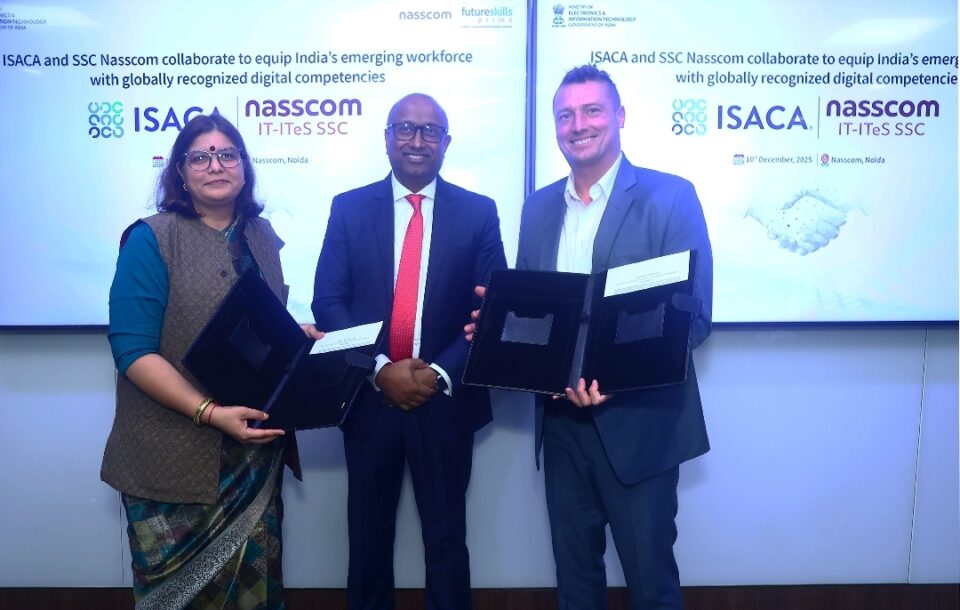
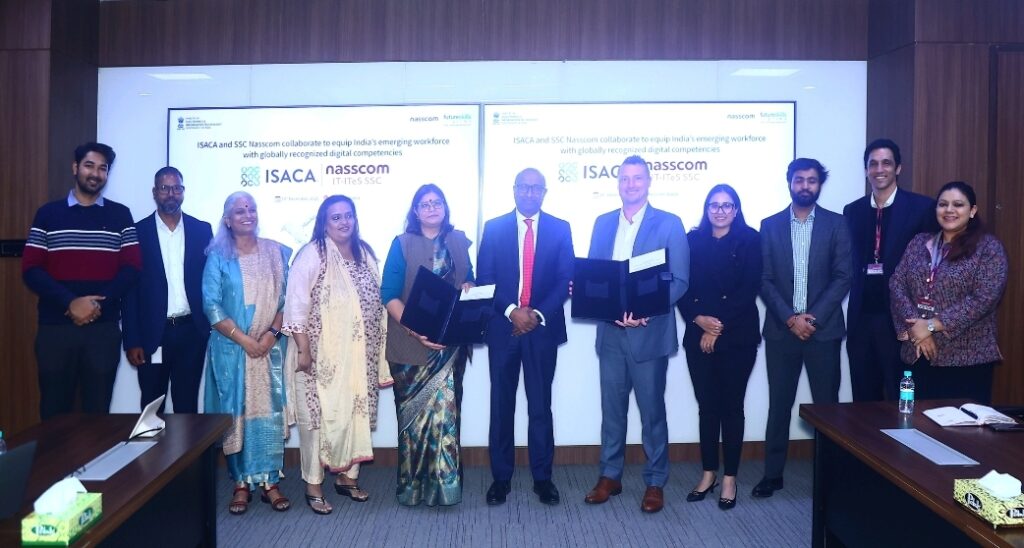
In that context, the recent collaboration between ISACA and Nasscom’s IT-ITeS SSC to align global credentials with India’s National Skill Qualification Framework (NSQF) marks a pivotal milestone. It’s not just a skilling initiative—it’s a blueprint for reimagining the employee experience (EX) and customer experience (CX) in the digital age.
A New Kind of CX-EX Challenge
Ask any CIO or CX leader today what keeps them awake at night, and “skills gap” will likely make the list. It’s no longer about filling vacancies—it’s about cultivating trust-ready, adaptive teams that can translate technology into value. But when foundational skills lack global recognition, professionals often face stalled progress and organizations suffer inconsistent quality assurance.
That’s the precise problem the ISACA–Nasscom MoU aims to solve. By mapping ISACA certifications such as CISA, CISM, and CRISC with India’s formal NSQF hierarchy, the collaboration ensures consistency, credibility, and parity across academic and professional pathways. The addition of ISACA’s AI governance courses brings even more relevance, bridging a crucial gap between industry needs and the capabilities of India’s future workforce.
Why This Matters to CX and EX Leaders
CX leaders may wonder: what does a certification alignment mean for customer experience outcomes? The link is deeper than it appears.
Every digital touchpoint a customer experiences—be it a banking app, an insurance chatbot, or an enterprise portal—depends on systems engineered and monitored by skilled professionals. Trust in those systems, both functional and ethical, defines the trust quotient of customer relationships. Employees who hold globally recognized certifications bring not just competence but confidence, which in turn elevates brand reliability.
When organizations integrate globally benchmarked credentials into learning frameworks, employees perceive clear growth pathways. This sense of empowerment is fundamental to modern EX. It reduces churn, nurtures innovation, and supports a culture where learning is continuous and aligned to business outcomes.
Decoding the Partnership: How It Works
The ISACA–Nasscom collaboration creates a structured integration where:
- ISACA certifications achieve equivalence with India’s NSQF levels, enabling standardized skill recognition.
- These certifications are registered on the National Qualification Register (NQR), letting students gain academic credits through their completion.
- ISACA training programs are available on the FutureSkills Prime platform, jointly driven by MeitY and Nasscom, widening access to both professionals and students.
This alignment effectively blends industry, academia, and governance into one cohesive framework. For an ecosystem long burdened by fragmented skill recognition, this is transformative.
The Broader Economic Context
India’s ambition to lead the global digital economy relies on two accelerators—scale and skill parity. With the technology industry valued at over $284 billion, the stakes are massive. Nasscom’s research consistently outlines a shortfall in job-ready digital talent, especially in risk management, cybersecurity, and AI.
According to estimates shared during the collaboration announcement, the Ministry of Skill Development and Entrepreneurship (MSDE), along with MeitY, is targeting the reskilling and upskilling of more than 890,000 IT professionals. Embedding globally respected ISACA certifications within this initiative ensures these professionals don’t just get trained—they become trusted experts capable of leading in global roles.
As Chris Dimitriadis, Chief Global Strategy Officer, ISACA, emphasized, bringing globally benchmarked credentials into India’s structured education ecosystem “provides professionals and students greater opportunities to build their careers in digital trust, risk management, and cybersecurity.”
Rajesh Nambiar, President, Nasscom, echoed this vision, stressing that “aligning ISACA certifications with NSQF integrates industry-leading expertise into formal learning frameworks.” These statements underline a growing strategic truth: trust, not technology, defines competitive advantage.
From Academic Alignment to Workplace Transformation
Embedding ISACA competencies into formal degrees through NSQF and NQR integration changes how skilling interacts with higher education. Universities can now award academic credits for what were earlier considered extracurricular certifications. For learners, this reduces friction between academia and employability.
For organizations, it sets up a new EX dimension—investing in learning that pays back in both academic qualification and professional growth. Learning paths can now align seamlessly with skill taxonomies recognized globally. Instead of fragmented training modules, enterprises can weave skill frameworks directly into their EX blueprint, ensuring agility and consistency across teams.
Linking Digital Trust to the CX Mandate
In CX strategy, digital trust sits at the intersection of technology confidence, data privacy, and ethical use of AI. Customers interact with brands through systems they often cannot see but must trust implicitly. A secure and well-governed technology backbone—supported by professionals with verifiable skills—forms the bedrock of customer confidence.
When trust is embedded into employees’ capabilities, it cascades outward in interactions with customers. Consider a cybersecurity analyst holding a CISM certification or a product manager equipped with ISACA’s AI governance fundamentals. These employees don’t just solve problems—they anticipate them, ensuring every customer touchpoint remains secure, compliant, and transparent. That’s the foundation of experience equity in modern CX.
Practical Implications for Enterprises
CX and HR leaders should interpret this collaboration not as an academic development but as a strategic opportunity to future-proof their talent base. Practical ways companies can leverage this include:
- Integrate NSQF-aligned certifications into learning frameworks. Use ISACA’s benchmark credentials as milestones in employee development journeys.
- Promote continuous re-skilling. With digital disruption constant, learning must evolve from event-based to habit-based. FutureSkills Prime provides the infrastructure to operationalize that.
- Map skills to CX impact. Connect technical learning (risk, governance, cybersecurity) with customer-facing KPIs like trust scores or incident resolution rate.
- Foster cross-functional confidence. Encourage collaborative learning between IT, risk, and CX teams to create shared accountability for customer trust.
- Incentivize certification-based achievement. Recognize and reward credential milestones to strengthen engagement and retention.
Through these steps, organizations can translate this macro collaboration into a microimpact across their digital ecosystems.
Redefining the ‘Future-Ready Workforce’
Dr. Abhilasha Gaur, CEO of IT-ITeS SSC Nasscom, succinctly described the motivation: “Closing the gaps between industry-relevant skills and academic skills is of utmost need and importance.” That statement captures not just a challenge but an opportunity to redefine how we measure readiness.
A future-ready workforce isn’t merely one trained on new technologies—it’s one whose competence is universally verifiable, ethically grounded, and strategically aligned with evolving customer expectations. By integrating ISACA’s credentials into national education and training systems, India creates a replicable model for digital trust development that other economies may soon emulate.
Toward a Trust-Driven Experience Economy
As industries converge around digital ecosystems, the next wave of CX innovation will hinge not on interfaces but on integrity—the assurance that every process, algorithm, and decision is secure and transparent.
ISACA and Nasscom’s initiative represents a structural step toward that future. It converts what was previously fragmented—academic theory, professional skill development, and CX execution—into a coherent pathway. In doing so, it lays the groundwork for an Experience Economy built on Trust.
The Final Takeaway: Action for CX & EX Leaders
For CX and EX professionals, here are actionable insights drawn from this transformation:
- Audit digital trust capabilities within your organization. Identify skill areas critical to sustaining secure, frictionless customer experiences.
- Embed digital trust into your CX metrics. Beyond NPS or CSAT, consider “Trust Index” or “Confidence Conversion” as key indicators.
- Prioritize credential-backed upskilling. Certifications like CISA, CISM, and CRISC not only validate skill—they signify reliability to clients and consumers.
- Adopt an ecosystem mindset. Break the silos between L&D, HR, and technology teams to create integrated EX journeys aligned to national and global standards.
- Champion learning culture as a CX enabler. Every skill investment ultimately shapes customer outcomes; align leadership narratives accordingly.
The ISACA–Nasscom partnership may appear technical, but its implications are human. It’s about building a workforce trusted to deliver experiences customers can believe in—secure, consistent, and world-class.
