
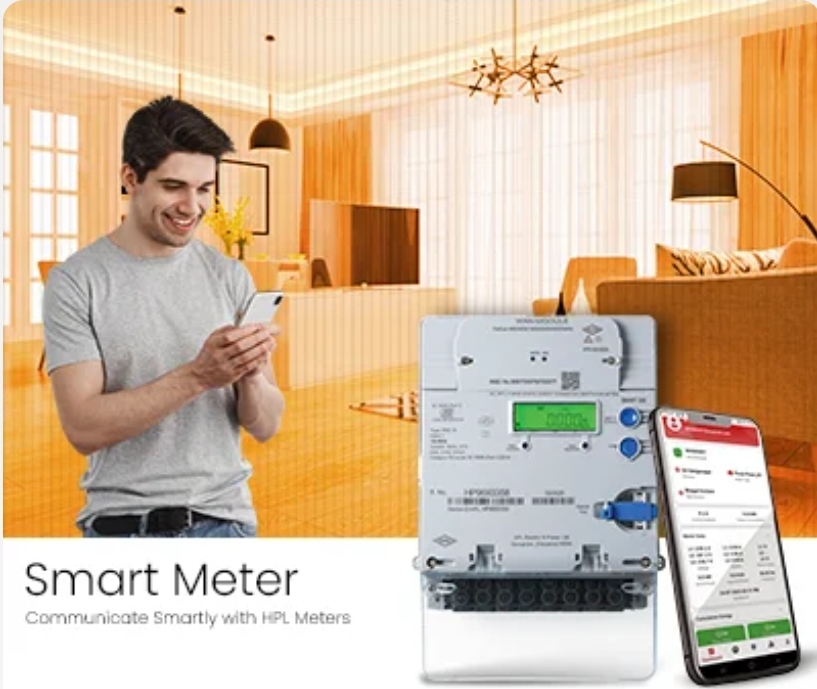
From Billing to Belief: Why Smart Water Metering Is Becoming a CX Imperative for Utilities
Ever opened your water bill and thought, “This can’t be right”?
Now imagine being the utility executive who has to explain it—without data, without visibility, and without trust.
Across cities, towns, and rural clusters, water utilities face a familiar CX paradox. Customers demand transparency and fairness. Operators struggle with leaks, theft, aging infrastructure, and fragmented data. Between them sits a fragile relationship, often broken by estimation errors, delayed billing, and reactive service.
This is where smart water metering shifts from being an infrastructure upgrade to a customer experience strategy.
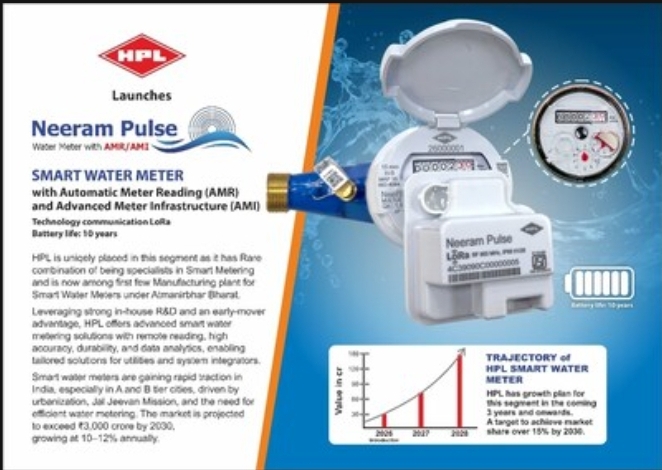
With the launch of ‘Neeram Pulse’, HPL Electric & Power Ltd. signals a decisive move into this transformation—bringing utility-grade smart water metering to a market primed for data-led operations.
But the bigger story is not the device.
It’s how smart metering is quietly redefining CX, EX, and trust in public utilities.
What Is Smart Water Metering—and Why CX Leaders Should Care?
Smart water metering uses digital meters and communication networks to capture, transmit, and analyse consumption data in near real time.
For CX teams, this replaces assumptions with evidence, and complaints with clarity.
Unlike traditional meters that require manual readings, smart meters integrate with AMR (Automatic Meter Reading) and AMI (Advanced Metering Infrastructure) platforms. They enable accurate billing, proactive issue detection, and personalised customer communication.
For utilities under pressure to improve service credibility, this matters more than ever.
Why Is the Smart Water Metering Market Accelerating Now?
Because water utilities are moving from reactive operations to predictive, customer-centric systems.
Globally, utilities are investing in smart water metering to:
- Reduce non-revenue water caused by leaks and theft
- Strengthen billing discipline and revenue assurance
- Improve service responsiveness and trust
- Support smart city and sustainability mandates
Industry projections show the smart water meters market growing from ~USD 4.61 billion in 2024 to ~USD 9.04 billion by 2030, reflecting a CAGR of nearly 12%.
For CX and EX leaders, this signals a structural shift—not a pilot trend.
Where Do CX and Utility Operations Usually Break Down?
Before smart systems, most utilities suffer from the same experience gaps:
- Estimated billing fuels customer distrust
- Delayed leak detection escalates costs and disputes
- Siloed data separates field teams, billing teams, and service desks
- Reactive service models frustrate both customers and employees
The result is predictable.
High complaint volumes. Low first-contact resolution. Burned-out staff. Eroding public confidence.
Technology alone does not fix this.
Integrated experience design does.
How ‘Neeram Pulse’ Fits Into a Modern CX-Led Utility Stack
Neeram Pulse is designed for environments where accuracy, resilience, and long-term performance directly impact customer trust.
HPL’s smart water metering solution brings together hardware reliability and AMR/AMI readiness—two factors that often determine whether CX improvements scale or stall.
Key capability highlights include:
- Compliance with IS:779:1994 and ISO 4064 standards
- High-accuracy, long-life metering using a dry dial multi-jet register
- Shielded magnetic coupling for tamper resistance
- IP68 fully sealed body for harsh field conditions
- Tamper, reverse flow, and magnetic interference detection
- Up to 10 years of battery life, depending on configuration
- LoRa RF communication (865–868 MHz) for scalable deployments
These features are not technical trivia.
They directly shape customer outcomes.
How Smart Metering Improves Customer Experience in Practice
Smart meters turn invisible problems into visible moments of trust.
Here’s how CX leaders should view the impact:
1. Billing Transparency Becomes the Default
Accurate, automated readings reduce disputes. Customers see consistency. Trust rebuilds quietly.
2. Proactive Service Replaces Apologies
Leakage alerts and reverse-flow detection allow utilities to act before customers complain.
3. Faster Resolution Across Touchpoints
Event alarms—module removal, battery low, tampering—enable quicker diagnosis and clearer explanations.
4. Fairness Becomes Measurable
Data removes ambiguity. Fair billing becomes defensible, not debatable.
This is experience design through data fidelity.
Why AMR/AMI Readiness Matters More Than “Smart” Labels
Many meters are digital. Few are deployment-ready at scale.
CX transformations fail when systems cannot integrate across:
- Field operations
- Billing platforms
- Customer service tools
- Analytics and dashboards
Neeram Pulse is AMR-ready and AMI-aligned, enabling utilities to move beyond pilots into system-wide rollouts—a critical threshold for CX impact.
This is where many smart city initiatives stumble.
Hardware exists. Integration does not.
What HPL’s Manufacturing Move Signals Strategically
Opening a dedicated Smart Water Meter manufacturing facility in Gurugram is not just capacity expansion.
It reflects three strategic CX-relevant bets:
- Long-term commitment to utility transformation, not short-cycle experimentation
- Control over quality, standards, and supply reliability
- Confidence in scaling beyond pilots into national infrastructure programmes
As one of the early integrated smart water meter plants in India, HPL positions itself as a partner prepared for volume, longevity, and compliance—factors utilities care about deeply.
What CX Leaders Can Learn from HPL’s Electric-to-Water Playbook
HPL’s move mirrors a familiar CX pattern:
replicating trust from one critical service into another.
With a strong footprint in smart electric metering—where over 99% of its order book aligns with advanced metering under RDSS/AMISP frameworks—HPL brings operational muscle into water infrastructure.
The lesson for CX leaders is simple:
Experience credibility compounds across domains when execution discipline transfers with it.
Common Pitfalls Utilities Face in Smart Meter CX Programs
Even with strong technology, experience gains can stall.
Watch for these traps:
- Treating smart meters as IT projects, not CX enablers
- Failing to train frontline teams on data interpretation
- Rolling out tech without customer education
- Ignoring internal EX friction between operations and service teams
Smart meters expose problems faster.
If organisations are not aligned, they expose dysfunction too.
A Practical CX Framework for Smart Water Deployments
Use this five-layer lens to guide implementation:
1. Accuracy Layer
Is the data reliable, tamper-resistant, and standards-compliant?
2. Integration Layer
Does it connect seamlessly to billing, HES, and service systems?
3. Intelligence Layer
Can it detect leaks, anomalies, and usage patterns proactively?
4. Experience Layer
Are insights translated into clear customer communication?
5. Trust Layer
Does every interaction reinforce fairness and transparency?
Neeram Pulse is strongest in layers one to three.
CX leadership determines layers four and five.
Why Employee Experience (EX) Improves Alongside CX
Smart water metering reduces cognitive load on frontline teams.
- Fewer billing disputes
- Clearer diagnostics
- Faster root-cause analysis
- Reduced field revisits
When employees trust the data, customers trust the service.
That loop matters.
What This Means for Smart Cities and Policy-Led Programmes
With increasing government focus on smarter water management, solutions like Neeram Pulse arrive at a pivotal moment.
Policy intent is clear.
Execution readiness is the differentiator.
Utilities that align technology, CX design, and operational governance will move from pilots to platforms.
Others will remain stuck explaining numbers no one believes.
Key Insights for CX and Utility Leaders
- Smart water metering is a CX strategy, not a hardware upgrade
- Accuracy and tamper resistance directly affect trust
- AMR/AMI readiness determines scalability
- Data without experience design creates friction
- Manufacturing depth signals long-term partnership capability
Frequently Asked Questions (FAQ)
How does smart water metering reduce customer complaints?
By enabling accurate billing, early leak detection, and faster issue resolution through data-driven insights.
Is LoRa-based communication suitable for large utility deployments?
Yes. LoRa RF supports long-range, low-power communication ideal for city-wide and semi-urban networks.
What role does CX play in smart city water initiatives?
CX ensures technology investments translate into trust, transparency, and citizen satisfaction—not just dashboards.
How long do smart water meters typically last?
Utility-grade meters like Neeram Pulse are designed for long life, with battery performance up to 10 years depending on configuration.
Can smart meters help reduce non-revenue water?
Yes. Leakage detection, reverse flow alerts, and tamper alarms directly support loss reduction.
Actionable Takeaways for CX and Utility Leaders
- Reframe smart water metering as an experience transformation initiative
- Map customer pain points before defining technical requirements
- Insist on AMR/AMI readiness to avoid pilot dead-ends
- Train service teams to explain data, not just read it
- Use leakage alerts to shift from reactive to proactive service
- Align EX incentives with CX outcomes, not meter installations
- Design customer communication around fairness and clarity
- Measure success through complaint reduction and trust indicators
Smart water metering is no longer about reading meters.
It’s about restoring belief—one accurate bill, one timely alert, one transparent interaction at a time.
For CXQuest readers navigating siloed teams, AI gaps, and fragmented journeys, that belief may be the most valuable infrastructure investment of all.
