
When Universities Act Like Platforms: What CX Leaders Can Learn from India’s New NASA Citizen Scientists
Imagine this.
A student opens a grainy telescope image at 2 a.m.
No classroom. No professor hovering.
Just raw data, a deadline, and the knowledge that one wrong measurement could fail a global mission.
That student isn’t playing a simulation.
They’re contributing to planetary defense.
This is not a sci-fi vignette.
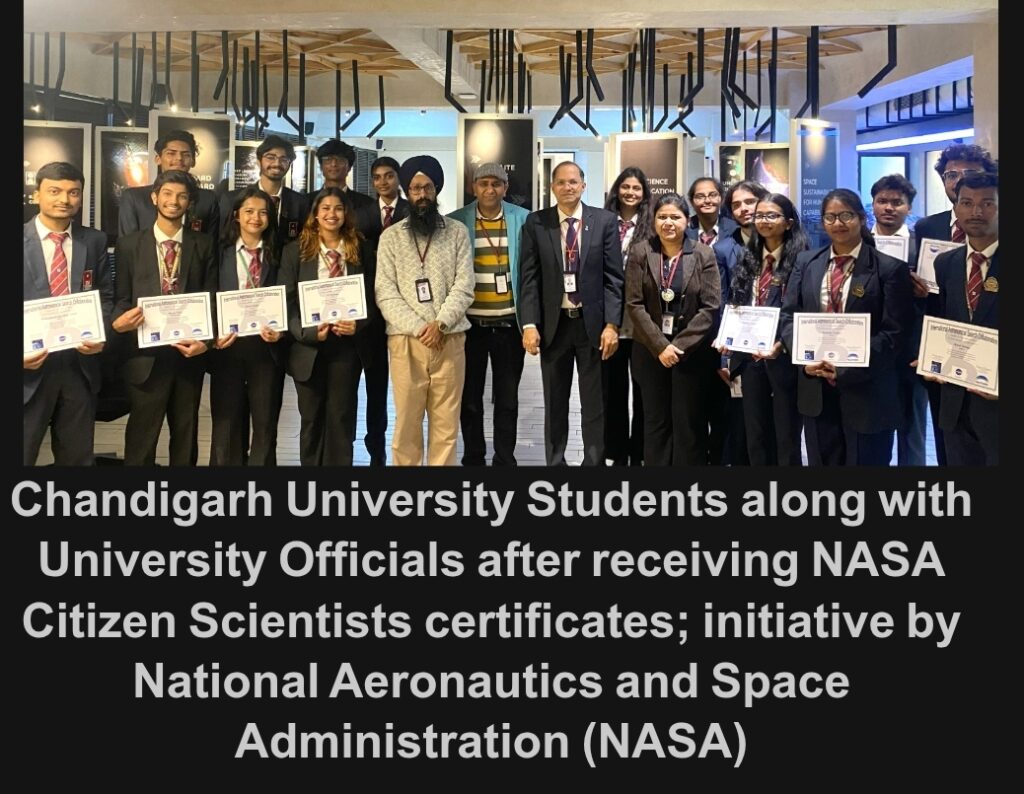
It’s a real story unfolding at , where 18 engineering and science students were officially designated NASA Citizen Scientists after discovering two new asteroids.
For CX and EX leaders, this story is more than academic pride.
It’s a masterclass in experience orchestration at scale—across silos, tools, skills, and outcomes.
And it raises a sharper question:
What if your organization designed employee and customer experiences with the same precision NASA demands from citizen scientists?
What Is the NASA Citizen Scientist Program—and Why CX Leaders Should Care?
Short answer:
It’s a real-world, high-stakes experience model where non-professionals deliver mission-critical outcomes using enterprise-grade tools.
The recognition came through the International Asteroid Search Campaign, a global initiative supported by National Aeronautics and Space Administration.
Students analyzed authentic telescope data from Pan-STARRS, one of the world’s most advanced sky-survey systems.
No mock data.
No protected sandbox.
Just responsibility.
For CX teams wrestling with AI pilots that never scale, this matters.
Because this is what trust-based experience design looks like.
Why This Story Matters Beyond Space Science
Most organizations say they want empowered employees.
Few actually design for it.
Chandigarh University did something different.
They didn’t:
- Add another course
- Launch a hackathon theater
- Gamify learning without stakes
They embedded students into a live global system.
That’s the leap CX leaders often avoid.
What Experience Problem Did Chandigarh University Actually Solve?
Short answer:
They eliminated the gap between learning, tools, and outcomes.
Let’s break that down.
The Common Enterprise Problem
- Skills are taught in isolation
- Tools are outdated or simulated
- Outcomes are abstract
Result?
Low confidence. Fragmented journeys. Slow readiness.
The CU Approach
- Real datasets
- Professional-grade software
- Global standards
- External validation
Students used Astrometric software to detect moving celestial objects.
Their findings met international scientific thresholds.
This mirrors what modern CX platforms promise—but rarely deliver.
How This Mirrors High-Maturity CX and EX Systems
Great CX doesn’t start with customers.
It starts with internal experience integrity.
Here’s how the model maps.
| Space Science Model | CX/EX Equivalent |
|---|---|
| Raw telescope data | Unfiltered customer signals |
| Astrometric tools | Journey analytics platforms |
| IASC validation | Governance and QA |
| NASA recognition | Market trust |
| Planetary defense | Business resilience |
This is journey orchestration, not journey mapping.
What Role Did Leadership Play in Experience Design?
Short answer:
Leadership didn’t micromanage. They created conditions.
According to Deep Inder Singh Sandhu, the focus was on enabling students to work with:
- Authentic data
- Advanced tools
- International standards
That’s a critical distinction.
Strong CX leadership doesn’t control touchpoints.
It removes friction so outcomes can emerge.
Why AI Pilots Fail—and Why This Didn’t
Many CX leaders face the same frustration:
“We invested in AI, but adoption stalled.”
Here’s the difference.
Typical AI Rollouts
- Abstract use cases
- Internal-only value
- No external accountability
The IASC Model
- Clear mission
- Binary outcomes
- Global verification
Students either discovered something real—or they didn’t.
That clarity is missing in many CX transformations.
What CX Leaders Can Learn About Trust and Autonomy
Trust is not a soft metric.
It’s an architectural decision.
In this case:
- Students were trusted with real data
- Errors had consequences
- Success had recognition
This created:
- Deep engagement
- Skill ownership
- Emotional investment
You can’t mandate that with dashboards.
Key Insights for CX and EX Leaders
Bold truths worth sitting with:
- Experience depth beats experience polish.
- Real tools create real confidence.
- External validation accelerates internal adoption.
- Stakes drive learning faster than incentives.
This is why customer stories resonate when they’re real.
Common Pitfalls Organizations Still Fall Into
Even with this evidence, many CX programs fail due to:
- Over-simulated environments
- Fear of employee failure
- Over-engineered governance
- Under-defined outcomes
NASA didn’t lower the bar.
They made the bar visible.
How to Apply This Model Inside Your CX Organization
You don’t need a telescope.
You need courage.
Start with One Mission-Critical Journey
Pick a journey where failure matters:
- Onboarding
- Incident response
- Retention recovery
Give Teams Real Signals
No sanitized dashboards.
Expose raw feedback and edge cases.
Use Enterprise-Grade Tools
Stop training on tools you won’t deploy.
Add External Validation
Audits. Certifications. Customer councils.
Why This Story Wins on Google Discover and PAA
Because it answers:
- How do students become NASA Citizen Scientists?
- What is the International Asteroid Search Campaign?
- How can universities contribute to space research?
- What skills are needed for asteroid discovery?
And it does so through experience, not abstraction.
Frequently Asked Questions (FAQ)
How did Chandigarh University students discover new asteroids?
They analyzed real telescope data using professional software under a NASA-supported campaign.
What is the International Asteroid Search Campaign?
It’s a global citizen-science initiative that enables participants to identify asteroids using authentic datasets.
Who can become a NASA Citizen Scientist?
Students and amateurs whose findings meet international scientific standards.
Why is this relevant to CX and EX leaders?
It demonstrates how real tools, trust, and outcomes create high-performance experiences.
What skills did the students develop?
Data analysis, precision measurement, accountability, and systems thinking.
Actionable Takeaways for CX Professionals
- Design experiences with real stakes. Simulations don’t build confidence.
- Expose teams to raw customer signals. Don’t over-curate insights.
- Adopt tools before training on them. Practice must mirror reality.
- Tie learning to external outcomes. Recognition accelerates belief.
- Reduce friction, not freedom. Governance should enable, not constrain.
- Measure contribution, not activity. Outcomes beat effort metrics.
- Let teams fail safely—but visibly. Growth needs feedback loops.
- Build trust into the system architecture. Culture follows design.
Final thought:
Chandigarh University didn’t just produce NASA Citizen Scientists.
They produced a living blueprint for experience-led transformation.
CX leaders would be wise to study the stars—not for inspiration,
but for instruction.
