

MAHE ’s AI Partnership: A Strategic Case Study for CX Leaders
It’s Monday morning in Manipal.
A faculty member reviews lecture slides minutes before class.
An administrator chases fragmented student data across systems.
A PhD scholar toggles between research papers, code, and grant drafts.
Everyone feels the same pressure. Do more. Move faster. Stay relevant.
Now imagine this:
AI tools assist lesson planning.
Research drafts evolve in hours, not weeks.
Student queries receive intelligent, ethical responses.
Governance teams monitor AI usage with transparent controls.
This is not a future concept. It’s unfolding now.
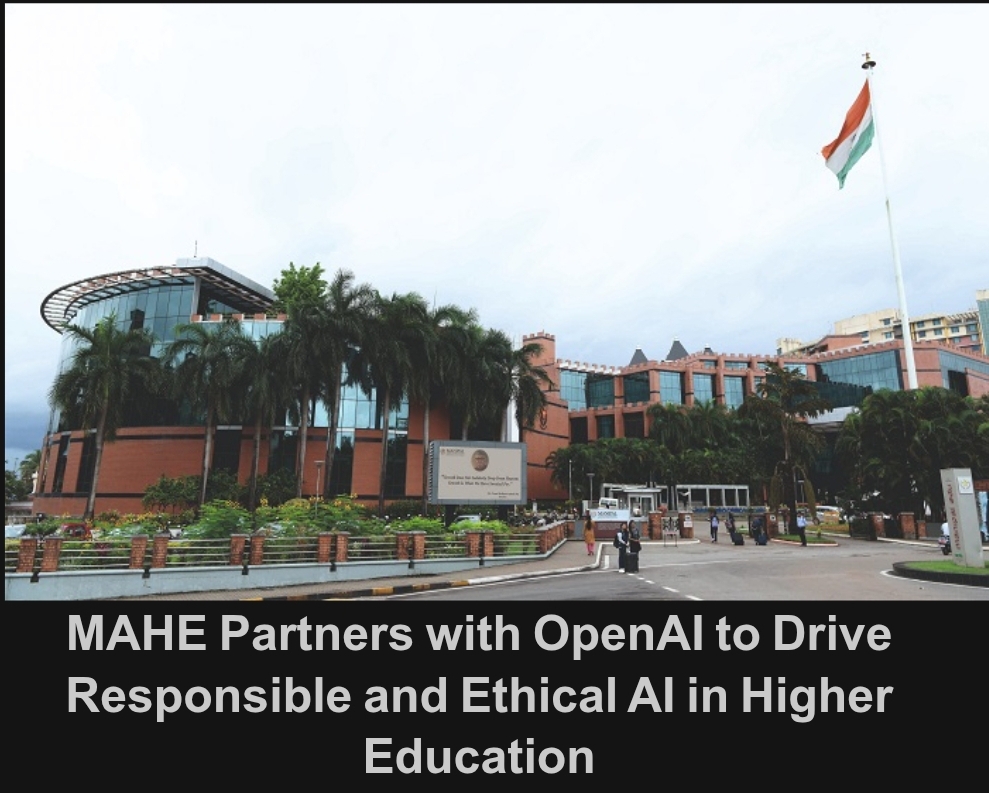
Manipal Academy of Higher Education (MAHE) has partnered with OpenAI to integrate advanced artificial intelligence across teaching, research, and academic administration.
For CX and EX leaders, this is more than a campus story.
It’s a blueprint for enterprise-wide AI adoption with governance at the core.
Why Should CX Leaders Care About a University AI Partnership?
Because universities mirror complex enterprises.
They operate across silos, serve multiple personas, and manage high-stakes journeys.
When a large institution embeds AI responsibly across functions, it offers lessons for:
- Siloed teams
- Journey fragmentation
- AI capability gaps
- Governance blind spots
MAHE’s initiative offers a structured, ethical model for scaling AI across a multi-stakeholder ecosystem.
What Is MAHE’s AI Integration Strategy?
MAHE is embedding AI tools across teaching, research, and administration with structured governance and cross-disciplinary literacy.
The initiative focuses on three pillars:
- Personalised Learning Enablement
- Research Acceleration
- Ethical AI Governance
Lt. Gen. (Dr.) M D Venkatesh, Vice Chancellor, MAHE, explains:
“Our partnership with OpenAI represents a strategic step toward embedding AI as a transformative enabler across teaching, research, and administration.”
This is not experimentation. It is structured transformation.
What Makes This Partnership Strategically Different?
It combines capability building, governance, and interdisciplinary access instead of isolated tool deployment.
Many organisations roll out AI tools department by department.
MAHE is approaching it institution-wide.
Key differentiators:
- AI access across Health Sciences, Technology, Management, Law, and Humanities
- Faculty enablement, not just student access
- Structured governance guidelines
- Alignment with a long-term digital roadmap
This reflects a platform mindset, not a pilot mindset.
How Does This Relate to CX and EX Strategy?
Universities are experience ecosystems.
Students = Customers
Faculty = Employees
Administrators = Internal service providers
Journey fragmentation exists across:
- Admissions
- Academic delivery
- Research workflows
- Student support
- Alumni engagement
Embedding AI across these touchpoints improves:
- Response speed
- Personalisation
- Knowledge discovery
- Decision intelligence
For CX leaders, this mirrors omnichannel orchestration.
A Framework CX Leaders Can Borrow: The AI Experience Maturity Model
MAHE’s approach reflects a four-stage maturity framework.
1️⃣ Access Layer: Democratised AI Tools
Ensure broad access to AI tools across roles.
2️⃣ Capability Layer: AI Literacy
Train teams to use AI responsibly and effectively.
3️⃣ Governance Layer: Ethical Guardrails
Create structured AI policies, monitoring, and accountability.
4️⃣ Value Layer: Measurable Outcomes
Link AI usage to improved outcomes.
This layered model prevents common enterprise failures.
What Outcomes Can AI Integration Drive?
When structured correctly, AI improves productivity, decision quality, and experience personalisation.
At MAHE, expected outcomes include:
- Enhanced learning outcomes
- Faster research cycles
- Interdisciplinary innovation
- Administrative efficiency
- Ethical AI usage transparency
For CX teams, this translates to:
- Reduced ticket resolution times
- Better knowledge management
- Smarter journey orchestration
- Higher employee confidence in AI systems
What Problem Does This Solve?
1. Siloed Knowledge
AI-enabled knowledge systems reduce information bottlenecks.
2. Journey Gaps
Integrated AI tools create consistent experiences.
3. Skill Gaps
AI literacy ensures adoption beyond IT teams.
4. Governance Risk
Structured AI guidelines prevent reputational damage.
What Role Does Governance Play?
AI without governance increases risk exponentially.
MAHE plans structured AI governance guidelines to ensure:
- Responsible use
- Ethical implementation
- Transparency in AI-assisted processes
- Academic integrity
For enterprises, governance should include:
- AI usage audits
- Data privacy controls
- Bias testing protocols
- Clear human-in-the-loop standards
Governance builds trust. Trust drives adoption.
How Does Interdisciplinary AI Literacy Drive Competitive Advantage?
AI literacy across disciplines multiplies innovation.
MAHE ensures AI exposure beyond technology students.
Health Sciences, Law, Management, and Humanities will engage with AI tools.
Why this matters:
- Cross-functional innovation accelerates.
- Real-world problem solving improves.
- AI becomes a capability, not a department.
For CX organisations, this means:
Customer Experience is not owned by one team.
AI adoption cannot be either.
Key Insights for CX/EX Leaders
- AI adoption must be enterprise-wide, not departmental.
- Governance is not optional.
- Capability building drives sustained ROI.
- Interdisciplinary access unlocks innovation.
- Leadership endorsement accelerates cultural acceptance.
MAHE’s Institution of Eminence status reinforces credibility.
It ranks 3rd in India’s NIRF rankings.
Its campuses span Manipal, Mangalore, Bengaluru, Jamshedpur, and Dubai.
This scale makes the transformation meaningful.
Common Pitfalls in AI Transformation
Even strong institutions can stumble. CX leaders must avoid:
❌ Tool-First Thinking
Deploying AI without workflow redesign.
❌ Shadow AI Usage
Unmonitored usage across departments.
❌ No Training Budget
Assuming intuitive adoption.
❌ Ignoring Ethical Frameworks
Failing to define responsible use.
MAHE’s structured approach mitigates these risks.
How Can Enterprises Apply This Model?
Below is a practical enterprise adaptation:
| MAHE Strategy Element | Enterprise Equivalent |
|---|---|
| AI literacy across disciplines | Cross-functional AI training |
| Structured governance | AI risk committee |
| Academic personalisation | Customer journey personalisation |
| Research acceleration | Innovation lab enablement |
| Digital roadmap alignment | Enterprise transformation strategy |
This is ecosystem transformation, not software deployment.
Frequently Asked Questions
How can universities or enterprises start AI integration responsibly?
Start with governance and literacy. Deploy tools after defining ethical guidelines and measurable goals.
Does AI integration threaten employee roles?
No. It augments productivity and decision-making when paired with upskilling.
How should CX teams measure AI impact?
Track productivity gains, resolution speed, quality metrics, and employee confidence scores.
What is the biggest risk in enterprise AI adoption?
Lack of governance and fragmented implementation.
How long does enterprise AI transformation take?
It depends on maturity. Structured adoption often spans 18–36 months.
Why This Matters Now
AI is no longer experimental.
It is infrastructural.
MAHE’s partnership signals a shift from AI curiosity to AI institutionalisation.
For CX leaders, the message is clear:
- Embed AI strategically.
- Govern it responsibly.
- Train widely.
- Measure relentlessly.
Institutions that act early build cultural fluency.
Those that delay risk reactive adoption.
Actionable Takeaways for CX/EX Leaders
- Conduct an AI readiness assessment across departments.
- Establish an AI governance council with cross-functional representation.
- Define ethical AI usage policies before scaling tools.
- Invest in AI literacy programs beyond technical teams.
- Align AI initiatives with measurable CX and EX outcomes.
- Redesign workflows before embedding AI.
- Track adoption, productivity gains, and risk indicators monthly.
- Communicate leadership commitment visibly and consistently.
Final Thought
AI transformation is not about replacing humans.
It is about elevating human capability.
MAHE’s partnership with OpenAI demonstrates how structured, ethical, interdisciplinary AI adoption can create scalable impact.
For CX leaders navigating siloed teams, AI gaps, and journey fragmentation, the lesson is simple:
AI must be embedded as a governed capability, not deployed as a shortcut.
The organisations that understand this will not just implement AI.
They will institutionalise intelligence.
And that changes everything.
