
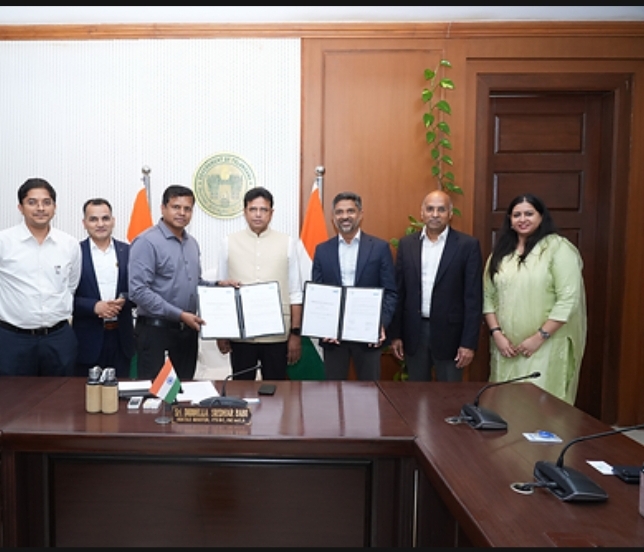
Amgen Hyderabad science innovation center marks a significant expansion of Amgen’s global R&D footprint, with the biopharmaceutical company announcing a new facility at Genome Valley, Hyderabad. Expected to become operational in 2027, the center will bring together scientists and technologists working across discovery chemistry, drug metabolism and pharmacokinetics, and precision medicine. The facility will connect with Amgen’s seven existing research laboratories worldwide and its technology and innovation site in Hyderabad. From a CX perspective, the development matters because faster, more precise medicine discovery can ultimately influence patient trust, treatment continuity, access to innovation, and confidence in healthcare brands.
CX Industry Context
Healthcare CX increasingly depends on what happens before a patient ever interacts with a provider, medicine, or digital health service. Research infrastructure therefore forms part of the broader experience chain. Amgen Hyderabad science innovation center brings experimental science, data, digital capabilities, and global collaboration into one R&D framework. That integration could shorten learning cycles and improve the precision of drug-development decisions. Moreover, the Hyderabad facility reflects the growing importance of India in global life-sciences innovation. As pharmaceutical companies increasingly use data, AI, automation, genomics, and advanced laboratory technologies, enterprises must consider not only scientific outcomes but also how innovation affects patient confidence, reliability, transparency, and continuity of care.
Company Strategy Analysis
Amgen’s strategy combines global R&D scale with local scientific and technology capabilities. The Amgen Hyderabad science innovation center will focus on discovery chemistry, drug metabolism and pharmacokinetics, and precision medicine while collaborating with research sites worldwide. This architecture gives Amgen a distributed innovation model rather than a geographically isolated research operation. It also positions Hyderabad as part of the company’s core scientific network. The competitive differentiation lies in connecting wet-laboratory science with data and digital innovation. Therefore, the strategic value extends beyond adding another facility. Amgen is building an operating model designed to move insights across scientific disciplines and locations more efficiently.
CX Impact
For healthcare companies, customer experience ultimately depends on outcomes, reliability, confidence, and continuity. The Amgen Hyderabad science innovation center could influence these dimensions indirectly by supporting faster and more precise medicine development. Better scientific decision-making can contribute to dependable product pipelines and potentially more targeted therapies. Data integration also raises expectations around responsible data protection and governance. Patients may never see the research center, yet they experience its consequences through medicines, treatment options, information, and support ecosystems. Consequently, R&D infrastructure increasingly deserves consideration as part of the healthcare CX architecture rather than as a function completely separate from customer experience.
Industry Implications
The Hyderabad announcement signals a wider shift in global life-sciences strategy. Companies increasingly need distributed access to scientific talent, technology expertise, data capabilities, and specialised research infrastructure. Genome Valley provides that combination at scale. Meanwhile, Indian technology and STEM capabilities can support research operations that serve global markets rather than only domestic requirements. For enterprise decision-makers, this changes the investment question. The issue is no longer simply where to locate an R&D center. It is how to construct globally connected research networks that improve speed, resilience, scientific collaboration, data governance, and ultimately patient outcomes.
Key Insights
- R&D infrastructure is becoming part of healthcare CX. The quality of customer experience increasingly depends on the reliability and effectiveness of the science behind products.
- Hyderabad is moving further up the pharmaceutical value chain. Genome Valley’s importance increasingly extends beyond manufacturing and established life-sciences operations into high-value discovery and innovation.
- Distributed R&D can improve organisational resilience. Connecting research capabilities across geographies can reduce dependence on a single innovation hub.
- Wet-lab and digital convergence changes the research operating model. Scientific experimentation can generate greater value when data, technology, and computational capabilities operate alongside laboratory expertise.
- Patient trust begins before the patient interaction. Confidence in medicines ultimately depends on the perceived quality, integrity, safety, and scientific discipline behind their development.
Amgen’s announcement of its Amgen Hyderabad science innovation center places Hyderabad deeper inside the company’s global research and development architecture. The biopharmaceutical company plans to open the new facility at Genome Valley in 2027, adding scientific and technology capabilities to its existing Hyderabad presence. The move matters beyond the R&D function. As healthcare companies increasingly connect biology with data and digital technologies, the quality of scientific innovation can influence patient trust, treatment continuity, data protection, and the overall brand experience.
The new center will join Amgen’s global R&D network, which currently includes seven research laboratories. Scientists and technologists at the Hyderabad site will work across discovery chemistry, drug metabolism and pharmacokinetics, and precision medicine.
More importantly, Amgen intends to connect those capabilities with research operations around the world. That approach gives the announcement a broader strategic significance.
Why the Amgen Hyderabad science innovation center matters beyond R&D
Healthcare organisations traditionally treated research and customer experience as distinct functions. That separation is becoming harder to sustain.
Patients experience healthcare outcomes, not organisational charts. They judge pharmaceutical brands through effectiveness, availability, safety, communication, confidence, and continuity. Research decisions sit behind many of those outcomes.
Therefore, the quality and speed of scientific discovery can influence CX long before a patient interacts with a pharmaceutical company.
Amgen says the new center will integrate experimental science with data and technology. That model could help researchers identify patterns faster, improve scientific decision-making, and coordinate knowledge across locations.
Jay Bradner, M.D., executive vice president of Research and Development, Artificial Intelligence and Data at Amgen, said:
“The new center in Genome Valley expands the way we integrate experimental science with data and technology across our global research capabilities and complements our strong U.S.-based Research and Development footprint.”
He added:
“By connecting these capabilities, we can learn faster and translate those insights into innovative medicines for patients.”
Those statements point to an important shift. Amgen is not positioning Hyderabad simply as another research location. Instead, it is integrating the site into a broader scientific network.
Editorial pull-quote:
The next frontier of healthcare CX may begin inside the laboratory, long before the customer interaction.
Amgen Hyderabad science innovation center and the rise of Genome Valley
Genome Valley has become an important component of Hyderabad’s life-sciences ecosystem. The region combines pharmaceutical expertise, biotechnology capabilities, research infrastructure, and a large STEM talent base.
Amgen’s decision to expand its research presence there reflects that ecosystem’s evolution.
The company already operates a technology and innovation site in Hyderabad. The new center will complement that capability by bringing deeper scientific research into the same geographic ecosystem.
That combination matters because modern drug discovery increasingly requires collaboration between disciplines.
Chemistry, pharmacokinetics, precision medicine, computational analysis, data science, and digital technologies can no longer operate entirely in isolation. Researchers need mechanisms that allow information to move between these domains.
Consequently, the Hyderabad model could provide Amgen with a more integrated research environment.
D. Sridhar Babu, Hon’ble Minister for Information Technology, Electronics & Communications, Industries & Commerce, and Legislative Affairs, Government of Telangana, said:
“Hyderabad has built one of the world’s strongest life sciences ecosystems, with deep capabilities in pharmaceuticals and vaccines. The next chapter is about taking that strength into discovery and innovation.”
He added:
“Our ambition is to make Hyderabad a place where the next generation of medicines and therapies can be discovered, developed and taken to the world.”
The statement captures the larger economic and industry significance of the announcement. Hyderabad is increasingly competing for higher-value segments of the global life-sciences value chain.
From scientific speed to customer experience
Speed in drug discovery does not automatically translate into better customer experience. However, it can create the conditions required for better outcomes.
Amgen says the new center aims to enhance how medicines are discovered and developed, with an emphasis on speed, precision, and efficiency.
Each of these attributes can have CX consequences.
Speed can influence how quickly promising scientific discoveries progress through development.
Precision can support research into treatments that better address specific biological characteristics.
Efficiency can help organisations allocate research resources more effectively.
Meanwhile, data and digital integration can improve the ability to connect insights across research teams.
For customers, the impact remains indirect. Patients will not necessarily know which research site contributed to a medicine. Nevertheless, they will experience the consequences through the availability, reliability, quality, and effectiveness of treatments.
That makes the research operating model increasingly relevant to healthcare CX strategy.
Editorial pull-quote:
Customer experience in healthcare increasingly reflects the quality of decisions made before the customer ever enters the journey.
Data protection becomes part of the innovation equation
The convergence of science, data, artificial intelligence, and digital technologies also introduces a critical CX consideration: trust.
Life-sciences companies work with highly valuable scientific and health-related information. As research becomes more data-intensive, organisations must maintain strong governance around how information is collected, processed, shared, protected, and used.
Amgen’s strategy explicitly connects scientific capabilities with data and digital innovation. That creates opportunities, but it also increases the importance of responsible data practices.
For enterprise leaders, data protection should therefore sit alongside innovation speed.
A research organisation that moves rapidly but fails to establish strong governance could undermine confidence. Conversely, an organisation that combines innovation with disciplined data management can strengthen stakeholder trust.
This principle extends beyond patients. Researchers, healthcare professionals, regulators, partners, and employees also need confidence in the systems supporting scientific collaboration.
Editorial pull-quote:
In data-driven healthcare, trust is not a communications layer added after innovation; it is part of the innovation architecture.
A globally connected research model
The Amgen Hyderabad science innovation center also illustrates how global pharmaceutical companies are distributing specialised capabilities across multiple locations.
Amgen already operates seven research laboratories globally. Hyderabad will become another node within that network.
Such a model can provide access to specialised talent while allowing research teams to operate across different scientific environments.
Som Chattopadhyay, senior vice president of Global Business Solutions and national executive at Amgen, said:
“This new center reflects Amgen’s commitment to advancing scientific excellence, and India will be an important part of our global R&D network.”
He added:
“By expanding Amgen’s global research capabilities through its Hyderabad site, we are enabling deep scientific collaboration and look forward to participating in the local innovation ecosystem.”
This distributed model could also support organisational resilience. Global research networks can create multiple centres of expertise rather than concentrating every capability within one geography.
However, geographic distribution only creates value when collaboration works effectively. Organisations need interoperable systems, common governance standards, secure data environments, and strong knowledge-sharing mechanisms.
The physical location therefore represents only one part of the equation.
The more important question concerns how effectively Hyderabad connects with Amgen’s broader scientific architecture.
What this means for healthcare brand experience
The Amgen Hyderabad science innovation center could eventually influence brand experience through a chain of interconnected outcomes.
Research quality affects medicine development. Medicine development affects product portfolios. Product portfolios influence treatment options. Treatment options affect healthcare outcomes. Those outcomes ultimately shape perceptions of pharmaceutical brands.
That chain demonstrates why CX leaders should pay greater attention to operational and scientific capabilities that traditionally sat outside the customer-experience function.
Healthcare customers increasingly expect organisations to demonstrate competence, transparency, reliability, and responsibility.
Brand experience therefore extends beyond websites, patient-support programs, call centers, mobile applications, and communications.
It also encompasses the confidence customers place in the organisation’s underlying capabilities.
Naveen Gullapalli, managing director, Amgen India, said:
“Hyderabad’s strong life sciences ecosystem and deep STEM expertise enable us to apply advanced technologies at scale.”
He added:
“Our new center at Genome Valley will help integrate biotechnology and digital innovation to serve more patients globally.”
That final point connects the research investment directly to patient reach.
Editorial pull-quote:
The strongest healthcare brands will increasingly compete on the reliability of the innovation engine behind the customer experience.
The strategic question for the life-sciences industry
The Amgen Hyderabad science innovation center reflects a broader change in how pharmaceutical companies can think about global R&D.
The traditional model often separated scientific research, technology, data, and commercial operations into distinct structures. Modern innovation increasingly requires these capabilities to work together.
That creates a new enterprise decision lens.
Companies must evaluate not only where scientific talent exists but also whether an ecosystem can support interdisciplinary collaboration. They must assess technology infrastructure, data capabilities, research partnerships, talent availability, regulatory environments, and the ability to connect local teams with global operations.
India’s expanding role in this equation could become increasingly significant.
For Hyderabad, the development strengthens its position as a global life-sciences hub. For Amgen, it expands the company’s research network. For the wider industry, it demonstrates how scientific, digital, and geographic strategies are converging.
From a CX perspective, the most important takeaway is straightforward: innovation infrastructure increasingly shapes customer outcomes.
Editorial pull-quote:
The future of healthcare CX will depend not only on better interactions, but on better science, better data, and better-connected innovation networks.
The Amgen Hyderabad science innovation center therefore represents more than another corporate research investment. Its significance lies in the operating model behind it: connecting experimental science, data, digital technology, specialised talent, and global research capabilities.
If that model delivers on its intended objectives, the eventual beneficiaries could extend well beyond Amgen’s research teams.
Patients may see the results through new treatment options, improved precision, greater continuity, and stronger confidence in the organisations developing their medicines.
That makes Genome Valley’s next chapter particularly relevant to CX leaders. The customer journey in healthcare does not begin at the point of interaction. It begins much earlier—with the scientific choices, technology infrastructure, data practices, and innovation systems that determine what the customer can ultimately experience.
