

Egypt’s Dry Port Project Signals a Shift from Infrastructure to Experience
The launch of Egypt’s Dry Port Project marks more than a construction milestone—it signals a structural transformation in how logistics is designed, delivered, and experienced.
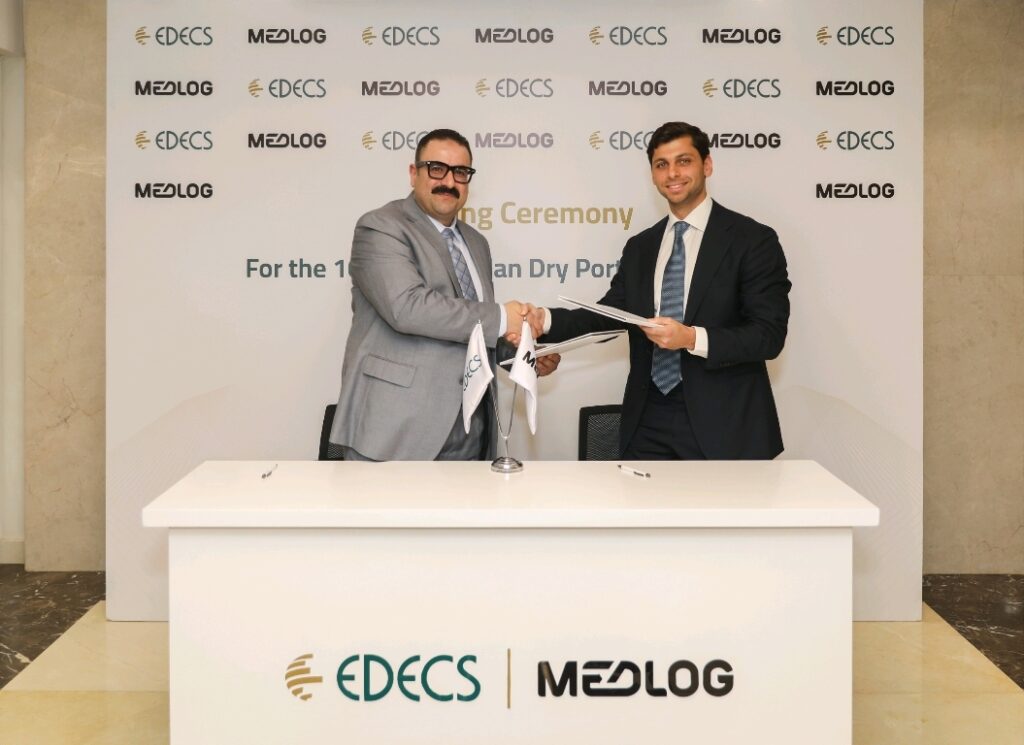
EDECS and MEDLOG have come together to build a 189,000 sqm dry port in 10th of Ramadan City, combining EPC execution with global logistics expertise. This becomes critical when supply chains are no longer judged only on speed, but on predictability, transparency, and resilience.
The deeper implication is unmistakable: logistics is evolving from physical movement to experience orchestration—and infrastructure is becoming the foundation of that shift.
Why Egypt’s Dry Port Project Matters in a Changing Logistics Landscape
Traditional logistics models—anchored in seaports—are increasingly strained. Congestion, delays, and fragmented inland connectivity have exposed the limitations of centralized systems.
This is where Egypt’s Dry Port Project changes the equation. By extending logistics capabilities inland, it decentralizes cargo handling and redistributes operational load across the network.
From a CX standpoint, this translates into:
- Reduced dwell time
- Faster cargo clearance
- Improved shipment predictability
This becomes critical when enterprises demand not just delivery—but reliability at scale.
The shift is clear: logistics infrastructure is no longer a bottleneck—it is becoming an experience enabler.
From Construction to Capability: The Strategic Inflection
At a structural level, this initiative reflects a transition from asset creation to capability orchestration.
EDECS brings execution discipline through its EPC model—ensuring infrastructure is delivered with efficiency and scale. MEDLOG contributes global logistics intelligence, integrating the facility into broader intermodal networks.
Strategically, this signals a shift in ownership:
- From infrastructure assets → to logistics capabilities
- From project delivery → to experience enablement
This is where the shift occurs.
Control is moving toward those who can orchestrate:
- Cargo flows
- Data visibility
- Network coordination
In this model, infrastructure is not the endpoint—it is the platform layer for logistics experience.
Competition Is Moving Toward Platform Logistics
Globally, logistics competition is no longer defined by port size or fleet capacity alone. It is increasingly shaped by platform capability.
L1 players remain focused on physical expansion. L2 players integrate operations and infrastructure. L3 leaders—emerging globally—are building digitally orchestrated logistics ecosystems.
Egypt’s Dry Port Project positions itself between L2 and early L3 maturity. It integrates digital systems and smart transport but retains scalability for future evolution into predictive, AI-driven logistics.
This positioning is strategic. It enables:
- Faster deployment
- Lower upfront complexity
- Progressive capability buildout
The deeper implication is that competitive advantage is shifting toward network intelligence, not just asset ownership.
Technology as the Backbone of Logistics Experience
The project’s value lies not in isolated technologies, but in how they are orchestrated.
Key elements include:
- Smart transport systems
- Digital logistics platforms
- Integrated utilities and infrastructure
- Intermodal connectivity
Operationally, this enables:
- Real-time cargo tracking
- Automated workflows
- Digitized documentation and clearance
From a system standpoint, the dry port becomes a node in a distributed logistics network, rather than a standalone facility.
This becomes critical because fragmented systems create latency—while integrated systems enable flow.
From a CX perspective:
Visibility replaces uncertainty, and coordination replaces delay.
Redefining Customer Experience in Logistics
From a CX standpoint, the impact spans across three layers:
Customer (Enterprise Shippers)
- Faster cargo movement
- Reduced uncertainty
- Enhanced visibility
Business (Operators)
- Lower operational costs
- Improved asset utilization
- Scalable capacity
System (Ecosystem)
- Reduced congestion at seaports
- Better inland distribution
- Increased resilience
This becomes critical when logistics transitions from a cost center to a competitive differentiator.
The deeper implication is that consistency—not just speed—becomes the defining CX metric.
Maturity and the Road Ahead
While Egypt’s Dry Port Project achieves strong integration, it sits at an intermediate maturity level.
The next frontier will be defined by:
- Predictive logistics systems
- AI-driven route optimization
- Autonomous coordination across networks
This is where the next wave of differentiation will emerge.
Organizations that move early toward data-driven orchestration will define future logistics standards.
Decision Intelligence for Industry Leaders
For enterprises and governments evaluating similar initiatives, three decisions become central:
Build vs Buy vs Partner
Partnership emerges as the optimal model—combining infrastructure expertise with logistics intelligence.
Risk Assessment
- Integration risk: Medium
- Execution risk: Medium
- Adoption risk: Low
Implementation Complexity
High—due to the need to align physical infrastructure, digital systems, and regulatory frameworks.
The lesson is clear:
Logistics transformation is a multi-actor, multi-layer challenge.
What This Means for the Industry
The rise of inland logistics hubs will reshape the competitive landscape.
We will see:
- Increased investment in dry ports and logistics zones
- Greater collaboration between public and private players
- Acceleration of digital adoption across supply chains
This becomes critical as countries compete not just on production—but on logistics efficiency and experience quality.
The Future of Egypt’s Dry Port Project
Looking ahead, Egypt’s Dry Port Project has the potential to evolve into a regional logistics platform, connecting trade routes across Africa, the Middle East, and beyond.
As integration deepens and digital capabilities expand, the project could shift from a national infrastructure asset to a cross-border logistics orchestrator.
This is where the real opportunity lies—not just in moving goods, but in shaping the future architecture of trade.
Key Takeaways
- Infrastructure is evolving into experience platforms
- Logistics advantage is shifting toward integration and orchestration
- Dry ports are becoming strategic assets in global trade networks
Ultimately, Egypt’s Dry Port Project demonstrates that the future of logistics will not be built on assets alone—but on the experiences those assets enable.
