
India’s PFBR Breakthrough: A Quiet Milestone with Massive Consequences
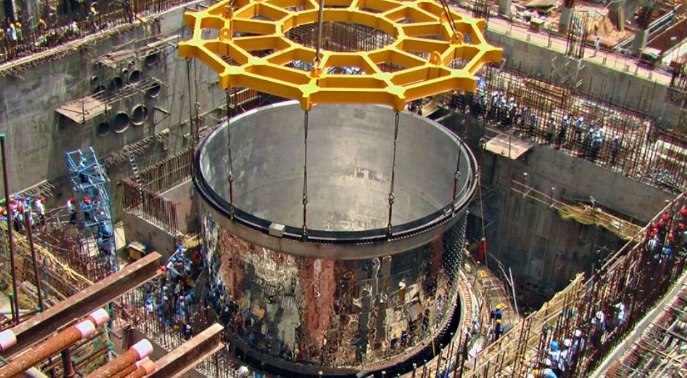
India has just crossed a threshold that only a handful of nations have ever reached. With the Prototype Fast Breeder Reactor (PFBR) at Kalpakkam achieving criticality—developed by Bharatiya Nabhikiya Vidyut Nigam Limited (BHAVINI) with support from Indira Gandhi Centre for Atomic Research (IGCAR)—the country has formally entered the elite league of nations capable of generating nuclear energy while simultaneously producing more fuel.
“This is not just a reactor milestone—it is a transition into a fundamentally different class of nuclear capability.” — Dr. Anil Kakodkar, Former Chairman, Atomic Energy Commission of India
At a surface level, this is a technological achievement.
At a structural level, it is something far more significant: a redefinition of how energy systems are built, sustained, and scaled.
This becomes critical when viewed not just through an energy lens—but through a customer experience (CX) lens.
Because energy is not just infrastructure anymore.
It is the invisible layer powering every modern experience.
The Collapse of Traditional Energy Assumptions
For decades, global energy systems have operated under a simple assumption: fuel is finite, and supply chains must compensate for scarcity.
This model is now under stress.
Rising geopolitical tensions, volatile fossil fuel markets, and increasing electrification demands—from digital economies to EV ecosystems—are exposing the fragility of traditional energy architectures.
“Energy security is no longer a policy discussion—it is an economic and social stability imperative.” — Fatih Birol, Executive Director, International Energy Agency
This becomes critical when we map it to customer experience.
Power outages disrupt digital services.
Price volatility impacts affordability.
Supply uncertainty creates systemic inefficiencies.
The deeper implication is clear:
energy reliability is now directly proportional to experience quality—across consumers, enterprises, and governments.
This is where the shift occurs.
The world is moving from:
- Energy as a commodity
to - Energy as a strategic capability layer
India’s PFBR milestone sits precisely at this inflection point.
From Energy Consumption to Energy Multiplication
At a strategic level, fast breeder reactor technology represents a paradigm inversion.
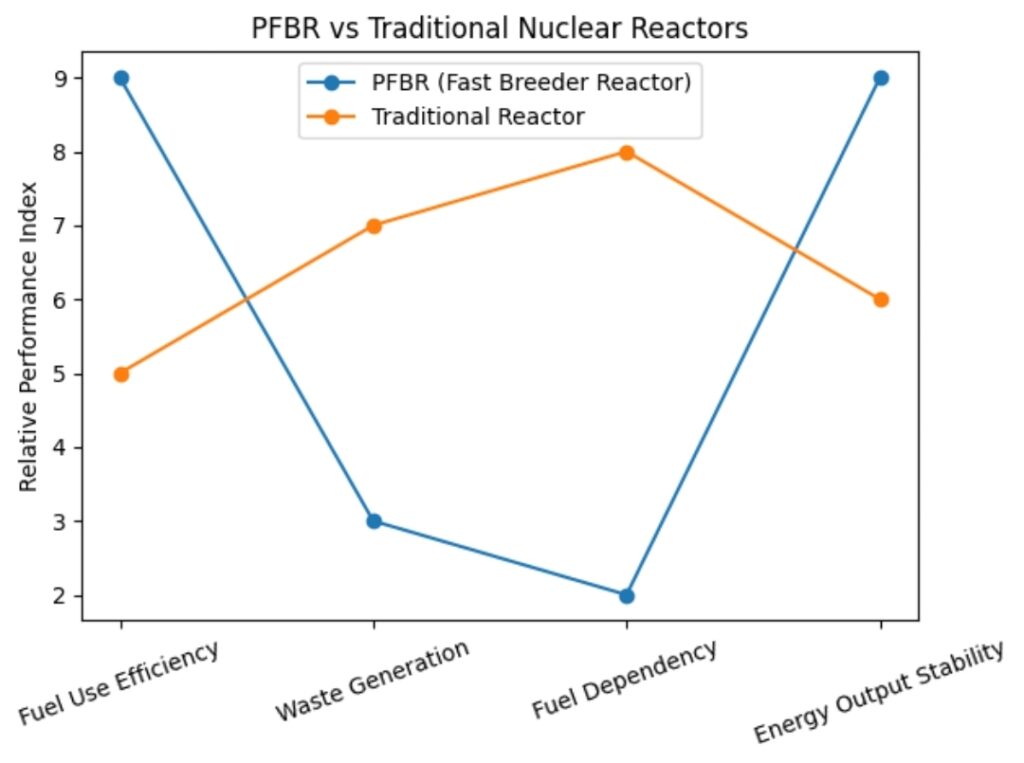
Traditional Model:
- Consume uranium
- Generate energy
- Manage waste
Fast Breeder Model:
- Generate energy
- Convert fertile material into fissile fuel
- Recycle and expand fuel supply
“Fast breeder reactors fundamentally change the resource equation by extending fuel availability by orders of magnitude.” — Dr. R. Chidambaram, Former Principal Scientific Adviser to the Government of India
This becomes critical because India is not just adopting this model—it is embedding it within a three-stage nuclear program designed for long-term energy sovereignty.
Stage 1: Pressurized Heavy Water Reactors (PHWRs)
Stage 2: Fast Breeder Reactors (PFBR)
Stage 3: Thorium-based reactors
The deeper implication is strategic continuity.
Unlike many countries that treat nuclear innovation as isolated projects, India is building a multi-decade energy architecture.
This is where the shift occurs: India moves from being an energy participant
to becoming an energy system architect
From a CX standpoint, this translates into:
- Predictability
- Stability
- Long-term resilience
A Global Race with Diverging Endgames
Globally, fast breeder reactor development has been uneven.
Russia leads with operational maturity.
China is scaling aggressively.
France and Japan have stepped back due to economic and political constraints.
“The economics of breeder reactors have always been challenging, but their strategic value remains undeniable.” — International Atomic Energy Agency (IAEA) Report
This becomes critical when positioning India.
India is not entering this race late—it is entering differently.
While others focus on optimizing uranium cycles, India’s roadmap extends toward thorium utilization, a resource it possesses in abundance.
The deeper implication is differentiation not in current capability, but in future potential.
This is where the shift occurs:
- Short-term → India aligns with global leaders
- Long-term → India may define a new category
From a strategic standpoint, this creates asymmetric advantage—a position where India is not just competing within existing frameworks but potentially redefining them.
Engineering a Self-Sustaining Energy System
At its core, the PFBR is a sodium-cooled fast neutron reactor—a design optimized for efficiency and fuel regeneration.
Key Components:
- Mixed Oxide (MOX) Fuel (Plutonium + Uranium)
- Liquid Sodium Coolant (~1,750 tonnes)
- Breeding Blanket (Uranium layer surrounding the core)
Operationally, this translates into a system where:
- Fast neutrons enable high-efficiency reactions
- Excess neutrons convert uranium into plutonium
- Newly generated plutonium feeds back into the fuel cycle
“The PFBR is designed to achieve a closed fuel cycle, significantly enhancing resource utilization.” — Senior Scientist, IGCAR
This becomes critical because it transforms nuclear energy from a linear system into a circular system.
The deeper implication is system-level efficiency:
- Reduced waste
- Extended fuel lifecycle
- Higher energy yield per unit resource
Integration-wise, PFBR is not an endpoint.
It is a bridge technology enabling the transition to thorium-based systems.
From a CX standpoint, this translates into:
- Infrastructure reliability
- Reduced external dependency
- Long-term scalability
The Invisible Backbone of Modern Experience
From a CX standpoint, energy operates as an invisible enabler—until it fails.
This becomes critical when we examine its cascading effects.
Customer Impact
- Fewer disruptions in daily life
- Stable electricity pricing over time
- Increased trust in public infrastructure
Business Impact
- Predictable operational costs
- Reduced downtime
- Improved service delivery reliability
System Impact
- Self-sustaining energy cycles
- Lower systemic risk
- Enhanced national infrastructure resilience
“Reliable energy systems are foundational to digital transformation and service continuity.” — World Economic Forum Energy Insights
The deeper implication is that PFBR is not just a power project—it is a CX stabilizer at national scale.
This is where the shift occurs: Energy transitions from being a risk variable
to becoming a strategic enabler of experience quality
Operationally, this translates to:
- Better SLA adherence
- Reduced service interruptions
- Higher consistency across digital and physical ecosystems
From Reactive Infrastructure to Predictive Capability
India’s PFBR milestone signals a transition into advanced infrastructure maturity.
Current Level:
L4 — Predictive / Strategic CX Infrastructure
This becomes critical because the system is no longer reactive—it is designed for long-term predictability.
Justification:
- Fuel self-sufficiency mechanisms
- Long-term scalability built into design
- Integration with future energy stages
Gap:
- Thorium cycle not yet operational
Trigger:
- Successful commercialization of thorium reactors
The deeper implication is that India is building not just capacity—but capability foresight.
High Complexity, High Payoff
From a decision-making standpoint, PFBR represents a high-stakes strategic investment.
Build vs Buy vs Partner
- Build: Essential for sovereignty
- Partner: Selective collaboration
- Buy: Not viable
Risk Assessment
- High capital expenditure
- Operational complexity
- Regulatory sensitivity
Implementation Complexity
🔴 High
“Nuclear infrastructure demands long-term commitment and institutional continuity.” — Nuclear Energy Institute
This becomes critical because such systems cannot be optimized for short-term returns.
The deeper implication is clear: This is a generational investment, not a quarterly one.
Ecosystem-Level Transformation
PFBR’s impact extends beyond energy into broader industrial ecosystems.
Talent
- Surge in demand for nuclear scientists and engineers
- Growth in materials science and advanced manufacturing
Competition
- Renewed global interest in nuclear innovation
- Increased strategic investments in energy infrastructure
Ecosystem
- Expansion of domestic heavy engineering
- Strengthening of research institutions
- Supply chain localization
This becomes critical when industries begin aligning around energy certainty as a competitive advantage.
The Thorium Inflection Point
If PFBR is the transition, thorium is the destination.
India possesses one of the largest thorium reserves globally.
Unlocking it at scale could fundamentally alter global energy dynamics.
“Thorium has the potential to provide a safer, more abundant nuclear energy pathway.” — World Nuclear Association
This becomes critical because thorium changes the equation entirely:
- Abundance replaces scarcity
- Domestic supply replaces imports
- Long-term sustainability replaces short-term optimization
The deeper implication is profound: India could move toward structurally abundant energy—a scenario few nations can achieve.
What This Really Means
- India has entered the elite league of fuel-producing nuclear nations
- PFBR is not an endpoint—it is a transition layer
- Energy independence is becoming a CX strategy
- Thorium represents a long-term asymmetric advantage
- Infrastructure innovation is now central to national competitiveness
Final Perspective
This moment will not dominate headlines tomorrow.
Markets may not react immediately.
Consumers may not notice instantly.
But 10–15 years from now, this milestone may be seen differently.
Not as a technological achievement.
Not even as an energy breakthrough.
But as the moment India began transforming energy
from a constraint
into a capability.
And in doing so, redefined the very foundation of experience at scale.
