
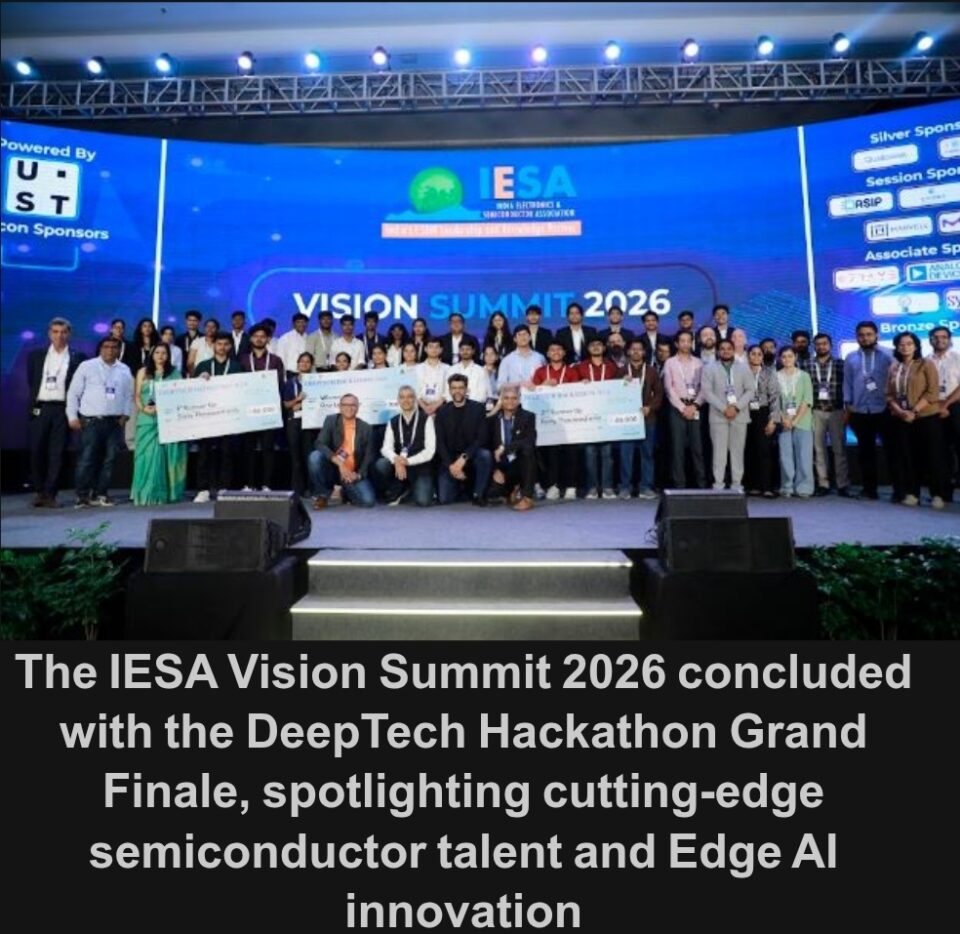
DeepTech Hackathon Ignites India’s Next Wave of Semiconductor & AI Innovation
Imagine a packed auditorium in Bengaluru.
Ten student teams stand before industry veterans. Their models classify microscopic semiconductor defects in seconds. The room goes silent as results flash on screen.
This was not a college project showcase.
This was the Grand Finale of the DeepTech Hackathon at the IESA Vision Summit 2026.
For CX and EX leaders, this story goes beyond chips and AI. It reveals how ecosystems, talent pipelines, and cross-industry collaboration shape the future of experience-driven innovation.
What Is the DeepTech Hackathon and Why Should CX/EX Leaders Care?
It is a national innovation platform that connects academia, semiconductor leaders, and AI workflows to solve real manufacturing problems. CX/EX leaders should care because ecosystem-led innovation directly impacts future customer value and talent experience.
The hackathon was organized by the India Electronics and Semiconductor Association (IESA), in collaboration with GlobalFoundries India, NXP Semiconductors, and the Inter Institutional Inclusive Innovations Center (i4C).
The challenge?
Build an Edge AI-based Defect Classification System for Semiconductor Images using AI-enabled EDA workflows.
That is not theoretical innovation.
That is fab-floor intelligence.
Why Is This Moment Critical for India’s Semiconductor Ecosystem?
India stands at a semiconductor inflection point. Talent depth exists. Manufacturing scale is emerging. Integration across the value chain is now essential.
India already commands global respect in semiconductor design.
But design alone does not build a self-reliant ecosystem. Manufacturing, testing, packaging, AI integration, and system-level thinking must converge.
At the IESA Vision Summit 2026 in Bengaluru, the message was clear:
“India’s semiconductor ecosystem is at a decisive inflection point. While the India Semiconductor Mission is unlocking unprecedented investments, the true multiplier lies in talent and deep-tech innovation,” said Ashok Chandak, President, IESA and SEMI India.
For CX leaders, this signals something powerful:
Customer experience in deep-tech industries begins years before a product reaches a buyer. It begins in talent and R&D ecosystems.
How Did the Hackathon Create Real Ecosystem Value?
By combining scale, rigor, mentorship, and real-world problem framing.
Consider the numbers:
- 911 teams
- 359 colleges
- 532 high-quality idea submissions
- 10 finalist teams
- Multi-stage evaluations with industry mentors
This was not a branding exercise. It was a structured pipeline.
Students received mentorship from engineers at GlobalFoundries and NXP. They faced evaluation criteria aligned to manufacturability, system design, and AI robustness.
That is ecosystem thinking.
What Makes Edge AI in Semiconductor Manufacturing So Strategic?
Edge AI reduces latency, improves yield accuracy, and enables intelligent manufacturing at scale.
In semiconductor fabrication, defect detection determines yield. Yield determines cost. Cost determines competitiveness.
An AI-enabled defect classifier running at the edge means:
- Faster inspection
- Lower false positives
- Reduced rework
- Higher throughput
For experience leaders, this translates to:
- More reliable products
- Shorter time to market
- Lower cost structures
- Stronger brand trust
As Hitesh Garg, Vice President and India MD at NXP Semiconductors, noted:
“What stands out in this challenge—bringing together defect detection, Edge AI, and real fab-level problem-solving—is how closely it mirrors the demands of modern intelligent manufacturing.”
That is the future of design-to-experience alignment.
Who Won and Why Does It Matter?
The winners demonstrated systems thinking, AI rigor, and real-world solution viability.
The top prize went to an all-girls team from Chennai Institute of Technology, awarded ₹1,00,000.
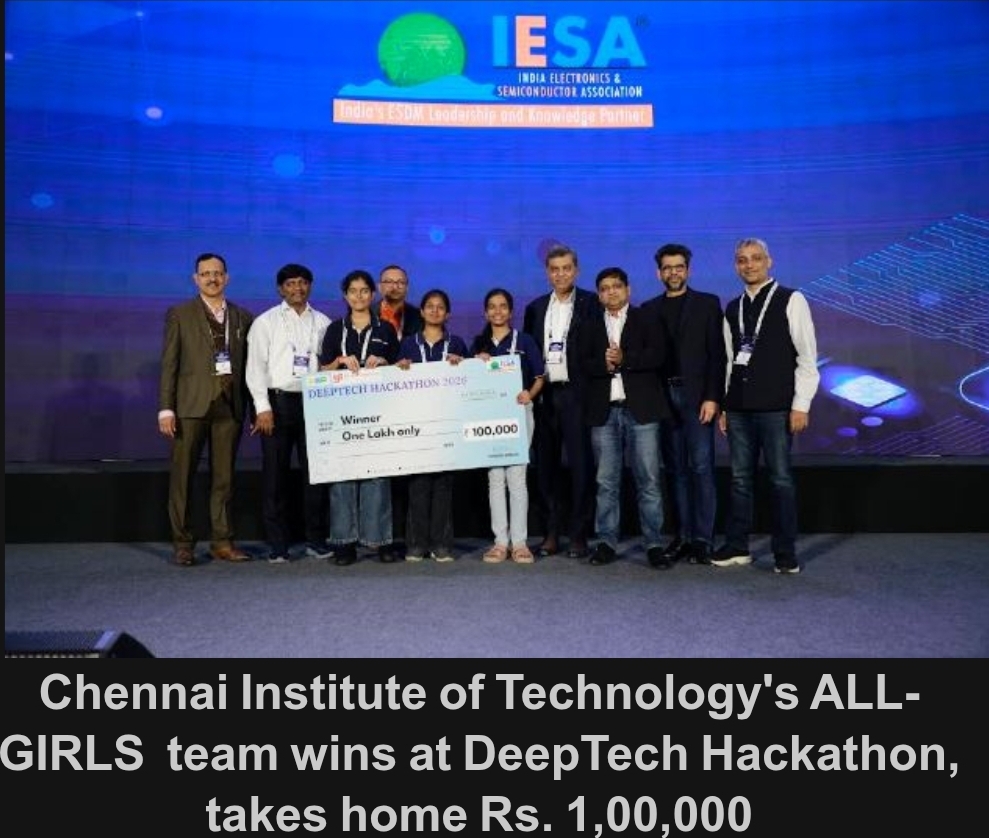
First Runner-Up: Ramco Institute of Technology (₹60,000).
Second Runner-Up: IIT Indore (₹40,000).
This is not just a competition outcome.
It signals:
- Gender inclusion in deep-tech leadership
- Tier-2 and Tier-3 academic participation
- National distribution of semiconductor talent
For EX leaders, this matters deeply.
Employer branding in deep-tech must now compete for AI-native engineers who want meaningful challenges.
How Does This Connect to CX Strategy?
Innovation ecosystems shape future customer journeys. Silos weaken them.
Many CX teams struggle with:
- Fragmented product development
- Disconnected R&D and marketing
- Limited AI literacy
- Siloed talent pipelines
The hackathon model offers a blueprint.
The Ecosystem-to-Experience Framework
1. Problem Framing at Industry Level
Align innovation challenges with real operational gaps.
2. Cross-Sector Collaboration
Industry + Academia + Innovation Hubs.
3. Mentored Iteration Cycles
Embed domain experts early.
4. Outcome-Based Evaluation
Reward solution viability, not presentation polish.
5. Talent Funnel Integration
Convert innovation events into recruitment pipelines.
This mirrors what CXQuest often highlights: experience is not a department. It is a system.
DeepTech Hackathon: What Are the Strategic Signals for CX/EX Leaders?
Key Insights
- AI and semiconductors are converging rapidly.
- Talent ecosystems are becoming competitive differentiators.
- Industry-academia collaboration reduces innovation lag.
- Edge AI is central to intelligent manufacturing.
- Inclusive innovation strengthens employer brand equity.
Jitendra Chaddah, Vice President and India Country Head at GlobalFoundries, emphasized:
“The hackathon… is a perfect platform for young talent to nurture industry-ready skills while solving real world problems.”
That is experiential learning at scale.
Common Pitfalls CX Leaders Must Avoid
- Treating hackathons as PR stunts
- Ignoring post-event talent integration
- Failing to document innovation frameworks
- Disconnecting innovation from customer outcomes
- Underinvesting in AI capability building
Innovation without operational follow-through creates frustration.
How Can Organizations Replicate This Model?
Start small, align with core business problems, and embed measurable outcomes.
Implementation Checklist
- Identify one operational bottleneck
- Translate it into a structured challenge
- Partner with academic institutions
- Provide structured mentorship
- Offer real incentives
- Track prototype-to-production conversion
Measure:
- Talent acquisition impact
- Time-to-solution
- IP creation
- Brand perception lift
- Innovation-to-revenue linkage
FAQ
How can CX leaders benefit from semiconductor innovation events?
They gain early visibility into emerging technologies that will shape product reliability, cost structures, and long-term experience design.
Why is Edge AI critical for manufacturing CX?
Edge AI reduces defects and delays, improving product quality and customer satisfaction.
Can hackathons truly solve industrial problems?
Yes, if structured around real datasets, mentorship, and viability metrics.
How does industry-academia collaboration improve EX?
It creates meaningful career pathways and strengthens employer credibility.
Is India positioned to lead in AI-driven semiconductor systems?
Yes. Talent depth and ecosystem momentum are accelerating rapidly.
Actionable Takeaways
- Map your innovation gaps to real operational pain points.
- Build structured challenge programs around those gaps.
- Integrate AI literacy into CX leadership training.
- Partner with academic institutions for talent sourcing.
- Measure ecosystem impact, not just event attendance.
- Embed inclusion metrics into innovation programs.
- Convert winning prototypes into pilot projects.
- Communicate ecosystem stories to strengthen brand trust.
India’s semiconductor journey is no longer theoretical.
It is practical, collaborative, and AI-driven.
For CX and EX leaders, the lesson is clear:
The future of experience is built in ecosystems, not silos.
And those ecosystems are forming now.
