
What the AlUla Emerging Market Economies Conference Reveals About the Future of CX in a Fragmented Global Economy
Ever watched a carefully designed customer journey collapse because finance, policy, and execution were misaligned?
Now imagine that problem at a national scale.
As Saudi Arabia prepares to host the AlUla Conference for Emerging Market Economies (ACEME) on February 8–9, 2026, finance ministers, central bank governors, and global policymakers will converge in AlUla to tackle resilience, growth, and reform. The event, jointly organized by the Saudi Ministry of Finance and the International Monetary Fund, may look macroeconomic on the surface. But for CX and EX leaders, it offers something deeper.
ACEME is not just an economic forum.
It is a live case study in experience orchestration under extreme complexity.
Emerging economies face the same challenges CX teams face daily—only magnified. Siloed systems. Fragmented journeys. Trust deficits. Technology gaps. Competing priorities. And customers—citizens, investors, businesses—who expect clarity, continuity, and outcomes.
This article decodes ACEME 2026 through a CX lens and translates macroeconomic dialogue into practical experience leadership frameworks.
What Is the AlUla Conference for Emerging Market Economies—and Why Should CX Leaders Care?
ACEME is a global policy platform where emerging economies align on resilience, reform, and sustainable growth.
For CX leaders, it mirrors the same coordination problems faced inside large enterprises.
Held amid rapid global economic shifts, ACEME reflects how experience quality now depends on cross-system trust and alignment, not isolated excellence. CX leaders can learn how nations coordinate policy the way organizations must coordinate journeys.
Why Emerging Market Challenges Mirror Modern CX Breakdowns
Emerging economies struggle with fragmentation across institutions, policies, and stakeholders—just like CX teams across functions and platforms.
Finance ministries, central banks, regulators, and global institutions often move at different speeds. Sound familiar?
Replace ministries with marketing, operations, IT, and finance.
Replace citizens with customers.
And, replace policy reform with journey redesign.
The challenges align almost perfectly.
Shared Pain Points
- Siloed decision-making slows outcomes
- Technology outpaces governance
- Trust erodes when signals conflict
- Long-term resilience competes with short-term pressure
ACEME exists to solve these at a national scale. CX leaders can apply the same logic internally.
What Strategic Signal Is Saudi Arabia Sending by Hosting ACEME 2026?
Saudi Arabia positions itself as an experience orchestrator of global economic dialogue.
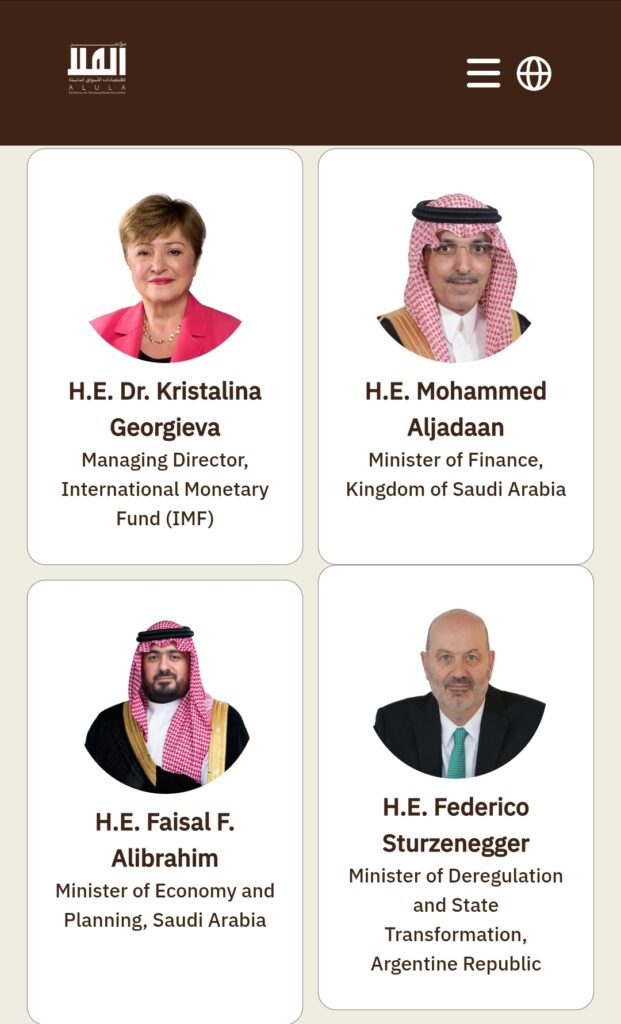
By partnering with the IMF and hosting ACEME in AlUla, the Kingdom signals maturity in convening, coordinating, and enabling multilateral outcomes. Finance Minister Mohammed Aljadaan emphasized that emerging economies are pivotal to global stability, not peripheral.
This mirrors a CX truth:
The most influential experience leaders don’t own every touchpoint. They orchestrate alignment.
Saudi Arabia is designing the platform, not dictating the outcome. That distinction matters.
How Does IMF Leadership Reinforce the Experience Design Narrative?
The IMF frames uncertainty as an experience challenge, not just a risk model.
IMF Managing Director Dr. Kristalina Georgieva highlighted technology, demography, and geopolitics as forces reshaping decision environments. Her message focused on coordination, resilience, and shared policy responses.
In CX terms, this is expectation management at scale.
Customers today navigate uncertainty constantly. They judge brands on how clearly they guide them through it. The IMF’s framing reinforces a core CX principle:
When environments become complex, experience clarity becomes currency.
What Can CX Leaders Learn from ACEME’s Strategic Objectives?
ACEME’s goals map directly to modern CX maturity models.
Let’s break them down.
| ACEME Objective | CX Parallel |
|---|---|
| Strengthen economic resilience | Design journeys that absorb shocks |
| Support inclusive growth | Serve underserved segments intentionally |
| Encourage policy coordination | Align cross-functional CX governance |
| Attract investment | Build trust signals across touchpoints |
| Improve living standards | Deliver measurable experience outcomes |
This is not coincidence. Experience, whether national or organizational, is a system-level discipline.
How Does Economic Resilience Translate to Experience Resilience?
Experience resilience means journeys continue to function during disruption.
Emerging economies plan for currency volatility, capital flows, and geopolitical shocks. CX teams must plan for outages, AI errors, regulatory shifts, and sudden demand spikes.
ACEME highlights resilience as proactive design, not reactive response.
Experience Resilience Framework
- Anticipate stress points using scenario planning
- Design fallback journeys, not just happy paths
- Empower frontline decisions within guardrails
- Align policy and execution continuously
Most CX failures occur because teams design for averages. ACEME designs for volatility.
What Role Does Technology Play—and Where Do CX Teams Go Wrong?
Technology is an enabler, not a solution.
Dr. Georgieva explicitly referenced technology as a disruptive force requiring coordinated policy. The same applies to AI in CX.
Too many organizations deploy AI without governance, leading to:
- Conflicting answers
- Broken handoffs
- Eroded trust
Emerging economies face similar risks when digital finance outpaces regulation.
The lesson is clear:
Experience governance must evolve alongside technology adoption.
What Is the “Policy-to-Experience Gap” and Why Does It Matter?
The policy-to-experience gap is the distance between intent and lived reality.
Governments announce reforms. Citizens experience bureaucracy.
Companies announce CX visions. Customers experience friction.
ACEME explicitly focuses on bridging this gap through coordination and reform pathways.
CX Translation
- Strategy without execution erodes trust
- Metrics without meaning confuse teams
- Vision without ownership stalls change
CX leaders must act as translators between intent and impact.
Common Pitfalls CX Leaders Can Avoid by Studying ACEME
Many CX transformations fail for the same reasons national reforms fail.
Common Pitfalls
- Treating alignment as a one-time exercise
- Ignoring political or cultural realities
- Over-indexing on tools instead of trust
- Measuring outputs instead of outcomes
ACEME’s structure acknowledges complexity upfront. CX teams often don’t.
How Can CXQuest’s Frameworks Help Leaders Apply These Lessons?
CXQuest consistently emphasizes system thinking, governance, and journey economics.
ACEME reinforces why these matter. Experience excellence is no longer about moments. It is about movement across systems.
CXQuest frameworks around:
- Journey orchestration
- Experience governance
- Outcome-based metrics
- Cross-functional accountability
…align directly with what ACEME attempts at a global scale.
Key Insights for CX and EX Leaders
- Experience is a macro discipline now, not a departmental one
- Resilience beats perfection in volatile environments
- Coordination creates trust faster than innovation alone
- Policy clarity drives experience confidence
These insights apply whether you serve millions of citizens or thousands of customers.
Frequently Asked Questions (FAQ)
How does an economic conference relate to customer experience strategy?
Economic coordination mirrors experience orchestration. Both require alignment across systems to deliver trust and outcomes.
What CX leaders can learn from emerging market economies?
How to design resilience, manage uncertainty, and align stakeholders under pressure.
Why is AlUla significant as a host location?
It symbolizes deliberate experience design—context, narrative, and purpose combined.
How does IMF thinking apply to enterprise CX?
IMF emphasizes governance, coordination, and long-term resilience—core CX maturity principles.
What is the biggest CX risk highlighted by ACEME?
Fragmentation between strategy, policy, and execution.
How should CX leaders prepare for similar uncertainty?
Design journeys for volatility, not stability.
Actionable Takeaways for CX Professionals
- Audit journey resilience, not just satisfaction scores
- Map policy-to-experience gaps across teams
- Establish cross-functional CX governance councils
- Design fallback journeys for AI and automation failures
- Align CX metrics to economic outcomes, not vanity KPIs
- Train leaders in system thinking, not just empathy
- Communicate uncertainty transparently to build trust
- Treat experience as infrastructure, not a campaign
ACEME 2026 reminds us that experience leadership is no longer optional—or small.
Whether at a national or organizational level, those who coordinate best will endure longest.
For CX leaders navigating siloed teams, AI gaps, and fragmented journeys, AlUla offers a powerful reminder:
The future belongs to experience orchestrators, not experience owners.
