
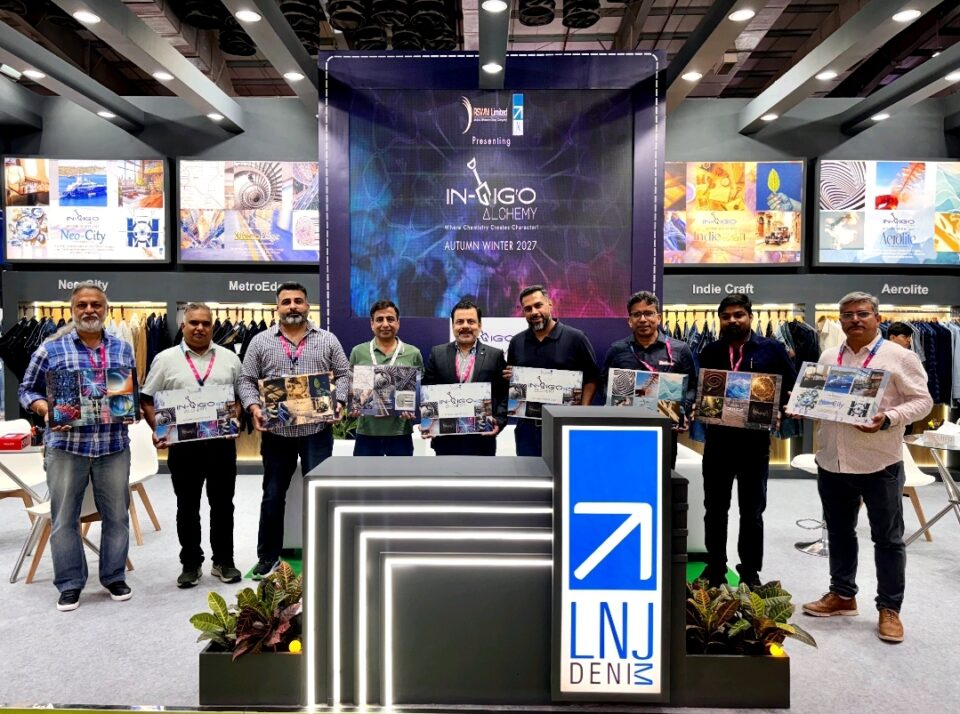
RSWM Ltd. unveils AW27 denim collection as Experience Engineering Platform
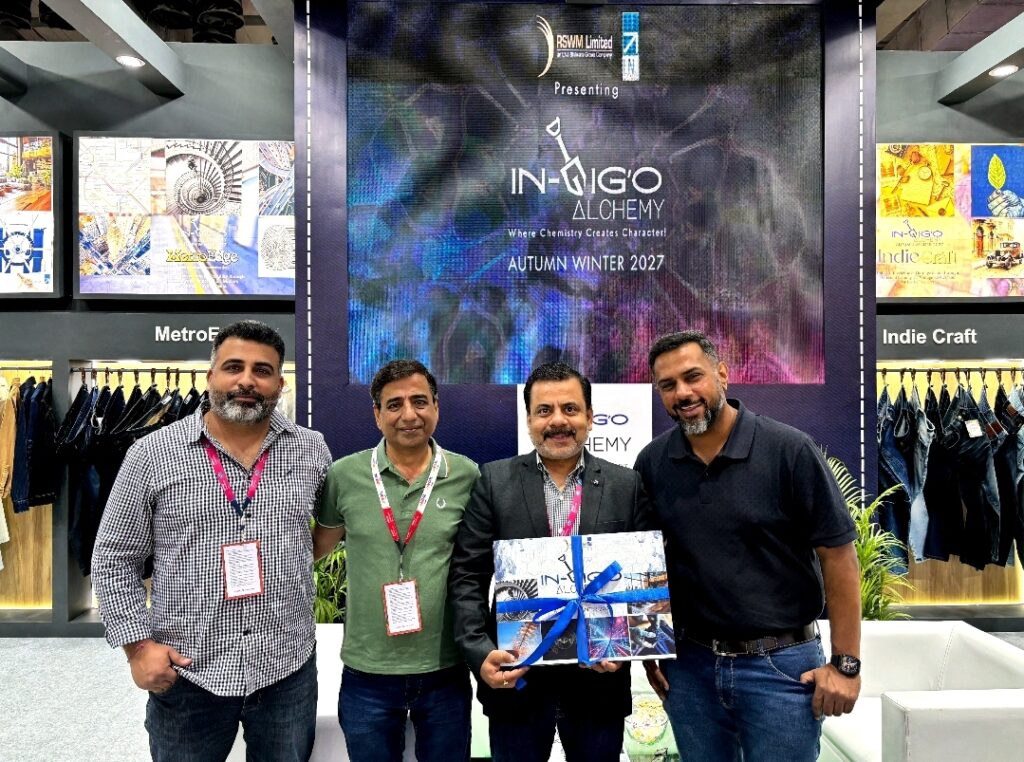
RSWM Ltd. unveils AW27 denim collection at a time when the textile industry is undergoing a fundamental shift—from scale-driven manufacturing to experience-led innovation. With In-DIG’o Alchemy, introduced at Gartex Texprocess India 2026, the company signals a move beyond fabric production toward engineering differentiated, use-case-driven denim experiences.
This becomes critical when consumers are no longer choosing denim purely for aesthetics or durability. Today’s expectations span comfort, sustainability, versatility, and identity. The deeper implication is clear: fabric is no longer a passive input—it is becoming an active driver of customer experience.
Why RSWM Ltd. unveils AW27 denim collection signals a structural shift
The textile industry is facing mounting pressure from fragmented demand, shorter fashion cycles, and sustainability mandates. Traditional production models—optimized for efficiency and volume—are increasingly misaligned with these realities.
This is where the shift occurs.
RSWM’s six-category architecture—Pulse, IndieCraft, Nova-Lab, Aerolite, MetroEdge, and Neo-City—moves beyond design segmentation into experience segmentation. Each category addresses a distinct consumer context, from everyday durability to expressive fashion and performance wear.
Strategically, this indicates a transition from product-centric manufacturing to context-aware design systems.
The deeper implication is that differentiation is being embedded at the material level, allowing downstream players—brands and designers—to accelerate innovation without rebuilding foundational capabilities.
From Manufacturing to Co-Creation Strategy
Historically, textile manufacturers operated as upstream suppliers, with limited influence over final customer experience. Value creation was largely driven by brands and retailers.
RSWM Ltd. unveils AW27 denim collection as a deliberate break from that model.
By integrating fibre engineering, dyeing science, and finishing innovation into a unified system, RSWM is repositioning itself as a co-creation partner. The six-category framework is not just a portfolio—it is a toolkit for brands to design faster, with greater precision and reduced iteration cycles.
“The response to In-DIG’o Alchemy at Gartex Texprocess India 2026 has been extremely encouraging. Through this collection, we have explored denim across both its most essential and most expressive forms. This collection reflects our continued commitment to combining scientific precision with design innovation to create fabrics that are relevant, responsible, and future-ready.” — Rajeev Gupta, Joint Managing Director, RSWM Ltd.
This becomes critical when speed-to-market and adaptability define competitive advantage.
Competitive Positioning in a Fragmented Market
The denim ecosystem is increasingly stratified between high-innovation global leaders and cost-driven commodity manufacturers.
RSWM’s approach positions it in a transitional innovation tier—bridging the gap between traditional scale players and advanced R&D-driven leaders.
RSWM Ltd. unveils AW27 denim collection with a differentiated edge:
- Structured segmentation across six categories
- Integration of heritage, performance, and expressive design
- Strong alignment with sustainability and fibre innovation
However, the next competitive frontier lies in:
- Digital sampling ecosystems
- Predictive design integration
- Deeper brand collaboration platforms
This is where the shift will accelerate—from product innovation to ecosystem orchestration.
Technology as the Backbone of Experience
At a structural level, In-DIG’o Alchemy is built on tightly integrated technological components:
- Fibre Engineering: Advanced blends enabling durability, flexibility, and comfort
- Indigo Chemistry: Oxidation-driven dyeing processes delivering depth and variation
- Fabric Construction: Precision weaving, texture engineering, and adaptive finishes
Operationally, this translates into a closed-loop innovation system, where each stage—from fibre selection to finishing—is optimized for both performance and experience.
“The collection has been well received for its versatility and depth, from everyday core offerings to high-performance and expressive denim solutions. It reflects our focus on building adaptive, forward-looking products aligned with evolving consumer and industry needs.” — Ashish Bhatnagar, Deputy Business Head & CMO, LNJ Denim (RSWM Ltd.)
The deeper implication is the emergence of modular innovation capability, enabling scalability without sacrificing customization.
CX Impact Across the Value Chain
From a CX standpoint, the impact unfolds across three interconnected layers:
Customer Layer
Consumers benefit from:
- Lightweight comfort (Aerolite)
- Functional performance (Nova-Lab)
- Expressive identity (Neo-City)
This transforms denim into a context-responsive product.
Business Layer
Brands gain:
- Faster design-to-market cycles
- Reduced dependency on post-production modifications
- Pre-engineered differentiation
System Layer
Manufacturing systems evolve toward:
- Integrated R&D pipelines
- Reduced waste through precision engineering
- Alignment with sustainability benchmarks
RSWM Ltd. unveils AW27 denim collection as a move that embeds CX directly into the fabric lifecycle, not just the retail experience.
Maturity and the Road Ahead
RSWM currently operates at a structured CX maturity level, with clear segmentation and strong R&D integration.
However, the next stage of evolution will require:
- Digital prototyping capabilities
- AI-driven demand forecasting
- Collaborative design ecosystems
This is where the shift occurs—from structured innovation to intelligent, predictive experience systems.
Decision Intelligence for Industry Stakeholders
For brands and manufacturers, the decision framework is evolving:
- Build: Requires significant R&D investment and integration capabilities
- Buy: Limits differentiation and flexibility
- Partner: Enables access to innovation without infrastructure burden
Partnering with players like RSWM offers a balanced path—combining speed, flexibility, and reduced execution risk.
However, implementation complexity remains medium to high due to:
- Integration requirements
- Alignment across design and production teams
The deeper implication is that strategic partnerships will define competitive advantage.
Industry-Wide Implications
This development signals broader shifts across the textile ecosystem:
- Talent: Demand for hybrid expertise—textile science + experience design
- Competition: Acceleration of innovation cycles and segmentation strategies
- Ecosystem: Stronger collaboration between mills, brands, and designers
Fabric is no longer just an input—it is becoming a strategic differentiator.
The Future of Denim is Engineered
RSWM Ltd. unveils AW27 denim collection not as a seasonal update, but as a directional shift.
The convergence of science, sustainability, and design signals a future where denim is:
- Engineered for context
- Designed for adaptability
- Built for experience
The deeper implication is unmistakable: the future of fashion will be defined not by garments alone, but by the intelligence embedded in materials.
Key Takeaways
- Denim is evolving into an experience platform
- Innovation is shifting upstream to manufacturers
- Segmentation is becoming a core strategic lever
- R&D orchestration defines competitive advantage
- CX begins at the fibre and fabric level
